


Breakfast | The Federal Reserve cut interest rates by 25 basis points as expected, Oracle fell over 10% after earnings

The Federal Reserve announced its third interest rate cut of the year and also announced the purchase of short-term bonds, which the market interpreted as "not QE's QE." Federal Reserve Chairman Jerome Powell's speech was milder than expected. The three major U.S. stock indices closed higher, with small-cap stocks leading the market. Oracle fell more than 10% after its earnings report, dragging Nvidia down over 1% in after-hours trading
Market Overview
The Federal Reserve announced its third interest rate cut of the year and also stated it would purchase short-term bonds, which the market interpreted as "not QE's QE," with Fed Chairman Powell's speech being milder than expected.
The three major U.S. stock indices closed higher, with small-cap stocks leading the market. Oracle's post-earnings plunge exceeded 10%, dragging Nvidia down over 1% in after-hours trading.
U.S. Treasury yields fell across the board, with the two-year Treasury yield, sensitive to interest rates, dropping over 7.6 basis points.
The dollar fell nearly 0.6%, reaching its lowest level since October 29. Bitcoin briefly rose to yesterday's high before dropping over 2.2%. Ethereum surged before retreating, gaining 1.2% during the day.
Precious metals rose broadly, with gold experiencing wide fluctuations, up 0.53% from yesterday's close. Silver reached a new high after digesting the Fed's rate cut decision, rising over 2% during the day. Oil saw a deep V reversal, with WTI crude rising more than 2.2% from its daily low.
During the Asian session, A-shares rebounded from a dip, with the real estate sector experiencing a surge in limit-up stocks, Vanke's stock and bonds both rising, retail stocks remained strong throughout the day, with Moore Threads rising over 15%, and Hong Kong stocks closed higher, with significant gains in the metals sector.
Key News
China's November CPI rose 0.7% year-on-year, the highest since March 2024, while PPI saw a slight widening in its year-on-year decline.
The real estate sector surged in the afternoon session, with discussions on Vanke's bond extension and market expectations for "mortgage interest subsidies" becoming the core emotional drivers.
The Federal Reserve cut rates by 25 basis points as expected, but three members opposed it, still anticipating one more rate cut next year, and will purchase $40 billion in short-term bonds; Powell stated that the scale of bond purchases may remain high in the coming months, the labor market is gradually cooling but slower than expected, and they can be patient with current rates, with tariff impacts expected to gradually fade next year. New Fed Communications: The Fed hinted at pausing rate cuts; the new bond king: today may be the last time under Powell's leadership.
Trump is planning a "final interview for the Fed Chair," Hassett is not yet "set in stone," and Bessent is still expected to succeed. Hassett: Trump will make a final decision on the Fed Chair candidate in the next 1-2 weeks, reiterating that the Fed has significant room for further rate cuts.
U.S. employment costs rose at the slowest pace in over four years, easing inflationary pressures.
Global long-term bond yields soared to a 16-year high, with the market betting that the global rate-cutting cycle is about to end.
Amid a historic surge in silver, the Silver Institute's "heavyweight report": demand in fields such as photovoltaics, electric vehicles, and data centers is surging, with global industrial demand for silver expected to continue growing over the next five years.
Oracle's earnings report showed revenue and cloud business below expectations, with capital expenditures exceeding expectations by about $15 billion, plunging over 10% in after-hours trading.
Meta is shifting direction, with Zuckerberg personally leading the charge, introducing Alibaba's Qwen training, moving from open-source to profit-oriented closed-source AI.
Trump disrupts Warner's "century acquisition"! Paramount throws out a cash plan worth hundreds of billions to "cut in," Netflix wants to win "by spending more."
Bank of America autonomous driving in-depth report: The scale of driverless ride-hailing could reach trillions, with a cost of $2 per mile being the tipping point.
Market Report
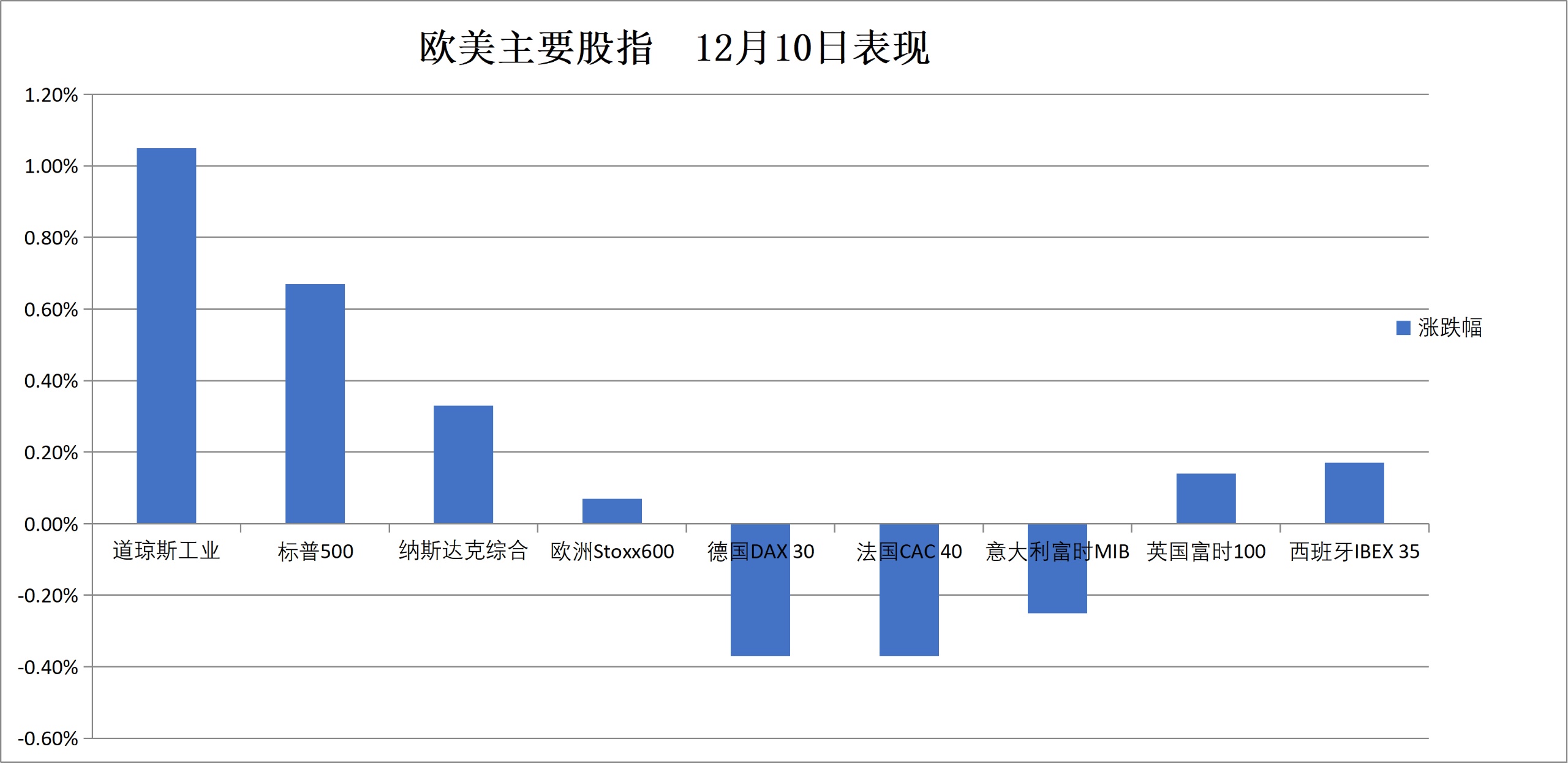
US and European Stock Markets: The S&P 500 rose 0.67%, closing at 6886.68 points. The Dow Jones increased by 1.05%, closing at 48057.75 points. The Nasdaq rose 0.33%, closing at 23654.155 points. The European STOXX 600 index closed flat at 577.78 points.
A-shares: The Shanghai Composite Index closed at 3900.50 points, down 0.23%. The Shenzhen Component Index closed at 13316.42 points, up 0.29%. The ChiNext Index closed at 3209.00 points, down 0.02%.
Bond Market: The yield on the US 10-year benchmark Treasury bond fell by 4.10 basis points to 4.1468%. The yield on the 2-year US Treasury bond fell by 7.65 basis points to 3.5381%.
Commodities: US oil rose 0.95%, closing at $58.87. Brent oil rose 0.91%, closing at $62.58. COMEX gold futures rose 0.50%, closing at $4257.20 per ounce. COMEX silver futures rose 2.27%, closing at $62.230 per ounce.
News Details
Global Highlights
China's November CPI rose 0.7% year-on-year, the highest since March 2024, while PPI's year-on-year decline slightly widened. In November, consumer spending continued to recover, with CPI slightly down 0.1% month-on-month and up 0.7% year-on-year, an increase of 0.5 percentage points from the previous month, the highest since March 2024. The year-on-year increase was mainly driven by a turnaround in food prices from decline to increase, while the core CPI, excluding food and energy prices, rose 1.2% year-on-year. Influenced by the optimization of supply-demand structures in some domestic industries and the transmission of international commodity prices, PPI rose 0.1% month-on-month, marking two consecutive months of increase, while year-on-year it fell by 2.2%.
- The Guolian Minsheng Macro team led by Tao Chuan believes that the November CPI rose to 0.7% and PPI fell to -2.2%, presenting a pattern of "one rise and one fall," reflecting structural contradictions in economic recovery. The rebound in CPI mainly relies on seasonal food prices and rising gold prices, which is not solid; the PPI falling short of expectations indicates a slowdown in the "anti-involution" policy, with increasing differentiation in price changes among upstream industries Future policy support is needed to promote trade-in programs to stimulate commodity consumption, unleash the potential of service consumption, and consolidate the foundation of domestic demand.
- The team led by Liang Zhonghua from Guotai Junan Macro Research believes that the CPI is mainly driven by food, fiscal subsidies, and gold prices, but core service prices are weaker than seasonal trends and still require policy support. The PPI is supported by rising prices of upstream non-ferrous metals, but downstream durable goods consumption is relatively weak, reflecting insufficient domestic demand. The key to price recovery in 2026 will shift from physical consumption to the elasticity of service CPI recovery, and further policy efforts are expected to boost this.
The real estate sector surged in the afternoon, with Vanke's bond extension discussions and market expectations for the "mortgage interest subsidy" policy becoming the core emotional drivers. Huatai Securities stated that as of 2023, cities such as Nanjing, Changchun, Yuncheng, and Wuhan have launched home loan interest subsidy policies. Founder Securities believes that the logic is to build a three-way win-win model of "fiscal subsidy spread, bank expansion of lending, and demand enjoying dividends." The inversion of interest rates and rental yields highlights the necessity of policy.
The Federal Reserve lowered interest rates by 25 basis points as expected, but three members opposed, still expecting one rate cut next year, and will buy $40 billion in short-term bonds; Powell: The scale of bond purchases may remain high in the coming months, the labor market is gradually cooling but slower than expected, and currently, the Fed can patiently wait under the current interest rates, with tariff impacts expected to gradually fade next year
- The Federal Reserve's interest rate decision faced opposition for the first time since 2019, with one member advocating for a 50 basis point cut, while two voting members and four non-voting members supported maintaining the status quo, effectively resulting in seven opposing the decision, reportedly the largest disagreement in 37 years. The meeting statement removed the phrase "unemployment rate remains low"; it added considerations for the "magnitude and timing" of further rate cuts, seen as indicating a higher threshold for rate cuts. To maintain sufficient reserves, the Fed will start buying short-term bonds from Friday, with expectations for high bond purchases to continue in the first quarter of next year.
- On December 10, the Federal Reserve cut rates by 25 basis points as expected and initiated short-term U.S. Treasury purchases. Powell emphasized that "the next move will be a rate hike" is not a basic assumption for anyone, and actual job growth may have been overestimated, with employment growth possibly having slightly turned negative since April. The labor market continues to cool gradually, possibly just slightly more gently than previously expected. Regarding inflation, he stated that tariff impacts are expected to gradually fade next year. He noted that the current position of interest rates allows the Fed to patiently wait and observe how the economy will evolve next. He mentioned that the scale of related short-term U.S. Treasury purchases may remain high in the coming months, and the Fed is not strictly "worried" about the tightness in the money market, just that this situation has come a bit faster than expected
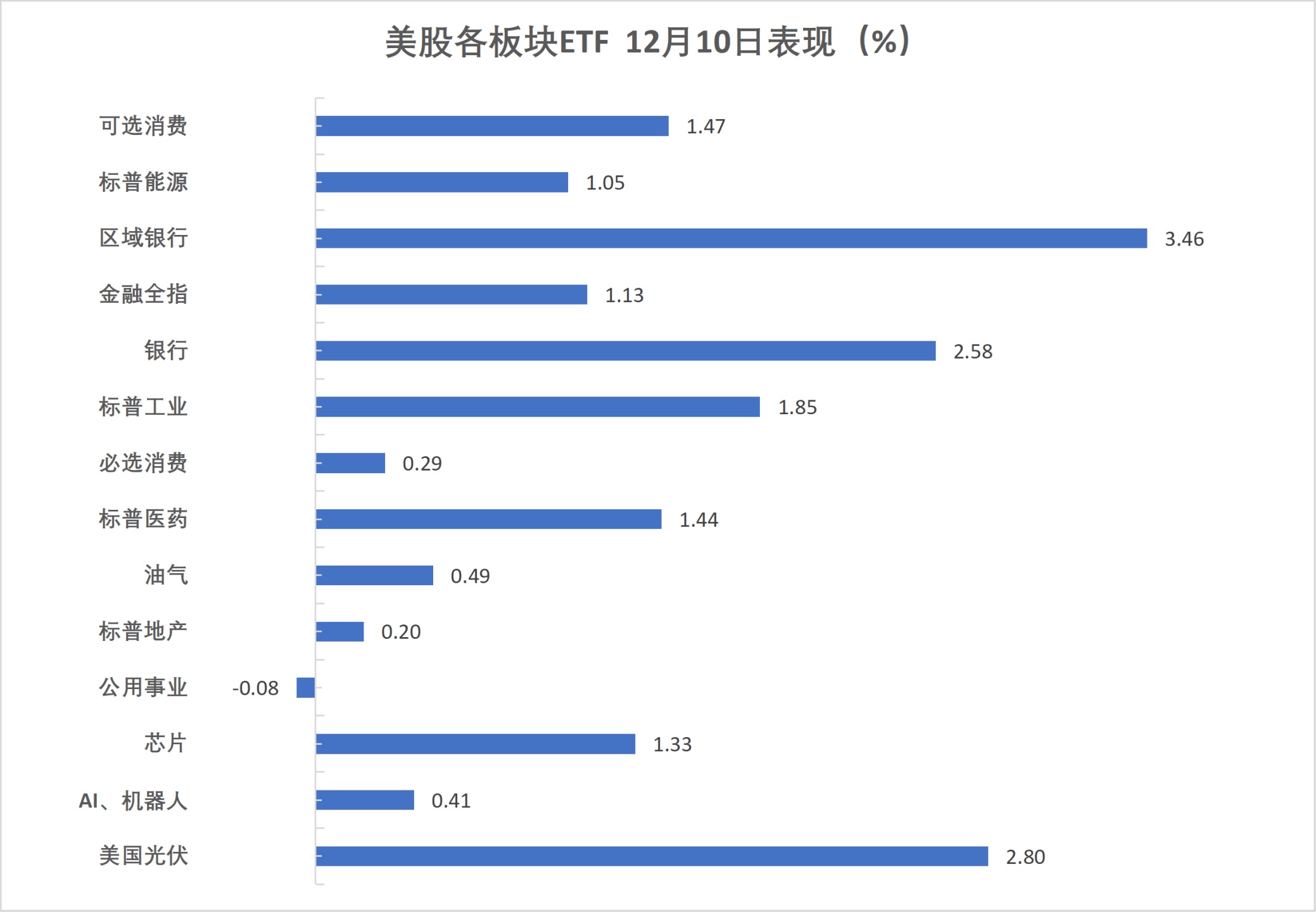
- The Federal Reserve lowered interest rates by 25 basis points as expected and announced the purchase of short-term U.S. Treasury bonds. Powell's speech was more dovish than anticipated. U.S. stocks hit a daily high during the session, but as Powell's press conference approached, the S&P's gains narrowed from 1.2% to 0.7%. The two-year U.S. Treasury yield fell by 7.5 basis points during the day, the ICE U.S. Dollar Index dropped over 0.6%, spot gold rose by 0.6%, hitting a daily high and approaching $4,239, while Bitcoin briefly surged towards $94,500, reaching a daily high, but then significantly retreated.
- New Federal Reserve News Agency: The Federal Reserve hints at pausing interest rate cuts, New Bond King: Today may be the last time under Powell. Nick Timiraos wrote that the pressure of rising prices in the U.S. coexists with a cooling labor market, presenting a tricky dilemma for the Federal Reserve, one that has not been encountered in decades. Jeffrey Gundlach of DoubleLine Capital stated that interest rate cuts will occur after Powell's departure, which will weaken the dollar.
Trump to conduct "final interview for Federal Reserve Chair," Hassett not yet "set in stone", is Bessent still expected to take over later? The competition for the Federal Reserve Chair has entered a heated stage, with Trump interviewing former governor Warsh this week, and the suspense around the nomination of popular candidate Hassett has increased. Meanwhile, U.S. officials discussed having Hassett serve a shorter term as Federal Reserve Chair (than the normal term), which may pave the way for Bessent to take over the Federal Reserve in the future.
- Hassett: Trump will make the final decision on the Federal Reserve Chair candidate in the next 1-2 weeks. Forty minutes before the release of the Federal Reserve's December FOMC decision statement, "shadow Federal Reserve Chair" and Director of the National Economic Council Kevin Hassett reiterated that there is still significant room for interest rate cuts.
U.S. employment cost growth hits a four-year low, inflation pressure eases. The U.S. employment cost index for the third quarter fell to an annual rate of 3.5%, the lowest in nearly four years, with the quarter-on-quarter growth also below expectations. Data shows a significant cooling in the job market, with hiring slowing, layoffs increasing, and the voluntary resignation rate dropping to its lowest since 2020, reflecting weakened worker confidence and decreased market liquidity. Real wage growth adjusted for inflation remains weak. This trend provides key evidence for the Federal Reserve to curb inflation and indicates that the labor market is shifting from a tight situation to a balanced one.
Global long-term bond yields soar to a 16-year high, market bets that the global rate-cutting cycle is about to end. Market analysis suggests that although the Federal Reserve is expected to cut rates again, concerns about long-term inflation, fiscal deficits, and policy independence have instead pushed up U.S. Treasury yields, triggering "disappointment trades" spreading across Europe, the U.S., Japan, and Australia With the expectation of interest rate hikes in multiple countries and accelerated fiscal expansion, global long-term borrowing costs are facing sustained upward pressure.
As silver experiences a historic surge, the Silver Institute has released a "heavyweight report". The report points out that demand in fields such as photovoltaics, electric vehicles, and data centers is surging, and global industrial demand for silver will continue to grow over the next five years. The annual growth rate of global solar installed capacity will reach 17% before 2030, and silver is the preferred material for conductive silver paste in solar cells; silver demand in the automotive industry will increase by 3.4% annually between 2025 and 2031, reaching approximately 94 million ounces by 2031; global data centers will grow from 0.93 gigawatts in 2000 to nearly 50 gigawatts by 2025, a 53-fold increase, with core components such as servers, switches, and cooling systems all requiring silver.
- After the surge in silver, will gold see a rebound? Analysis suggests that after the significant squeeze in silver, gold is showing opportunities for a rebound. The technical pattern of gold prices is robust, and the relatively low volatility of options provides a tactical layout window. Capital inflow remains insufficient, emerging market central banks have room to increase holdings, and coupled with the seasonal strength from the end of the year to early next year, the subsequent upward momentum of gold is worth paying attention to.
Oracle's performance fell short of expectations, with capital expenditures about $15 billion more than expected, plunging over 10% in after-hours trading. Oracle announced its second-quarter performance after U.S. stock market hours on Wednesday, showing that the company's revenue and cloud business both fell short of analyst expectations, with quarterly free cash flow (FCF) at -$10 billion, and annual capital expenditures expected to exceed original estimates by about $15 billion.
Meta shifts direction, with Zuckerberg personally leading the charge, introducing Alibaba's Qwen training, moving from open-source to profit-oriented closed-source AI. According to media reports citing informed sources, Meta used Alibaba's Tongyi Qianwen (QWEN) for optimization while developing its new AI model "Avocado." The model is expected to debut in spring next year and may be released as a closed-source model. This move can be seen as a key step for Meta in transitioning from an open-source strategy to closed-source commercialization.
Trump disrupts Warner's "century acquisition"! Paramount throws out a $108 billion cash offer to "hijack," Netflix needs to "pay more" to win. Paramount has maliciously thrown out a $108 billion all-cash offer, which is not only more attractive in price but also crucially benefits from its long-standing friendly relationship with Trump's team, giving it a natural advantage under the new government regulatory framework. In contrast, if Netflix wants to turn the tables in a regulatory disadvantage, the only feasible path is to—continue to raise the price to a level that Warner shareholders are willing to take regulatory risks Bank of America Autonomous Driving Deep Report: The scale of unmanned ride-hailing could reach trillions, a cost of $2 per mile will be the tipping point. Bank of America believes that if autonomous driving can reduce the cost per mile from the current $2.5-3 to below $2 (close to the private car cost of $0.7-1.06), and the penetration rate reaches 20%, the market size will reach $0.9-1.2 trillion. Even if Uber's market share drops to 50%, the order volume can still achieve a 17% compound annual growth rate, but it faces price war threats from giants like Waymo and Tesla.
Domestic Macro
Director of the National Medical Products Administration Li Li: Accelerate the review and approval of urgently needed overseas new drugs, rare disease drugs, and pediatric drugs. Li Li, director of the National Medical Products Administration, stated in an interview that it is necessary to strengthen the awareness of serving the people and accelerate the meeting of clinical medication needs. Fully utilize breakthrough therapy drugs, conditional approvals, priority reviews, special approvals, and other fast-track channels to accelerate the review and approval of urgently needed overseas new drugs, rare disease drugs, and pediatric drugs, shortening the distance from the laboratory to the bedside, and allowing innovative results to benefit people's livelihoods more quickly. Adhere to maintaining standards, not reducing procedures, and steadily expanding the scope of consistency evaluation of generic drug quality and efficacy, so that affordable and high-quality medicines benefit more patients.
Domestic Companies
The merger plan of the two domestic computing giants, Haiguang Information and Zhongke Shuguang, officially terminates after six months of stock swap absorption. Both parties announced that due to significant changes in the market environment, the transaction conditions are not yet mature, and they decided to terminate this major asset restructuring. Although the merger could not be realized, both parties stated that they would maintain and deepen their strategic synergy and cooperation in the computing industry chain.
There is no sign of a slowdown in computing demand! The "three major AI server foundries" all set historical highs in November performance. Wistron led the growth with a significant year-on-year revenue increase of 194.6% in November, achieving a record high in AI server shipments; Quanta's November revenue increased by 36.5% year-on-year, mainly benefiting from increased momentum in AI server shipments. Inventec's November revenue increased by 158.6% year-on-year, with continued growth in demand from major cloud service provider customers.
AI demand continues to drive growth, TSMC's November sales increased by 24.5% year-on-year. TSMC's November sales reached NT$343.61 billion, a year-on-year increase of 24.5%, but a decrease of 6.5% compared to October. Cumulative revenue for the first 11 months reached NT$3.47 trillion, a significant year-on-year increase of 32.8% The list of the top 10 shareholders of the polysilicon capacity integration platform Guanghe Qian has been disclosed. Among them, Tongwei Photovoltaic Technology (Emeishan) Co., Ltd. holds a 30.35% stake, GCL-Poly Energy Holdings Limited holds a 16.79% stake, and Shanghai Dongfang Hope New Energy Technology Co., Ltd. holds an 11.3% stake, making them the top three shareholders.
Overseas Macro
Trump: Will impose tariffs on Canadian fertilizers if necessary. To boost domestic fertilizer production in the U.S., Trump threatened to impose "very severe" tariffs on Canadian fertilizers if necessary. This statement comes as the U.S. prepares a $12 billion farmer assistance plan to alleviate cost pressures from tariffs. Given the U.S. market's heavy reliance on Canadian potash and nitrogen fertilizers, any new tariffs could severely impact its agricultural supply chain and raise production costs for American farmers.
Goldman Sachs warns clients: Before the 2008 financial crisis, Las Vegas was the first to collapse, and it has now "reappeared". Goldman Sachs analysts warned that the current trend of declining gaming revenue in Las Vegas is highly similar to early warning signs before the 2008 financial crisis. The report noted that while some sectors, such as air travel demand, remain resilient, if the weakness spreads to broader areas like the airline industry in the future, it may force the Federal Reserve to consider more aggressive rate cuts.
Deutsche Bank: Rapid rate cuts in non-recession periods often lead to a higher likelihood of rate hikes. Deutsche Bank warned that the current pace of rate cuts by the Federal Reserve is extremely rare during non-recession periods. Historically, while such policies have supported the market in the short term, they can easily lead to economic overheating and a rebound in inflation, ultimately forcing central banks to "hit the brakes" and raise rates again. International markets such as the Eurozone and Canada have shifted expectations towards rate hikes, indicating that the U.S. may follow suit.
No rate cuts next year? Lagarde: The European Central Bank may raise economic growth forecasts next week. European Central Bank President Lagarde stated that given the resilience shown by the Eurozone economy in the face of external trade pressures, the new forecasts to be released by the European Central Bank next week may raise economic growth expectations. Influenced by hawkish comments from ECB executives, the money market has significantly adjusted its assessment of the ECB's policy path, with traders now expecting a 50% probability of rate hikes before the end of 2026 and completely ruling out the possibility of rate cuts.
Latest developments in the Russia-Ukraine conflict mediation: Zelensky softens stance on elections, "peace plan" split. According to Xinhua News Agency, Zelensky stated that the initial 28-point "peace plan" has been split into three documents, including a 20-point framework agreement, A security assurance document from the US and Europe regarding Ukraine, as well as a document on post-war reconstruction in Ukraine. He stated that if the US and Europe can ensure election security, Ukraine is willing to hold elections within 60 to 90 days. Since the 8th, Zelensky has met with several European leaders, including Starmer, Macron, and Merz.
Overseas Companies
Google poses the most severe challenge, OpenAI's "major strategic adjustment": "Enhancing user engagement" takes precedence over "achieving AGI". In the face of competitive pressure from Google, OpenAI has initiated a "red code" alert, pausing long-term projects like Sora and concentrating resources on enhancing ChatGPT's user engagement to stabilize the market and address share loss and financial pressure. This shift indicates that, under the real challenges of survival and competition, its short-term business goals have temporarily taken precedence over the long-term vision of achieving Artificial General Intelligence (AGI).
Tech investment mogul: Next year, NVIDIA's GPUs will overturn Google's TPU advantage. Investor Gavin Baker pointed out that Google's TPU currently leads in AI training costs over NVIDIA's "fourth generation" Hopper chips, allowing it to operate at a negative 30% profit margin to suppress competitors. However, the situation will reverse once the Blackwell chip cluster is put into use in early 2026. Additionally, Google's conservative design and supply chain strategy in TPU development may limit its long-term competitiveness. Once it loses its cost advantage, maintaining loss-making operations will become unsustainable, reshaping the competitive landscape of the AI industry.
Oaktree Capital's Marks: NVIDIA's 30x PE "isn't crazy," AI may not be a repeat of the internet bubble. Marks stated, "This time is different," as AI products already exist, and demand for them is exploding, generating revenue at a rapidly growing rate. Furthermore, the valuation ratios of mature participants, such as price-to-earnings ratios, are reasonable—NVIDIA's forward P/E ratio is about 30 times, which, while high for a company capable of generating massive profits, is not crazy, and is far lower than the trading levels of some telecom, media, and tech stocks during the 1999 internet boom.
"Memory giant" SK Hynix considers US listing to eliminate "Korean discount", which has not yet been finalized.
$2.9 trillion demand: SpaceX rushes for IPO, will it trigger a "super unicorn" listing wave? Elon Musk's SpaceX may go public in mid to late 2026, with a valuation potentially reaching $1.5 trillion, likely becoming the largest IPO in history. This move could break the long-standing deadlock of giant unicorns remaining in the private equity market, pushing "centaur" companies, including Stripe, towards the public market Its massive financing scale will test the market infrastructure and investors' acceptance of high-valued companies, while direct listing or becoming a giant without financing is another option. The market generally views this as a core barometer, or a restart of the global super IPO cycle.
Elon Musk "regrets" entering politics: DOGE is barely successful, but I wouldn't take on a similar role again. Musk admitted that leading DOGE has only achieved limited results, but stated he would not take on similar positions again, as the related controversies have caused serious backlash for Tesla, even leading to vehicle damage. This statement is seen by the market as a signal that he will refocus on core business, also addressing long-term investor concerns about his divided attention.
Today's News Preview
The number of initial jobless claims in the U.S. last week.
The Federal Reserve will release data on the financial health of American households from the Q3 2025 flow of funds report.
Broadcom, Costco, and Lululemon will announce earnings.
OPEC will release its monthly oil market report.
IEA will release its monthly oil market report.
