


 Posts
Posts Likes Received
Qingdao Beer: Saving money is also an attitude

Hello, everyone. I am Changqiao Dolphin.
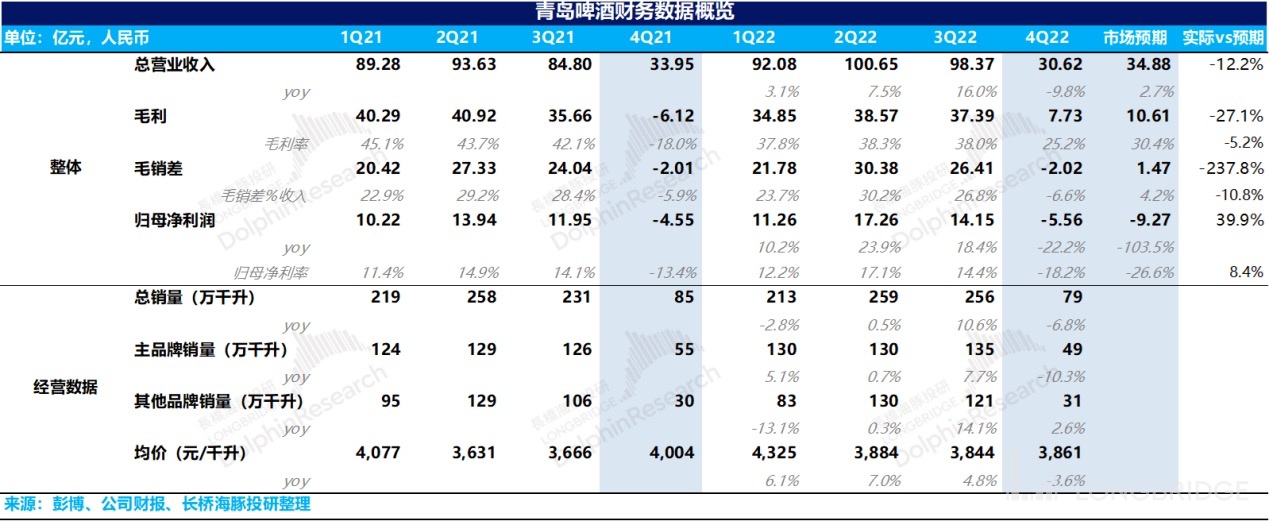
After the Hong Kong stock market closed on the evening of March 22nd Beijing time, Qingdao Beer Co., Ltd./Qingdao Beer (0168.HK/600600.SH) released its full-year performance for 2022. From an annual perspective, the revenue was slightly lower than the market expectation (a difference of 400 million yuan, -1.2%), while the net profit attributable to the parent company was higher than the market expectation (a difference of 260 million yuan, +7%).
At first glance, this result is not bad, the revenue is not weak, and the profit is quite impressive. However, a closer examination reveals that there are still many areas where "wind is leaking." The fourth-quarter profits last year relied mainly on cost savings, and there is still a certain gap compared to the "not-so-low season" expected by Dolphin.
The main points are as follows:
- Sales volume declined, and the high-end was even worse than the low-end in the fourth quarter: The beer industry has always been talking about the logic of high-end, and the sales and revenue of high-end products of almost all listed beer companies have been increasing. Qingdao Beer is also following this trend, but in the fourth quarter of this year, Qingdao Beer went in the opposite direction.
The decline in overall sales volume can be reasonably explained, after all, in December, the infection rate surged rapidly, and everyone was busy taking medicine, so drinking alcohol was put on hold. However, the difference in the growth rate of high-end and low-end sales is also quite obvious, which has affected the small single-digit decrease in the quarterly average price.
In addition to the impact of the epidemic, Dolphin believes that the biggest reason for this phenomenon is the sales structure in the fourth quarter of 21, where the sales volume of low-end products dropped faster, affecting the base. Coupled with the impact of December, the high-end sales volume in the fourth quarter of last year was indeed a bit low (the lowest since 2019, lower than 500,000 kiloliters in a single quarter).
Therefore, such results are presented comprehensively, but this does not mean that the logic of high-end has been destroyed. In fact, the industry still has expectations for high-end and price increases, which Dolphin will elaborate on later.
- Although cost improvement is not obvious, it is concentrated at the inflection point in the fourth quarter: Originally, Dolphin thought that the improvement of the full-year gross profit margin was not particularly significant, but upon careful calculation, there should have been considerable changes in the fourth quarter, but due to the small proportion of revenue, it had little impact on the whole year.
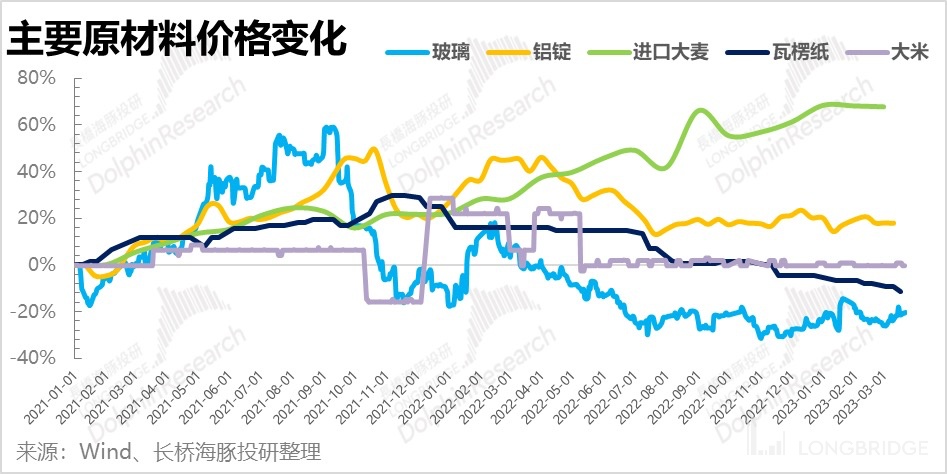
It was hoped earlier that after the raw material costs such as glass, aluminum ingots, and corrugated paper entered the price reduction range, cost reduction could be achieved. Under the background of high profitability, the change in gross profit margin may give greater elasticity to profits than sales growth (relatively stable and not very fast in growth rate).
However, in the early part of the year, several companies in the market interaction pointed out that although the cost of packaging materials has eased, the pressure on barley has returned (a large increase in imported barley). Therefore, the expectation for 23 is that the cost pressure will ease compared to last year.
It seems that the way to achieve an increase in gross profit margin should be through continuous price increases (or by increasing the proportion of high-end products, structurally increasing the average price), rather than absolute cost reduction (can only be said to be a relative decrease in cost rate). 3. Cost control: Profitability Improves. How did the company increase its profits? Since open source is difficult, the company can save money. With such a large scale, saving a few billion by cutting sales expenses and managing expenses will result in unexpectedly high net profits.
Dolphin's Overall View:
Overall, fourth quarter sales were mediocre, but the company's ability to save money throughout the year was extremely strong. In a tough environment, the company still managed to save excess profits.
Furthermore, when compared to the previous year, Tsingtao Brewery has actually shed a lot of baggage. Asset impairment has decreased, and although asset disposal gains have also decreased, these one-time projects are unrelated to operations and have actually improved overall operational efficiency. Due to expense optimization, the company has achieved an impressive net profit margin. Thriftiness is also an ability, and in difficult times, the market's recognition is still quite high.
This year, Dolphin is still looking forward to the optimization of gross profit margin. Against a backdrop of continued high-end development and cost optimization, Tsingtao Brewery's profit-making ability (gross profit margin) will likely continue to improve through a combination of factors, including a downward trend in costs (confirmed over 1-2 quarters) and a gradual increase in average price (which is foreseeable).
If you are interested in the financial report conference call management communication, Dolphin will subsequently share the minutes of the call via the Changqiao App community platform or investment research group. Interested users are welcome to add the assistant's WeChat "dolphinR123" to join the Changqiao Dolphin investment research group and receive it in real-time.
Detailed Interpretation of the Financial Report:
I. Poor performance in Q4, profitability driven by cost savings
Full-year revenue was RMB 37.2 billion, an increase of 6.6%, with a net profit attributable to the parent of RMB 3.7 billion, an increase of 17.6%, and a much faster growth rate than revenue. Overall, it can be considered a good achievement for the entire year, but the main contribution was achieved in the first three quarters.
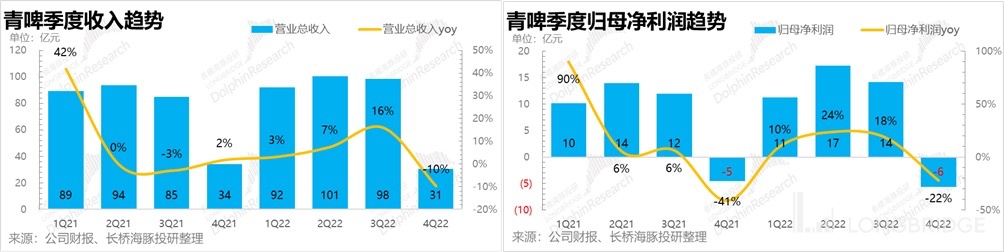
Marginally speaking, the operating conditions in Q4 of last year were not very good. First of all, revenue was only just over RMB 3 billion, a 10% decrease from a single quarter. The fourth quarter is traditionally a slow season, and sales volume and revenue are far from comparable to the first three quarters. However, certain rigid costs (such as depreciation, amortization and worker wages) as well as basic expenses are fixed and have little elasticity, hence there are cases where expenses exceed income in Q4.
Under such conditions, if revenue drops again, the performance of net profit will become even more unsightly. If it weren't for the cost savings this period, the net profit attributable to parent's performance would have been even worse. The performance of Tsingtao Brewery is better than market expectation, mainly due to the greater than expected reduction in costs.
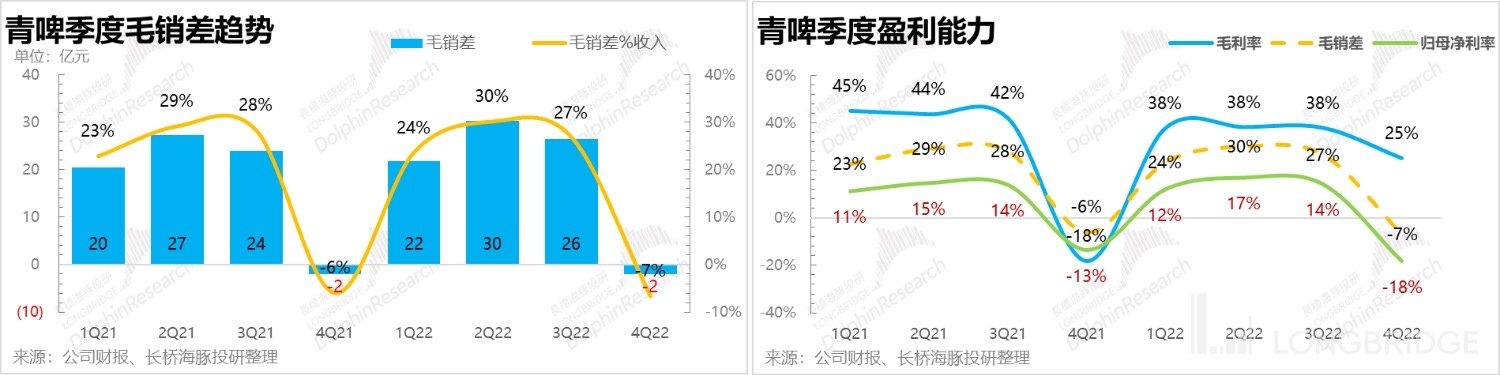
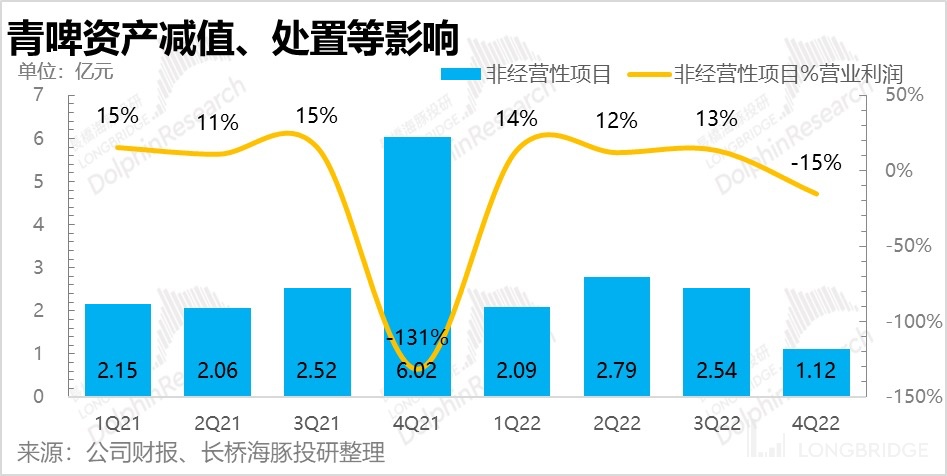
In terms of profitability, overall, there was a slight improvement compared with the previous year, and there was also improvement in the fourth quarter. However, there was a large asset disposal gain (nearly RMB 600 million) in the single fourth quarter of 2021, coupled with impairment losses of nearly RMB 200 million which was not present last year. As a result, the net profit margin attributable to shareholders of Tsingtao Brewery may appear to have declined. However, from the perspective of non-recurring items, the non-recurring net profit margin for the full year increased by 2.7 percentage points to nearly 10%, and the non-recurring net profit attributable to shareholders increased by 45%.
Secondly, the sales volume has reached a bottleneck and the average price is affected by its structure.
The growth trend of the first two quarters was not continued and the sales growth rate of the single fourth quarter of last year had a small problem. Not only did the overall sales decline by 7%, but the main source of the decline was high-end products, whose sales fell by 11%. Even due to the changing structure, the average price of the single fourth quarter also slightly declined.
However, I don’t think the problem is big at the moment. The performance of a single quarter does not mean that the trend of high-end will end. In addition, the volume of the fourth quarter itself is very small, and there will be some disturbances in the calculation.
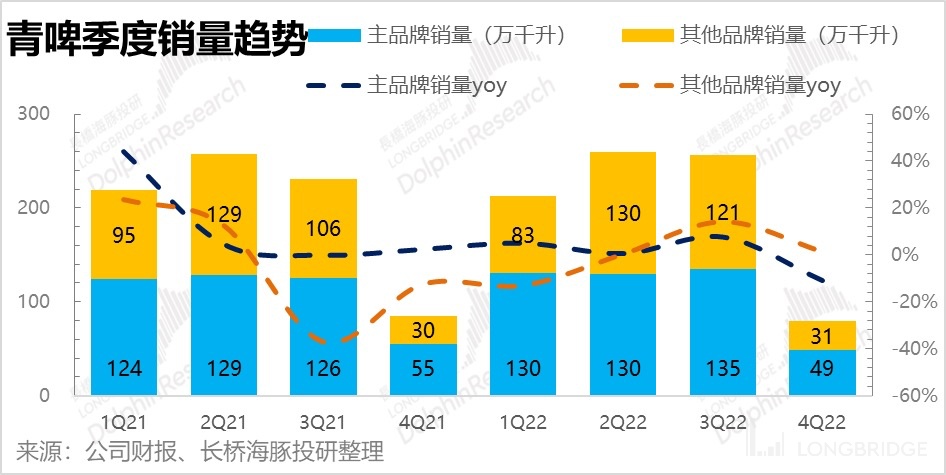
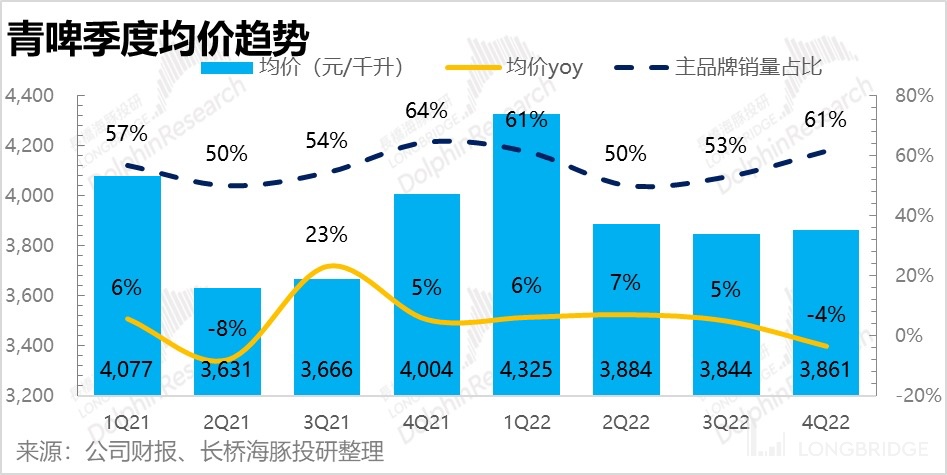
Looking at the whole year, the proportion of premium beer in Tsingtao Brewery continues to rise (from 54.6% to 55.0% for the whole year), although the increase is relatively small. Moreover, in terms of market share, Tsingtao Brewery has also maintained its upward trend. Last year, the industry output increased only by 1%, hovering at the level of 35-36 million hectoliters.
Dolphin Jun has also mentioned in the earlier industry review of beer, "Tsingtao Beer and Heineken Beer: Beer ‘Old Guns’ Transform into Consumer ‘Mainstream’”, the beer industry has gone through several years of acquisition and continuous cleaning up of production capacity. In recent years, it has stabilized. In the future, there will not be much change in terms of volume growth, and more growth will depend on the increase in average price (price increase or increase in the proportion of high-end products).
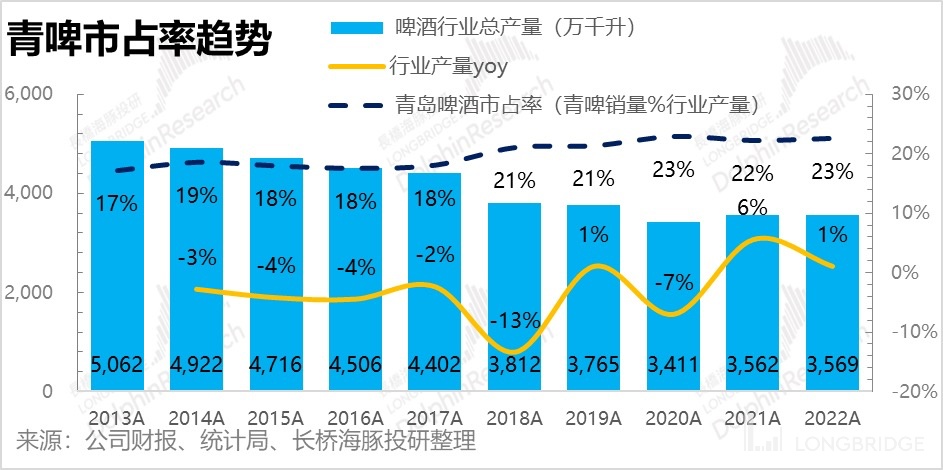
Therefore, looking forward, Dolphin Jun believes that the most probable path would be: 1) Short-term view, sales will have a small surge
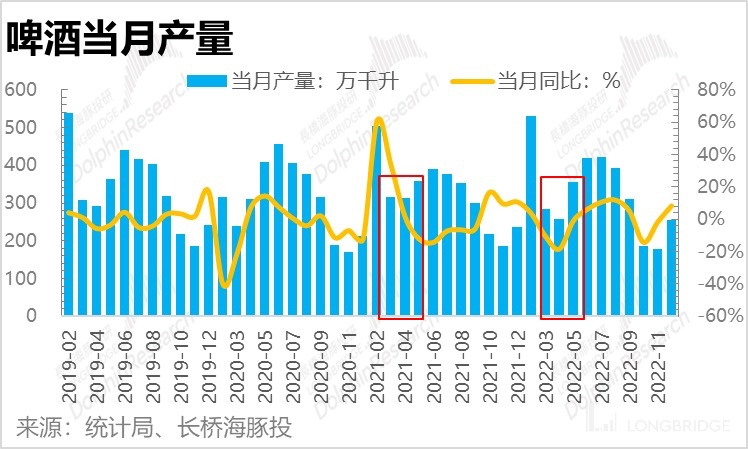
Last year, many regions implemented grid management in the second and third quarters, leading to a relatively low base for beer production and sales in March to May **. Against the backdrop of a relatively stable base, the YoY change in sales (or production) is more likely based on the same period last year. The next quarter is favorable for the beer industry. Furthermore, some beer brands have achieved double-digit sales growth in January and February.
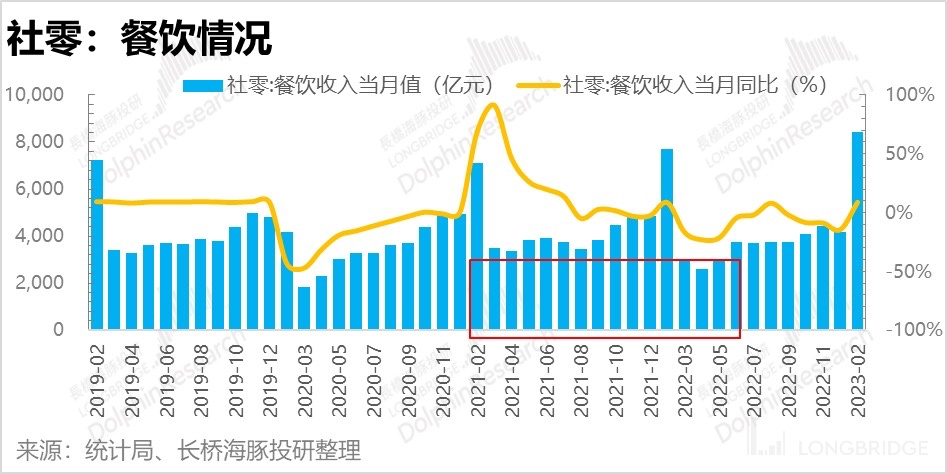
It can also be seen that the overall catering industry was greatly affected last year, with the proportion of on-premise consumption dropping from 60% in 2019 directly to 40% last year. With the recovery of the catering industry in the present and future three quarters, on-premise consumption channels (with a higher average price than non-on-premise consumption) can make a good contribution.
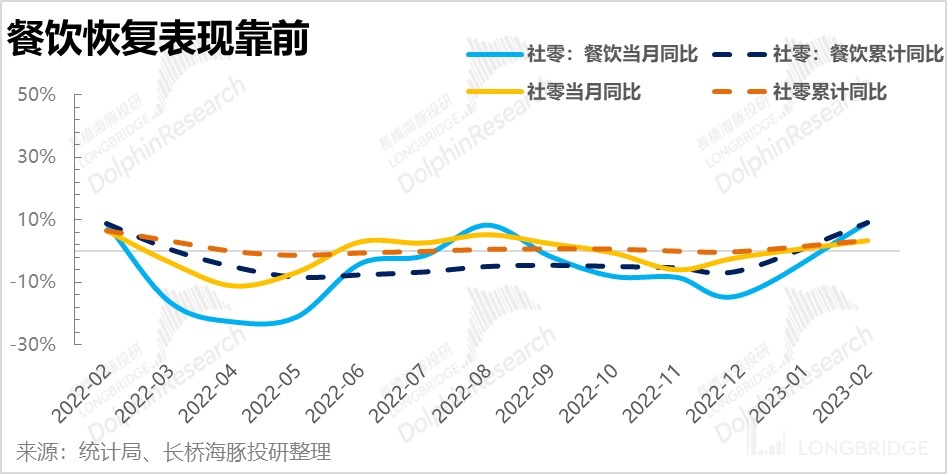
Just one point to note, last year was a hot summer, so sales in June to August skyrocketed very fast, which may put some pressure on sales in the third quarter.
2) There is room for average price increase in the long term
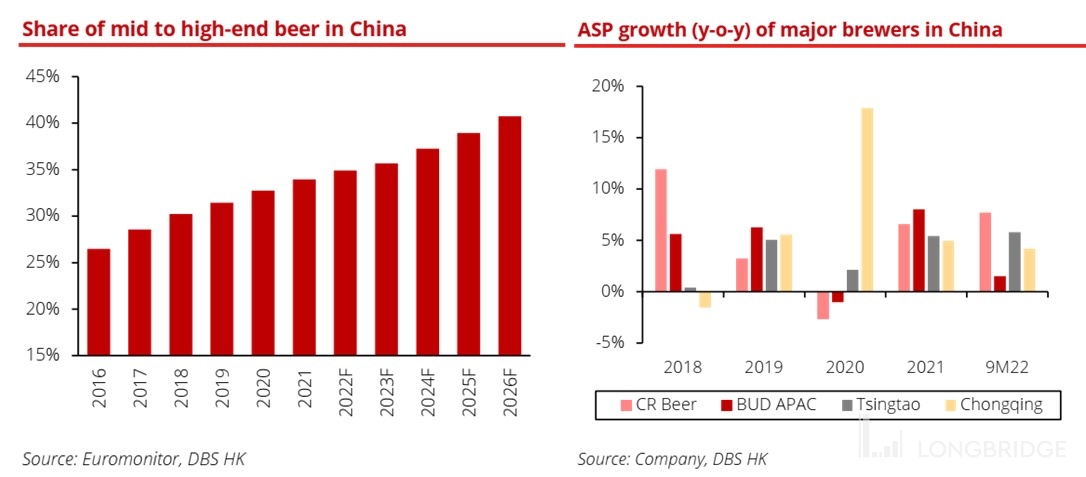
Both the trend of the high-end market share increase and the ASP increase trend have been evident in various major brands in the past few years in the domestic market. And this trend has not been broken so far.
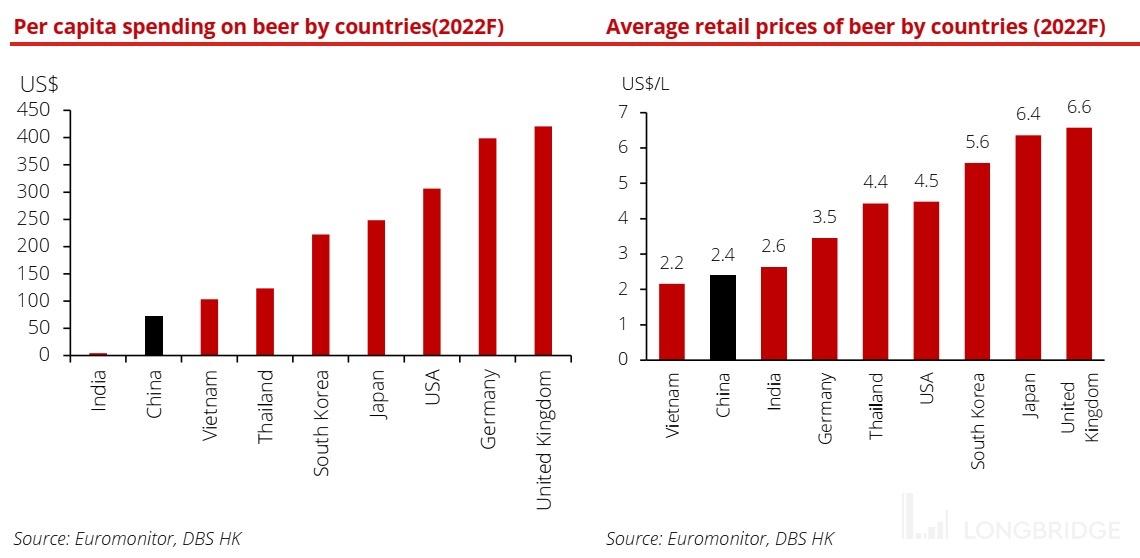
On the one hand, the average per capita consumption of beer in China is still not high, and on the other hand, the average price in China is only half of that in Japan and Western countries. In the long run, there is still great potential for the average price of beer to increase in China.
3) High-end products perform better throughout the year
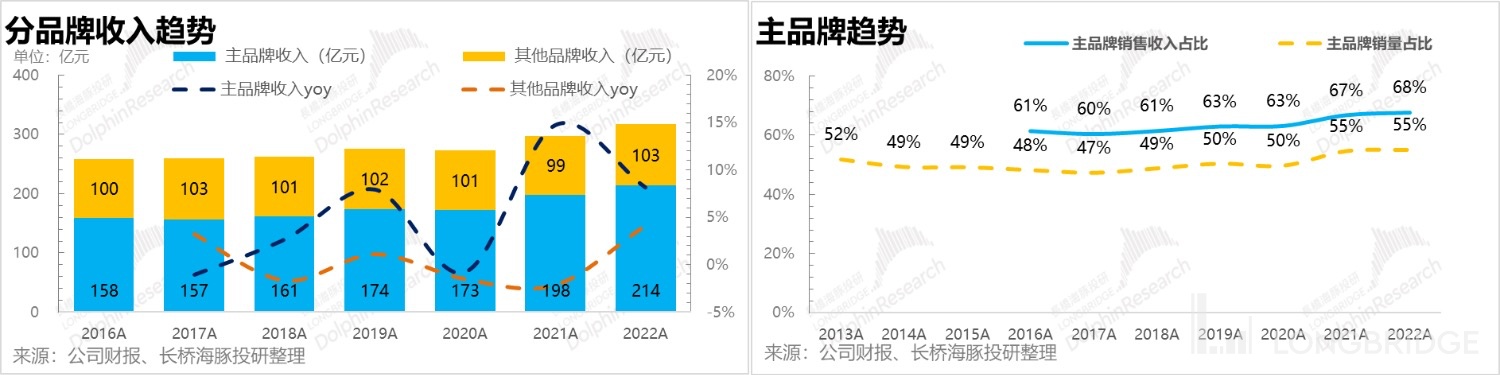
Earlier we mentioned that high-end products may encounter some small bottlenecks in the fourth quarter. However, from the perspective of the whole year, high-end products still perform better.
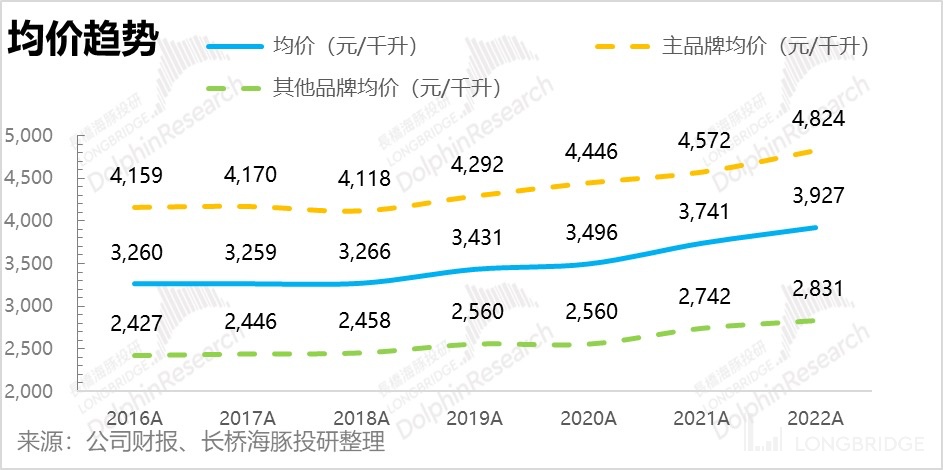
From the perspective of product distributions, although the proportion of high-end sales is not significantly improved, the average price is steadily increasing. This also confirms what we mentioned earlier, that from a medium-to-long-term perspective, either direct price increase (coarse, with uncertain effects), or structural optimization (with a relatively easy improvement in high-end product sales proportion) can be used to achieve the same goal. Pulling the overall price growth trend together.
The improvement in structure also has a larger role in improving gross margin. The cost difference between high-end and low-end beer is not large, but the difference in average price close to 2,000 yuan (per 1,000 liters) directly leads to a huge gap in gross margin between the two products (refer to "Tsingtao, Chongqing Brewery: Beer Old Gun Turned into Consumer Mainstream").
IV. Cost: Slight Changes Need Time to Confirm
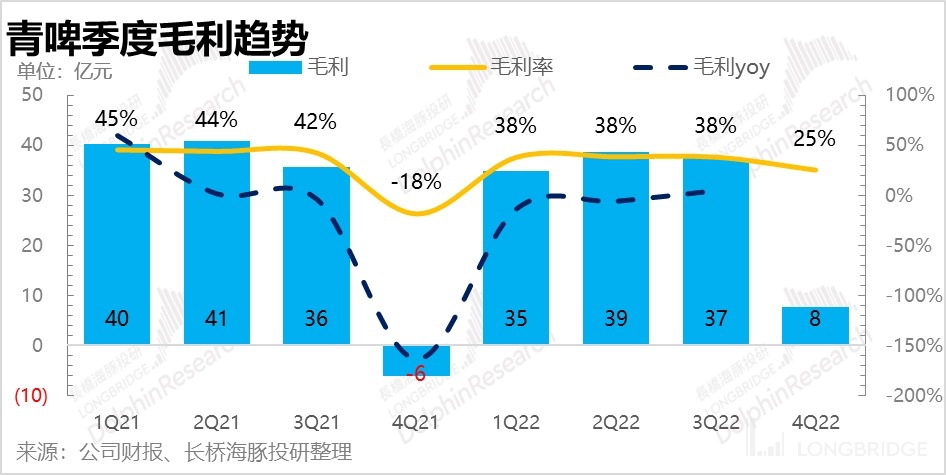
The change in cost is actually the issue that Dolphin cares about most, because in the scenario where sales volume does not improve significantly and growth is mainly driven by average price, especially in the context of the year 23, which happens to be a time point of cost change, the improvement of gross margin actually has a greater impact on profit elasticity (for scenarios with low profit margin levels).
And precisely because of the freight classification adjustment in 2021, which was adjusted from sales expenses to cost, the year-on-year comparison will not be very clear. Tsingtao's adjustment started in the fourth quarter of 21, so the caliber difference produced was not retrospective, but directly pushed the difference in amount to the fourth quarter.
Therefore, the situation of negative sales expenses and a large drop in gross profit margin in the fourth quarter occurred. Such an operation has no impact on the annual performance but will interfere with our understanding of the changes between quarters, especially when the change is very small.
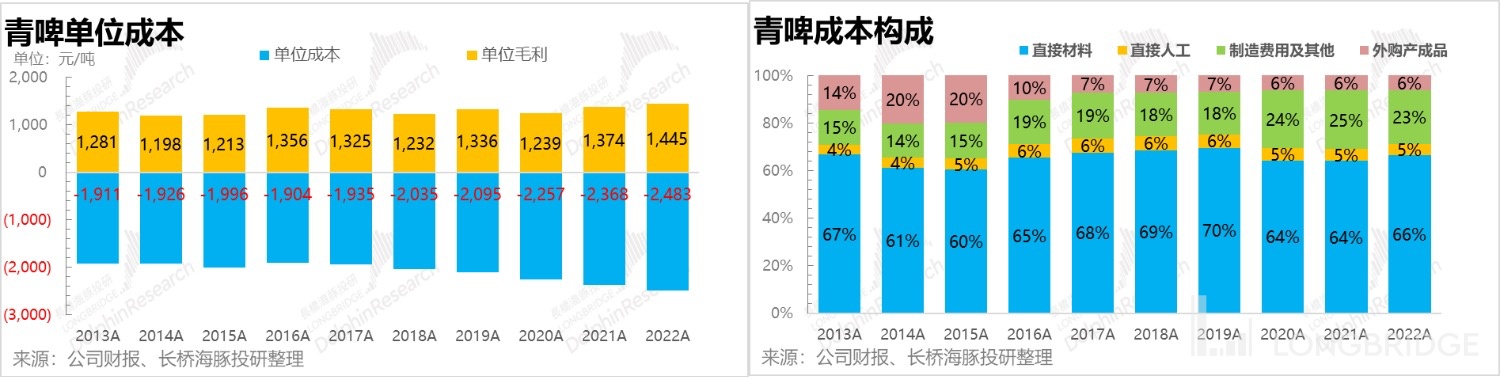
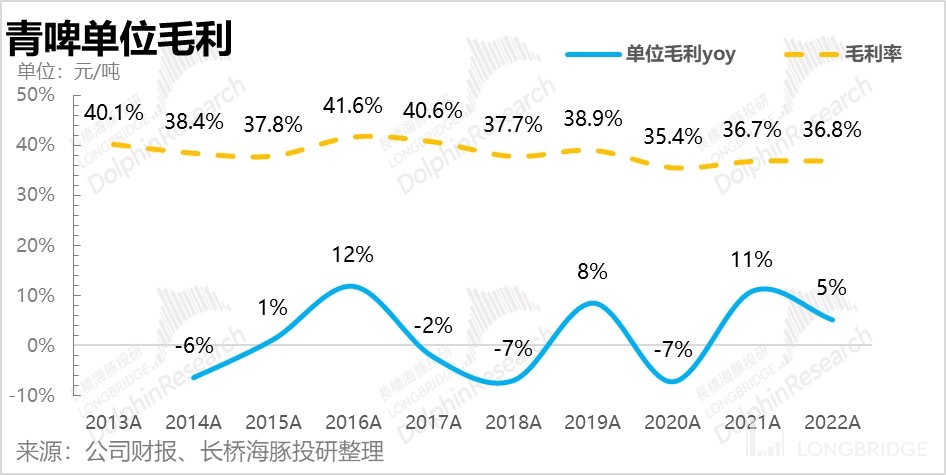
Based on the breakdown of cost details, there is still a very small change in gross margin, and unit gross profit is also increasing. And this slight change, Dolphin believes that it is basically caused by the improvement in the fourth quarter (even if the freight is restored in the first three quarters, the impact on gross profit margin is still under certain pressure). However, this view still needs to be confirmed in the first and second quarters of this year. Because new factors have changed, although the downward trend of packaging material costs is very obvious, the increase in barley (import) is quite surprising.
 V. Changes in Operating Expenses
Due to significant impairment and disposals of assets in the previous quarters, operating profit was unable to fully reflect the company's profitability.
However, from the perspective of core profit (taking into account only cost, sales, management, and R&D expenses), the company's profitability was actually enhanced due to the convergence of sales and management expense ratios. Therefore, even though revenue declined in the fourth quarter, the company really did spend less and lose less.
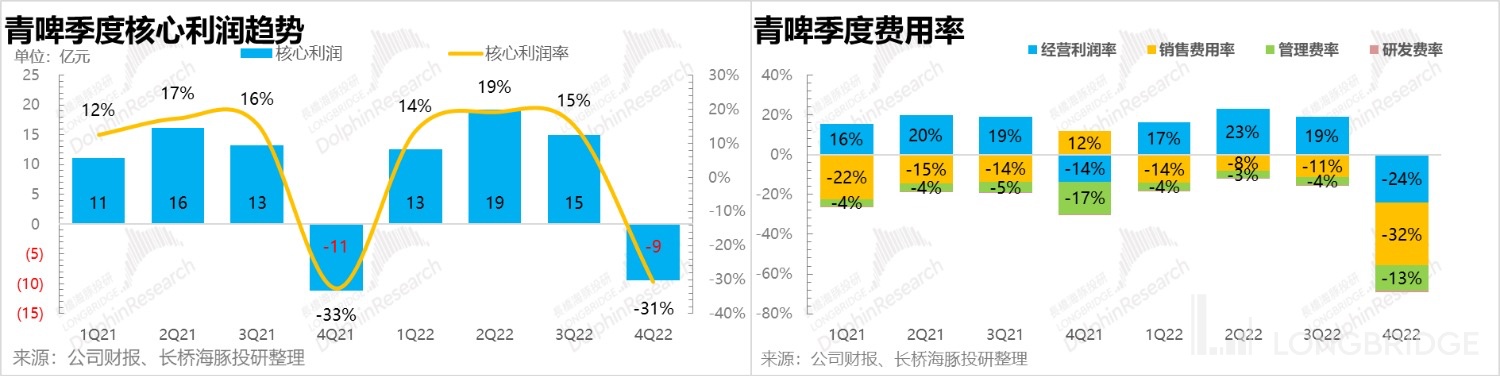
Overall, while Q4 sales were not ideal, they were offset by various cost controls, and there were hints of a slight improvement trend in costs. Considering Tsingtao Brewery's current valuation and future development potential, it is still worth looking forward to.
Historical Articles of Changqiao Dolphin "Tsingtao Brewery Co., Ltd."
Earnings season:
October 27, 2022: "Tsingtao Brewery: Relying on Heaven or anything else? The fourth quarter may not be cool either" August 31, 2022: "Tsingtao Brewery: Continuous High-end Development" August 26, 2022: "Tsingtao Brewery Strikes Back: Price Hike is the Way to Go" April 28, 2022: "Tsingtao Brewery: Ton Price Continues to Rise, Cost Pressure Easing" October 28, 2021: "Tsingtao Brewery: Slowing Sales Is a Fact, High-end Breakthrough Efforts Still Needed"
In-depth analysis:
February 10, 2022: "Tsingtao Brewery (Part 2): Valuation of Tsingtao Brewery After Fosun Reduces Shareholding?" On January 25, 2022, "[Qingdao Beer (Part 1): Unlocking the high-end market, will beer's "Maotai-ification" be a fleeting trend or a destined fate?"(https://longbridgeapp.com/topics/1870808)" was published.
Risk disclosure and statement for this article: "Dolphin Investment Research Disclaimer and General Disclosure"(https://support.longbridge.global/topics/misc/dolphin-disclaimer)
The copyright of this article belongs to the original author/organization.
The views expressed herein are solely those of the author and do not reflect the stance of the platform. The content is intended for investment reference purposes only and shall not be considered as investment advice. Please contact us if you have any questions or suggestions regarding the content services provided by the platform.
