


Aesthetic restoration + biocompatibility dual-wheel drive: Zirconia dental implants continue to rise with a 6.6% CAGR
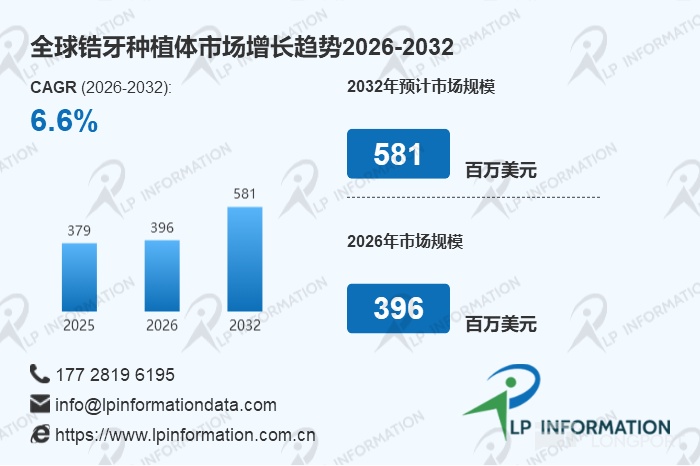
According to preliminary research data from LP Information, the global zirconia dental implant market size was approximately $379 million in 2025 and is projected to reach $581 million by 2032, with a Compound Annual Growth Rate (CAGR) of 6.6% during the 2026-2032 period. Driven by an aging global population, rising awareness of oral health, and increasing demand for high-end dental treatments, zirconia dental implants are gradually entering more clinical application scenarios as an important supplementary technological route to traditional titanium implants. In 2025, the global production volume of zirconia dental implants was approximately 1.6 million units, with an industry average gross margin of about 78%. The relatively high technical barriers and product added value have made it an important niche segment in the field of oral medical devices.
Zirconia dental implants are primarily made of zirconia (Zirconia) ceramic material and serve as bio-ceramic medical devices used to replace missing tooth roots. Compared to traditional titanium metal implants, zirconia implants offer non-metallic properties, a color close to natural teeth, outstanding aesthetic effects, good biocompatibility, and corrosion resistance. They are particularly suitable for anterior aesthetic restorations, patients with thin gingiva, and those at higher risk of metal sensitivity. As oral implant treatment evolves from "functional restoration" to "aesthetic restoration + long-term health management," zirconia dental implants are becoming a key growth direction in the high-end implant market.
I. Industry Chain Analysis: Upstream Materials and Manufacturing Technology Determine Product Competitiveness
The zirconia dental implant industry chain mainly consists of three segments: upstream raw material supply, midstream product manufacturing, and downstream medical service applications. The upstream sector mainly involves suppliers of high-purity zirconia powder, stabilizer materials (such as yttria), ceramic processing equipment, precision grinding tools, and surface treatment materials. Among these, the purity of zirconia powder, crystal structure stability, and sintering process directly affect the strength, toughness, and long-term reliability of the implants, forming a crucial foundation for determining product performance.
The midstream segment comprises R&D and production enterprises of zirconia dental implants. These companies need to complete processes such as material formula optimization, structural design, precision machining, surface treatment, quality inspection, and medical certification. Since zirconia belongs to high-performance engineering ceramics, its processing involves complex sintering control, dimensional accuracy management, and defect control, resulting in high manufacturing barriers. Leading enterprises are enhancing clinical adaptability through digital design, Computer-Aided Design/Manufacturing (CAD/CAM), surface microstructure treatment, and personalized customization technologies.
The downstream segment mainly includes dental hospitals, professional dental clinics, aesthetic restoration centers, and digital oral medical institutions. With the popularization of oral implant technology and improved patient purchasing power, terminal medical institutions continue to increase their demand for high-aesthetic and high-reliability implant materials, further driving the expansion of the zirconia dental implant market.
II. Industry Dynamics: Zirconia Dental Implants Expanding from High-End Products to Clinical Applications
In recent years, the global oral implant industry has been undergoing a stage of material upgrades and technological integration. Traditional titanium implants still dominate the market due to their mature clinical application experience. However, rising patient demands for non-metallic, biologically friendly, and aesthetically pleasing options have continuously increased attention on zirconia implants.
Industry technological development focuses mainly on three directions: First, material performance optimization, improving long-term stability by enhancing the toughness and fatigue resistance of zirconia ceramics; Second, implant structural innovation, improving clinical success rates by optimizing thread design, surface treatment, and osseointegration performance; Third, digital integration, achieving more precise personalized treatment plans through oral scanning, digital implant planning, and smart manufacturing.
Currently, the European and American markets remain regions where zirconia dental implant applications are most mature, with some high-end dental institutions offering ceramic implants as specialized treatment options. Meanwhile, Asian markets such as China, Japan, and South Korea are also emerging as important growth areas for the industry, driven by the upgrading of oral healthcare consumption.
III. Market Growth Drivers: Aging Population, Aesthetic Demands, and Digital Dentistry Jointly Promote Industry Development
The trend of global population aging is a significant factor driving the growth of the zirconia dental implant market. As the proportion of the elderly population increases, the demand for tooth replacement, periodontal disease treatment, and oral functional restoration continues to rise, providing a long-term growth foundation for the dental implant market. Simultaneously, younger consumer groups' heightened attention to dental aesthetics, natural results, and healthy materials is also driving up the demand for high-end implant materials.
Aesthetic demand has become one of the core drivers for the development of zirconia dental implants. Compared to metal implants, zirconia's color is closer to that of natural teeth, reducing the risk of metal show-through in areas with thinner gums, making it popular in the high-end cosmetic dentistry market. Additionally, some patients have psychological concerns regarding metal materials, and non-metallic ceramic implant solutions can meet their needs for biological safety.
The development of digital oral technology is further promoting industry upgrades. Digital impressions, 3D oral scanning, AI-assisted design, and precision implantation technologies enable zirconia dental implants to better integrate into digital oral treatment workflows, improving doctors' operational efficiency and patients' treatment experiences.
IV. Industry Development Opportunities: High-End Medical Consumption Upgrading and Domestic Substitution Create Growth Space
The future development opportunities for the zirconia dental implant industry mainly stem from the expansion of the high-end oral healthcare market, the integration of digital healthcare, and growing demand in emerging markets.
First, the upgrading of high-end oral healthcare consumption will drive increased patient acceptance of high-quality implant solutions. With rising income levels and changing concepts of health consumption, patients' focus on dental implants is gradually shifting from price to safety, aesthetics, and long-term effects, creating market space for high-value-added zirconia dental implants.
Second, the construction of a digital oral ecosystem will accelerate the application of ceramic implant technologies. In the future, zirconia dental implants are expected to integrate with digital design platforms, intelligent processing equipment, and personalized restoration systems, achieving more precise and efficient treatment processes.
Furthermore, oral healthcare markets in Asia, Latin America, and parts of the Middle East are still in a rapid development phase. With improvements in medical infrastructure, enhanced dental service capabilities, and increased patient awareness, these regions are expected to become sources of new market growth in the future.
V. Competitive Landscape: International Brands Dominate the High-End Market, Local Enterprises Accelerate Layout
The global zirconia dental implant market currently exhibits a high degree of concentration, with European and American enterprises holding leading positions due to long-term clinical accumulation, brand influence, and doctor training systems.
Major international players include Straumann, Dentsply Sirona, Envista Holdings, ZimVie, as well as companies specializing in the ceramic implant field such as Z-Systems, Swiss Dental Solutions, and Zeramex. These enterprises form competitive advantages through material R&D, clinical data accumulation, doctor education systems, and global sales networks.
Meanwhile, Chinese enterprises are accelerating their entry into the ceramic implant field, enhancing market competitiveness through material R&D, production process optimization, and cost control. Future industry competition will not only be reflected in product performance but will also concentrate on clinical validation, doctor recognition, channel construction, and digital solution capabilities.
VI. Industry Development Challenges: Clinical Validation, Cost Control, and Market Education Remain Key Factors
Despite its clear advantages, the development of the zirconia dental implant industry still faces certain challenges. First, zirconia is a high-performance ceramic material with higher manufacturing difficulties compared to metal materials, requiring stringent standards for production equipment, process control, and quality management, which leads to higher product costs.
Second, compared to titanium implants, large-scale long-term clinical data for zirconia dental implants still needs further accumulation. Some dental doctors maintain a cautious attitude towards their indications, long-term stability, and application in complex cases, necessitating more clinical research and professional training to promote market acceptance.
Additionally, price factors are also important influences on market penetration. Currently, zirconia dental implants are mainly positioned in the mid-to-high-end market, with relatively limited promotion speed in price-sensitive regions. Enterprises need to reduce costs and improve market penetration through scaled production, supply chain optimization, and domestic substitution.
VII. Future Development Trends: Material Innovation and Precision Medicine Drive Continuous Industry Upgrades
From a long-term development perspective, the zirconia dental implant market will move towards high-performance materials, multi-functional designs, and digital integration. Future enterprises will continue to optimize the zirconia material system, improving fracture resistance and long-term stability, while developing personalized implant solutions that better meet the needs of different patients.
With the development of artificial intelligence, digital manufacturing, and precision medicine technologies, zirconia dental implants are expected to further integrate into the digital oral ecosystem, achieving intelligent management throughout the entire process from diagnosis, design, and manufacturing to treatment.
Overall, although zirconia dental implants remain a niche segment within a market dominated by traditional titanium implants, their market potential is gradually being released thanks to aesthetic advantages, biocompatibility, and trends in high-end medical consumption. In the future, with technological maturity, improved clinical evidence, and increased patient acceptance, zirconia dental implants will occupy a more important position in the global oral implant market.
The copyright of this article belongs to the original author/organization.
The views expressed herein are solely those of the author and do not reflect the stance of the platform. The content is intended for investment reference purposes only and shall not be considered as investment advice. Please contact us if you have any questions or suggestions regarding the content services provided by the platform.
