


SpaceX: Is Starlink About to Be Unstoppable?
As we noted in our prior piece ‘From Daydream to Big Money: Is SpaceX Really Sci‑Fi?’, Starlink has quietly taken the baton to become the absolute core of $SpaceX(SPCX.US) growth and profit. It is even the key cash engine financing its expansive AI agenda.
Starlink is far more than a connectivity segment; it is the foundational stack underpinning SpaceX’s long‑term ambitions. Without Starlink, SpaceX’s valuation would revert to a rocket manufacturing and launch archetype. And without Starlink’s steady cash flow, there would be no funding base for Starship’s cash burn or AI’s heavy capex.
So how was this ‘super cash cow’ built? In this report, we pivot back to fundamentals to dissect this space‑network asset that has achieved a full commercial loop and a dominant market position. Dolphin Research addresses four core questions on Starlink:
1) Why has Starlink proven out its biz. model and become a stable profit contributor? 2) Satellite mobile network vs. telcos: can it take them head‑on? 3) As a network operator, what advantages does Starlink have vs. peers? 4) Where are Starlink’s moats and barriers to entry?
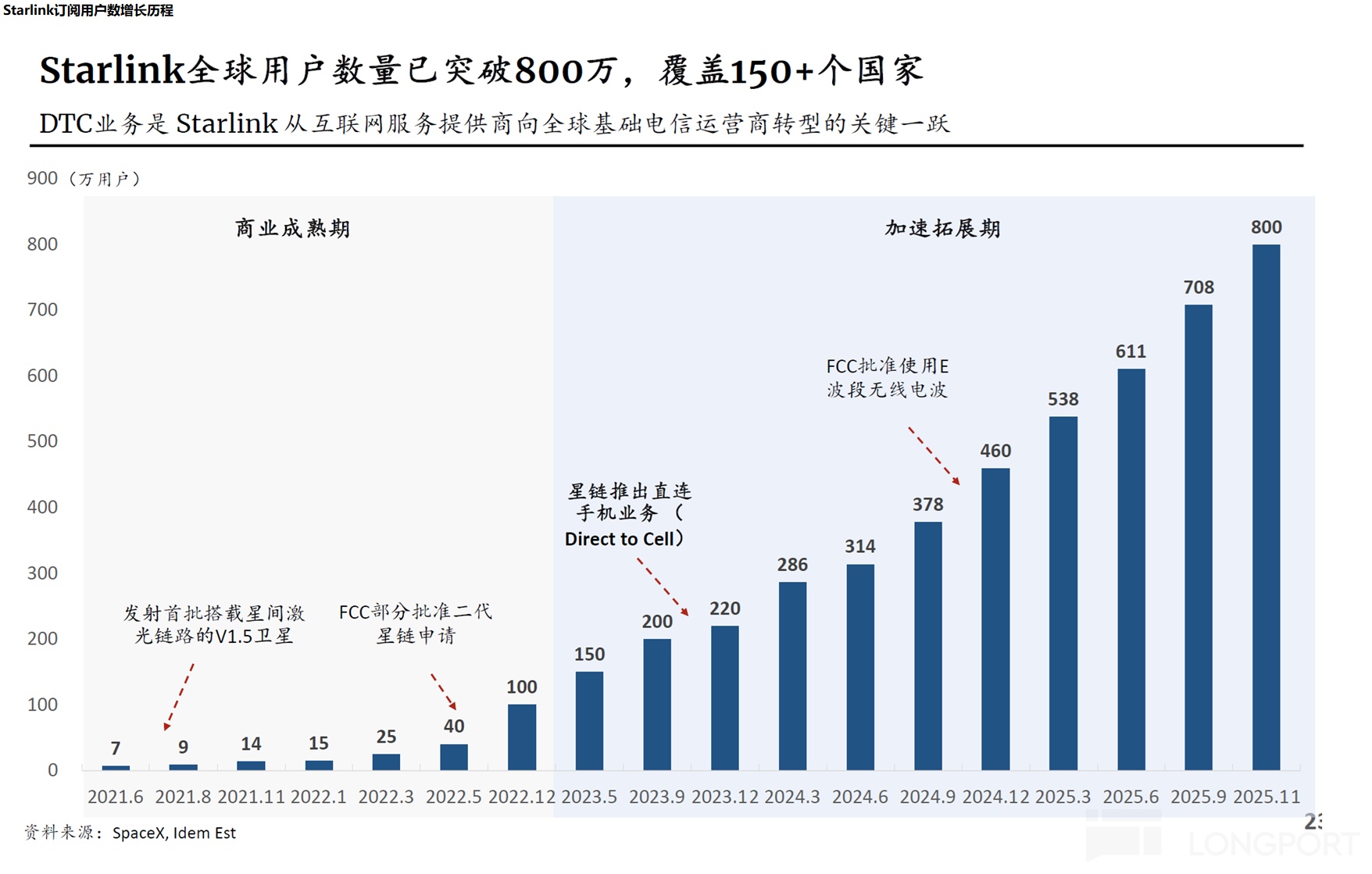
I. How did Starlink make the space‑comms model work?
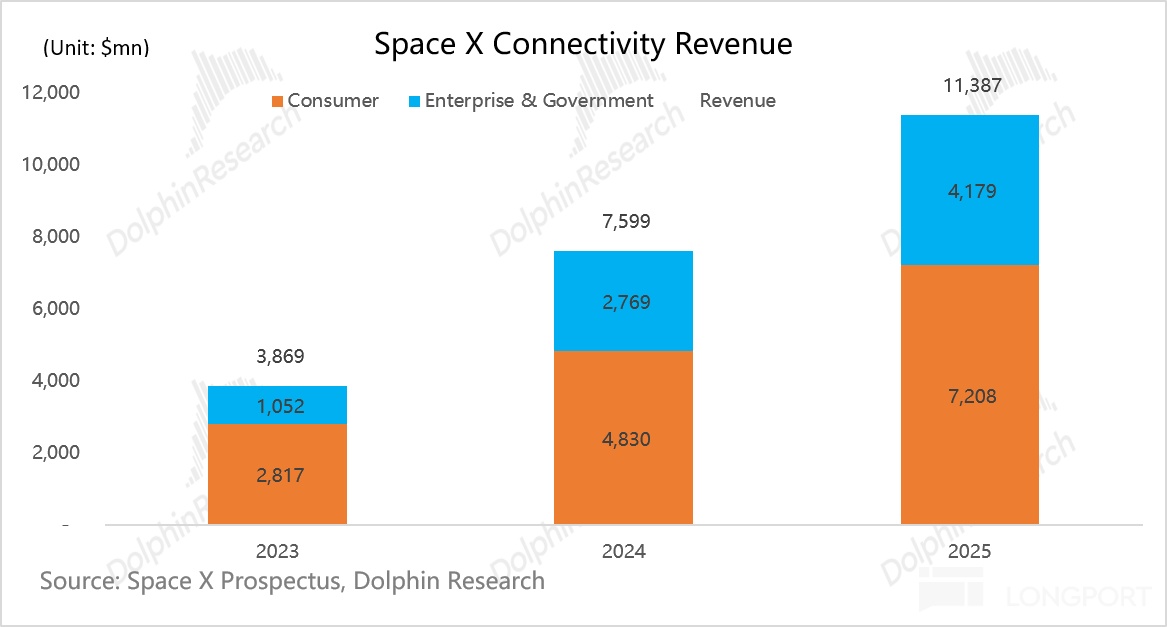
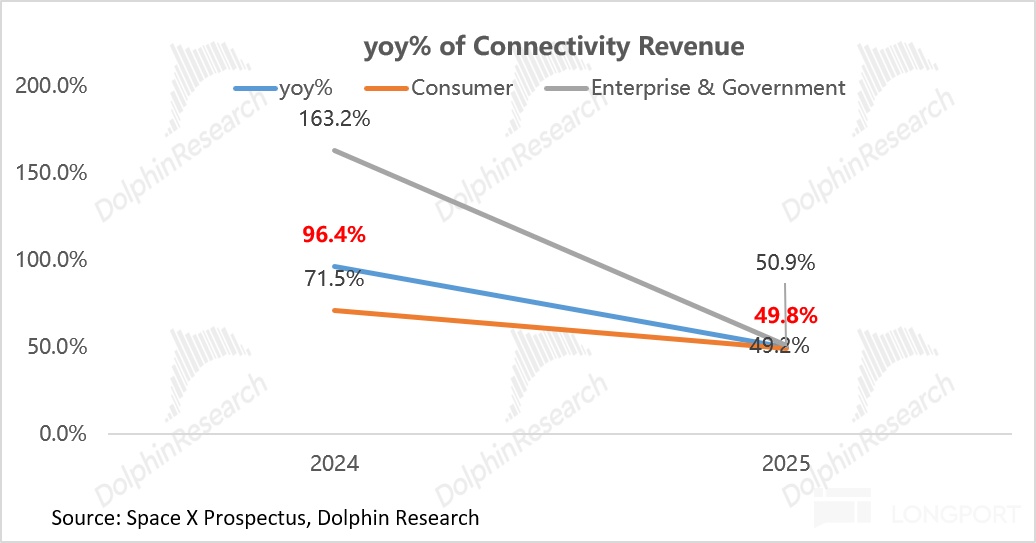
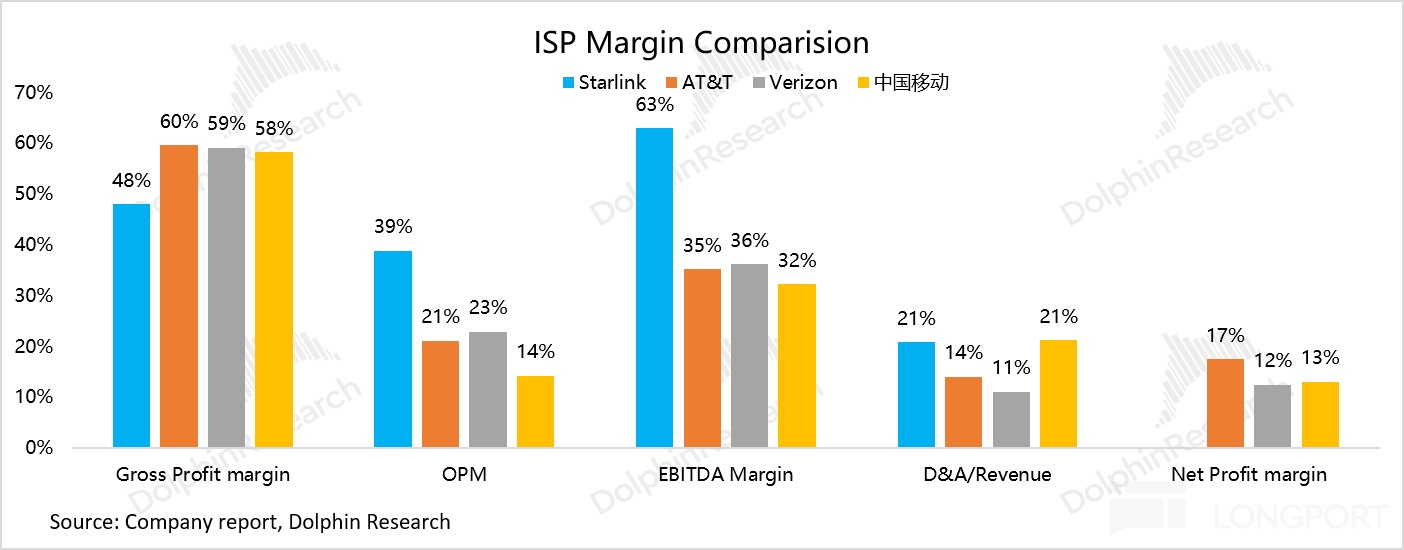
Starlink is the core pillar of SpaceX’s leap from a ‘launch provider’ to a ‘global connectivity and compute operator’. From 2023 to 2025, Starlink revenue surged from approx. $3.9bn to $11.3bn, a 2‑yr CAGR >70%. OP swung from breakeven to approx. $4.4bn, with OPM nearing 40%.
SpaceX delivered nonlinear growth in both revenue and profit by closing the loop of a LEO constellation disrupting legacy GEO satellites and ground networks. This unlocked a self‑reinforcing flywheel: cheaper launch → faster constellation build‑out → user growth → profit reinvestment → rocket iteration.
1) Satellite comms: SpaceX’s LEO delivers a step‑change
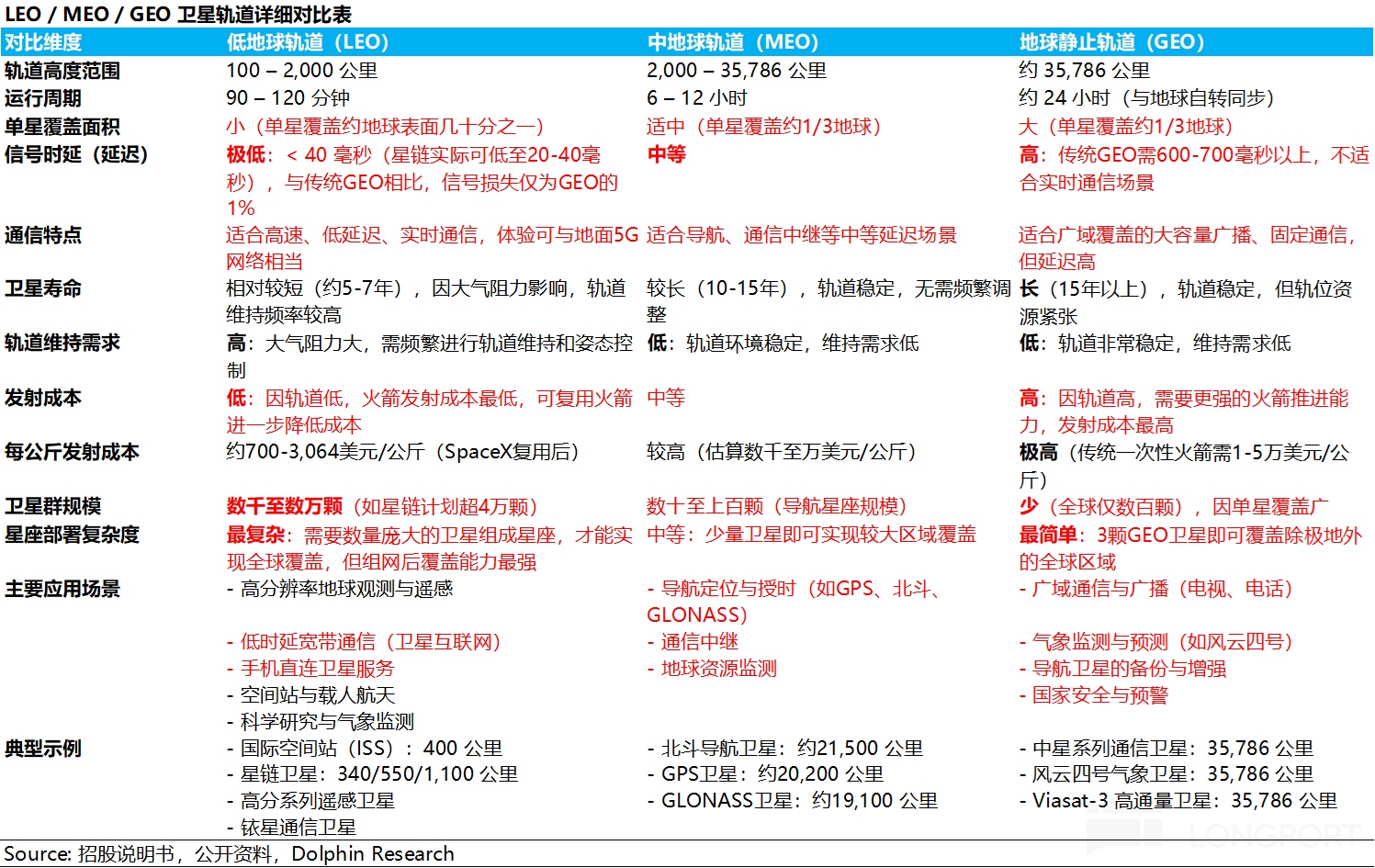
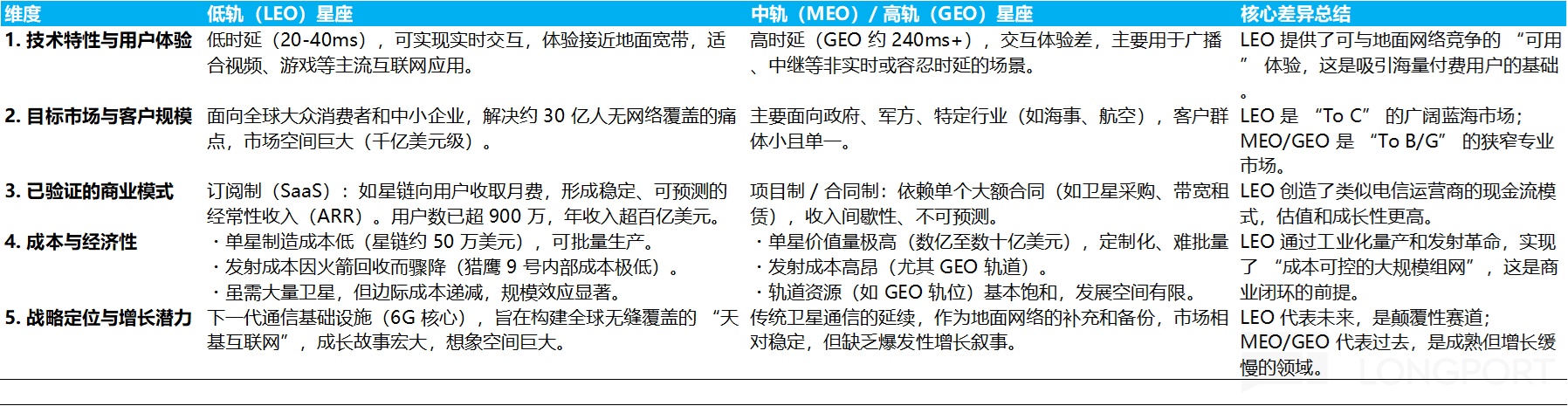
Legacy satellite internet relies on GEO birds in geostationary orbit at 36k km, which suffer high latency (practical RTT >600ms) and weak throughput. Modern use cases like streaming and cloud collaboration simply do not work.
How does SpaceX solve this?
a. LEO vs. GEO: fix latency
Starlink uses LEO satellites at roughly 550 km. The lower altitude cuts latency to a fraction of GEO, making user experience closer to fiber on delay.
b. Constellation: fix coverage
Each LEO satellite overflies a location for only minutes, so broad coverage requires a dense constellation. Here SpaceX leverages its low‑cost launch to assemble a massive network at scale.
c. Satellite manufacturing: assembly‑line cost down
GEO satellites are largely hand‑built and cost hundreds of millions each. By adopting auto‑style mass production, SpaceX has pushed LEO unit cost down to about $0.5mn.
2) Customer scenarios: deliberate mis‑positioning
Starlink avoids head‑to‑head fights with telcos in dense cities where satellites are inferior on cost, bandwidth, and indoor coverage. It targets areas beyond ground coverage or with negative ROI for fiber build‑out: remote rural, maritime, aviation, and developing markets. This strategy unlocks three major scenario verticals.
a. Consumer broadband: harvest telcos’ ‘dead zones’
Even in the AI era, c.3bn people remain offline, 90% in rural or complex terrains. For telcos, fiber and upkeep across sparse geographies are uneconomic and long‑term ROI‑negative.
Starlink’s LEO constellation offers the only technically and economically viable path to global, high‑throughput coverage at scale. It captures the ground operators’ economic white spaces.
Technically, satellite broadband uses high bands like Ku/Ka. These short‑wavelength signals carry lots of data but have poor penetration and attenuate with foliage, walls, and rain.
So Starlink users need a ground terminal (a phased‑array flat panel) to capture and steer the passing satellite beams. A phone’s tiny antenna cannot do this job.
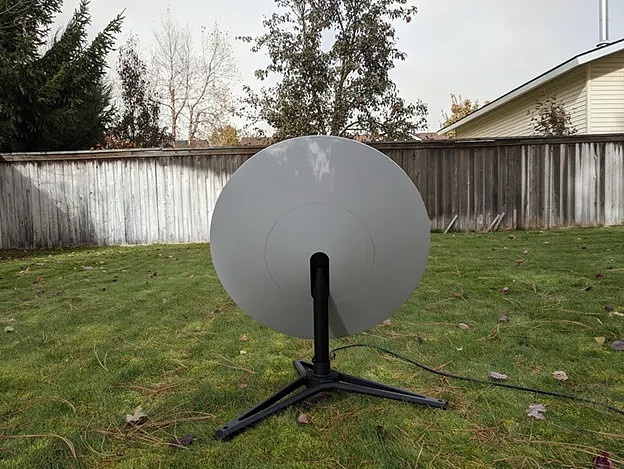
Compared with last‑mile fiber, setup is still simple: plug‑and‑play and no pro install required. Place the dish with a clear sky view, power it, and connect a router.
The dish retails around $500 with a design life near 10 years. Early BOM exceeded $3,000, but by reworking the supply chain with ST, MediaTek, and Micron, SpaceX cut the terminal cost to the low hundreds. Hardware is roughly breakeven.
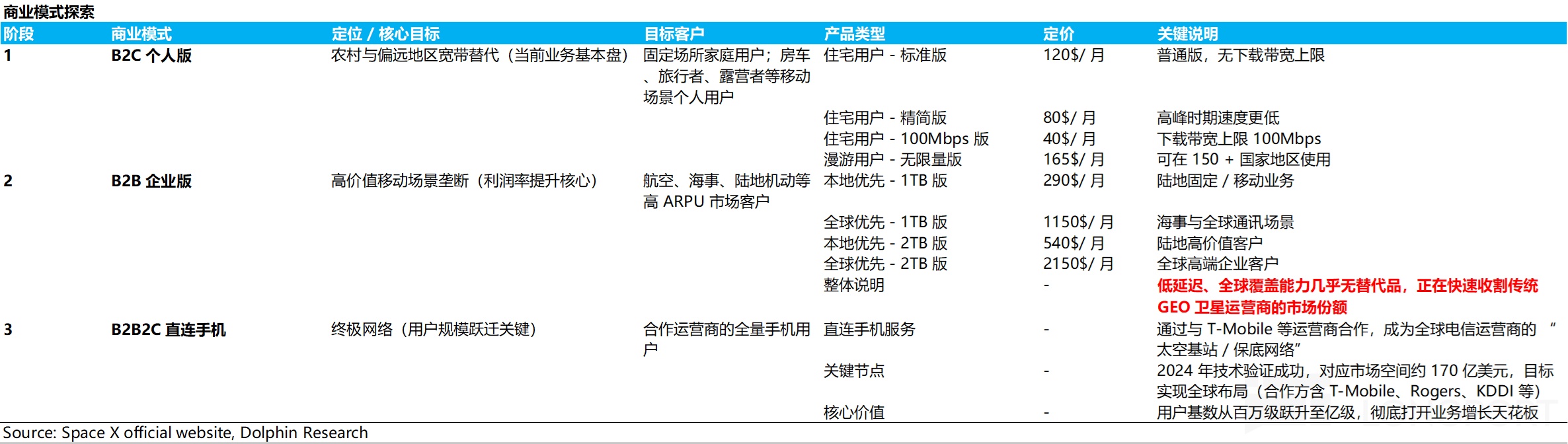
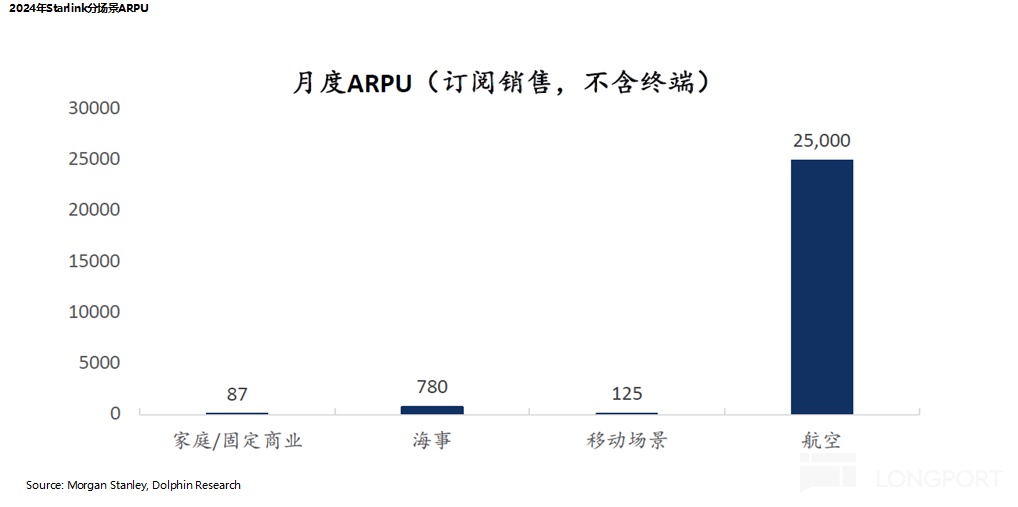
Pricing then comes down to monthly plans. Starlink runs precise price tiering: $120–165/month premium tiers for high‑income markets, and entry plans in emerging markets, in some places as low as $40/month. The value proposition is ‘works well, not pricey’ to scale quickly.
b. Enterprise broadband: LEO disrupts GEO’s high‑value niches
Enterprise: aviation, maritime, and land‑based oil & gas need high‑reliability, low‑latency links. These were GEO‑served, but LEO now outclasses them. Contracts and margins here exceed consumer levels.

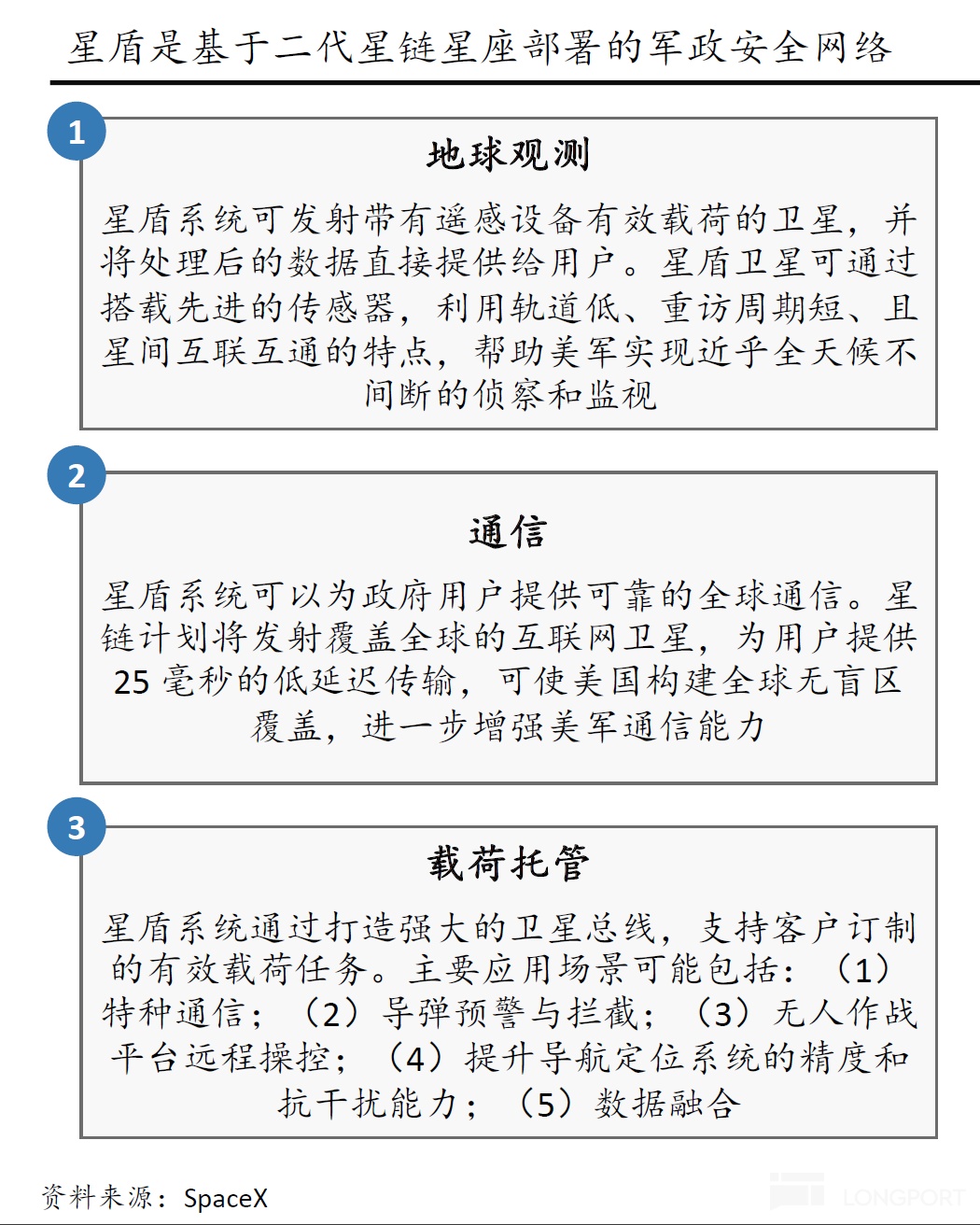
Geo‑political/Gov. (to‑G): defense users require resilient, jam‑resistant global connectivity. SpaceX’s Starshield has become core infrastructure for U.S. military mission‑critical comms, supporting secure links, ISR backhaul, and missile‑warning relay.
These contracts often run on cost‑plus models with 5–10 year terms. They provide high revenue visibility for SpaceX.

II. Satellite version of mobile: can it go head‑to‑head?
Commercially, Starlink’s success so far comes from mis‑positioning vs. telcos. But it now aims to replace part of the stock market with Direct‑to‑Cell (D2C), i.e., a satellite variant of mobile service.
From a user view, dishes are costly and usage is constrained, so the company is pushing phone‑to‑satellite connectivity. Also, only c.20% of land is covered by terrestrial cellular today. If satellites can cover the rest, it still aligns with a mis‑positioning strategy.
In essence, direct‑to‑phone removes the dish for convenience while keeping phone form factors unchanged. That requires:
a. Bigger satellite signals: D2C satellites carry massive phased arrays tens to hundreds of square meters, like a giant kite in space. They act as a ‘super loudspeaker’ so low‑power phones can hear, while also ‘hearing’ the phone’s weak uplink.
Of ~9,600 satellites on orbit, only ~650 are dedicated to D2C today. Deployment is set to accelerate from 2H25.
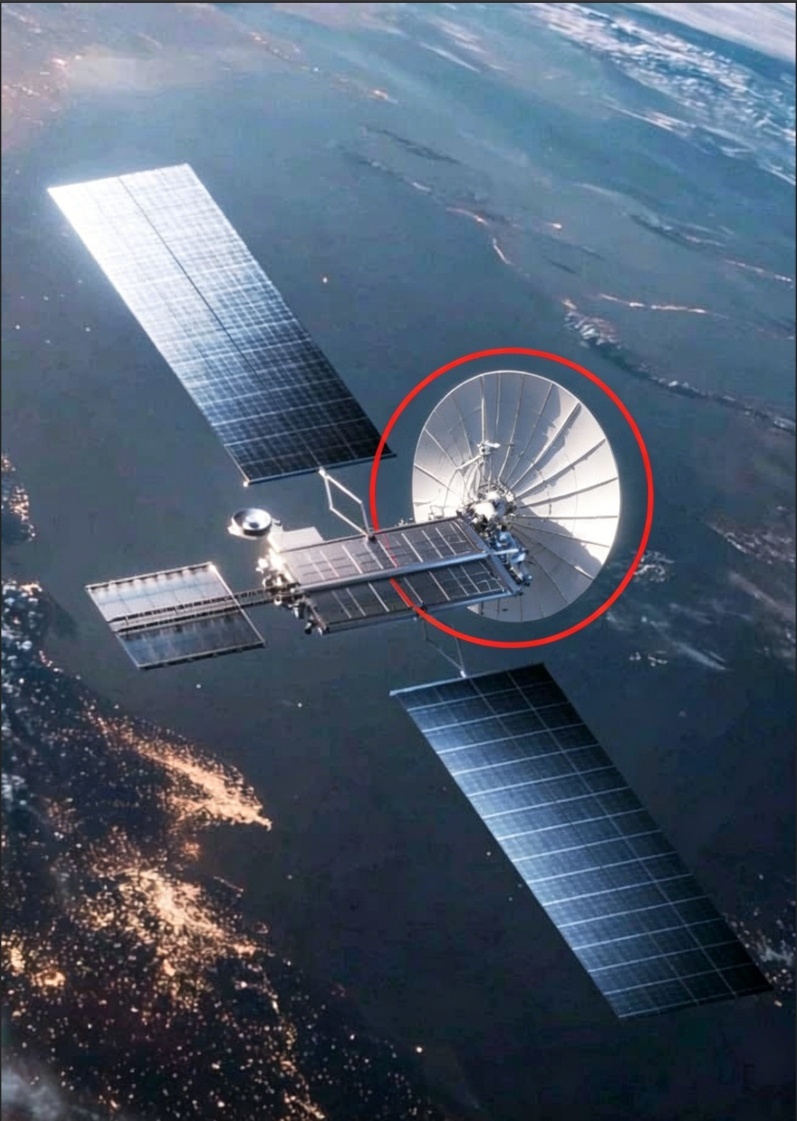
b. Different spectrum: D2C typically uses licensed lower bands like L (1.5–1.6 GHz) and S (2.0–2.5 GHz). These penetrate foliage and thin glass, enabling outdoor phone use, but carry less data, so speeds are limited to voice, SMS, and basic data.
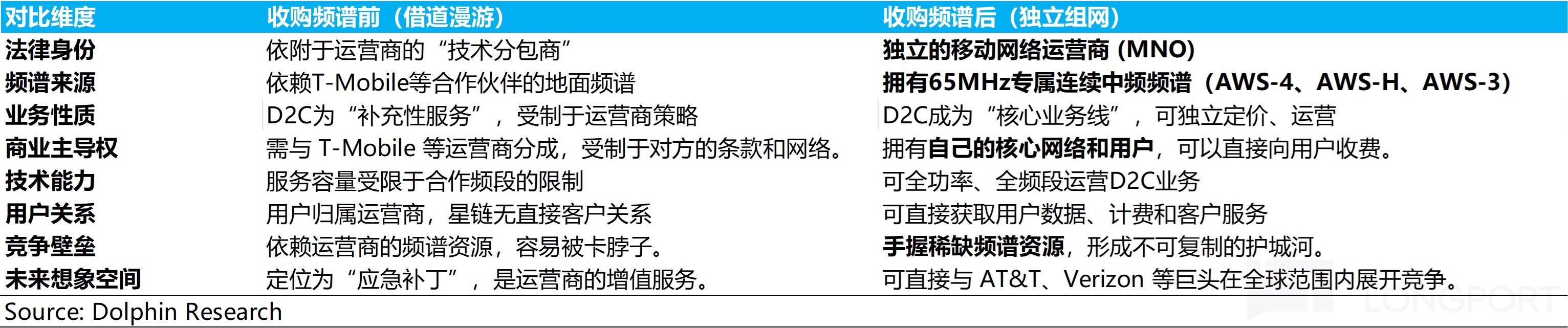
Spectrum is scarce, and low bands are largely owned by telcos. Starlink must roam via partnerships, effectively acting as a technical sub‑contractor. Operators sell ‘satellite mobile’ add‑ons and share revenue with SpaceX.
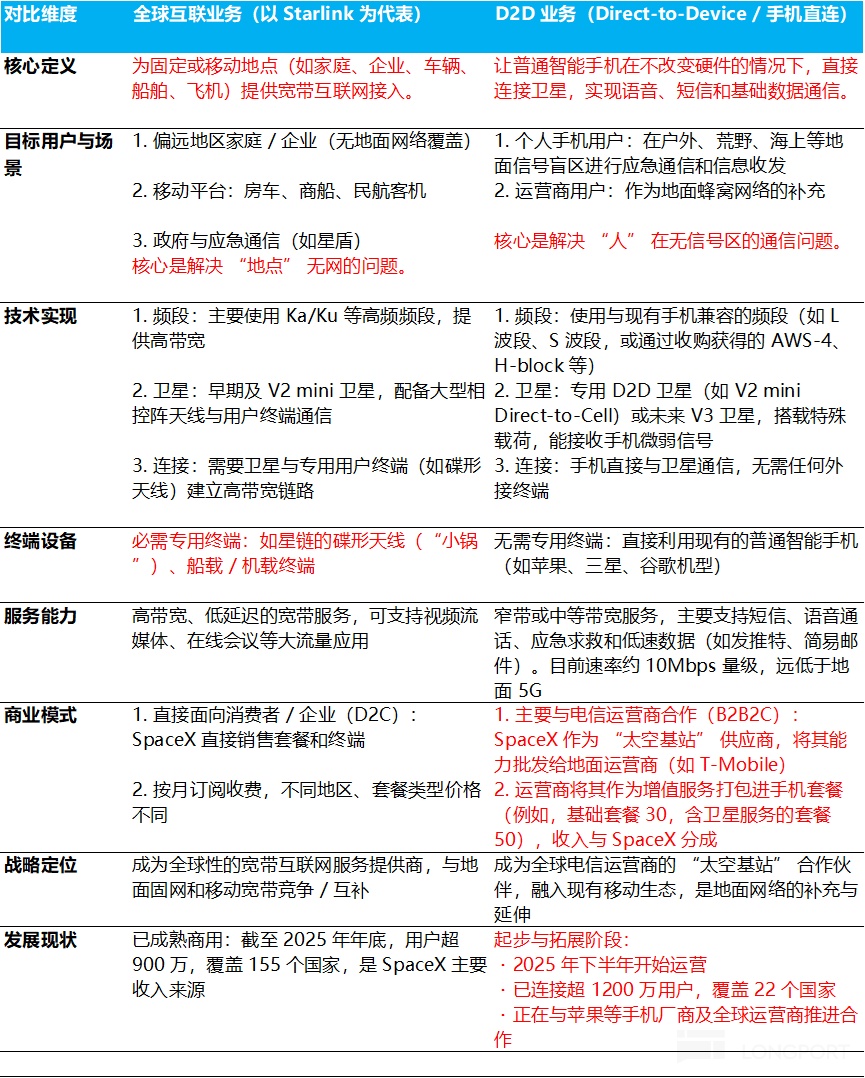
This technical compromise narrows bandwidth: mobile links are shared at Mbps‑class, not the tens to hundreds of Mbps dedicated on fixed broadband. The core value is ‘basic connectivity’ rather than ‘premium experience’ — emergency SMS/calls and narrowband data, not UHD video or high‑speed downloads.
Since video and fast downloads are baseline internet needs, the current D2C form factor complements, rather than competes with, telcos’ stock services. This product only began rolling out in 2H last year.
As of Q1 2026, Starlink’s mobile coverage spans 30 countries with 7.4mn active devices. It has revenue‑share deals with 30 leading mobile operators.
Dolphin Research estimates that under a rev‑share model, and using T‑Mobile as an example, users pay about $10/month extra, with roughly $5.5/month to SpaceX per public reports. Assuming c.6mn devices online by end‑2025, D2C revenue would be around $0.4bn in 2025. That is about 5.5% of Starlink’s c. $7.2bn consumer revenue.
The key question: can D2C really challenge mobile operators? Here is how SpaceX addresses its weaknesses:
1) Spectrum: buy, buy, buy?
Phone‑to‑satellite faces a fundamental power/spectrum constraint: phones transmit at only ~200–500 mW, and signals must traverse the atmosphere and ionosphere. High bands like Ku/Ka are fast but do not penetrate well, and phone uplink power is insufficient. Lower bands penetrate, are widely supported by Qualcomm and MediaTek ecosystems, and can be heard by satellites.
Starlink’s early D2C rode operators’ bands. In 2026, SpaceX acquired 65 MHz of Sub‑6 GHz spectrum in the U.S. (closing after 2027), opening a path to independent deployment in mid/low bands.
2) V3 satellites: the bandwidth answer?
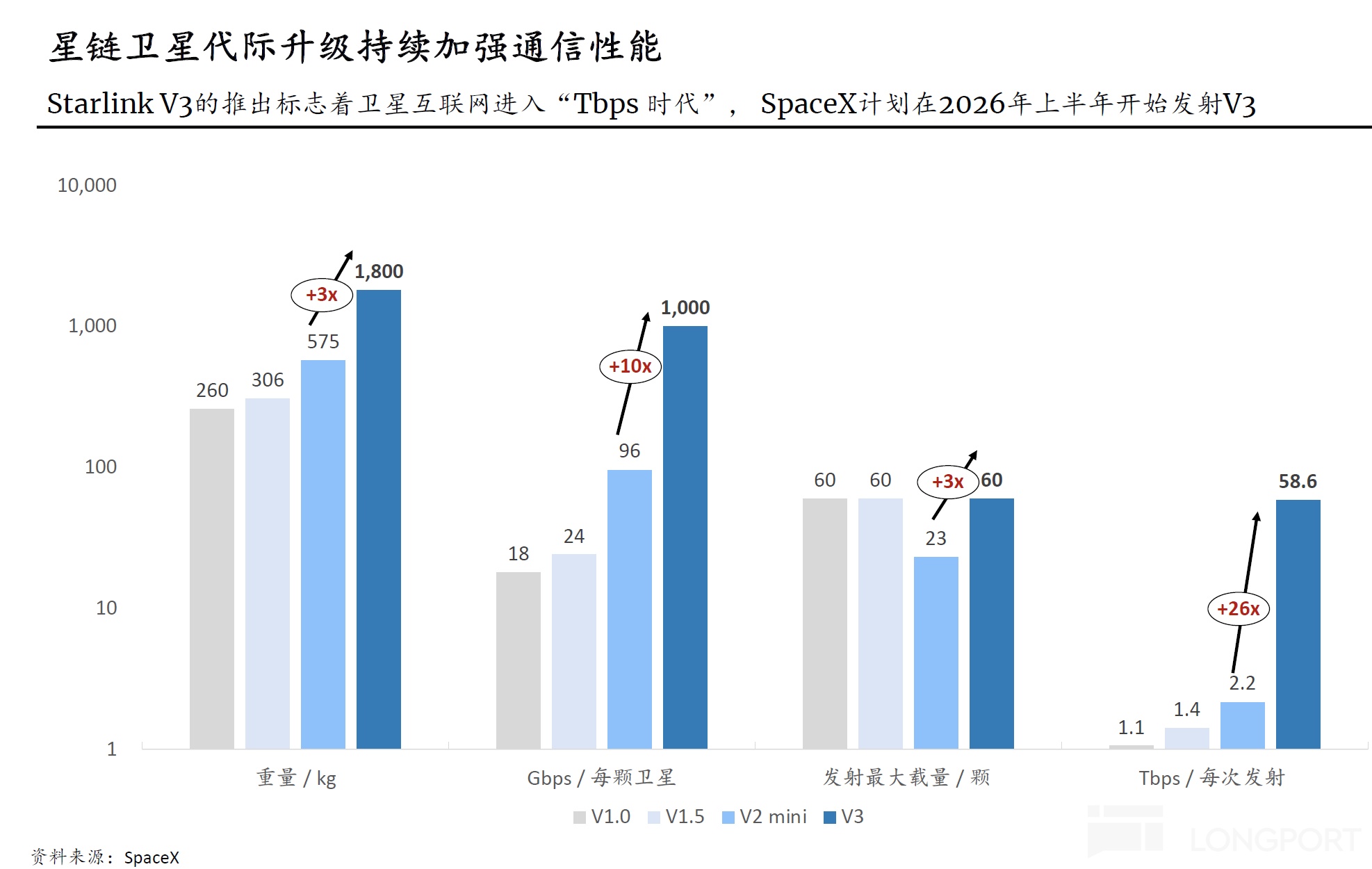
V3 boosts per‑sat capacity to 1 Tbps. With thousands of units, total constellation capacity reaches several thousand Tbps, tens of times V2 Mini.

Dolphin Research notes these moves ease constraints but do not make full substitution easy:
First, spectrum sovereignty: usage follows national jurisdiction. The 65 MHz approved by the FCC is valid only in U.S. territory, airspace, and some waters, and cannot be ported to Japan, Germany, or Brazil without local MIC/BNetzA‑style approval or auction.
Further, even with spectrum, telcos can densify sites and reuse bands across city blocks. A satellite, however, blankets tens of thousands of km², forcing all users to share a single 65 MHz channel with minimal spatial reuse.
This means in dense areas, bandwidth per user collapses under heavy concurrency and becomes unusable, nowhere near the 1–2 Gbps per‑user peak from 5G macro sites. Ironically, the user experience is better in remote regions.
So the model is fundamentally complementary to terrestrial operators.
Second, handset hardware support: current phones do not natively support SpaceX’s newly acquired bands for 5G D2C. Vendors need scale incentives before redesigning RF and antennas.
Even with V3 adding satellite capacity, the bottleneck shifts to phones: limited size and power cap uplink performance, and weak phone signals are hard to capture from hundreds of km away. D2C is inherently ‘fast down, slow up’.
Net‑net, going from mis‑positioning to full confrontation with mobile operators looks hard over the next three years due to spectrum readiness. In 3–5 years, telcos’ spectrum bargaining leverage may erode, but mobile is data‑sensitive and the technologies differ at the root. A wholesale replacement story remains a stretch, and outside the U.S., partnering with local operators will likely remain the default to manage regulatory risk.
III. As network operators, how does Starlink outclass peers?
Starlink monetizes across four scenario‑based revenue streams. Broadband is now a stable base, while mobile extends the runway for growth.
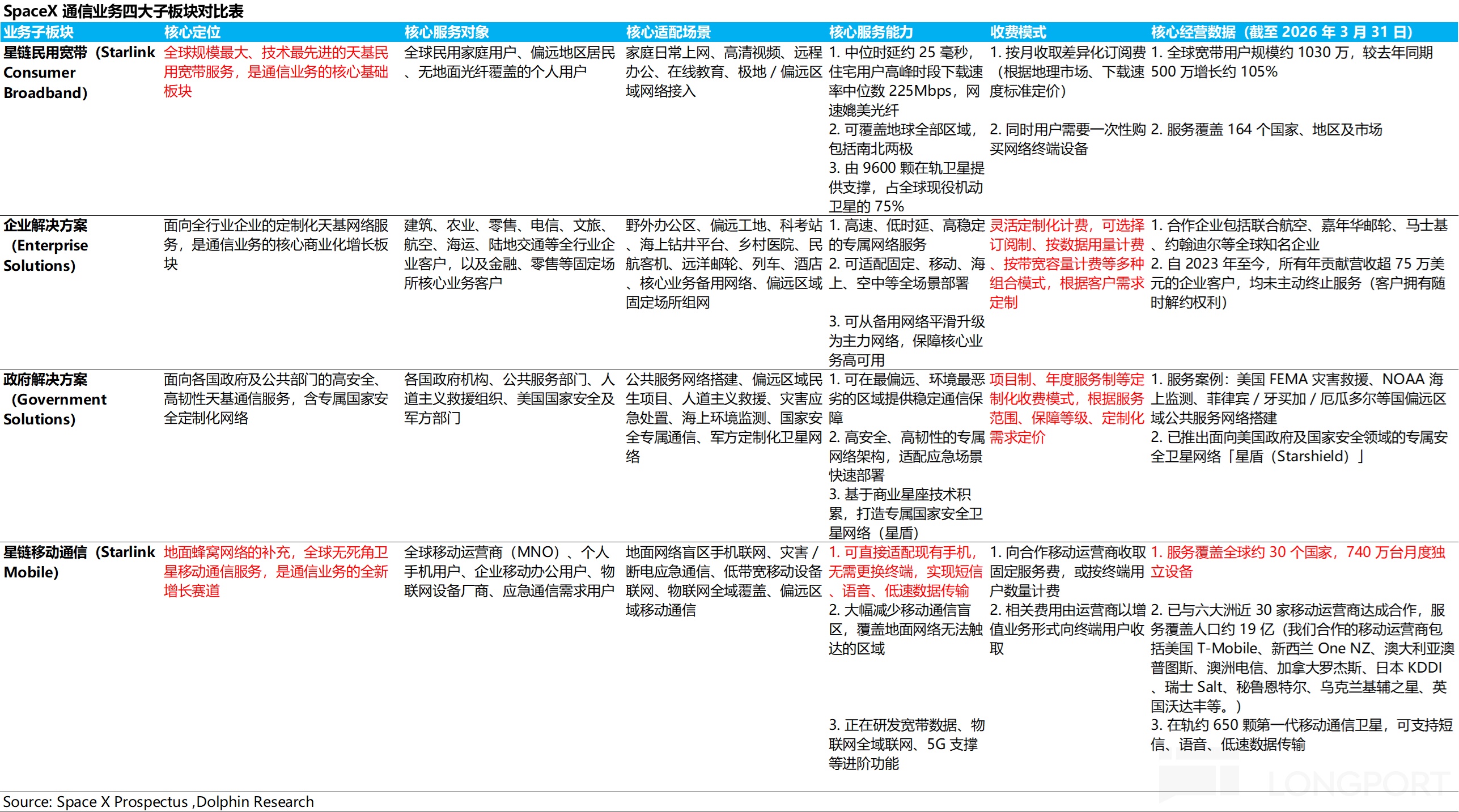
Together they form a powerful scale‑economics curve:
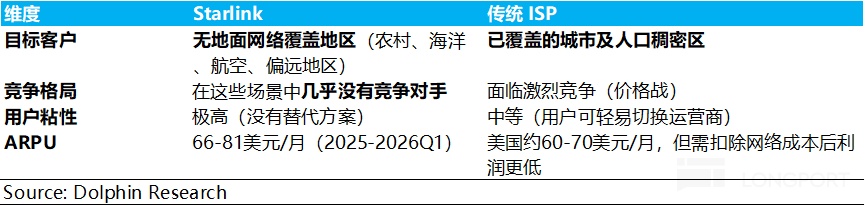
a) ARPU down, revenue up: ARPU fell from $99/month in 2023 to $66/month in Q1‑26 (‑33%). Revenue jumped from c. $3.9bn in 2023 to $11.4bn in 2025.
b) Profit unlocked fast: GPM rose from 28% in 2023 to 48% in 2025, a 2‑yr CAGR >70%. OP increased from $469mn to $4.423bn, nearly 10x, with OPM approaching 40%, and EBITDA margin climbed from 41.4% in 2023 to 63% in 2025.
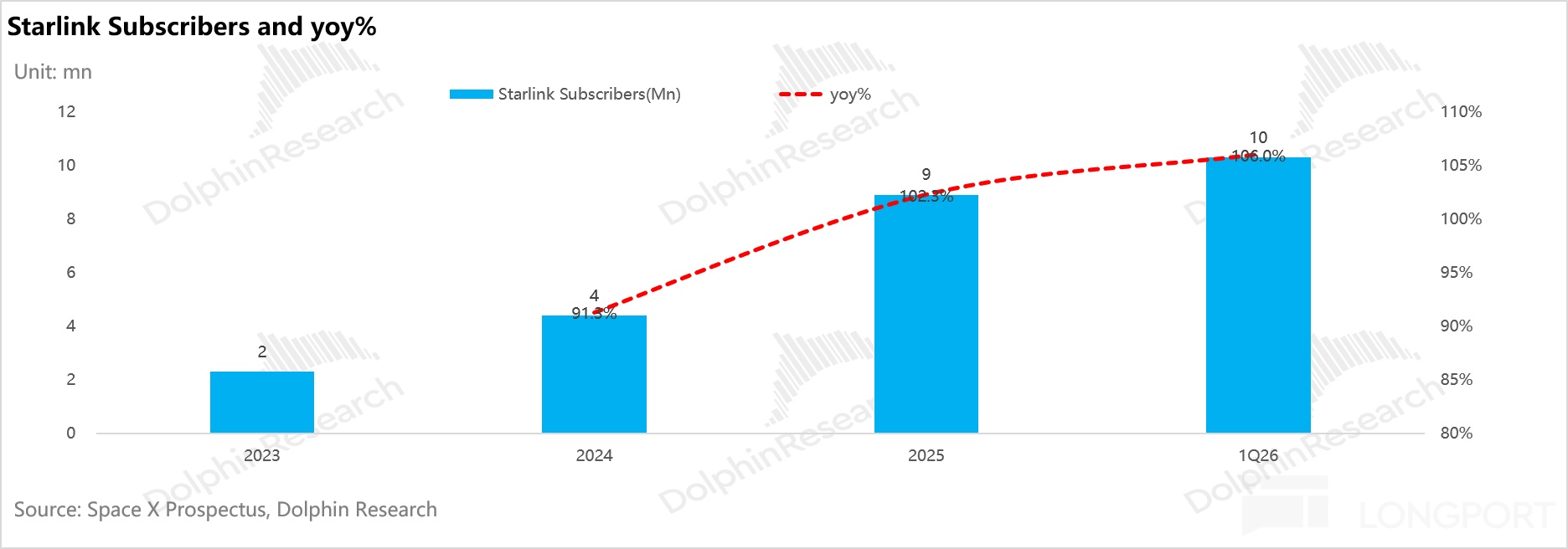
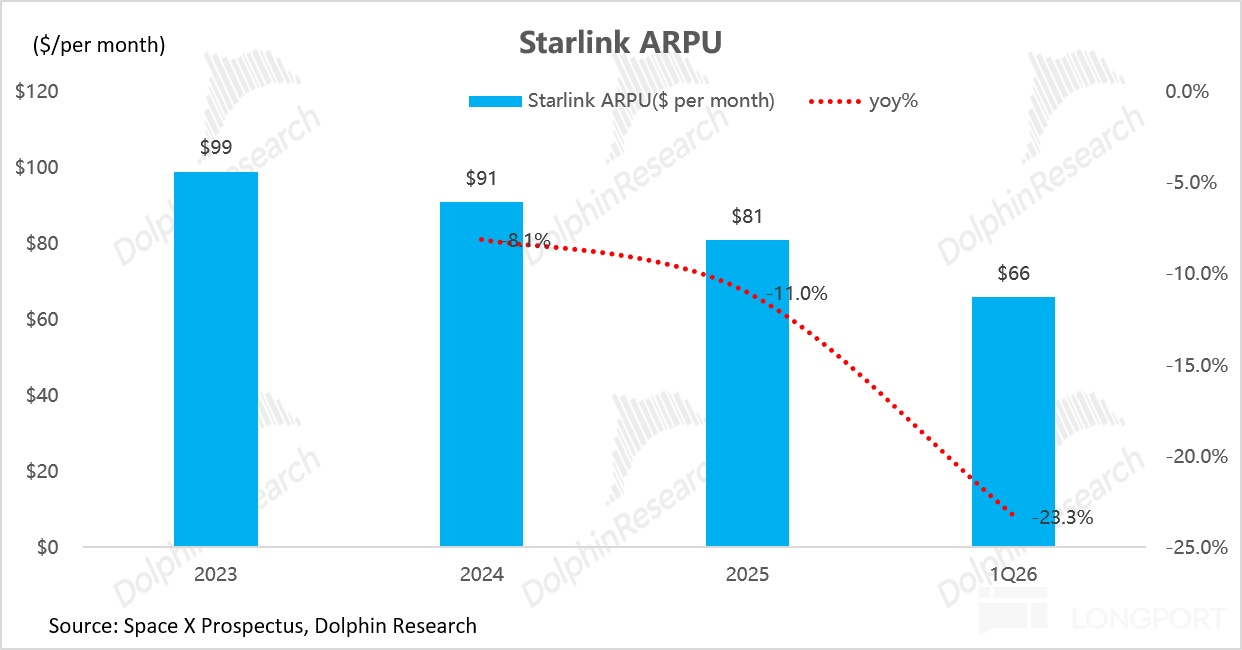
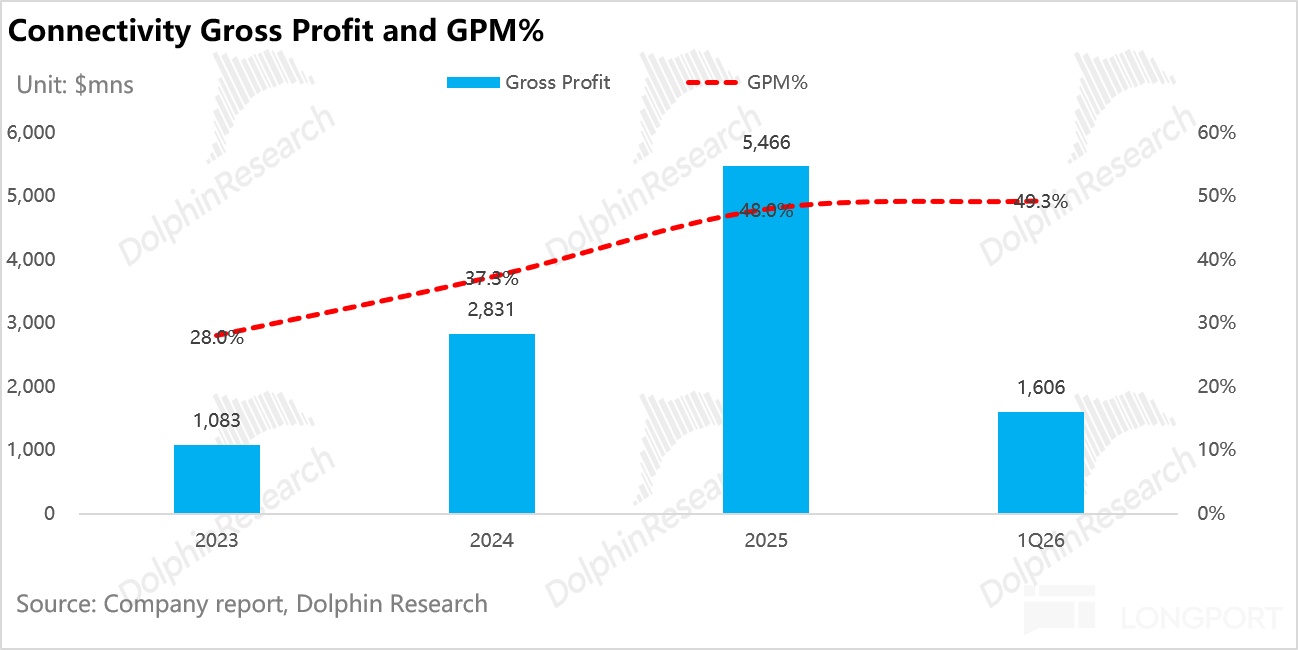
Falling unit price with rising profit signals a shift from ‘loss‑leader network build’ to a ‘low‑cost rent collection’ phase:
a) Operating leverage unleashed:
Starlink is front‑loaded with fixed capex — launch, satellite manufacturing, and ground hardware. Once the constellation is live, the marginal cost per incremental user is tiny, since capacity is shared and incremental opex is minimal.
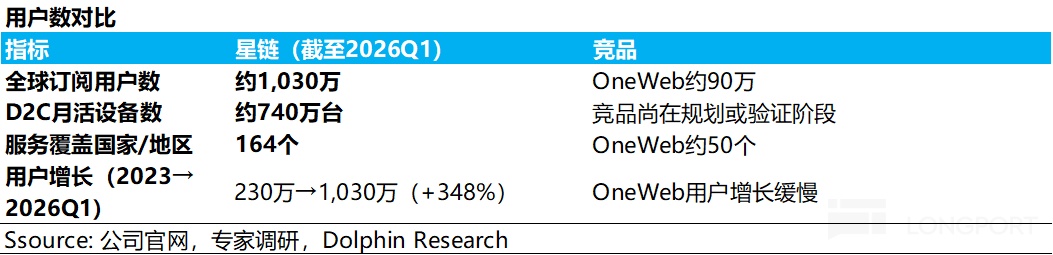
From 2023 to 2025, users grew from 2.3mn to 8.9mn, nearly 4x. OP rose from $469mn to $4.423bn, over 9x, more than twice the pace of user growth — a clean operating leverage story.
b) Launch cost ‘implicit subsidy’: Falcon 9 launch cost has dropped from ~$60mn to <$15mn per flight. That slashes per‑sat launch cost to a quarter or fifth of rivals (list price ~$62mn vs. internal ~$15mn), reflecting captive capacity prioritized for in‑house demand.
Starlink capitalizes launch for constellation build and depreciates over five years. Effectively, it taps low‑cost in‑house lift — a vertical‑integration edge competitors cannot replicate.
c) A cliff‑edge drop in satellite manufacturing cost: three core levers drove exponential cost compression. Unit cost fell from >$1.0–1.5mn to $0.6–0.8mn, with V3 expected near $0.2mn.
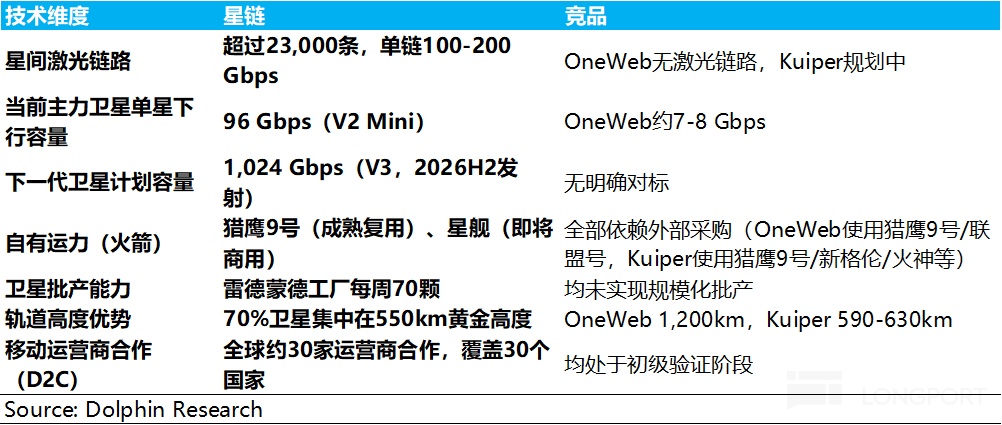
Satellite depreciation is a top cost line, and SpaceX acted on two fronts: Materials substitution: using automotive/industrial‑grade chips from ST and TI instead of space‑grade parts; Assembly line: Redmond’s line turns out ~70 units/week, leveraging a highly integrated supply chain and auto‑style modular assembly for a single SKU at scale.
d) Dish cost down: at $500 retail, the terminal now roughly covers cost and no longer drags margins.
Notably, Starlink’s scale economies are far stronger than traditional ISPs. Despite revenue at one‑tenth of peers, profitability — with or without D&A — already leads decisively.
Dolphin Research’s take:
a) Price tiering: premium within low‑frequency necessities
Legacy telco pricing is flatter, with enterprise lines priced high due to bespoke build‑outs. Starlink’s tiered pricing faces similar maintenance cost per user, so higher price largely equals higher gross margin.
b) Cost structure: near‑zero marginal cost, low maintenance
Low marginal cost: telcos still face last‑mile constraints and site capex for remote users. Starlink’s shared sky network has similar marginal cost whether a new user is in a desert or at sea.
Low maintenance: terrestrial ISPs carry heavy maintenance capex and labor with large call centers and field crews. Starlink runs a light‑asset internet model; space is a clean environment, ground maintenance is minimal, and labor costs are low.

c) Supply‑chain downshift via vertical integration — already covered above.
IV. Long‑term outlook: where are Starlink’s moats and barriers?
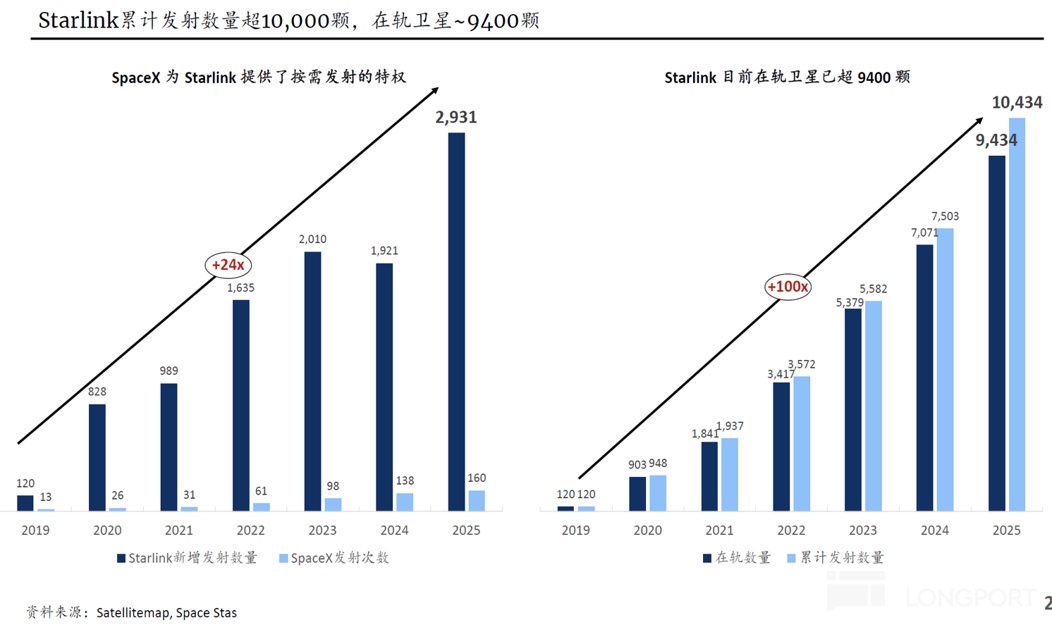
Starlink leads the LEO field by a wide margin in satellite count, subs, revenue, and cost. It holds >80% share, and its on‑orbit satellites exceed 70% of all LEO comms birds.
Key competitors:
OneWeb: ~630 satellites on orbit, ~0.9mn users, <10% share, and launch reliant on Falcon 9 and Soyuz with no captive lift. Revenue is orders of magnitude smaller (2025: Starlink ~$11.4bn vs. OneWeb ~$0.2bn).
Amazon Kuiper: first launches in 2025 with ~100–200 satellites currently on orbit. It targets 3,236 units but relies on external lift and has not reached commercial scale.
China’s GW and Qianfan constellations: both have just 100+ satellites so far, focused on APAC. Honghu‑3 is still in planning, and none has global scale.

The moats are clear:
a) Captive launch capacity enabling scale constellation build‑out
This is the hardest moat to copy. SpaceX operates the world’s only mature reusable launch system, giving Starlink a structural cost edge in network deployment.
A cliff in per‑sat launch cost: Falcon 9 costs <$15mn per flight internally. With ~24 V2 Mini per launch, per‑sat launch cost is ~$0.6–0.7mn. Rivals renting external launch pay ~$2–3mn per satellite or more, a 4–5x disadvantage.
b) First‑mover advantage in orbits and spectrum: a space ‘land grab’
Orbits and spectrum are scarce, first‑come resources under ITU rules. With speed and scale, Starlink has effectively staked out the prime space.
Orbit slots: LEO (100–2,000 km) can safely host roughly 60k–100k satellites. Starlink occupies prime shells at ~340 km, 550 km, and 1,100–1,325 km, with ~70% of active sats at 550 km, the sweet spot for low latency and lower radiation — enabling lower‑cost auto/consumer‑grade chips.
Once taken, later entrants face collision risk and coordination costs at similar altitudes. The FCC has cleared Starlink for up to 42k satellites, and by early 2026 it has >10k on orbit, or roughly two‑thirds of all active satellites globally (c.65%–75%).
Core spectrum locked: Starlink holds Ku/Ka/V/E bands that deliver very high data rates with small antennas. These bands are also first‑come constrained, and LEO comms spectrum is tightening.
Starlink has deployed >23k inter‑sat laser links at 100–200 Gbps per hop, building a dynamic mesh in space and deepening spectral control. Under ITU rules, filings must launch a first sat within 7 years and meet 10%/50%/100% deployment in 2/5/7 years post‑first launch, or allocations get cut.
Starlink is uniquely capable of meeting these timelines at scale, creating a de facto permanent barrier in orbits and spectrum.

c) Manufacturing cost down: materials substitution and vertical integration
Both satellites and dishes are on a cost glidepath, while performance improves: from ~20 Gbps downlink per V1.0 sat to 96 Gbps on V2 Mini, and 1 Tbps on V3, roughly 10x V2 Mini capacity.

<End>
Related:
‘From Daydream to Big Money: Is SpaceX Really Sci‑Fi?’
<SpaceX Challengers: Can Bezos and China’s Teams Catch Up?>
<Another Trump Card from Musk: Can SpaceX Rewire ‘Space Economics’?>
The copyright of this article belongs to the original author/organization.
The views expressed herein are solely those of the author and do not reflect the stance of the platform. The content is intended for investment reference purposes only and shall not be considered as investment advice. Please contact us if you have any questions or suggestions regarding the content services provided by the platform.
