


[HK IPO] Impact Therapeutics Subscription Status and IPO Analysis (with Kofu Tianxing Review)
Impact Therapeutics:
1. Underwritten by Goldman Sachs and CICC, public offering of 21,000 lots, Goldman Sachs as stabilizing agent, cornerstone investors account for 32.15%.
2. The company's founder is the Nanjing real estate tycoon Chen Mailin. However, shortly after its establishment, he exited during the Series A financing round in 2014 for unknown reasons. This is understandable though. Asking someone who made quick money in real estate to grind through innovative drug development feels a bit like a mismatch. Moreover, it was a long time ago, and I don't consider this a major negative factor.
3. Due to the founder's exit, the company remains in a state of highly dispersed shareholding with no actual controller. The largest shareholder is Lilly Asia Ventures (LAV), holding 13.9%, and the second largest is Shanghai Liyi, holding 11.8%. The actual controller of Shanghai Liyi is Chen Fei, who is also one of the partners at LAV. However, there is no direct equity connection between Shanghai Liyi and LAV, and their investment decisions are independent.
In addition, Tencent and Decheng Capital are also major shareholders of the company. Overall, the lineup of backers is quite solid.
4. The cornerstone investment is 32.15%, not maxed out, but the lineup is decent. First, Nanjing Jiangbei New Area Industrial Investment Group (state-owned) leads with 11%. Then, a positive point: LAV and Tencent continue to increase their participation as cornerstone investors, accounting for 4.5% and 7.2% respectively.
Some companies may have had well-known firms invest in historical rounds over a decade ago and then keep boasting about it. In many cases, these well-known investors only recognized the company from over a decade ago, unaware that its development would worsen later, and the investors themselves are just waiting for the lock-up period to expire after listing to exit.
Those who continue to participate as cornerstone investors are different. Taking this company as an example, Tencent invested in the D++ round in 2024 and now continues as a cornerstone investor, indicating to some extent that Tencent believes the company's development continues to improve and holds investment value.
LAV, on the other hand, has been continuously leading/following investments from Series B to D+ across 5 financing rounds since 2014, deeply recognizing the company's value and achievements, which serves as a strong endorsement.
5. The core product, Senaparib, is a PARP1/2 inhibitor for ovarian cancer, based on the principle of synthetic lethality. It has been commercialized in China, covering over 30 provinces.
A brief introduction to the concept of synthetic lethality: it's like having two fuses. Blowing one fuse won't kill the cell, but blowing both will cause cell death.
Taking PARP inhibitors as an example, PARP is a gene protein responsible for single-strand DNA repair. There's another gene protein called BRCA, responsible for double-strand DNA repair. As long as one of them is normal, the cell can survive. If both are damaged simultaneously, the cell dies.
In some cancer cells of breast and ovarian cancer, BRCA is naturally mutated, and they rely on PARP to survive, while normal cells have both PARP and BRCA functioning normally. Senaparib works by inhibiting PARP and its function, causing cancer cells to "blow both fuses" (normal cells still have BRCA), thereby achieving targeted elimination of cancer cells. Compared to traditional carpet-bombing anti-cancer drugs, synthetic lethality therapy only targets cancer cells with specific genetic defects, has fewer side effects, turning the cancer cell's genetic defect from a "survival advantage" into a "fatal weakness."
However, it's important to note that tumors generally don't consist of only one cell type. BRCA mutation is not a characteristic of all cancer cells. PARP1/2 inhibitors can only kill cancer cells with this characteristic and that are not in a dormant state, so they can only achieve suppression, prolonging the patient's "survival with disease" time, and cannot yet achieve eradication.
6. Since Senaparib is so impressive, why does the company only have revenue of just over 30 million in 2024-25, with no explosive growth even from a low base? The reason lies in the fact that the PARP1/2 inhibitor field is already a red ocean. Olaparib and Niraparib, launched in China in 2018 and 2019, together hold a 94% market share. Hengrui's Fluzoparib and BeiGene's Pamiparib take another 6%, leaving only a tiny fraction after the decimal point for Senaparib.
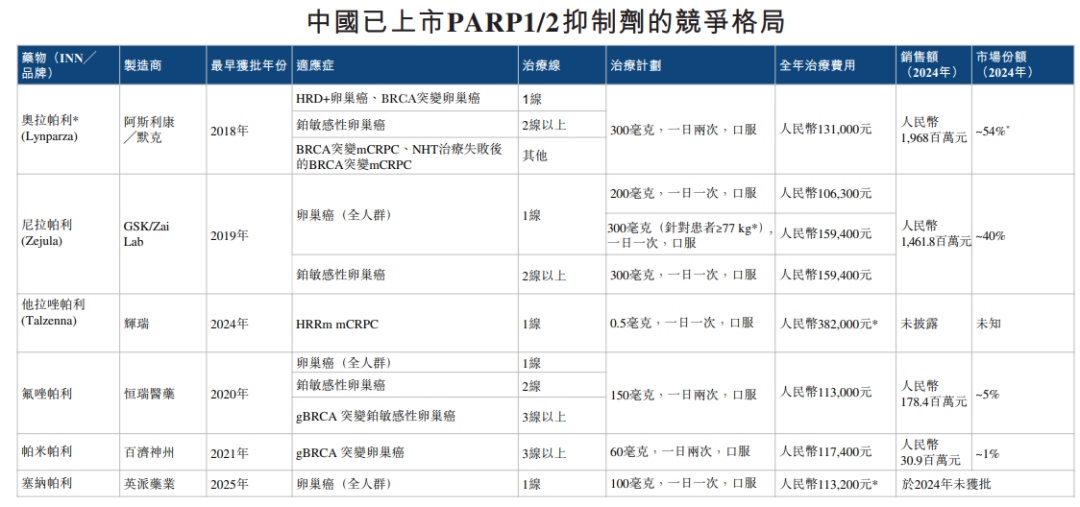
Moreover, although Senaparib's efficacy is not inferior to existing drugs, and even superior in aspects like safety, the company faces strong market pressure and difficulties in promotion due to doctors' prescription habits and the acceptance of new drugs.
7. Looking solely at Senaparib's ovarian cancer indication, I think it's not very interesting; the cake has long been divided. I believe the company's main potential lies in the combination therapy of Senaparib and Temozolomide for small cell lung cancer, currently in Phase Ib/II.
This is a pure blue ocean. It has even obtained FDA orphan drug designation. Currently, small cell lung cancer is mainly treated with chemotherapy. The small cell lung cancer indications of several recent biotech IPOs (like VelaVigo, GenFleet Therapeutics, Jiangsu Aosaikang Pharmaceutical, etc.) are mostly in clinical stages, and chemotherapy remains the mainstay.
The successful commercialization of Senaparib's ovarian cancer indication is more of a technical validation, proving the company has successfully navigated the synthetic lethality path. The combination therapy for small cell lung cancer is the main event. Even if it's not the first to be commercialized, being among the first batch is expected to generate substantial profits. Additionally, the company has four other synthetic lethality targeted drugs: IMP1734, IMP9064, IMP1707, IMP7068. It's a matter of which one can break through.
IPO Application Rating: ★★★~★★★★★ (Final strategy and rating posted on Xingqiu)
Appendix: Review of Tianxing Medical and Kefu Medical
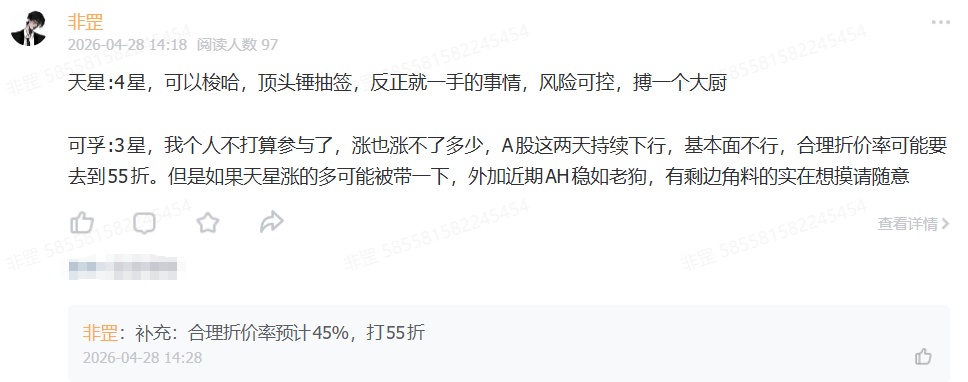
Not much to say about Tianxing, a "cook" stock, peaked at debut, then kept dropping, currently halved from the 300% high in the grey market.
As for Kefu, I didn't take their placement. Does it have a chance to rise? Yes, but three conditions are needed:
1. Not priced at the upper limit
2. A-shares rebound
3. Tianxing performs well
Requiring all three simultaneously is a bit harsh. Moreover, this placement can only be sold on the first day. Overall, the risk is still high, so I didn't participate.
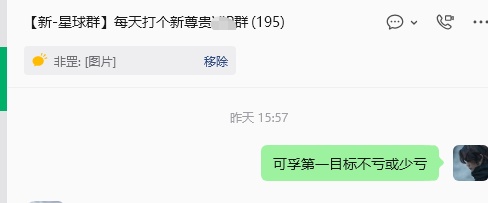
In the end, none of these three conditions were met, so my grey market advice was: just don't lose money.
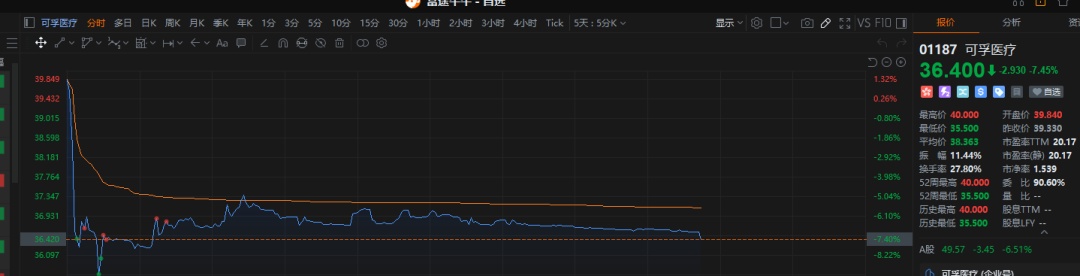
Honestly, Kefu not breaking issue price in the grey market already exceeded my expectations. If you were given a chance to break even (or even make a small profit) and you still didn't run, then who's to blame for losing money on the first day?
The copyright of this article belongs to the original author/organization.
The views expressed herein are solely those of the author and do not reflect the stance of the platform. The content is intended for investment reference purposes only and shall not be considered as investment advice. Please contact us if you have any questions or suggestions regarding the content services provided by the platform.
