


Gold "Even safe-haven assets can be dumped"? Broke 4100 today, looking at subsequent trends from historical gold plunges
Gold's recent trend is typical: geopolitical risks are heating up, the market should be buying safe-haven assets, but gold prices have instead experienced a rapid decline. However, this statement is also cliché, so this time we're talking about the logic behind this statement, and then referencing historical trends to determine how to operate. On the chart, spot gold once fell to around $4098/oz, then returned to near $4200/oz; the pullback magnitude has clearly amplified in the short term, and the cumulative pullback from the year's high is already significant. This isn't "gold failing," but the market repricing gold with a higher discount rate.
The core logic of this round of decline: Oil price shock interrupted the "rate cut trade," forcing gold to digest higher rates
First, let's look at several historical instances of gold declines and their causes:
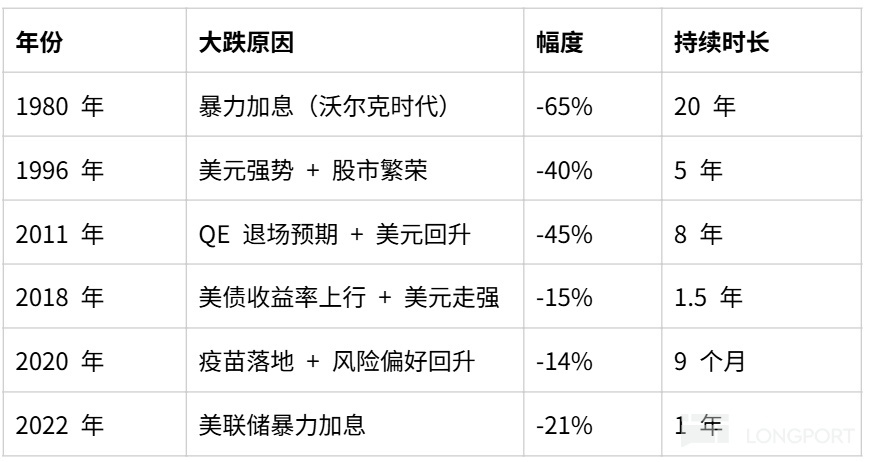
First, analyze the transmission path of this wave:
First, rising oil prices increase inflation concerns. Brent crude fluctuates around $113/barrel, and supply-side uncertainties have made inflation expectations sensitive again.
Second, interest rate expectations shifted from "faster rate cuts" to "higher for longer, even tightening again." The rise in US long-term rates is very direct: the 10-year Treasury yield touched 4.423% (the high range since July 2025). In this environment, the opportunity cost of a "non-yielding asset" like gold rises, and its valuation anchor is compressed.
Finally, the simultaneous strengthening of the dollar further suppresses dollar-denominated gold. The dollar index moved near 99.77, with safe-haven funds flowing more into the dollar and Treasuries first, while gold is more likely to be treated as an asset that can be "sold for liquidity."
One more point: during such extreme volatility periods, gold often exhibits a "liquidity effect"—investors, to cover losses on other assets or meet margin or redemption pressures, will sell the most easily liquidated positions, and gold will passively bear the pressure.
How to view the future market
Short term: What's more critical is whether interest rates and the dollar stop rising; gold's own technicals have almost no reference value.
Medium to long term: Gold's value is more reflected in hedging extreme tail risks and monetary credit volatility, but the holding experience will be highly dependent on the interest rate cycle. In the current stage of oil prices pushing up inflation → rate repricing, volatility will be significantly amplified.
Finally, it's important to note that high leverage is most taboo in this kind of market. Gold will experience unexpected amplitude under liquidity shocks, where position and margin management are more important than views.$Gabelli Global Utility & Income(GLU.US) $Us Brent Oil(BNO.US) $Dow Jones Industrial Average(.DJI.US)
The copyright of this article belongs to the original author/organization.
The views expressed herein are solely those of the author and do not reflect the stance of the platform. The content is intended for investment reference purposes only and shall not be considered as investment advice. Please contact us if you have any questions or suggestions regarding the content services provided by the platform.
