


 First-Sip Taster
 Alphabet Diamond Holder
关于接下来黄金的走势
Let's start with the core view: Gold will almost certainly undergo a period of weekly-level adjustment, but the long-term bullish logic remains unchanged.$SPDR Gold Shares(GLD.US)
The gold mentioned in this article is all priced in US dollars.
To translate: I believe that in the next 3-6 months, gold is highly likely to enter a consolidation phase, almost impossible to reach new highs again; but at the same time, the long-term logic for gold has not changed, and there are still some buying opportunities during the weekly-level adjustment process.
Regarding the factors supporting the short-term rise of gold, it can be said that none of them hold water now.
- Geopolitical risks and safe-haven demand: The positive news has been exhausted. Unless the two major powers, China and the US, go to war over Taiwan, it's impossible for new geopolitical risks to emerge.
- Real interest rates: Although rising oil prices have pushed up medium-term inflation expectations, they have also reduced expectations for Fed rate cuts; the expected number of Fed rate cuts this year has dropped from 2 to less than 1, and the two-year US Treasury yield has hit a six-month high, causing the actual short-term interest rate to rise instead, and gold has an inverse relationship with real interest rates.
- US Dollar Index: Since oil is priced in US dollars, the oil supply shortage caused by the closure of the Strait of Hormuz requires the market to use dollars to buy oil, leading to a higher US Dollar Index. In fact, the weak dollar policy implemented by Trump to revitalize manufacturing has accumulated a large number of short positions in the dollar, and short covering could even cause the US Dollar Index to continue rising on a weekly level.
- International hot money, speculative capital: It's obvious that all speculative money is now going into oil, gold is already a thing of the past. In the short term, the sweetheart has become the nagging wife.
Furthermore, from a technical perspective, gold has been continuously overbought on a monthly level and has finally entered an adjustment period recently. There is no asset that only rises and never falls, a round of weekly-level correction is very necessary.
By the way, regarding market liquidity, US dollar liquidity has not returned to its previous high since peaking in October-November 2025. Coupled with the weakness of US stocks in the midterm election year, the liquidity shock from the stock market decline will also affect gold.
The MOVE index, a volatility index for US Treasury yields, has also been rising recently. Another potential short-term negative for gold is the rise in interest rate volatility caused by Wash's appointment in May, which will inevitably lead to an increase in gold's volatility.
In late February, GLD's realized volatility continued to be higher than its implied volatility. Now, the realized volatility is finally slowly approaching the implied volatility; options market bets on further gold price increases have weakened significantly. GVZ (Gold Volatility Index) has the possibility to continue declining.
If gold is to undergo a weekly correction, where is the support?
In this gold bull market, there are two clear moving averages providing support: the daily 50MA and the weekly 20MA.
As of the time of writing, 5000 has been lost. Tonight's FOMC on March 18th is a potential negative for gold, and gold has also fallen below 4850, below the 50MA. But I believe this Fed meeting is an opportunity for a short-term negative news exhaustion for gold (as long as it's not particularly hawkish). If buyers can support it after this break below the 50MA, buying the dip around this FOMC time would be a suitable entry point at least from a medium to long-term perspective.
The next support level, the weekly 20MA, currently looks to be around 4600-4650, a drop of just over 5% from 4850 to 4600.
- If you enter around 4850 and add to your position around 4600, if gold substantially breaks below 4500, it will most likely declare the end of this bull market, and the total loss here can be controlled to around 5%.
- If the bull market is still intact and gold makes new highs (breaking through 5600), then the profit from this trade can exceed 10%.
Why do I think the medium to long-term logic for gold is still there?
There's a chart circulating online showing gold's price movement during the Iran-Iraq War, implying this gold bull market ends here. This is a case of "carving a mark on a moving boat" and does not truly reveal the real reason for gold's decline.
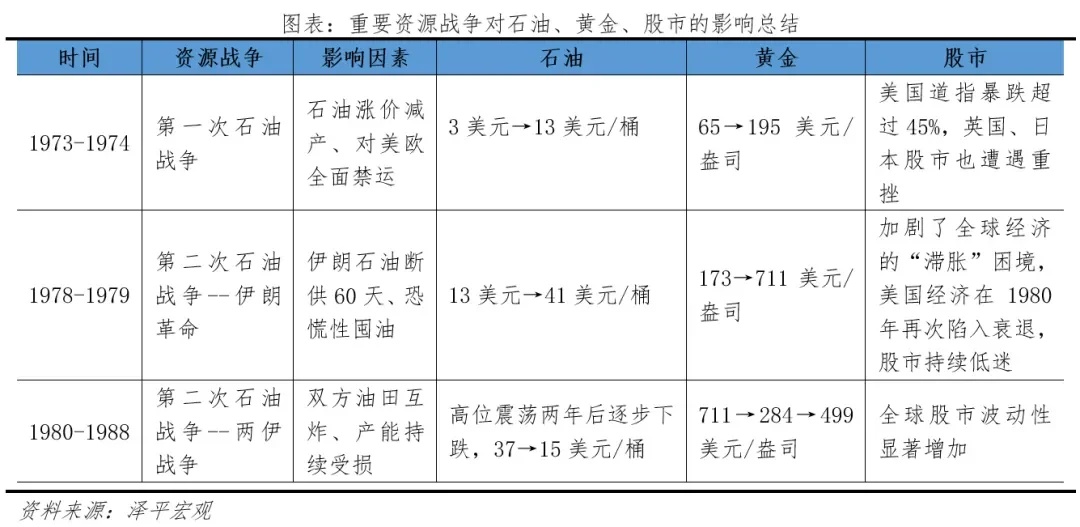
In the 1970s, the driving force behind gold's rise stemmed from the collapse of the Bretton Woods system and inflation brought about by soaring oil prices.
Starting in 1979, the newly appointed, most hawkish Fed Chairman in history, Paul Volcker, gradually raised the federal funds rate to above 20%,
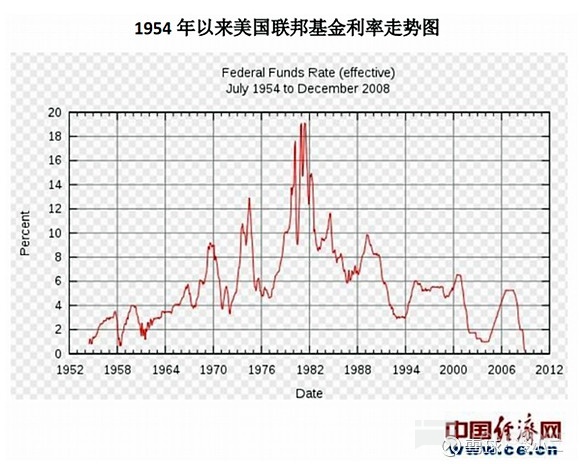
1980 coincided with the outbreak of the Iran-Iraq War. Just imagine, with interest rates at 20%, how could gold, a non-yielding asset, continue to rise?
The fundamental difference between now and the 1980s environment is that the Fed essentially has no possibility of implementing aggressive rate hikes to combat inflation again. Not to mention the cost of rate hikes is economic recession, Trump might not let his close associate Wash do such a thing; now much of the US debt is short-term (thanks to old lady Yellen hahaha), once interest rates rise, the US government's debt simply can't handle it! During Volcker's time, US debt as a percentage of GDP was only 30%, times have changed!
In the medium term, central bank gold purchases are still ongoing, and the Fed's ability to control inflation through rate hikes is limited. If stagflation really occurs, it will be a huge positive for gold.
In the long term, the credit crisis of US debt and de-dollarization have not undergone fundamental changes. Based on this long-term logic, I believe there will be no shortage of long-term buyers for gold.
Some personal ramblings: This wave of inflation has eliminated the tiny probability of the Fed implementing YCC to save US debt in the future. YCC would be an epic-level positive for gold (of course, the dollars in hand would become worthless in no time hhh).
Buy at the right time and price point, then quietly leave it to time. The most important thing in trading is patience. If in the future we can see that gold's support at various moving averages is effective and implied volatility reaches low levels, it might be a good time for speculative large-scale long positions in gold.
In any case, the fundamentals for gold's rise have changed to some extent. Expecting gold to rise sharply like before in the next 1-2 years is unlikely. But as a tool to hedge against inflation and the credit currency system, gold deserves a place in everyone's portfolio. Therefore, besides regular small-amount dollar-cost averaging, choosing a suitable entry point for a one-time allocation is also good.
The copyright of this article belongs to the original author/organization.
The views expressed herein are solely those of the author and do not reflect the stance of the platform. The content is intended for investment reference purposes only and shall not be considered as investment advice. Please contact us if you have any questions or suggestions regarding the content services provided by the platform.
