


First invasive device approved! After half a century, brain-computer interface finally enters medical reality.
The concept of brain-computer interfaces (BCI) is gaining increasing popularity.
During the National Two Sessions in March, it was for the first time included in the government work report, listed alongside future energy, quantum technology, embodied AI, 6G, and others as a key future industry for national cultivation. In the capital markets, related stocks have surged significantly, and representative companies like BrainCo and Borui Kang are accelerating their IPO sprints.
From the formal proposal of the brain-computer interface concept in 1973 to its current position at the forefront of industrialization, this cutting-edge technology has traversed over half a century. Amidst the hype, we are more concerned with: what medical problems can this seemingly profound technology actually solve? Has it truly entered the realm of reality?
Brain-Computer Interfaces + Healthcare: A Trillion-Dollar Market Awaits Explosion
When mentioning brain-computer interfaces, public perception largely remains in the sci-fi scenario of "controlling devices with thoughts." However, stripped of its mystique, its core is actually about establishing a direct connection pathway between the brain (or brain cell cultures) of humans or animals and external devices.
Simply put, it involves capturing the weak electrical signals generated by the brain through sensors, decoding them via algorithms into machine commands, while also being able to transmit regulatory signals back to the brain in reverse, achieving two-way human-machine interaction. The core goal is to assist, enhance, or repair human sensory, motor, or cognitive functions.
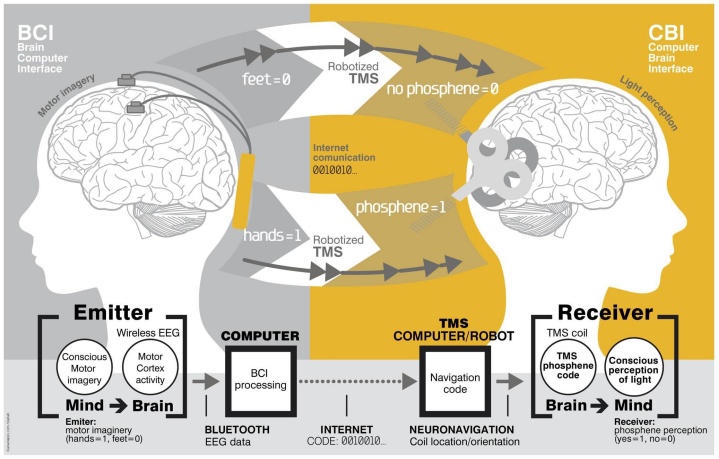
Currently, brain-computer interfaces are mainly divided into three technical approaches: non-invasive, which requires no surgery, with electrodes attached to the scalp—safe and convenient but with limited precision, suitable for consumer-grade scenarios; invasive, which requires craniotomy surgery, with electrodes directly implanted into the cerebral cortex—offering the highest signal quality but with significant costs and risks, primarily used in treatment scenarios like severe paralysis; and semi-invasive, which lies between the two, using minimally invasive surgery to implant electrodes under the dura mater or on the surface of the cerebral cortex, balancing precision and safety, commonly used for epilepsy monitoring and motor control.
Among the many application scenarios, medical rehabilitation is the most core and urgent demand for brain-computer interfaces.
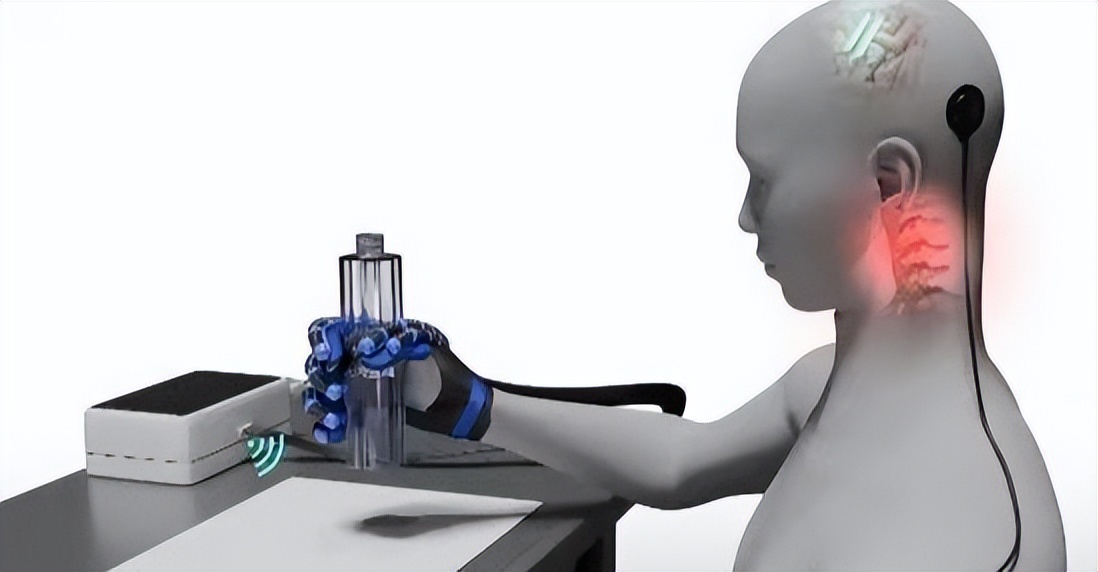
For example, for patients paralyzed due to spinal cord injury, the damaged neural pathways are like broken wires, preventing brain commands from reaching the limbs. Brain-computer interfaces can directly bypass the damaged pathways, allowing patients to control devices like robotic arms and pneumatic gloves with their thoughts, regaining basic life abilities such as grasping and eating. The cumulative number of spinal cord injury patients in China has exceeded 3.7 million, with 90,000 new cases annually. Brain-computer interfaces bring hope for these "silent patients" to regain the ability for self-care.
Beyond motor function reconstruction, brain-computer interfaces can theoretically fill many clinical gaps. For instance: objectively quantifying the consciousness level of patients with consciousness disorders, addressing the strong subjectivity of traditional assessments; delaying the progression of degenerative diseases like Parkinson's and Alzheimer's through closed-loop neural regulation; helping aphasia patients convert language intent into text or speech, re-establishing communication abilities...
Behind such immense clinical demand lies a vast commercial market.
According to McKinsey predictions, the global market size for BCI medical applications is expected to reach $40 billion by 2030, surpassing $145 billion by 2040. Morgan Stanley in the US further predicts that by 2045, the US BCI medical market alone could reach $400 billion. Domestically, according to calculations by the China Academy of Information and Communications Technology, China's BCI industry scale is expected to exceed 10-14 billion yuan by 2030, with immeasurable market potential.
Of course, it must also be noted that brain-computer interfaces have taken over half a century to begin stirring the market, which also means that translating the concept into reality is by no means easy.
Amid Multi-dimensional Resonance, Technology Implementation is No Longer Distant
As a complex technology integrating neuroscience, computer science, biomedical engineering, materials science, electronic engineering, and other disciplines, brain-computer interfaces face numerous core challenges.
For example, brain signals are complex and exhibit significant individual differences. How to accurately capture and effectively filter interference, translating complex thoughts into precise machine commands? Additionally, implantable devices face a series of challenges such as biocompatibility, long-term stability, and infection risks.
Perhaps based on this, a long-standing "impossible triangle" exists in the BCI field—requiring fast and accurate signal transmission, minimal surgical trauma, and long-term safety and stability of the system within the human body.
These issues are clearly not solvable by a single discipline or enterprise alone. It requires concerted efforts and collaborative breakthroughs from all parties to propel this industry towards its true moment of explosion.
At the policy level, the state provides comprehensive support from top-level design to specific implementation: In 2025, documents such as the "Implementation Opinions on Promoting the Innovative Development of the Brain-Computer Interface Industry," "Medical Device Terminology Using Brain-Computer Interface Technology," and the "Guidelines for the Establishment of Nervous System Medical Service Price Items (Trial)" were successively released, gradually improving the industry's regulatory system. The inclusion of BCI in the government work report provides the industry with the highest level of policy endorsement, indicating that more resources will converge in this field.
Local governments are also taking frequent actions. Shanghai, Beijing, Jiangsu, and other regions have introduced special action plans, building innovation platforms and opening application scenarios to accelerate technology implementation.
Meanwhile, R&D breakthroughs by related companies are turning science fiction into reality.
The most discussed recent event should be the approval by the National Medical Products Administration in March of Borui Kang's innovative product registration for the "Implantable Brain-Computer Interface Hand Motor Function Compensation System," which is the world's first invasive BCI medical device approved for market.
It is reported that this product uses epidural minimally invasive implantation and wireless power and communication technology, suitable for patients with quadriplegia caused by cervical spinal cord injury, enabling them to achieve hand grasping function compensation through pneumatic glove devices. Clinical trial results show that all relevant patients using this product successfully achieved home-based brain-controlled grasping assistance, with a 100% achievement rate for the primary clinical endpoint.
The heat in the capital market has also been rising. Since the beginning of this year, over 80% of human brain engineering concept stocks have recorded price increases, with individual stocks like Innovation Medical, Kefu Medical, and Sanbo Brain achieving interval gains of over 30%.
Capital actions by some companies are still deepening. For example, BrainCo secured 2 billion yuan in financing, setting a domestic record for the field; Step Medical completed 500 million yuan in strategic financing, with giants like Alibaba and Tencent entering the fray; Gestalt Technology's 150 million yuan angel round financing even set a new record for angel round financing in China's BCI field.
Overall, with policy support, capital injection, and accelerated research, China is gradually occupying an important position in the global BCI field. In particular, the technological revolution that is first occurring in medical scenarios may indicate that the comprehensive commercialization and implementation of brain-computer interfaces is no longer a distant prospect.
Source: Pharmaceutical Research Society
The copyright of this article belongs to the original author/organization.
The views expressed herein are solely those of the author and do not reflect the stance of the platform. The content is intended for investment reference purposes only and shall not be considered as investment advice. Please contact us if you have any questions or suggestions regarding the content services provided by the platform.
