


 Likes Received
 Rate Of Return
<p>Bros, <span class="security-tag" type="security-tag" counter_id="ST/US/TSLA" name="Tesla Inc." trend="0" language="en">$Tesla(TSLA.US)</span> <strong>pulled up</strong> today, <strong>stabilized at 55</strong>. The <strong>big players</strong> on the <strong>main board</strong> are <strong>going strong tonight</strong>. Looks like those who are <strong>taking a short position</strong> are <strong>losing money (currently)</strong>! <strong>Dump (shares)</strong> and then it rises, really <strong>fell into a trap</strong>. Any <strong>bro</strong> want to <strong>let's go!</strong>? <strong>What price did everyone get in at?</strong> <strong>Bosses</strong> who <strong>well sold</strong> can <strong>take profits</strong>, those who are <strong>bagholding</strong> just keep <strong>watching the show</strong>. I <strong>can't sleep if</strong> the <strong>trading update (positive)</strong> and <strong>earnings report</strong> <strong>don't fall/rise</strong>! <strong>Now I see clearly</strong>, <strong>not even pretending</strong>, <strong>so shameless</strong>, <strong>nasty character</strong>! <strong>All in all</strong>, if it's <strong>not rising</strong>, just <strong>buy and crash it</strong>, <strong>run fast</strong>, <strong>good world</strong>! The <strong>chip</strong> stock mentioned <strong>last night</strong> <strong>is still falling so much today</strong>, <strong>got tricked</strong>! <strong>That's all</strong>, <strong>bros</strong> need to <strong>hold tight</strong> themselves, <strong>take a breather</strong> first.</p>
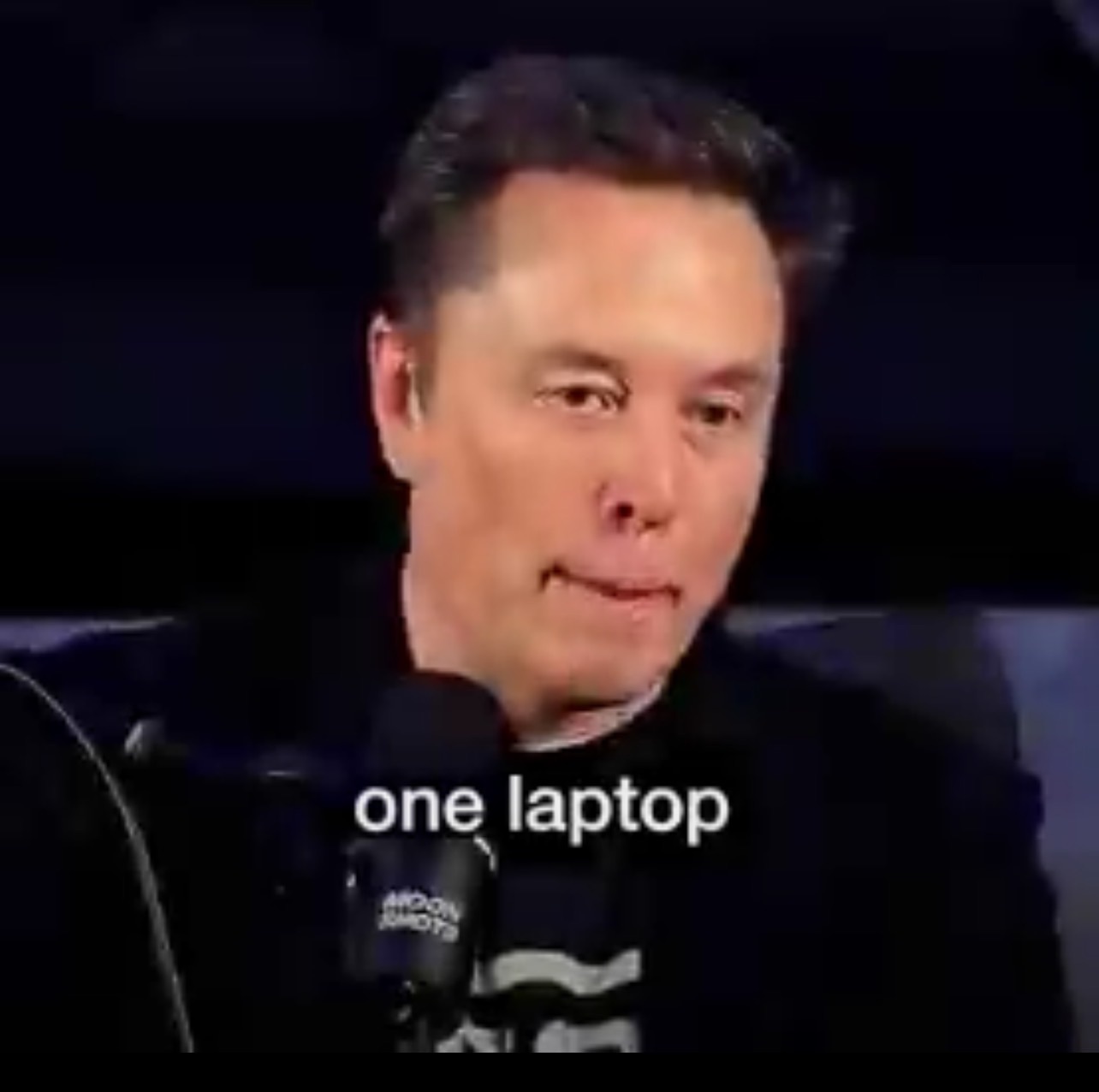
🔥Elon Musk's statement has almost sentenced all "semi-automated companies" to death.
I think Elon Musk has been very blunt this time.
A laptop with a spreadsheet can outperform hundreds of "human calculators" in a building. And if there are still a few cells in this spreadsheet that require manual human input, then the entire system itself is already invalid.
What this statement truly hits is not just traditional offices, but the vast number of hybrid companies globally that still wear the cloak of a "tech company" but essentially rely on manual labor to patch holes.
Many companies appear to be platforms, software, or automated systems on the surface.
But as soon as you dig deeper, you'll find that the core processes are still packed with manual reviews, manual proofreading, manual scheduling, and manual data entry. The front end looks like technology, but the back end is actually still propped up by human wave tactics. Such a model can still be packaged as "efficient operations" during growth tailwinds, but once it truly enters a competitive stage centered on computing power, algorithms, and automation, the fragility of this structure will be instantly magnified.
The brutal point Elon Musk wants to make is this: the companies that will survive in the future are not those that "use many people," but those that "can still run after removing people."
Because a truly strong system should have closed-loop processes, closed-loop data, and closed-loop decision-making.
If a single link still requires repeated manual intervention, it means this system hasn't been truly built. Manual labor is not an advantage; it's just covering up the system's immaturity. In the past, many enterprises considered a large workforce as execution capability, but in the new competitive logic, this instead becomes a source of cost, delay, and error rates.
I believe this is also why "hybrid companies" are finding it increasingly difficult.
They lack the flexibility of a purely manual model and the scale efficiency of a purely automated model. They are stuck in the middle: bearing high labor costs on one side while failing to achieve the true software multiplier and machine efficiency on the other. They seem to have both, but in reality, they are not fully capitalizing on the advantages of either.
The most lethal part of Musk's statement is that it's not an abstract slogan, but a clear articulation of the criteria for judging future companies.
It's not about how big your office is, not about how large your team is, not about how complex your flowcharts are, but about whether you have compressed the parts that "must be done manually by humans" close to zero. Whoever still relies on a massive amount of manual form-filling, interfacing, double-checking, and information transfer is more like prolonging the lifespan of the old era rather than entering the new one.
What lies behind this is actually a much larger divergence.
The most valuable companies in the future may not be those with the most employees, but rather those driven by a small core of talent that can amplify massive output. Organizations will become thinner, systems will become thicker, management layers will become fewer, and tools and models will become stronger. In the past, the competition was about "who can manage more people." Next, the competition might be about "who can enable fewer people to control greater production capacity."
So what I see is not just criticism of the hybrid company, but a very clear direction: any company that still requires a large amount of manual labor to maintain the "appearance of automation" will become increasingly dangerous.
Because the market ultimately won't reward pseudo-automation.
The market will reward the companies that truly embed processes into systems, write judgments into models, and solidify efficiency into products.
Do you lean more towards the idea that the strongest enterprises of the future will be companies with "more people," or companies with "stronger systems"?
The copyright of this article belongs to the original author/organization.
The views expressed herein are solely those of the author and do not reflect the stance of the platform. The content is intended for investment reference purposes only and shall not be considered as investment advice. Please contact us if you have any questions or suggestions regarding the content services provided by the platform.
