


 Likes Received
 Rate Of Return
<p>Bros, <span class="security-tag" type="security-tag" counter_id="ST/US/NVDA" name="NVIDIA Corporation" trend="0" language="en">$NVIDIA(NVDA.US)</span> is still falling so much today, while <span class="security-tag" type="security-tag" counter_id="ST/US/AAPL" name="Apple Inc." trend="0" language="en">$Apple Inc.(AAPL.US)</span> has stabilized at 55 yuan. Seems like it's over. The night market opens tonight, will <span class="security-tag" type="security-tag" counter_id="ST/US/TSLA" name="Tesla, Inc." trend="0" language="en">$Tesla(TSLA.US)</span> go strong? I'm losing money and really want to bottom-fish, but I'm afraid of falling into a trap. What price did everyone get in at?</p>

🔥 War, surging oil prices, market panic—but the real question is: why does the market end up handing money to long-term investors after every war?
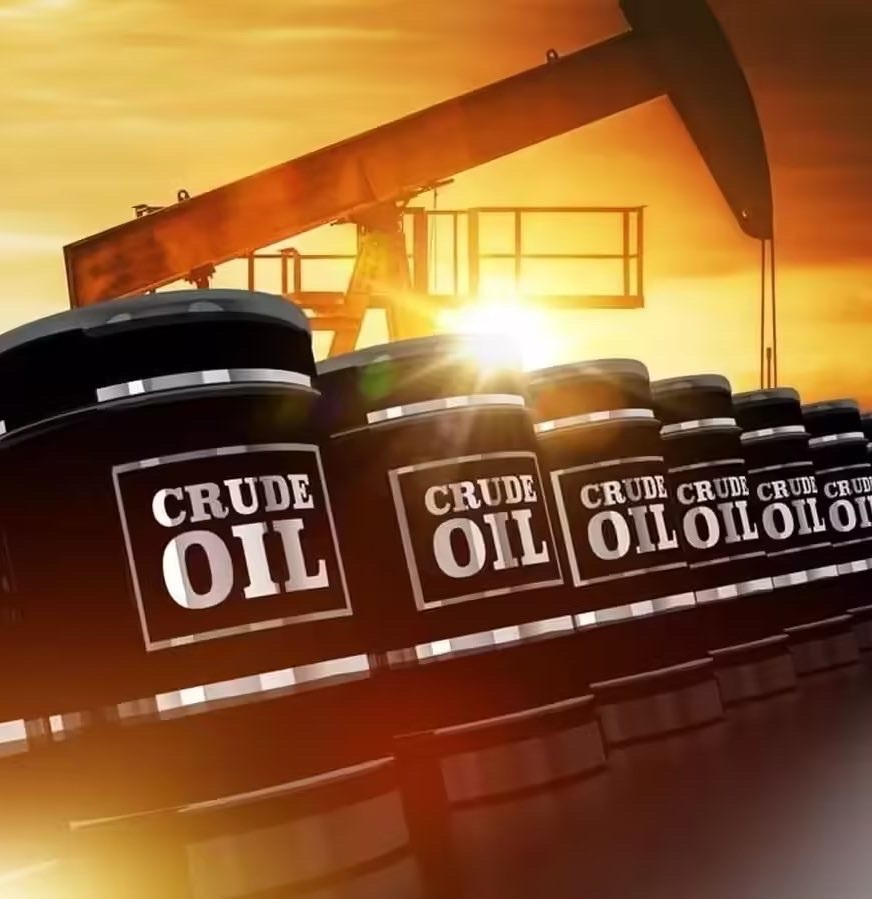
Over the past two weeks, oil prices have soared from $65 all the way to $115, then retreated to around $100.
In just 14 days, the increase was close to 45%.
Many people seeing such news do only one thing: panic.
But if you look back at history, you'll find a very counterintuitive fact:
Almost every war creates a "panic discount."
And this is precisely the moment long-term investors love most.
Many media outlets are now repeatedly emphasizing a word:
Stagflation.
It means:
Rising unemployment
Rising inflation
Declining economic growth
It sounds like the worst possible combination for the economy.
And the logic the market is worried about now is this:
Rising oil prices → Rising inflation
Worsening employment data → Economic slowdown
The Fed can neither cut interest rates nor easily control inflation
Thus, market sentiment quickly enters "extreme fear."
But the problem is, the market's way of pricing future risks has always been extreme.
Once a new risk emerges, the market often directly assumes the worst-case scenario has already happened.
For example, this oil price surge is primarily due to the Hormuz Strait.
This is one of the world's most critical energy transportation chokepoints:
About 20% of global oil shipments must pass through here.
Iran has recently created significant uncertainty through:
Drone attacks
Mine-laying
Disrupting tanker traffic
Attacking surrounding energy facilities
And what the market hates most is "uncertainty."
So oil prices were quickly priced as an extreme scenario:
As if global oil supply would be severely impacted for the next 12–24 months.
But history tells us almost every time:
Wars create oil price shocks, but rarely change long-term supply and demand.
1990 Gulf War
Oil price from $17 → $40
Back to $20 a year later
2003 Iraq War
Oil price rose short-term
Then gradually declined
2022 Russia-Ukraine War
Oil price from $74 → $130
Back to $80 a year later
In other words:
Wars cause short-term volatility, not long-term structural change.
But the most interesting thing about financial markets is here:
When risk appears, the market immediately prices in the worst scenarios for the next several years.
And once reality isn't that bad, the market begins to correct.
This is why wars often lead to a very consistent market pattern:
Phase 1: Panic
Phase 2: Market decline
Phase 3: Capital flows back
Phase 4: Recovery and rise
The statistics are even remarkably consistent.
For the vast majority of wars in history, the impact on the stock market is roughly:
A decline window of around 30 days.
Then, within 6–12 months, indices usually return to pre-war levels.
Looking over longer cycles, this pattern becomes even more obvious.
There have been about 70 wars globally over the past 30 years.
But during the same period:
The S&P 500 rose from 470 points to nearly 6900 points.
A gain of over 1200%.
This isn't an opinion; it's objective data.
War didn't destroy the market.
What truly destroys investor returns is something else:
Panic selling.
Many people choose to exit the market during wars, crises, and news shocks.
But true long-term investors do the exact opposite.
They gradually buy when the market panics.
The reason is simple:
The market is driven by emotion in the short term and by profits in the long term.
And most wars do not permanently alter corporate profitability.
Another overlooked fact is:
Rising oil prices aren't always bad.
The US is now one of the world's largest oil producers.
Rising oil prices mean:
Higher profits for energy companies
Increased energy investment
Some regional economies actually benefit
Of course, no one wants oil to reach $140/barrel.
But a short-term energy shock doesn't automatically lead to economic collapse.
The real risk is:
Investors making the most extreme decisions when emotions are at their most extreme.
For example:
2003 Iraq War
S&P500 fell from 1172 to 800
12 months later
The index returned to 1172
2022 Ukraine War
S&P500 fell from 4800 to 3667
12 months later, back to 4800 again
Almost every geopolitical crisis, the market's trajectory is very similar.
Panic → Decline → Recovery.
So many long-term investors' strategy is actually very simple:
Buy the dip.
Not predicting wars
Not predicting oil prices
Not guessing the news
But adding quality assets when market sentiment is extreme.
For example:
Technology
Artificial Intelligence
Software
Long-term growth companies
What truly determines the stock price of these companies isn't war, but:
Profitability over the next 5–10 years.
If you stretch the timeline, you'll find a very interesting phenomenon.
Starting to invest at the peak of the 2000 dot-com bubble was actually one of the worst starting points in history.
But if an investor dollar-cost averaged into the S&P 500 every week:
After 25 years
The investment return could still exceed 500%.
Looking at just the past 15 years:
The S&P 500's return is close to 700%.
During which it experienced:
Financial crisis
Pandemic
Multiple wars
Multiple bear markets
Yet the long-term trend is still upward.
This is why many top investors say:
The biggest risk to the market has never been war, but emotion.
Because war creates panic.
And panic often creates price dislocation.
If history is any guide, then almost every geopolitical crisis repeats the same story:
Short-term chaos, long-term opportunity.
The real question isn't actually:
"Will war affect the market?"
But:
When the market panics, will you choose to flee, or start positioning?
If history continues to repeat, it tends to reward only one type of person:
Those who remain patient when others are panicking.
The copyright of this article belongs to the original author/organization.
The views expressed herein are solely those of the author and do not reflect the stance of the platform. The content is intended for investment reference purposes only and shall not be considered as investment advice. Please contact us if you have any questions or suggestions regarding the content services provided by the platform.
