


 Likes Received
 Rate Of Return
<p>Bros, <span class="security-tag" type="security-tag" counter_id="ST/US/TSLA" name="Tesla, Inc." trend="0" language="en">$Tesla(TSLA.US)</span> is still falling so much today! Seems like it's over. I'm losing money and bagholding. What price did everyone get in at?</p>

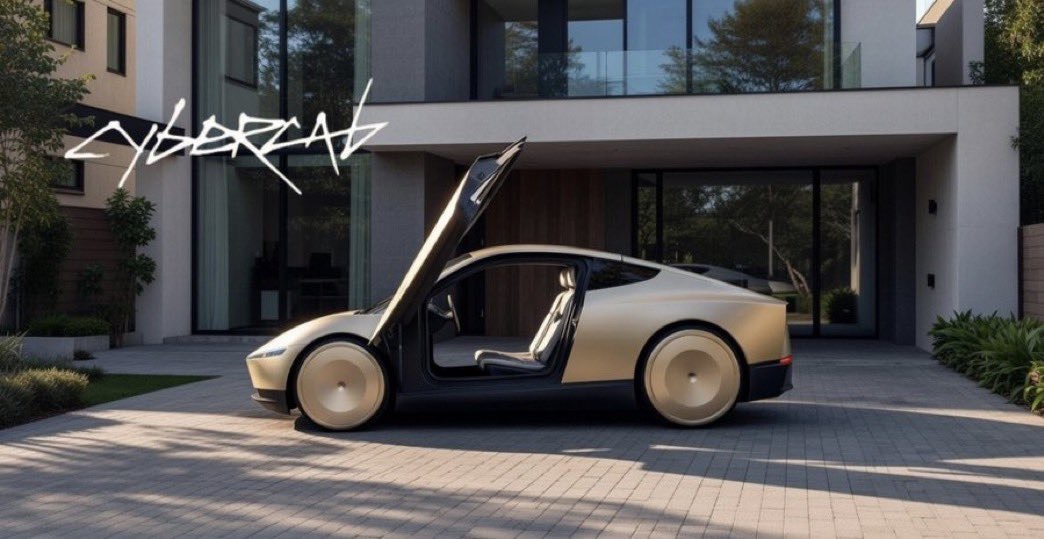
🚗🔥 Elon Musk confirms: $Tesla(Tesla.US) Cybercab may be sold for $30,000 before 2027. The real question worth asking isn't "is it cheap?" but rather—if you buy one, how much money can it earn you in a year?
Many people are still viewing Cybercab as just a car. But if you change your perspective, it's more like an asset that can make money automatically.
Assuming Elon Musk's claims come true:
Cybercab costs about $30,000.
What does that mean?
It means ordinary people can use a car to participate in an autonomous ride-hailing network for the first time, and this car doesn't need you to drive it most of the time.
In other words, what you're buying might not be a car, but a robot driver asset.
Many people overlook a key question:
Why would Tesla be willing to sell Cybercab to individuals?
Intuitively, Tesla could completely own the entire Robotaxi fleet and keep all the revenue to itself.
But from a business structure perspective, letting individuals own the vehicles actually has three huge benefits.
First, it directly impacts the existing ride-hailing industry.
Right now, Uber drivers are essentially trading time for income.
Driving every day
Accepting orders
Wasting time
But if in the future they could:
Buy a Cybercab
Let the car operate automatically
Run Robotaxi orders every day
Then the money they could make might not be less than driving themselves, maybe even more.
Once this model is established, many Uber drivers might make a simple choice:
Sell their time, or buy a money-making machine?
The answer is actually quite obvious.
This is also why Robotaxi is believed to accelerate the end of the traditional ride-hailing model.
The second reason is capital efficiency.
Many people worry that Tesla needs to invest huge amounts of capital to build a Robotaxi fleet.
But if some of the cars are individually owned, the situation is completely different.
Tesla just needs to:
Produce vehicles
Sell to users
Recover cash
Continue production
The capital turnover speed will increase significantly.
At the same time, the factory won't rely solely on Tesla's own fleet demand; it can also have consumer demand as a supplement.
In other words:
Tesla can deploy a larger network with less capital.
The third reason is actually rarely mentioned but very crucial:
Political risk.
If all the profits from the Robotaxi network go to Tesla, the company could become a huge profit center in the future.
And history tells us that once a company controls massive cash flow, politicians often target it.
But if Cybercab becomes a structure like this:
Tens of thousands of ordinary people own vehicles
Each person has monthly income
Then things are completely different.
When regulators try to restrict this industry, vehicle owners will say:
"You're not attacking a company; you're affecting my income."
This "vehicle owner alliance" is actually very similar to the political role played by Uber drivers back in the day.
This is also why letting ordinary people participate in the network might actually make the entire system more stable.
Another very realistic factor is the peaks and troughs of travel demand.
Travel demand in any city is not uniform.
Morning commute peak
Afternoon and evening peak
Late-night demand plummets
If Tesla relies entirely on its own fleet, they must have enough cars ready to meet peak demand.
But the problem is, after the peak, a large number of vehicles will be idle.
If personal vehicles are allowed to join the network, things become more efficient.
Tesla can maintain a basic fleet.
And during demand peaks, personal owners' Cybercabs can go online to operate.
This is equivalent to a decentralized fleet system.
Reducing capital pressure for Tesla
Increasing income for owners
This is actually a very typical win-win structure.
Of course, Tesla will likely set conditions.
For example, when you buy a Cybercab, you need to agree to:
Let the vehicle join the Robotaxi network for a certain number of hours each month.
Because if a large number of users buy cars but don't let them operate online, the efficiency of the entire system will decrease.
Another point many people overlook:
Cybercab is just one vehicle form.
The future Robotaxi ecosystem might have many versions:
Two-seater city car
Four-seater family car
Six-seater shared car
Even something like the Robovan Tesla has shown (similar to a small bus)
So in the future, a situation might arise:
Someone buys a six-seater autonomous vehicle
Use it as a family car when they need it
Let it run orders automatically when not in use
At that point, the meaning of the car is completely different.
It's no longer just transportation; it's a mobile asset.
Another key variable is pricing.
Recently, Tesla has been hiring Robotaxi pricing software engineers.
The core task of this position is to design a dynamic pricing algorithm.
Many people hope Robotaxi can achieve:
$1 per mile
But the reality is, if demand suddenly increases and there aren't enough cars, wait times could become 20 minutes.
At that point, many users will simply give up.
So the Robotaxi system will likely adopt a mechanism similar to Uber's current one:
Dynamic pricing / Surge pricing
The algorithm will calculate in real-time:
City demand
Number of vehicles
Regional differences
Traffic conditions
Taxes and fees
Road tolls
Then dynamically adjust prices.
The good news is, Tesla has a huge advantage:
They already have the world's largest scale of real-world driving data.
Finally, look at some real-world data.
A research report analyzed ride-hailing prices in San Francisco.
Many people think Uber is about $4 per mile.
But in reality, if the trip is very short, the price is extremely high.
0.1–0.9 miles
$30–42 per mile
0.9–1.4 miles
$12–18 per mile
1.4–1.8 miles
$9–13 per mile
2.7–5.8 miles
$4–5.6 per mile
That is:
The real cost of short trips is far higher than most people imagine.
And in a 2025 survey, the biggest complaints people had about ride-hailing were actually only three:
Price too high
Wait time too long
Safety concerns
What Robotaxi needs to solve is precisely these three things.
If Cybercab can truly achieve:
Cheaper
Faster
Safer
Then the question may no longer be:
"Will anyone buy it?"
But rather:
How many people will want to own one?
If Cybercab is really sold for $30,000 and allowed to join the Robotaxi network.
Would you treat it as:
A car?
Or an automatic income-generating asset?
The copyright of this article belongs to the original author/organization.
The views expressed herein are solely those of the author and do not reflect the stance of the platform. The content is intended for investment reference purposes only and shall not be considered as investment advice. Please contact us if you have any questions or suggestions regarding the content services provided by the platform.
