


 Likes Received
 Rate Of Return
💢💢💢

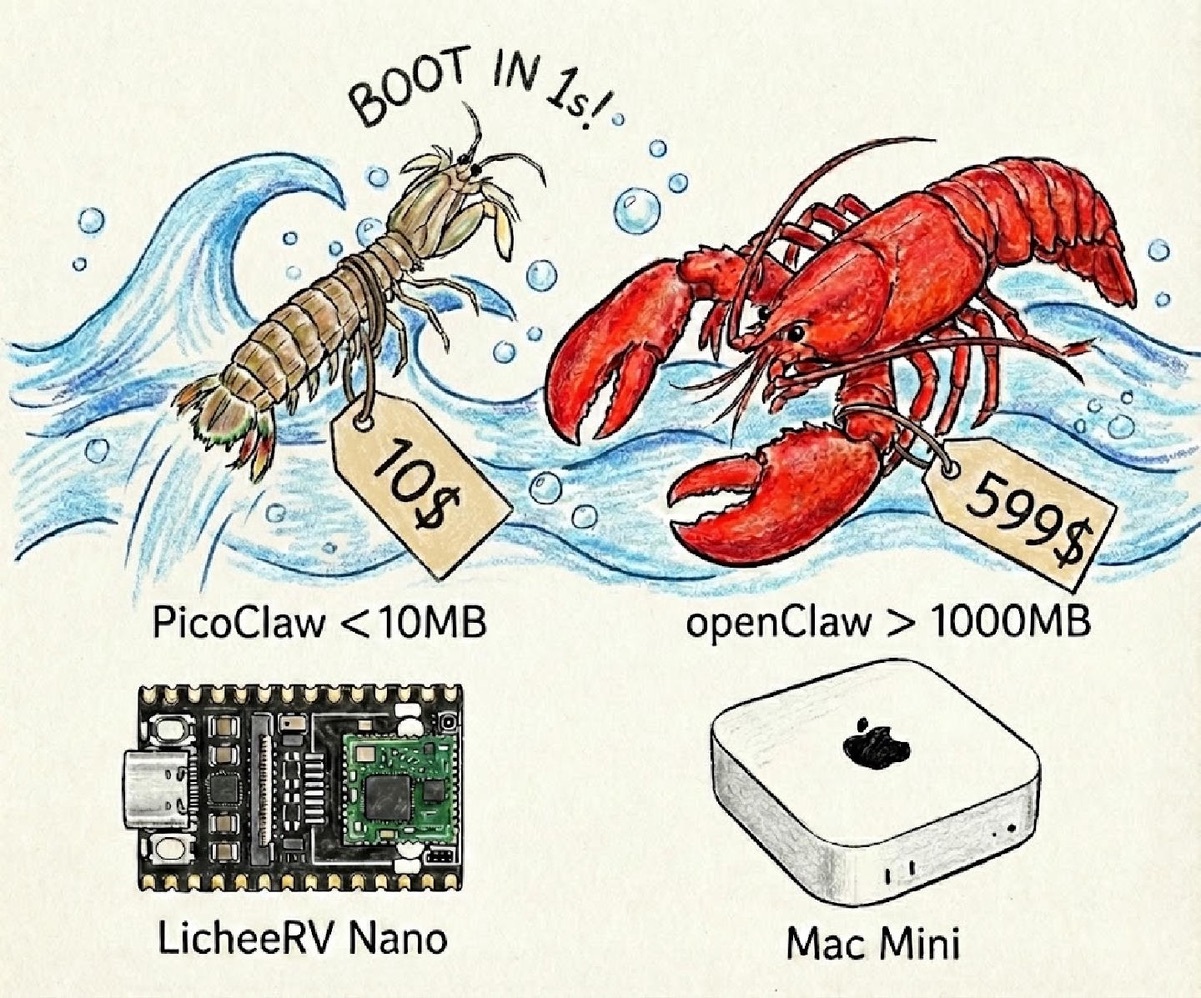
🚀 "Raising Lobsters" suddenly went viral, but behind it is actually a chain reaction of AI Agent → Computing Power → Chip Architecture.
In the spring of 2026, an open-source AI Agent framework called OpenClaw suddenly exploded in popularity within the developer community.
Because it solved something AI had never been able to do before:
Making AI not just answer questions, but truly "get work done".
Traditional large models like ChatGPT or Claude are essentially about:
Telling you how to do something.
While OpenClaw's positioning is:
Directly doing it for you.
It can understand tasks → schedule tools → call plugins → execute complete workflows.
For example:
Automatically organizing data
Operating software
Running scripts
Handling business processes
Essentially, it's:
A digital employee.
This also gave rise to a new concept:
OPC (One-Person Company)
One person + AI Agent
can run a company.
Many developers even jokingly call OpenClaw:
"Raising Lobsters".
Because the project mascot is a lobster, and each Agent is like a "claw" that helps you work.
But the truly important change isn't the framework itself, but the industry chain reaction it triggered.
When AI Agents evolve from chat tools to automated execution systems, computing power demands will change.
In the past, AI computing power was mainly focused on:
Model Training
But in the Agent era, computing power demand comes more from:
High-concurrency inference + long-duration operation.
For example:
Enterprises running thousands of Agents simultaneously
Continuously executing tasks
Calling tools
Processing data
This directly changes the computing power structure.
Therefore, many chip manufacturers have started optimizing for Agents.
For example:
Domestic DCU chips
Low-power inference chips
Edge AI chips
Simultaneously, many local governments have also started rapidly following suit.
Cities like Shenzhen, Wuxi, Changshu, Nanjing, and Hangzhou have already launched special policies to support the OpenClaw / OPC entrepreneurial model.
For example:
Computing power subsidies
Development subsidies
Startup funding
Computing power vouchers
Some regions even propose:
Zero-cost entrepreneurship.
Meanwhile, global tech giants have also begun laying out plans for AI Agents.
$NVIDIA(NVDA.US)
Plans to launch the NemoClaw platform
$Microsoft(MSFT.US)
Established the CoreAI department, aiming to be an "AI Agent Factory"
Domestic manufacturers are also quickly following up:
Zhipu → AutoClaw
ByteDance → ArkClaw
Huawei → XiaoyiClaw
Tencent → WorkBuddy
Alibaba → CoPaw
Baidu → Agent Solutions
Almost all AI companies are doing the same thing:
Agentification.
This is also why many believe the AI industry is entering a new phase:
Chatbot Era → Agent Era
But OpenClaw's viral popularity also exposed a serious problem:
Security.
The National Internet Emergency Center has already issued a risk warning.
The main issues currently discovered include:
Prompt injection attacks
Plugin poisoning
Excessive system permissions
Plaintext key storage
There have even been actual incidents, such as:
Databases being accidentally deleted
Corporate files lost
Cloud services fraudulently charged
Currently, about 30,000 OpenClaw instances are directly exposed to the public internet globally.
80% of them lack strong identity authentication.
This is also the biggest challenge for AI Agents currently:
They possess real system permissions.
If vulnerabilities appear, the impact is far greater than with ordinary AI.
So the industry now faces two directions:
On one side, the immense productivity brought by Agents
On the other, security and compliance challenges
Future AI Agent competition will likely focus on four levels:
Computing power architecture
Chip adaptation
Software ecosystem
Security system
And if Agents can truly operate at scale, the entire AI industry chain will change.
Because AI is no longer just about model competition, but about:
Automated production systems.
The question is—
If in the future, one person can really use an AI Agent to operate a complete company,
which industry do you think will be disrupted first?
Software development, cross-border e-commerce, or the content industry itself?
The copyright of this article belongs to the original author/organization.
The views expressed herein are solely those of the author and do not reflect the stance of the platform. The content is intended for investment reference purposes only and shall not be considered as investment advice. Please contact us if you have any questions or suggestions regarding the content services provided by the platform.
