


 Likes Received
 Rate Of Return
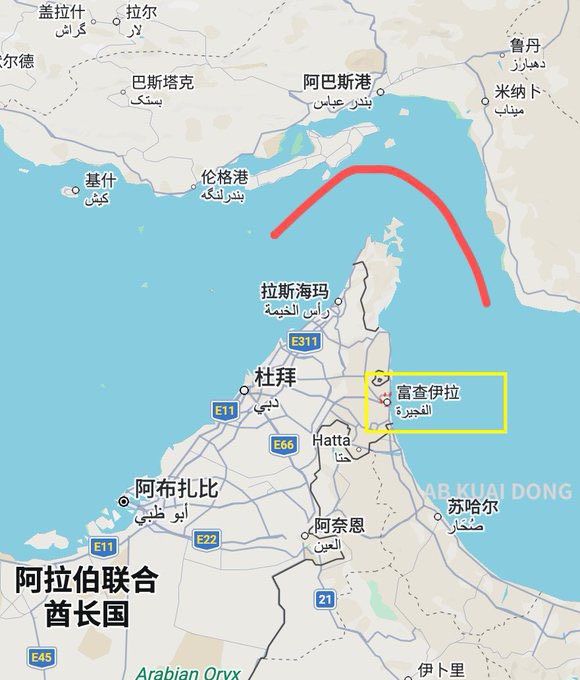
🚨🔥 Iranian drone attack on Fujairah oil storage facilities — what the market truly fears is not the fire, but the shattering of the "safety myth" beyond the Strait of Hormuz.
When the drone attack occurs in Fujairah, rather than the Strait of Hormuz itself, the nature of the incident changes.
Fujairah is important precisely because it was originally seen as a strategic export point to "bypass the risks of the Strait of Hormuz."
It is the UAE's only major oil export location that does not need to pass through the currently closed Strait of Hormuz.
In other words, it was meant to be a safe-haven route.
Now, this route has been attacked.
What does this mean?
First, the geographical security assumptions for energy transportation have been shattered.
The market's past logic was:
Tension in the Strait of Hormuz → alternative exports still available → risks are controllable
But if the alternative exports are also unsafe, the risk pricing model must be recalculated.
Second, risk premiums may rise systematically.
What the energy market is most sensitive to is not "losses that have already occurred," but "future uncertainty."
Once the market starts factoring in:
Increased shipping insurance costs
Risks of tanker rerouting
Infrastructure security issues in Middle Eastern oil-producing countries
The volatility range of oil prices will significantly widen.
Third, $Donald Trump(TRUMP.US)'s statement of "protracted war, at all costs" amplifies the sentiment.
War itself is a risk variable.
The phrase "protracted war" means the time dimension is extended.
What capital markets fear most is not a one-time shock, but sustained uncertainty.
What will this affect?
Short-term volatility in energy stocks
Global inflation expectations
Central bank interest rate path judgments
Overall valuation of risk assets
If oil prices continue to rise, the Fed's room for maneuver on the pace of interest rate cuts will be compressed.
This will have a chain effect on tech stocks, high-valuation assets, and even capital flows to emerging markets.
Many will treat this as just another piece of regional conflict news.
But I am more concerned about the structural-level signal:
When even alternative energy export routes are attacked, the global supply chain security assumptions are being repriced.
This is no longer a single-point event.
This is the "spillover escalation" of geopolitical risks.
The real question is —
Will the market price this as a short-term conflict, or has Middle East risk entered a long-term phase?
The copyright of this article belongs to the original author/organization.
The views expressed herein are solely those of the author and do not reflect the stance of the platform. The content is intended for investment reference purposes only and shall not be considered as investment advice. Please contact us if you have any questions or suggestions regarding the content services provided by the platform.
