



Earnings Report Analysis: GPUs are still in the 'specs race', while Montage Technology has quietly started 'collecting rent'.
Over the past two years, the capital market's narrative on AI has been highly concentrated on GPUs, computing power leasing, and large model companies. However, what truly determines computing efficiency is not just the scale of computing power, but the efficiency of data flow between computing units.
As global AI servers begin to adopt multi-GPU cluster architectures on a large scale, single-machine power consumption, bandwidth, and latency become performance bottlenecks. The data interconnect capability within servers is shifting from a "supporting role" to a "key variable." If GPUs are the computing engine, then interconnect chips are the "highways" of the computing system.
In this structural shift, Montage Technology has delivered a 2025 report card that can be described as a turning point.
In 2025, the company's revenue soared to 5.456 billion yuan, with net profit exceeding 2.2 billion yuan. All four core financial indicators hit record highs. But this is not a simple cyclical rebound; it is a profound structural leap.
As PCIe 6.0 and CXL 3.0 become the new generation of interconnect standards, Montage Technology is evolving from a past "cycle beneficiary" to a "rule-maker" that defines industry standards.
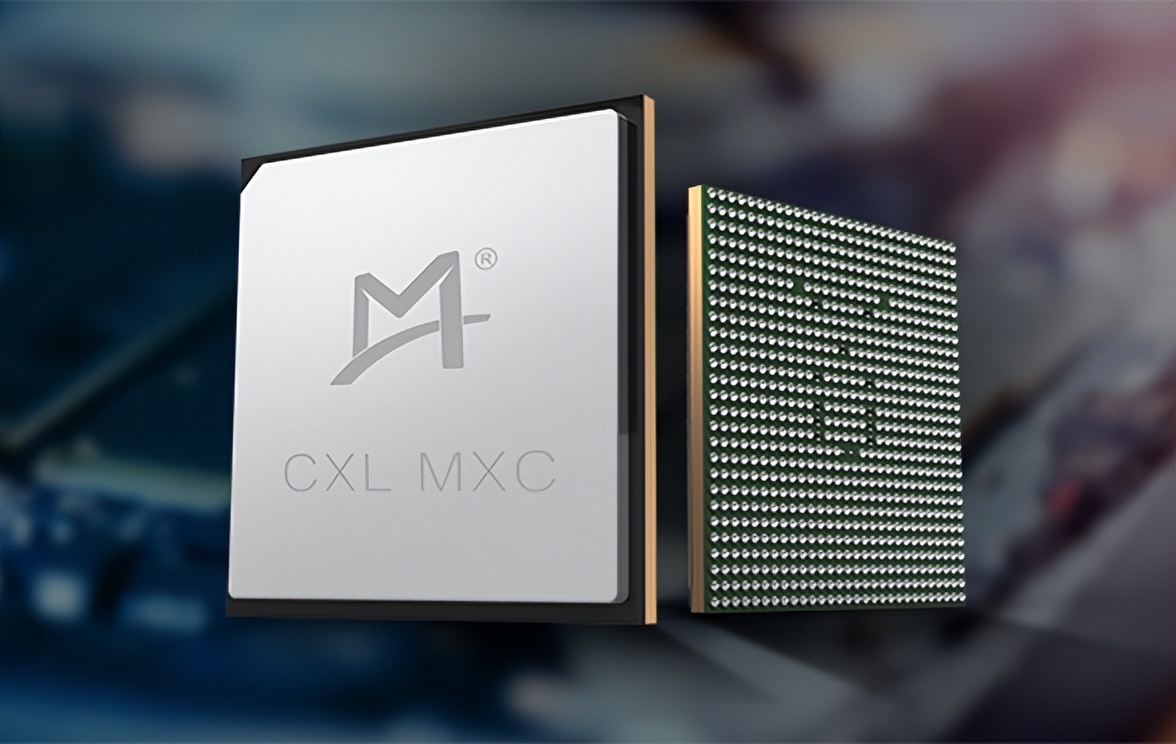
Farewell to the "Selling Shovels" Logic: Interconnect Chips Are Upgrading from Accessories to Core Variables
The market often tends to view semiconductor supporting manufacturers through the lens of "cyclical stocks," believing their growth merely follows the fluctuations in downstream server shipments. However, Montage Technology's 2025 performance completely disproves this linear logic.
Its interconnect chip revenue reached 5.139 billion yuan, accounting for over 90% of total revenue, with a year-on-year increase exceeding 53%. More crucially, the overall gross margin continued to climb to over 65%. Behind this "volume and price rising together" is the technological threshold leap brought by the AI server architecture reconstruction and the resulting shift in pricing power.
In traditional server architectures, communication bandwidth between the CPU and memory/GPUs is often the bottleneck. In the AI era where multi-GPU clusters are mainstream, data needs to flow at high speeds between thousands of computing units. Any minor delay can lead to computing power loss.
This makes high-speed interconnect chips like PCIe Retimers, DDR5 RCD, MDB, and CKD transform from dispensable "supporting roles" into "critical bottlenecks" that determine system performance.
Montage Technology keenly captured this architectural change and preemptively laid out product lines for new protocols like PCIe 6.0 and CXL 3.0. While the industry was still struggling with inventory digestion of old standards, Montage had already built a formidable technological moat with its new generation of high-margin products.
This technological barrier directly translates into market clout. Data shows that in 2024, Montage Technology's share of the global memory interconnect chip market reached 36.8%, firmly ranking first globally.
More importantly, the company has deeply participated in the international standard-setting for key DDR5 chips. In the semiconductor industry, first-tier companies set standards, second-tier companies develop technology, and third-tier companies make products.
By participating in standard-setting, Montage Technology essentially locked in the technological path for the next few years at the source, securing a "certain beneficiary" niche in the AI computing power upgrade cycle.
At this point, Montage is no longer a passive supporting supplier waiting for orders, but a key infrastructure provider capable of influencing global server architecture design. Its high growth is not speculative chasing of trends, but an inevitable result of standing at the core node of computing infrastructure upgrade.
Behind the High Valuation: Long-term Chips of Technical Standards and Ecosystem Lock-in
Any high-growth story must ultimately land on "sustainability."
Montage Technology's current forward P/E ratio exceeds 90 times, and its P/B ratio exceeds 16 times. This level clearly cannot be explained by traditional semiconductor valuation systems. The logic behind the market's high premium lies in its technological moat and strategic industry positioning.
First is R&D intensity. In 2025, the company's R&D investment was approximately 915 million yuan, a year-on-year increase of 20%, accounting for over 16.7% of revenue. R&D personnel accounted for 76% of staff, with 64% holding a master's degree or higher.
This means the company reinvests over 60% of its profits into technological iteration. In the highly complex field of high-speed, low-power mixed-signal design, the pace of R&D determines market position.
Second is global ecosystem binding capability. The company has established branches in Shanghai, Kunshan, Beijing, the US, and South Korea, deeply engaging with processor, memory module, and server manufacturers. Interconnect chips do not exist in isolation; they must be highly synergistic with CPUs, GPUs, and memory modules. Whoever can participate in standard-setting earlier can enter the design cycle of the next-generation products sooner.
This "design-in" cooperation model implies extremely high customer switching costs. Once integrated into the core supply chain, the technological barrier strengthens over time.
Looking at capital moves, the company completed its H-share listing in early 2026, raising approximately 6.9 billion HKD to further boost R&D in high-speed interconnect chips. This is both a financing act and a strategic posture. Against the backdrop of intensifying global competition in computing infrastructure, whoever can sustain investment and maintain technological leadership will continue to hold the initiative in the next round of protocol upgrades.
Of course, risks are not absent. The rollout pace of new-generation products, customer adoption progress, and the sustainability of the AI server boom cycle could all affect short-term volatility.
But from an industry trend perspective, AI computing power expansion is not a one-time demand but a long-term structural upgrade. As model parameter scales expand and inference applications proliferate, the upgrade of server internal interconnect capabilities will continue to advance.
Conclusion
In the AI narrative, GPU manufacturers stand at the center of the stage, while interconnect chip manufacturers remain behind the scenes. But as computing power scales from millions to tens of millions, as multi-GPU clusters become the mainstream architecture, and as data flow efficiency becomes the new performance bottleneck, the importance of interconnect chips will only be magnified.
Montage Technology's 2025 is not just a period of high-performance growth; it resembles a declaration of a role shift—from a server supporting supplier to a key node in AI computing infrastructure.
If computing power is the "electricity" of the new era, then interconnect chips are the core controllers of the "substation." In this global AI computing power race, the true long-term winners might not be under the spotlight, but on the "highway" that determines data flow efficiency.
Author: When the Piano Sounds
Source: Hong Kong Stock Research Society
The copyright of this article belongs to the original author/organization.
The views expressed herein are solely those of the author and do not reflect the stance of the platform. The content is intended for investment reference purposes only and shall not be considered as investment advice. Please contact us if you have any questions or suggestions regarding the content services provided by the platform.
