


 Likes Received
 Rate Of Return
💥📊 Goldman Sachs releases its list of "AI Disruption" winners and losers—the real question isn't who to go long on, but who will be replaced.
While the market is still debating "whether AI will change the world," Goldman Sachs has already broken down the question into an investment framework:
In the process of AI reshaping productivity, whose moats will be strengthened, and whose business models will be compressed?
The logic is straightforward.
To withstand the AI shock, it's not just about finding beneficiaries; more importantly, it's about shedding assets that are easily consumed by automation.
Two core characteristics of winners:
The first category: companies that are difficult for AI to replace.
Reasons typically include:
Requiring physical execution
High regulatory and compliance barriers
Complex system integration
Irreplaceable human accountability
The second category: companies that directly benefit from AI expansion.
For example:
Computing power
Data infrastructure
Security
Observability
Hyperscale cloud
AI development platforms
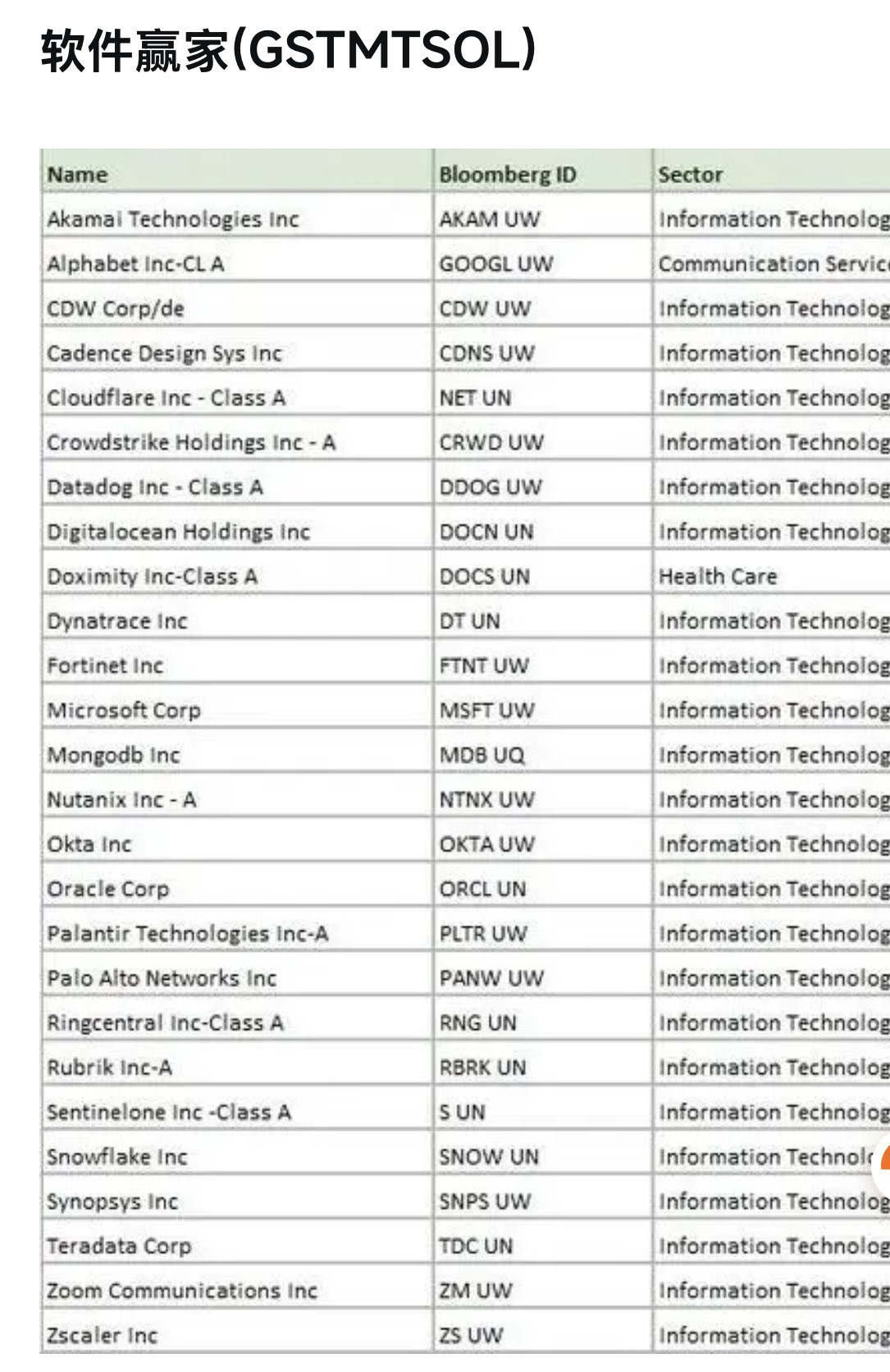
Based on this framework, Goldman views the following companies as core winners:
$Microsoft(MSFT.US)
$Oracle(ORCL.US)
$CloudFlare(NET.US)
$CrowdStrike(CRWD.US)
$Palo Alto Networks(PANW.US)
These companies are not "replaced by AI," but become the infrastructure or safety rails for AI operation.
If AI becomes the new means of production, they are the providers of those means.
The logic for losers is equally clear.
Companies whose core is "software-driven workflows," if their functions can be automated by AI or internally restructured by enterprises, may see a decline in outsourcing demand.
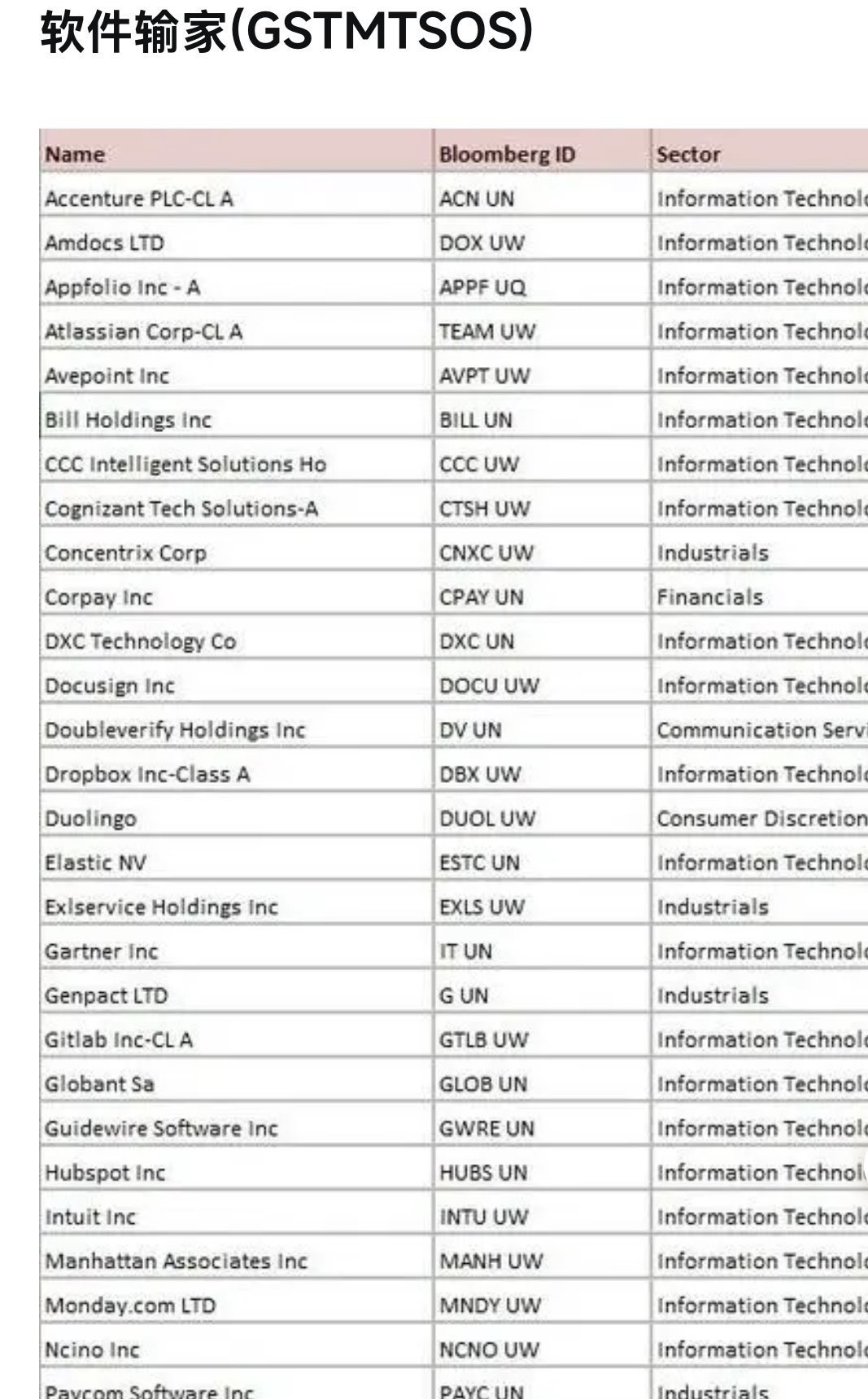
Goldman places the following companies on the potential pressure list:
$Salesforce(CRM.US)
$Docusign(DOCU.US)
$Accenture(ACN.US)
$Duolingo(DUOL.US)
The key question isn't whether they will disappear, but whether their profit margins and bargaining power are being compressed.
A year ago, the software sector's P/E ratio was as high as 51x, making it the most expensive sector in the U.S. stock market.
It has now fallen back to around 27x, with a significant contraction in valuation premium.
More interestingly:
Valuations for media, autos, semiconductors, and capital goods are already higher than software.
This means the market is repricing the "software equals high growth" narrative.
What's truly worth thinking about is—
Will AI enhance SaaS efficiency, or will it devour SaaS's profit pool?
In the next 3–5 years, will enterprises choose to continue paying for standardized software, or will they build internal AI tools as replacements?
When the cost of building productivity tools plummets, how much moat is left for external software vendors?
📬 I will continue to dissect the impact of AI structural changes on industry valuation systems, helping you see the true direction of asset repricing during cyclical shifts.
The copyright of this article belongs to the original author/organization.
The views expressed herein are solely those of the author and do not reflect the stance of the platform. The content is intended for investment reference purposes only and shall not be considered as investment advice. Please contact us if you have any questions or suggestions regarding the content services provided by the platform.
