


 Likes Received
 Rate Of Return
⚡🔥Why does Dario Amodei passionately advocate for AGI while remaining restrained on data center expansion? This is a hedge between $1 trillion in revenue and $1 trillion in risk.
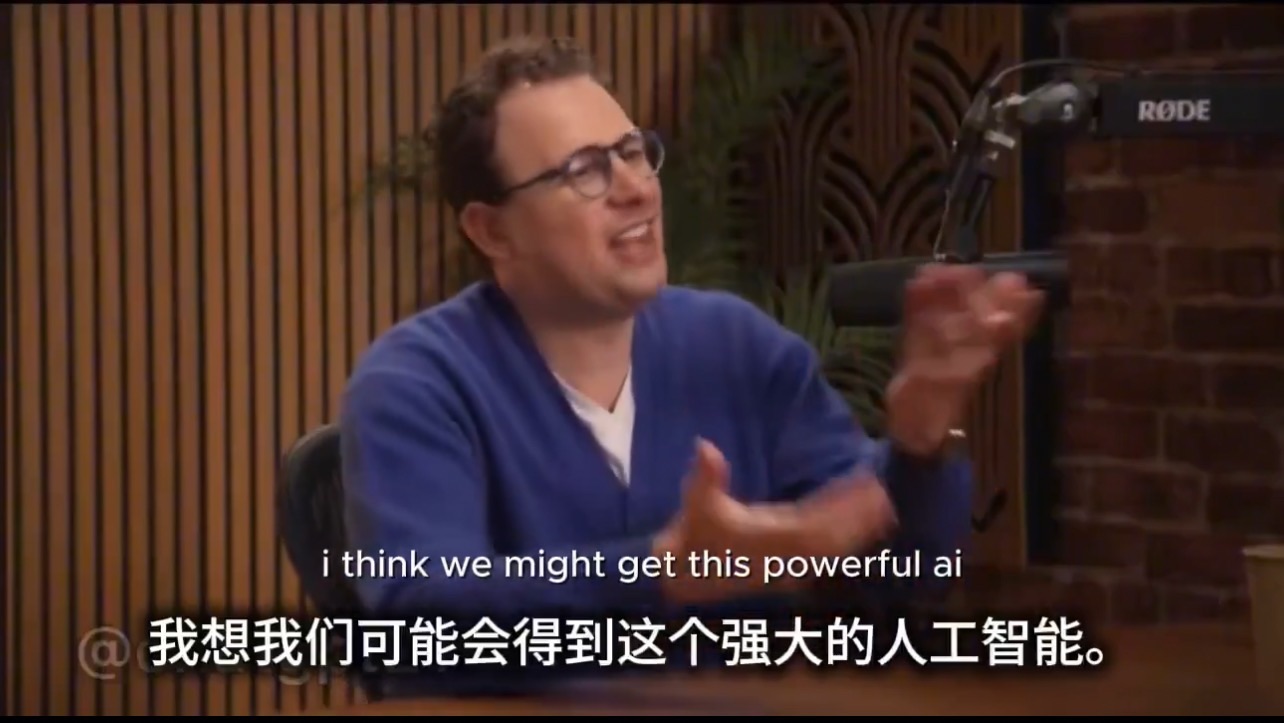
When $Anthropic CEO Dario Amodei was asked:
"You are so bullish on AGI, why do you appear conservative in data center construction?"
His answer wasn't emotional; it was a deduction based on financial structure.
He proposed an extreme but not impossible scenario:
If revenue continues to grow at a rate of 10x per year, by the end of 2027, a leading model company's annualized revenue could reach $1 trillion.
The true meaning of this statement is not optimism.
It's a warning.
Let's break down the logic first.
AI model capabilities are improving exponentially.
Commercial penetration of models is also expanding rapidly.
If growth continues, the revenue curve will be extremely steep.
But the problem is—
Revenue can grow exponentially,
but capital expenditure is upfront, rigid, and non-recoverable.
Data centers are not software.
Once built, they become multi-billion dollar long-term assets,
locking in electricity, land, GPU procurement contracts, and financing costs.
If a company pre-deploys computing power based on "10x revenue growth,"
it must bet on two things:
First, demand won't slow down.
Second, prices won't drop significantly.
Yet the AI industry precisely faces two structural risks:
Price competition arising from converging model capabilities.
Decreasing per-unit computing power demand due to improved inference efficiency.
If these two variables occur simultaneously,
the revenue growth curve slows,
but capital expenditure is already locked in.
This is the "staggering financial risk" Dario mentioned.
He is bullish on AGI because the technological path is opening up.
But he remains restrained on data center expansion because capital cycles and technology cycles are not synchronized.
Technology can double in a year.
The payback period for infrastructure could be five to ten years.
If the judgment is wrong,
it's not a problem of slowing growth,
but a problem of balance sheet imbalance.
This is also the most easily overlooked point in the current AI race:
The real risk is not in model lagging,
but in capital structure mismatch.
When the market enthusiastically discusses trillion-dollar revenues,
few talk about the trillion-dollar pressure of fixed assets.
And this is exactly what mature companies must prioritize.
So this is not "bearish on AGI."
It's a calculation of cash flow safety margin under high-growth expectations.
The truly thought-provoking question is:
Should the expansion of AI infrastructure be planned according to the technology curve,
or the cash flow curve?
In the computing arms race, are you more worried about the risk of falling behind,
or the risk of over-expansion?
📬 I will continue to deconstruct the capital structure logic and cyclical inflection points behind the AI industry chain, helping you maintain judgment amidst the hype.
The copyright of this article belongs to the original author/organization.
The views expressed herein are solely those of the author and do not reflect the stance of the platform. The content is intended for investment reference purposes only and shall not be considered as investment advice. Please contact us if you have any questions or suggestions regarding the content services provided by the platform.
