


 Likes Received
 Rate Of Return
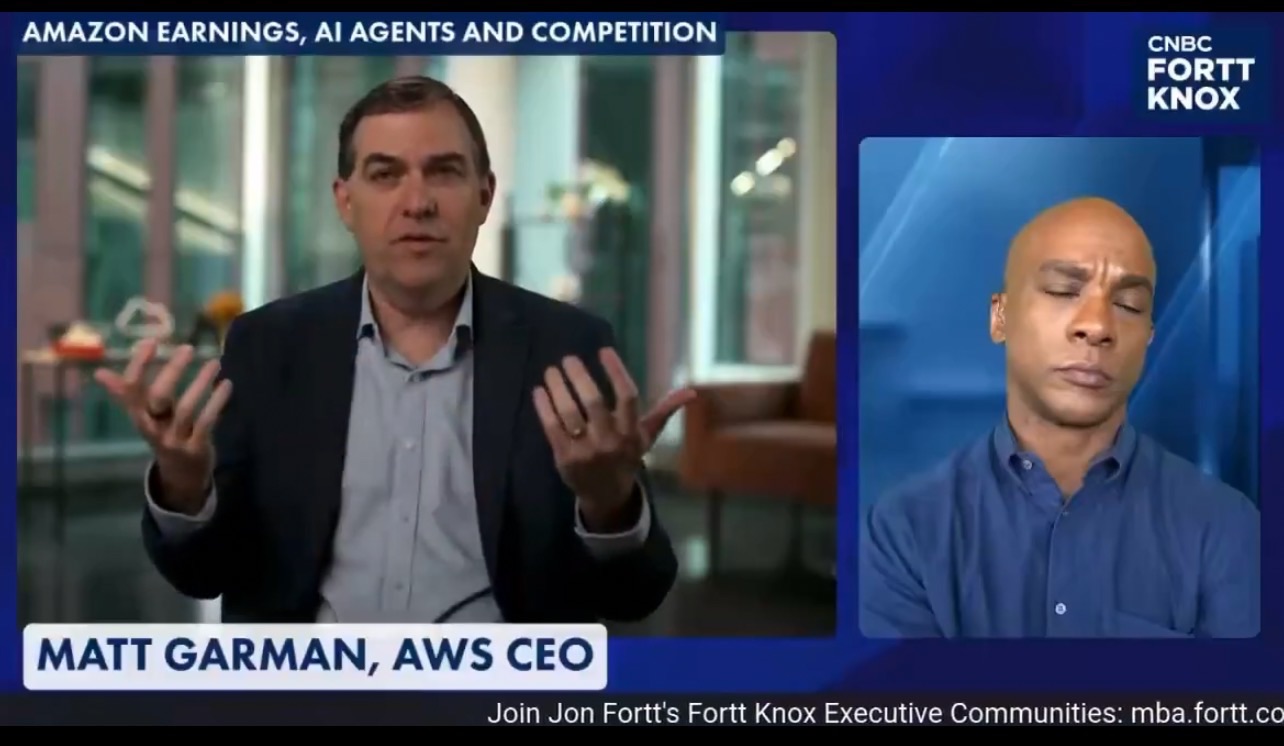
🚀 "We will sell every single server." — This statement from AWS's CEO is more important than the earnings report.
The market is fixated on profit margins.
But this statement from Matt Garman
might be the key signal.
"Even with this level of capital expenditure, my judgment is—we will still be capacity-constrained for the next few years.
We will sell every server, every bit of bandwidth, and we'll wish we had more."
This isn't emotional expression.
This is confirmation of a supply-demand imbalance.
When a cloud provider explicitly states "insufficient capacity,"
it means demand growth has outpaced the deployment pace.
If even the fastest-expanding AWS is capacity-constrained,
what does that mean?
It means the demand for AI inference and enterprise migration
far exceeds the current infrastructure supply.
And this isn't a short-term phenomenon.
The phrase "for the next few years"
means the demand curve is steepening.
The market often overestimates short-term profit pressure
but underestimates the pricing power brought by long-term capacity bottlenecks.
When demand exceeds supply,
the largest player benefits the most.
$Amazon(AMZN.US)
AWS's scale dictates that
as long as demand exists, it is the primary beneficiary.
The core logic behind such statements is—
not "can we sell it,"
but "can we build it faster."
In the AI era, computing power is essentially infrastructure.
When infrastructure is in a state of chronic shortage,
the valuation anchor is no longer just quarterly profit margins.
The question is—
If the next two years remain capacity-tight,
would you worry more about high capital expenditure,
or more about missing the demand explosion?
📬 I will continue to dissect the real changes in the supply-demand structure of cloud and computing power, focusing on the variables that truly determine the cycle's direction. Welcome to subscribe, let's stand on the side of long-term trends together.
The copyright of this article belongs to the original author/organization.
The views expressed herein are solely those of the author and do not reflect the stance of the platform. The content is intended for investment reference purposes only and shall not be considered as investment advice. Please contact us if you have any questions or suggestions regarding the content services provided by the platform.
