


 CRWV Commentator
 Rate Of Return
$Amazon(AMZN.US) Generally, new products have a two-year first-mover advantage, but Amazon's AWS had no competitors for seven years. Why? The reason might be "Black Friday" and its characteristics—a sudden surge in demand, generating massive redundant computing power at other times.
1. The Death Loop of First-Mover Advantage and Scale Effects (Competitors Can't Enter)
Amazon itself was the first and most demanding customer of cloud services. To handle the traffic tsunami of "Black Friday," it was forced to build a globally distributed, ultra-large-scale infrastructure far exceeding demand at the time. When it opened this system to the public (AWS):
· Cost Crushing: Its server utilization smoothed out the peaks and troughs of retail, spreading fixed costs extremely thin. Competitors faced astronomical initial investments and higher unit costs.
· Trust Crushing: Early startups (e.g., Netflix) entrusted their lives to AWS because it had already withstood harsher tests. "Even Amazon's own business runs on it" was the best sales pitch early on.
2. The Compound Effect of Product Ecosystems (Competitors Can't Keep Up)
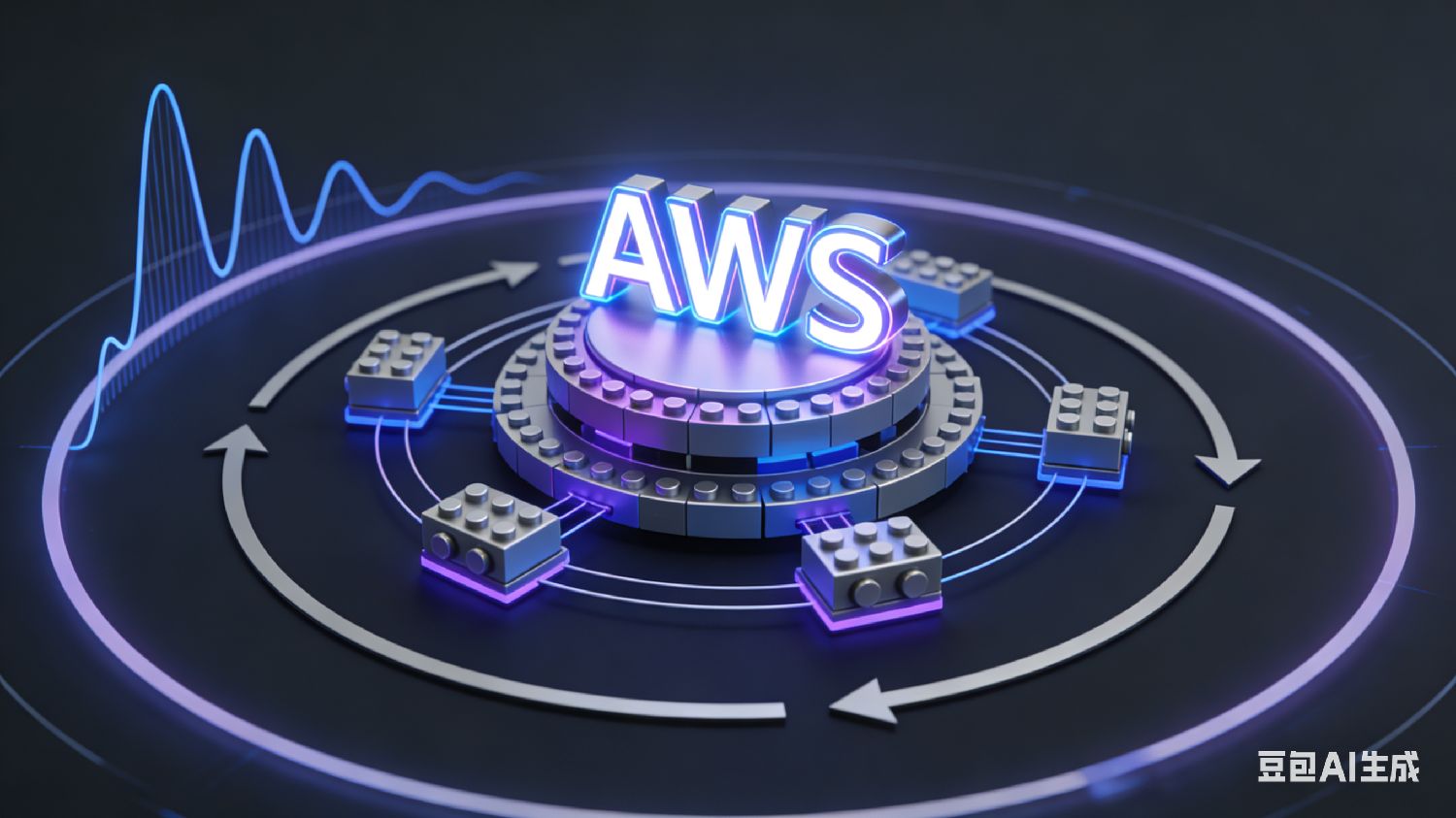
AWS isn’t just "renting servers"—it’s a Lego empire built layer by layer:
· Bottom Layer (EC2/S3) → Middle Layer (Databases, Analytics) → Top Layer (AI, IoT Services).
Once customers run their business on the bottom layer, their data and systems get "stuck." Migrating is like changing an engine mid-flight. By the time competitors build something like EC2, Amazon has already added ten new layers. Competitors are always chasing a moving, ever-growing target.
3. Organizational DNA and the Flywheel Effect (Competitors Can't Learn)
This is fundamental. From day one, Bezos positioned Amazon as an "infrastructure company." E-commerce was just its first outward-facing capability.
· Flywheel-Driven: AWS profits fuel e-commerce logistics and R&D, making the entire Amazon empire stronger, which in turn gives AWS more internal scenarios to refine. This virtuous cycle left competitors struggling to even cast the first gear in seven years.
4. Mindshare and Ecosystem Lock-In (Competitors Can't Win)
By the time Microsoft and Google woke up and went all-in on the cloud (seven or eight years later), the market had already equated "cloud = AWS."
The copyright of this article belongs to the original author/organization.
The views expressed herein are solely those of the author and do not reflect the stance of the platform. The content is intended for investment reference purposes only and shall not be considered as investment advice. Please contact us if you have any questions or suggestions regarding the content services provided by the platform.
