


Zenava UserDay Shanghai Station Record: 4 Industry Judgments and 4 AI Implementation Methods

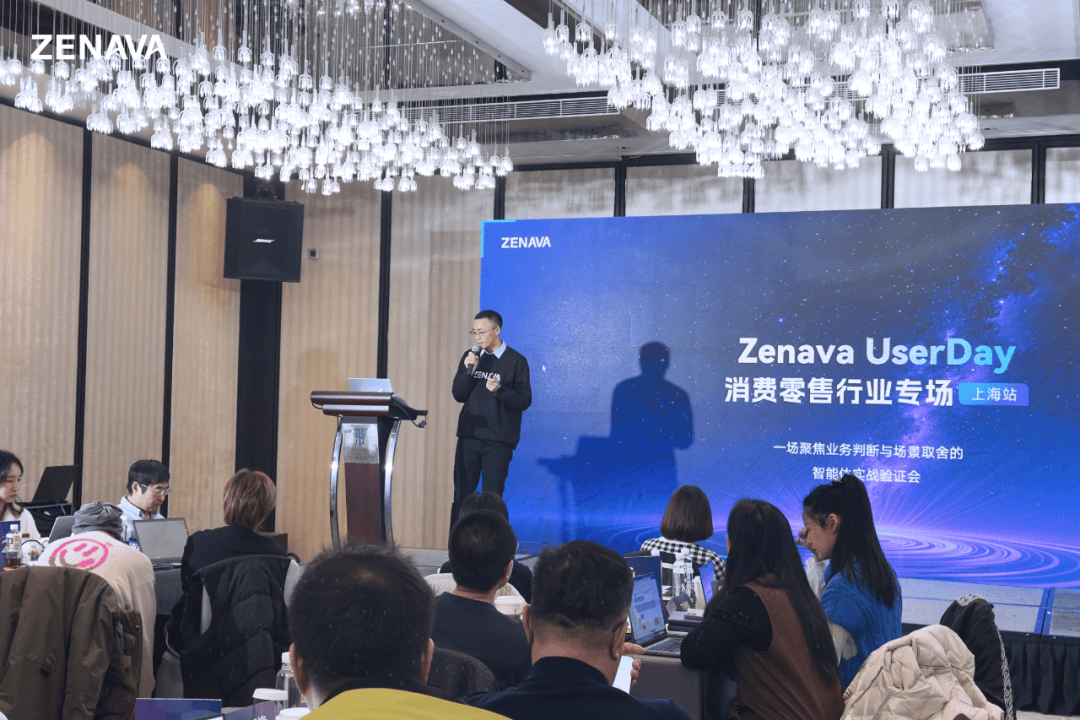
On January 15, the first event of the 2026 Zenava UserDay was held in Shanghai.
Leading companies and industry representatives from the consumer retail sector gathered to engage in high-density discussions around real business challenges.
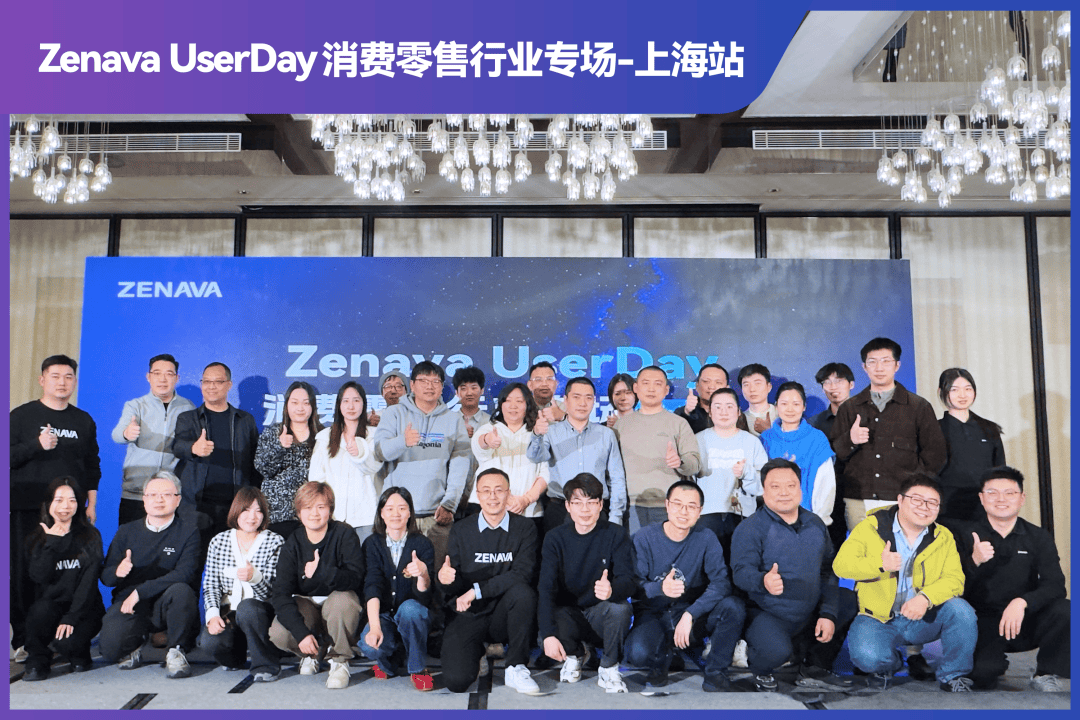
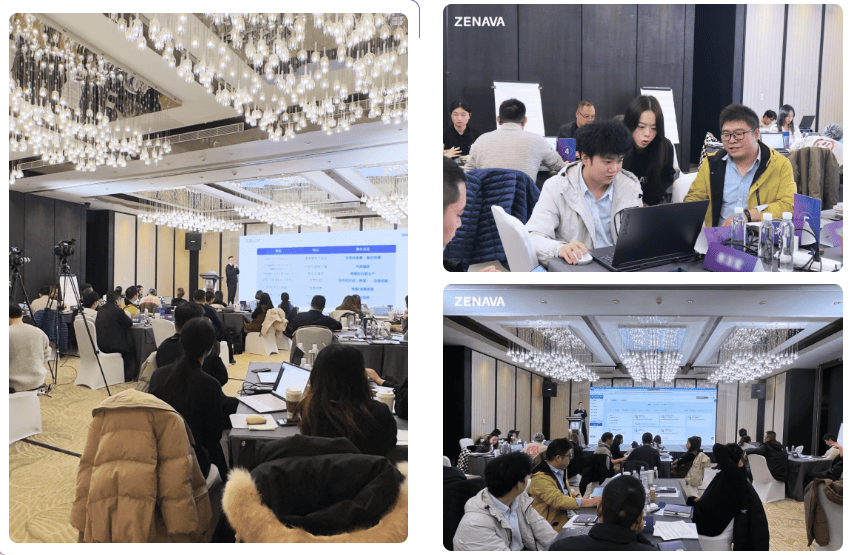
Through full-day live demonstrations and in-depth exchanges, four core industry insights on consumer retail Agent applications were distilled, along with four actionable methodologies to provide businesses with a clear path from insight to execution.
The following sections systematically present the latest practical understanding of consumer retail Agents through these four insights and methodologies.
I. Four Core Industry Insights on Consumer Retail Agents
Insight 1: From "Trying Agents" to "Judging Agents": Decision-Making Is Shifting Forward
As Agents continue to be deployed in consumer retail scenarios, a reality has emerged: many projects remain stuck in the demo phase—not due to technical limitations, but because of a lack of business scenario judgment at the outset. Whether an Agent can function is no longer the industry’s focus; instead, attention is shifting toward identifying which scenarios are worth pursuing now, whether they occur frequently enough, and whether they can deliver quantifiable returns. Practice is forcing businesses to recognize that judgment, not technical demonstration, is the first hurdle for Agent projects to move into production.
Insight 2: From Efficiency Tools to Outcome Deliverers: Agents Are Now Accountable for Business Results
In early explorations, Agents were primarily seen as tools to enhance human efficiency. But in real business environments—especially in high-frequency scenarios like customer service, after-sales, and service fulfillment—expectations have shifted from "can it help answer questions" to "can it get the job done." The ability to complete tasks independently, reduce human intervention, and form stable closed loops is becoming the core standard for measuring Agent value. Business completion, rather than interaction experience, is now the key metric for Agent maturity.
Insight 3: Whether Scenarios Are Clearly Defined Determines an Agent’s Path to Production
A consensus formed during on-site discussions: Agents don’t fail in complex problems but in ambiguous scenarios. When user types, entry points, business stages, and emotional states are handled indiscriminately, even the strongest technical capabilities struggle to ensure stable performance. This renders the "one Agent for all problems" approach increasingly ineffective, replaced by scenario breakdowns bounded by specific business units. Scenario granularity is emerging as the critical variable for Agent stability, operability, and scalability.
Insight 4: As Models Converge, Business Understanding Becomes the True Differentiator
With multiple models coexisting in practice, the importance of technical selection is declining. Agent performance increasingly hinges on the depth of business understanding: whether it aligns with real user expressions, fits frontline workflows, and covers high-frequency yet fragmented edge cases. Practice shows that business comprehension, not model capability, is becoming the core source of long-term Agent competitiveness.
II. Four Methodologies: Practical Implementation Paths for Agents in Consumer Retail
Methodology 1: Don’t Start Big: Agent Transformation Should Be Proactively Scoped
A key takeaway from the event: attempting to overhaul entire customer service or fulfillment processes at once is the most common—and most likely to fail—path for Agent projects. Overly ambitious scopes not only increase judgment difficulty but also amplify trial costs and decision risks, leading to premature project cooling before value is proven. Instead of pursuing "one-step perfection," it’s better to proactively narrow the scope during initiation, prioritizing judgment and risk control.
Methodology 2: Start with a "Minimal but Complete" Business Loop
A recurring emphasis: the best scenarios to launch Agents aren’t the simplest-looking ones, but high-frequency business units with clear boundaries, well-defined goals, and measurable outcomes. Though small, these scenarios have complete workflows that truly test an Agent’s ability to operate independently. Validations around single use cases—like repair requests, order tracking, or follow-ups—yield faster, clearer conclusions.
Methodology 3: One Solid Loop Outperforms Multiple Shallow Scenarios
Coverage ≠ success. Compared to launching multiple half-baked Agents, a single stable, metric-driven loop builds internal confidence and replication value more effectively. Whether measured by independent resolution rates or accuracy, sustained performance in one scenario often proves more persuasive than "appearing to do a lot."
Methodology 4: Agents Aren’t Projects—They’re Ongoing Operational Capabilities
Practice shows Agents don’t exist in a "set-and-forget" state. Only through continuous evaluation, refinement, and paced optimization can they progress from usable to reliably usable. A shared lesson: improving from 85% to 90% efficacy rarely comes from one technical upgrade but from sustained operations and detail polishing. Thus, "operational capability" is the key prerequisite for long-term Agent value.
III. Zenava UserDay: A Professional Co-Creation Space for Customer Engagement
In summary, deploying consumer retail Agents isn’t a single-point tech upgrade but a systems engineering feat requiring judgment and organizational synergy. Discussions converged on one truth: an Agent’s real value depends on whether a business can go deep and deliver consistently in the right scenarios with disciplined pacing.
This also means the industry needs—more than ever—a professional forum to discuss real problems, validate diverse approaches, and accumulate practical knowledge.

Against this backdrop, Zenava UserDay was born.
It’s not a training event but an AI Agent practice platform for businesses—centered on real scenarios, verifiable implementation paths, and measurable metrics to help build clearer Agent reference frameworks.
Structured around industry exchanges, live demos, and workshop co-creation, UserDay emphasizes low-risk experimentation and knowledge reuse. Throughout 2026, Zenava UserDay will expand to multiple cities nationwide.
We also invite more frontline practitioners to join, advancing discussions from theory to practice and steering customer engagement toward more professional, rational, and sustainable evolution.
The copyright of this article belongs to the original author/organization.
The views expressed herein are solely those of the author and do not reflect the stance of the platform. The content is intended for investment reference purposes only and shall not be considered as investment advice. Please contact us if you have any questions or suggestions regarding the content services provided by the platform.
