



Caffeine Giant "Addicted" to Innovative Drugs: Shiyao Innovation Goes to Hong Kong, Shiyao Group Gains More Strong Player Chips

In the era of rapid evolution in China's pharmaceutical innovation, the linkage between technological breakthroughs and the capital market has become increasingly close.
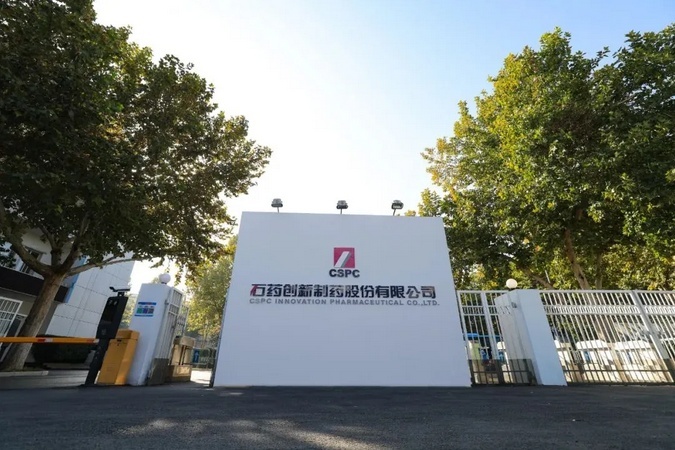
On December 10, Sino Biopharmaceutical Innovation, spun off from the A-share listed company Sino Biopharmaceutical, officially submitted its prospectus to the main board of the Hong Kong Stock Exchange, initiating its H-share IPO process, with CITIC Securities serving as the exclusive sponsor.
This company, which started as a caffeine producer, transformed into an innovative drug platform after acquiring Jushi Biologics. Its Hong Kong listing can be seen as a key move by Sino Biopharmaceutical in the "Innovation 2.0 Era" of biopharmaceuticals.
However, the prospectus also revealed consecutive revenue declines, widening losses, and innovative drug revenue accounting for less than 10% of the total, reflecting the challenges Chinese pharmaceutical companies face in transitioning from traditional businesses to cutting-edge R&D.
From "King of Caffeine" to a Newcomer in Innovative Drugs: Is the Transition Complete?
The story of Sino Biopharmaceutical Innovation began at a starting point far removed from "innovative drugs."
According to the prospectus and company materials, its predecessor, Sinoway, was a health industry firm established in 2006, initially known for its functional ingredient business. It was long the global leader in the synthetic caffeine market, supplying raw materials to international beverage giants like Coca-Cola, PepsiCo, and Red Bull GmbH.
Data from Frost & Sullivan shows that from 2020 to 2024, Sino Biopharmaceutical Innovation remained the world's largest supplier of synthetic caffeine.
This traditional business once contributed over 90% of its revenue, supporting the company's stable cash flow during its peak. However, in recent years, slowing market growth and industry supply equilibrium have significantly weakened the growth momentum of this segment. Meanwhile, with the support of macro policies, the company has accelerated its strategic shift toward innovative drug R&D and biopharmaceuticals, particularly in high-growth markets such as oncology, autoimmune diseases, and infectious diseases.
In 2023, Sinoway acquired a 51% controlling stake in the biopharmaceutical platform Jushi Biologics through a capital increase of RMB 1.871 billion and subsequently changed its name to "Sino Biopharmaceutical Innovation Co., Ltd.," clearly signaling its strategic pivot. In September this year, Sino Biopharmaceutical Innovation proposed acquiring an additional 29% stake in Jushi Biologics, raising its ownership to 80%, demonstrating its commitment to going all-in on innovative drugs.
During this period, expanding global capital access, alleviating transition pains, and R&D investment pressures have driven many pharmaceutical companies to push for listings. Following the footsteps of industry leaders like Hengrui Pharma, which successfully established dual A+H platforms, and others like Mindray and WuXi AppTec, Sino Biopharmaceutical Innovation's Hong Kong IPO application is a natural step.
According to HKEX disclosures, in the first seven months of 2025, the company reported revenue of approximately RMB 1.241 billion but a net loss of about RMB 226 million, with gross margins dropping to 38.3%.
This performance volatility reflects both the slowdown in traditional businesses and the high costs of innovative drug R&D, which has yet to generate sufficient revenue scale—a typical transitional challenge.
Reviewing its financial performance over recent fiscal years shows annual revenue declined from RMB 2.838 billion in 2022 to RMB 1.981 billion in 2024. Core profitability metrics also came under pressure, with gross margins declining yearly and profits turning into losses.
As of the first seven months of 2025, traditional businesses still dominated, with functional ingredients and health products accounting for about 88.4% of revenue, while the much-anticipated biopharmaceutical products contributed only about 9.5%, less than 10%.
This indicates that the company's revenue and profit remain heavily reliant on traditional businesses, while the commercialization of innovative drugs is still in its early stages. The "old-to-new transition" dilemma is evident.
PD-1, mRNA, and 9 ADCs: Sino Biopharmaceutical Innovation's Pipeline
In fact, in biopharmaceuticals, Sino Biopharmaceutical Innovation has already commercialized two antibody drugs: the Class 1 innovative PD-1 inhibitor Enshuxin® and the first domestically developed omalizumab biosimilar Enyitan® under Category 3.3.
Additionally, its mRNA vaccine Duentai® and Duentai 2® for variants hold clinical and market value under China's emergency use authorization framework.
Meanwhile, as of the latest practicable date in the prospectus, the company's R&D pipeline includes 15 clinical or late-stage drug candidates, nine of which are antibody-drug conjugates (ADCs) and one is an mRNA vaccine. The ADC pipeline covers high-value targets like EGFR, HER2, and CLDN18.2.
A closer look at the prospectus reveals a pipeline spanning oncology, autoimmune diseases, and infectious diseases, with a core focus on ADCs and mRNA vaccines—two of the hottest and most competitive fields today.
However, while these R&D achievements hold potential commercial value, their current contribution is insufficient to reshape the overall revenue structure. This explains why IPO fundraising is crucial for long-term R&D investment and global expansion.
The innovative drug business is clearly in a "cash-burning" investment phase. Acquiring Jushi Biologics and advancing over a dozen clinical or late-stage pipelines require continuous capital.
With weakening self-sustaining capabilities, losses are almost inevitable. In November, the company's former chairman, Pan Weidong, was fined RMB 5 million by the CSRC for insider trading. While the penalty was borne personally, it has somewhat shaken market confidence in the company's governance.
Sino Biopharmaceutical Innovation's current state is a microcosm of many traditional Chinese pharmaceutical companies transitioning to innovation: they leverage accumulated cash flow to navigate cycles but must confront the tension between short-term performance declines, strategic patience, and shareholder return demands. A Hong Kong listing is undoubtedly a critical step in securing "ammunition" for this prolonged battle.
Industry Momentum in China's Pharmaceutical Innovation 2.0 Era
In a broader industry context, China's pharmaceutical innovation is entering a 2.0 phase centered on "high-quality and sustainable innovation." According to a Clarivate report, China's biopharmaceutical out-licensing deals in the first eight months of 2025 exceeded $50 billion, surpassing last year's total, with an expected annual growth rate of 35%. This trend clearly signals the rising participation of domestic innovative drugs in global R&D and commercialization value chains.
This year, the surge in out-licensing deals, particularly in new target areas like PD-1/VEGF bispecific antibodies, reflects how innovative drug companies are rapidly integrating into global markets through international collaboration. This model allows early capital recovery for R&D investments and amplifies the global impact of innovations. Over time, China's innovative drugs may achieve a qualitative leap in influence within the global healthcare system.
Technologically, China's contributions in cutting-edge fields like targeted protein degradation (TPD) account for a significant global share, with clinical pipelines growing steadily. This further illustrates China's R&D ecosystem transitioning from a "follower" to a "peer" or even a "leader."
This industry backdrop provides tangible opportunities for Sino Biopharmaceutical Innovation's technical roadmap, including broader external collaboration and capital market access, while also driving cross-border financing channels at the institutional level.
Recently, several innovative drug and related companies have filed or prepared for IPOs, reflecting Hong Kong's renewed appeal as a financing hub for tech and healthcare. Sino Biopharmaceutical Innovation's timing aligns with this trend, capitalizing on overseas capital market resources toward the pharmaceutical innovation sector.
For investors, beyond its R&D progress, Sino Biopharmaceutical Innovation's value lies in the resource empowerment from its parent company, Sino Biopharmaceutical.
As of pre-IPO, Sino Biopharmaceutical (01093.HK) indirectly owns 75.30% of Sino Biopharmaceutical Innovation through wholly-owned subsidiaries NBP Pharma and CSPC Ouyi Pharma, making it the controlling shareholder.
Statistics show that, leveraging its AI-powered drug discovery platform, Sino Biopharmaceutical has secured over $16.6 billion in overseas licensing deals. In June, it signed a $5.33 billion strategic R&D collaboration with AstraZeneca to discover and develop novel oral small-molecule drug candidates. As the parent company's core innovative drug platform, its post-listing revenue potential remains significant, potentially further benefiting the parent.
The copyright of this article belongs to the original author/organization.
The views expressed herein are solely those of the author and do not reflect the stance of the platform. The content is intended for investment reference purposes only and shall not be considered as investment advice. Please contact us if you have any questions or suggestions regarding the content services provided by the platform.
