


Morgan Stanley: Comparing Nokia and Ciena
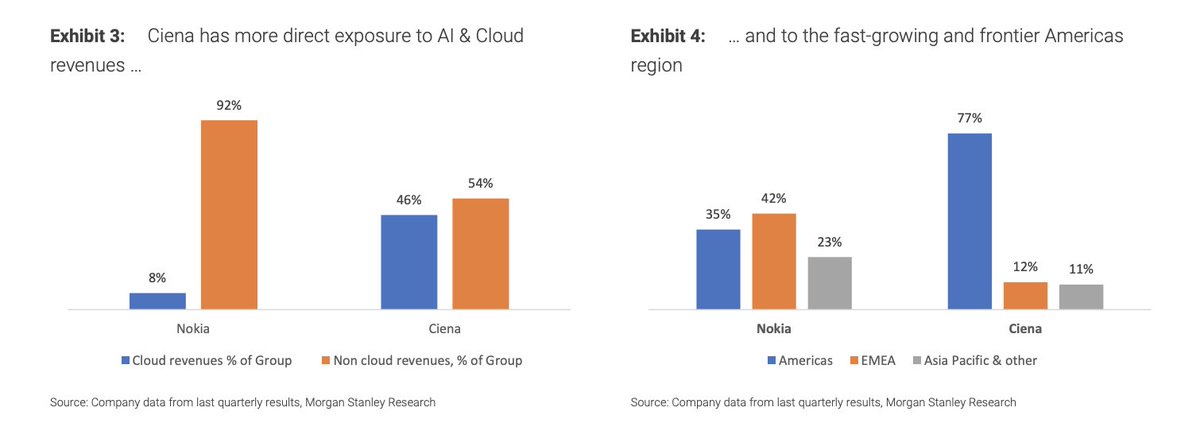
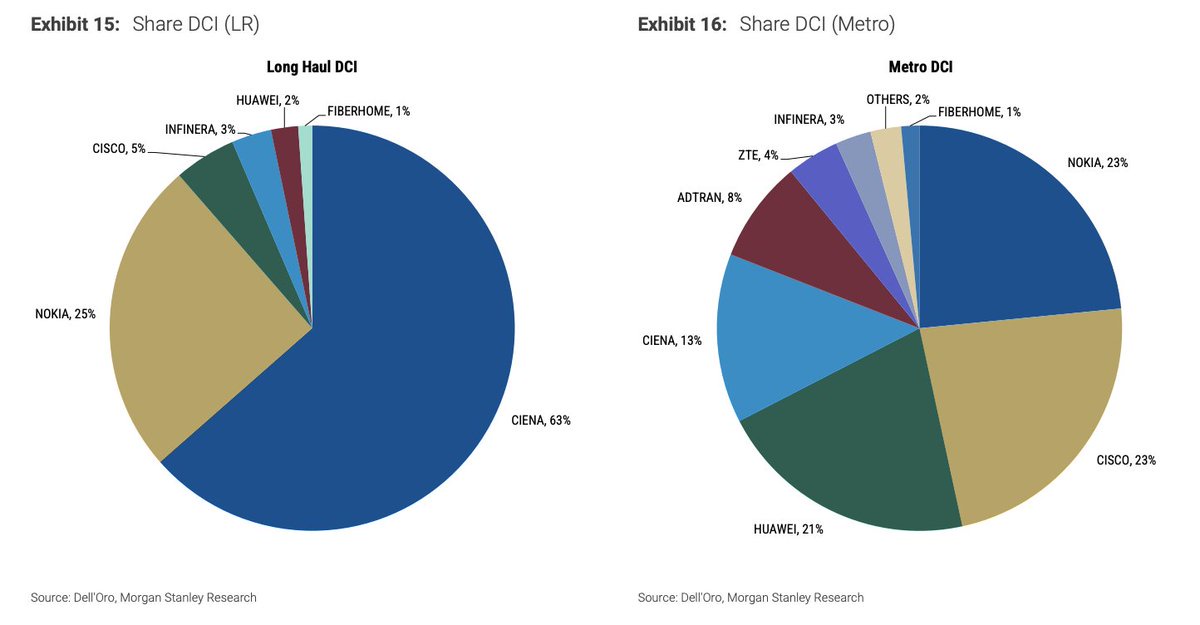
AI & Cloud Exposure> Revenue Mix: Around 50% of Ciena's Group revenues are derived from cloud customers, compared to under 10% for Nokia. However, Nokia's AI and Cloud segment grew 49% YoY in Q1 and is estimated to reach roughly 30% of Group revenue by the end of the decade. > Market Demand: Hyperscaler capex is driving massive demand for optical networking kit. Combined hyperscaler capex reached $600 billion in 2025 and is projected to scale to $1.1 trillion in 2026 and $1.7 trillion by 2030.Product & Technology Face-off> Ciena: Holds technology leadership via its WaveLogic franchise, specifically the WaveLogic 6 Extreme (WL6e) supporting 1.6 Tb/s wavelengths. It maintains a dominant 63% market share in Long-Haul Data Center Interconnect (DCI).> Nokia: Rapidly closing the gap following its acquisition of Infinera in 2025. Nokia aims to deliver 4 new DSPs by H2 2027 (up from 2 currently), though Morgan Stanley highlights some execution risk given their historical cadence of 1 DSP every 4 years.Production & Supply Chain Strategy> Nokia (Vertically Integrated): Operates advanced Indium Phosphide (InP) fabrication facilities in San Jose and a packaging center in Pennsylvania. It is expanding its San Jose fab capacity by 25x and its Pennsylvania packaging capacity by 10x, backed by US CHIPS Act funding. This vertical integration could help Nokia capture market share during tight supply conditions.> Ciena (Fabless Model): Follows an asset-light, fabless manufacturing strategy. It designs its own proprietary DSPs but relies entirely on external merchant foundries like TSMC for silicon fabrication, alongside third parties for packaging and optical assembly.Technical/Geopolitical Tailwinds> The "Western Supplier" Premium: Both Ciena and Nokia are heavily benefiting from the geopolitical "Rip and Replace" structural cycle, which has effectively frozen out low-cost Chinese infrastructure competitors (like Huawei) from Western Tier-1 telco and hyperscale builds. > The Supply vs. Demand Dynamics: While Ciena enters the year with a massive $7.8 billion order backlog proving that demand is robust, it faces component tightness. Morgan Stanley sees this supply-constrained environment as a massive tactical advantage for Nokia's heavily vertically integrated Indium Phosphide (InP) manufacturing model.$Nokia Oyj(NOK.US) $Ciena(CIEN.US)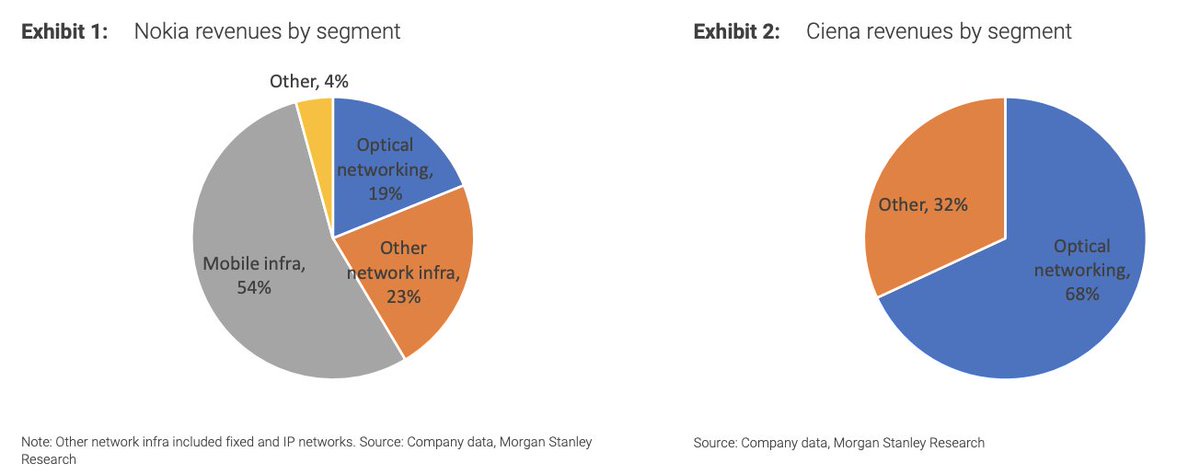
The copyright of this article belongs to the original author/organization.
The views expressed herein are solely those of the author and do not reflect the stance of the platform. The content is intended for investment reference purposes only and shall not be considered as investment advice. Please contact us if you have any questions or suggestions regarding the content services provided by the platform.
Post your comment

No Comments