


Everyone agrees that increased tariffs are one time price hikes as vendors raise prices to recover the amount of the tariff increase. The debate is what happens to future inflation expectations.
That’s why Fed officials are keeping a close eye on estimates of future inflation — and the latest ones show cause for concern. The benchmark long-run inflation expectations gauge, which had already climbed to a 30-year high since Trump’s election, soared higher still on Friday after Trump’s sweeping global tariffs.That kind of mindset could help turn a one-time price hike from Trump’s trade war into a more persistent inflationary expectation. The risk is all the greater because it’s at a time when American households are still shaken by the post-pandemic price spike. A sharp rise in long-term inflation expectations would signal a loss of faith in the Fed’s ability to bring inflation back to 2%. If consumers face tariff-led price hikes well above 3% over the next year, they may decide that’s the new normal, and build it into their everyday calculations. Workers would demand higher wages while firms adjust their long-term pricing plans.Source: Bloomberg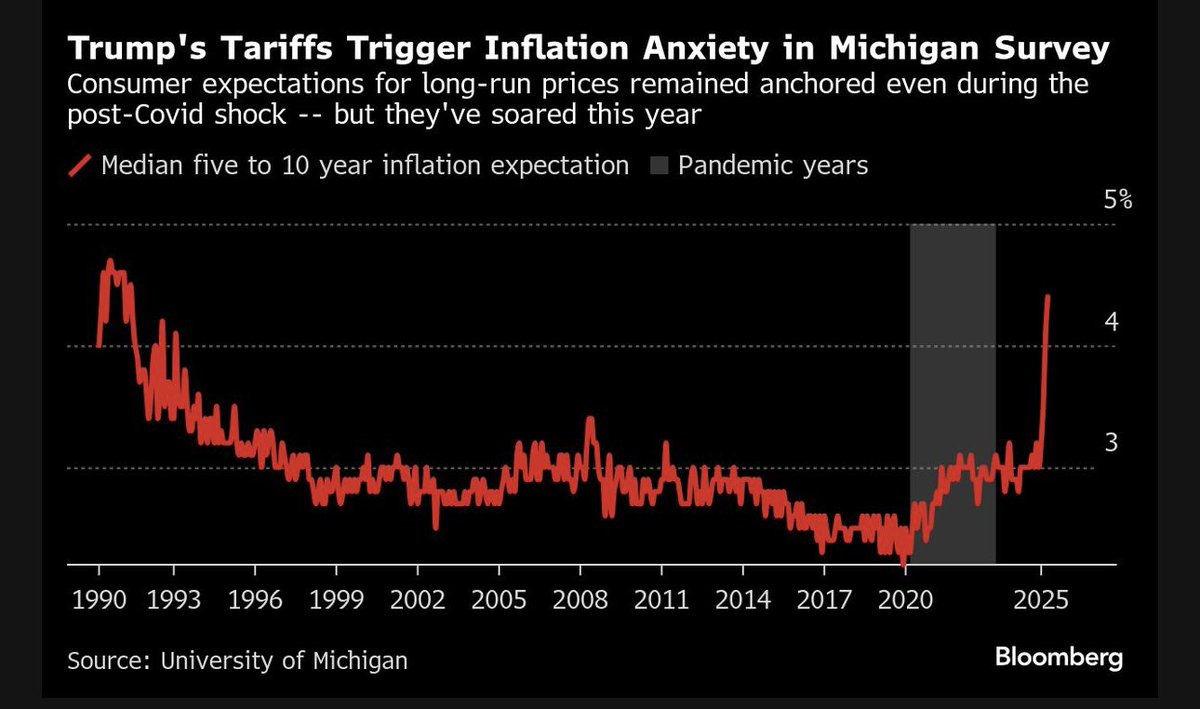
The copyright of this article belongs to the original author/organization.
The views expressed herein are solely those of the author and do not reflect the stance of the platform. The content is intended for investment reference purposes only and shall not be considered as investment advice. Please contact us if you have any questions or suggestions regarding the content services provided by the platform.
Post your comment

No Comments