


Breakthrough in US-Canada Trade Talks: Report Says US Plans to Halve Steel and Aluminum Tariffs to 25% and Cut Auto Tariffs to 15%
According to media reports, the US and Canada have preliminarily reached a framework for a trade agreement that would reduce tariffs on certain Canadian steel and aluminum products exported to the US from the current 50% to 25%, and lower tariffs on Canadian auto exports from 25% to 15%. The news triggered a surge in Canadian steel stocks and a sharp decline in US steel stocks. Details of the agreement have not yet been finalized, with pressure from US manufacturing groups and Trump's historical unpredictability leaving uncertainty ahead of Friday's deadline
Signs of a major breakthrough have emerged in trade negotiations between the United States and Canada, with market participants reacting swiftly to the progress.
Citing people familiar with the matter, Bloomberg reported that the proposed trade agreement between the US and Canada would reduce export tariffs on Canadian steel and aluminum from 50% to 25%, and lower tariffs on Canadian auto exports from 25% to 15%.
On Wednesday, Trump stated, "We may reduce some tariffs to levels comparable to those of other countries, as Canada has previously borne higher tariffs."
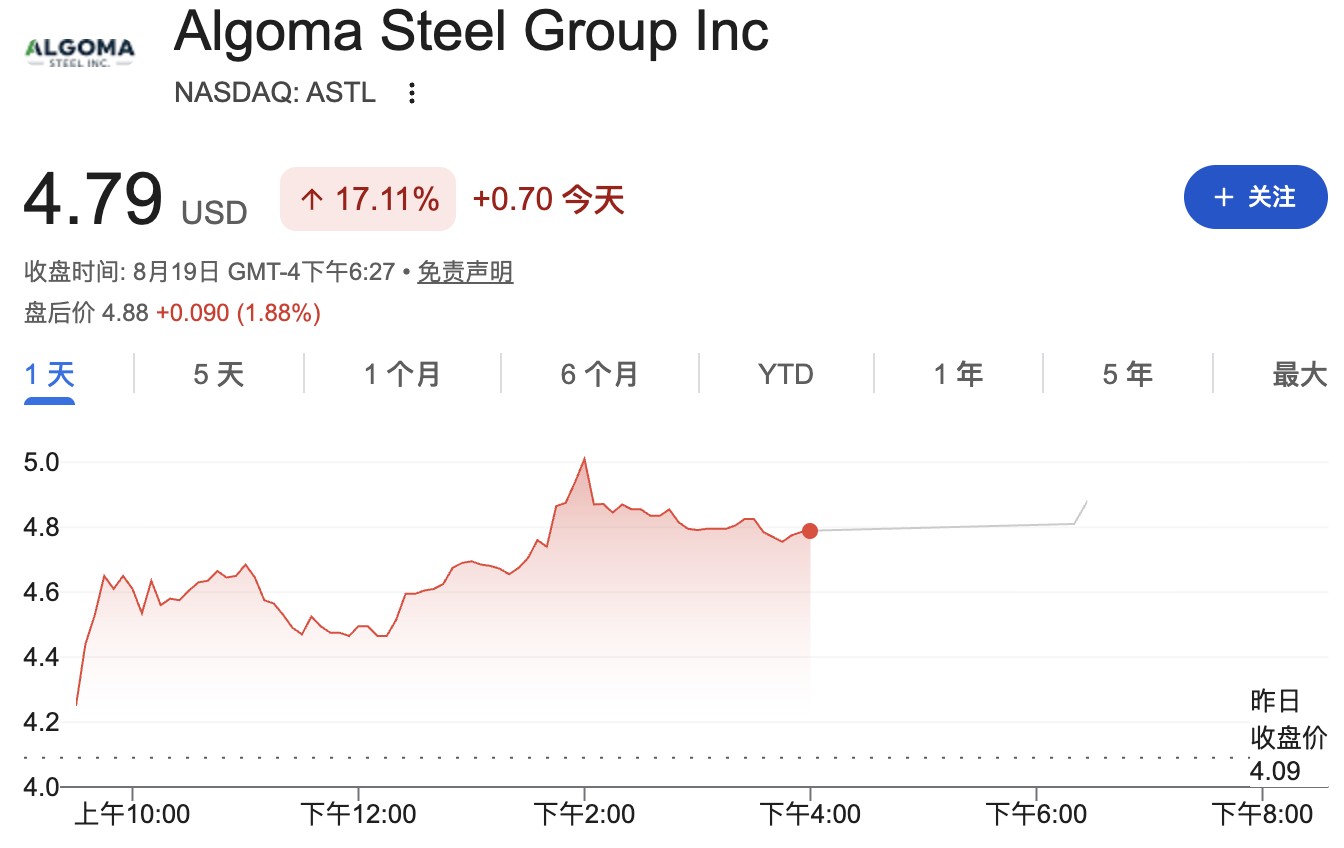
Following the announcement, shares of Canadian steel producer Algoma Steel Group surged as much as 24% during intraday trading. Meanwhile, US steel product manufacturer Nucor fell 8.9%, and Century Aluminum dropped 11%. The Canadian dollar edged up 0.2% in early London trading on Wednesday, to CAD 1.3876 per USD.
The emergence of this US-Canada framework also poses a potential shock to Mexico. As another key member of the North American Free Trade Agreement besides the US and Canada, Mexico has made multiple concessions to the Trump administration's trade agreements but has yet to achieve substantial progress. If Canada secures preferential tariffs first, Mexico's bargaining position within the trilateral trade landscape could weaken further.
Negotiations Ongoing, Details Yet to Be Finalized
Details of the aforementioned agreement have not been finalized and are not expected to apply to all categories. Sources indicated that different tariff rates might apply to certain derivative products containing steel or aluminum, with both sides still discussing exemption clauses and other adjustment measures.
The immediate backdrop to the negotiations was Trump's announcement on Tuesday evening that he would suspend the implementation of a $50 billion tariff plan on Canadian goods for three days to allow more time for talks.
Previously, the US plan to impose 50% tariffs on various Canadian commodities had sharply intensified tensions between the two countries.
Notably, Trump has previously overturned agreements or introduced new demands at the final stages of negotiations, so the ultimate outcome of these talks remains uncertain. Friday is the current deadline for the negotiations.
Under Tariff Pressure, Canada Focuses on Steel, Aluminum, and Autos
The current 50% tariff on steel and aluminum stems from actions taken by Trump under Section 232 of the Trade Expansion Act. Introduced as part of his tariff barrier policy during his second term, the measure has drawn dissatisfaction from several major US trading partners, some of which have negotiated industry-specific tariff caps with the US.
In this round of negotiations, Canada has focused on reducing tariffs on steel and the automotive sector.
Canada is the largest source of US aluminum imports, currently accounting for about half of total US aluminum consumption. Since domestic US capacity cannot meet internal demand, the associated tariff costs have largely been passed on in full to US buyers.
US Manufacturing Groups Exert Pressure, Warning Against Excessive Tariff Concessions
Despite positive progress in the negotiations, the Trump administration faces counter-pressure from domestic manufacturing interest groups.
The Coalition for a Prosperous America, a manufacturing advocacy group supporting tariff policies, along with other stakeholders, is lobbying the Trump administration to maintain high 50% tariffs on aluminum derivative products while reducing tariffs on primary aluminum, in order to protect the domestic processing and manufacturing segments that constitute the core of the US aluminum industry.
These groups warn that approximately 125,000 jobs in the US aluminum rolling, drawing, and extrusion processing sectors are at risk.
This pressure implies that even if both sides ultimately agree on an overall framework, the scope and intensity of tariff concessions may still be limited. The tariff arrangements for derivative products will become a key variable determining the final shape of the agreement.
