


Morgan Stanley: Market Severely Undervalues SpaceX's AI Business; Bull Case Sees Stock Price at $600
Morgan Stanley believes the market is pricing SpaceX's AI business extremely conservatively. After stripping out the space business, the implied valuation for the AI business is only about $12 per share. The acquisition of Cursor is a key move in building an end-to-end enterprise AI platform. Leveraging synergies in computing power, data, and ecosystem, Cursor's Annual Recurring Revenue (ARR) is projected to reach $33 billion by 2030. Morgan Stanley maintains a base target price of $300, with a bull case target of $600, implying a potential upside of 350% from the current stock price
Morgan Stanley believes that SpaceX's acquisition of the AI coding tool Cursor is a critical step in building an end-to-end enterprise AI platform. The current stock price reflects an extremely conservative implied valuation for its AI business, indicating significant upside potential.
In a research report dated August 10, Morgan Stanley stated that despite a recent gain of over 25%, SpaceX still has more than 100% upside to its base target price of $300, and could reach $600 in a bull case scenario. This implies a potential increase of nearly 350% from the current stock price of $140. The core argument of the report is that the market is currently pricing SpaceX's AI business very conservatively, treating it as an ordinary emerging cloud service provider rather than an emerging end-to-end AI platform.
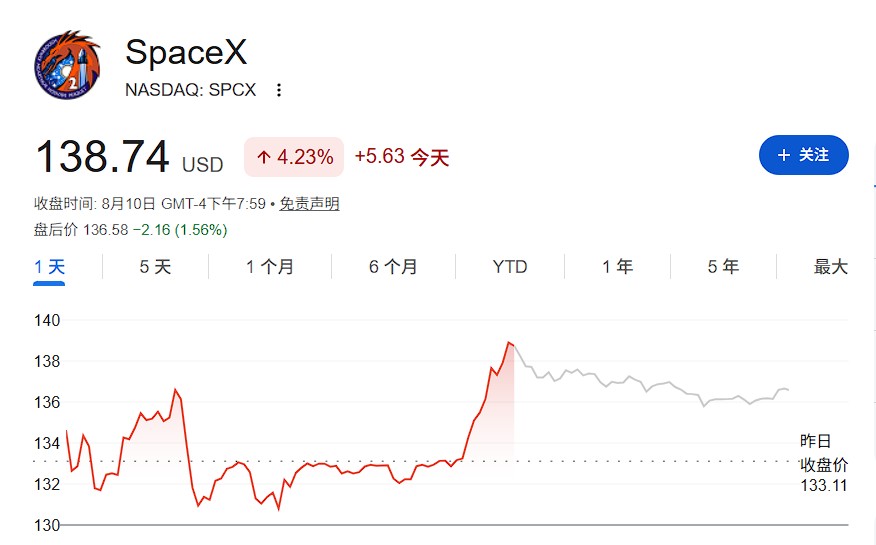
Morgan Stanley analysts, including Adam Jonas, pointed out that if the value of SpaceX's space and connectivity business (approximately $127 per share) is stripped from the current stock price, the market's implied valuation for its AI business (including consumer and enterprise AI) is only about $12 per share. This corresponds to an EV/Sales multiple slightly above 1x for 2028, which is even lower than the valuation levels of comparable emerging cloud service providers. The report suggests that as progress related to Cursor/Grok continues to be disclosed, this valuation discount is expected to gradually narrow, creating a catalyst path with upward skew.
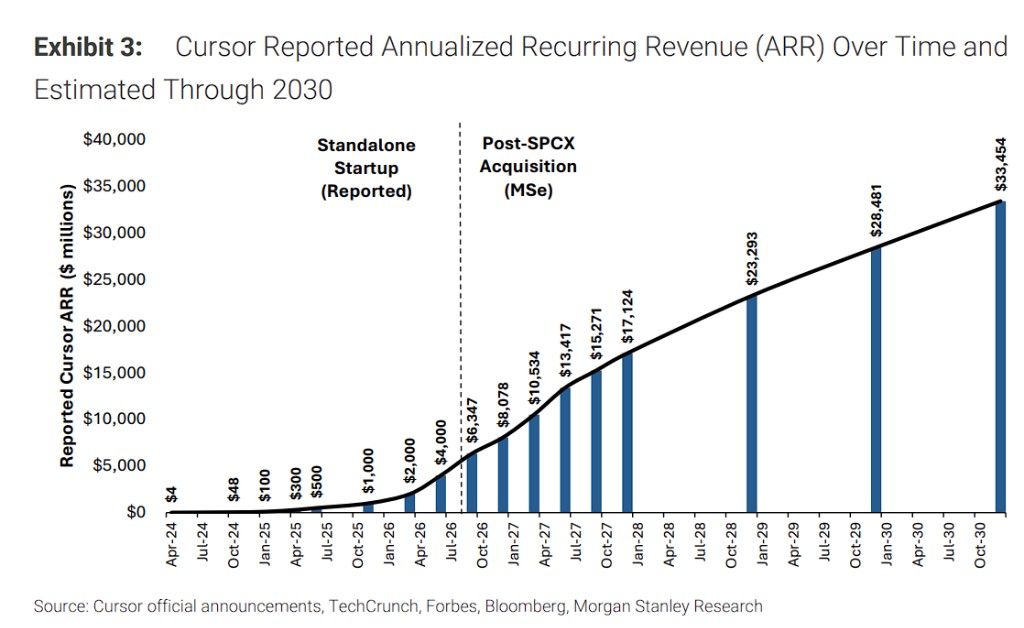
The report forecasts that Cursor's Annual Recurring Revenue (ARR) will grow from approximately $4 billion reported in early June 2026 to about $8 billion by the end of 2026, around $17 billion in 2027, and reach approximately $33 billion by 2030. Cursor is expected to contribute about $2.5 billion in revenue to SpaceX in 2026 and approximately $13 billion in 2027, accounting for about 19% of SpaceX's total AI revenue.
Why SpaceX Spent $60 Billion to Acquire Cursor
On June 16 this year, SpaceX announced the all-stock acquisition of Anysphere for $60 billion, with the transaction expected to close in the third quarter of 2026. Prior to this, the two parties had begun cooperating in April 2026, with SpaceX and xAI opening their Colossus data center to Cursor for model training. Cursor stated that its development roadmap had previously been constrained by computing power bottlenecks.
Morgan Stanley outlined three strategic logics behind SpaceX's acquisition of Cursor:
First, computing leverage. Cursor possesses developer workflows but still relies on third-party frontier models for many agent-based programming tasks. SpaceX's Colossus cluster can help Cursor expand its self-developed model capabilities, reduce dependence on external AI labs, and compress per-token costs through vertical integration.
Second, proprietary programming data and feedback loops. Cursor has accumulated real-world developer usage data covering 50,000 enterprises, including 64% of the Fortune 500. This data asset can provide stronger model iteration feedback for SpaceX and xAI in the competition for enterprise AI.
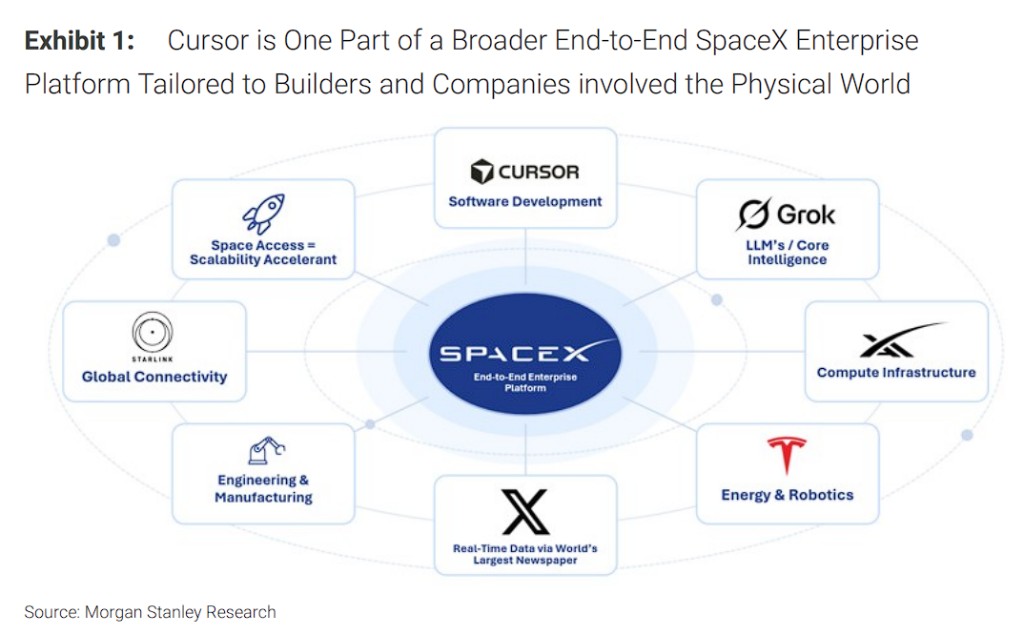
Third, foundational products for building a broader enterprise ecosystem. Morgan Stanley believes that acquiring Cursor is just one part of SpaceX's construction of a grander enterprise-level AI ecosystem:
In the merged SpaceX enterprise platform, Cursor provides the application layer and workflows, Grok provides the core intelligence layer, the X platform provides real-time data, SpaceX AI provides computing infrastructure, Starlink provides global connectivity, and Tesla provides the path to physical AI.
The report specifically noted that its $33 billion ARR forecast for Cursor in 2030 does not assume the realization of the aforementioned synergies.
Cursor is the flagship product of Anysphere, officially launched in March 2023. Built on Microsoft's open-source Visual Studio Code, it offers AI-native code writing, editing, debugging, and review functionalities.
Cursor is not purely a model company; its core value lies in the workflow interface layer (the "harness"), which can call upon various large language models including Grok, Gemini, and its self-developed Composer series. To date, Cursor has served over 50,000 enterprises, covering 64% of the Fortune 500, with clients including Samsung, Adobe, Figma, Stripe, and NVIDIA.
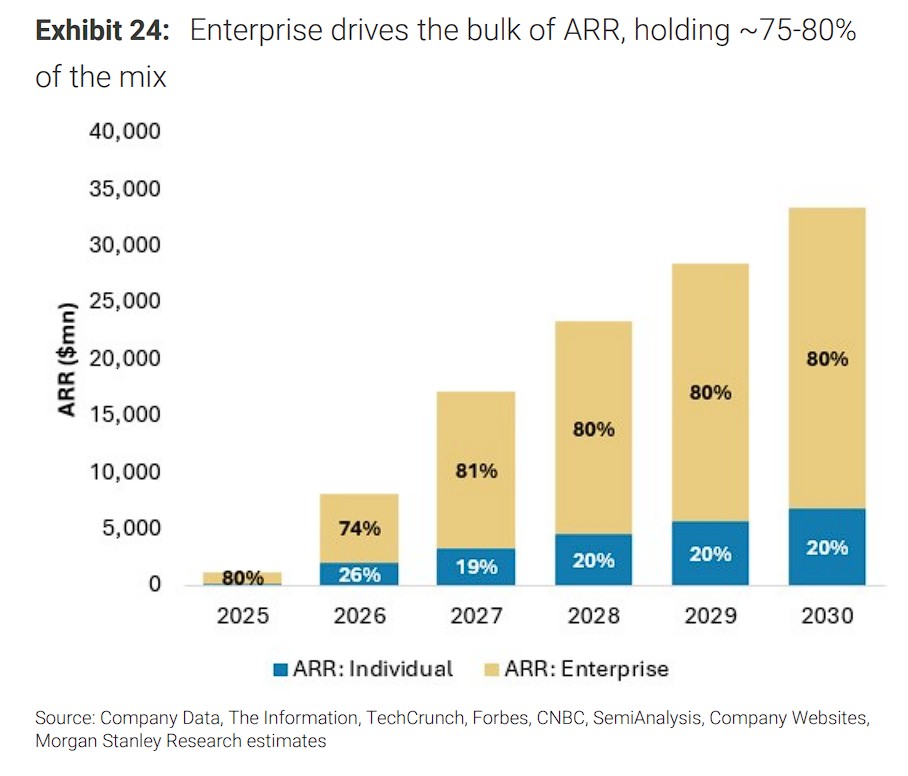
Regarding revenue growth trajectory, Cursor's ARR ramp-up speed is among the fastest in software history: it surpassed $100 million in January 2025, reached $500 million in June 2025, hit $1 billion in November 2025, reached $2 billion in February 2026, and achieved approximately $4 billion in June 2026, growing about 8-fold within a year. Enterprise B2B customers contribute approximately 75% of ARR, serving as the primary revenue source.
Model Strategy: Betting on Cost Efficiency Rather Than Pure Performance
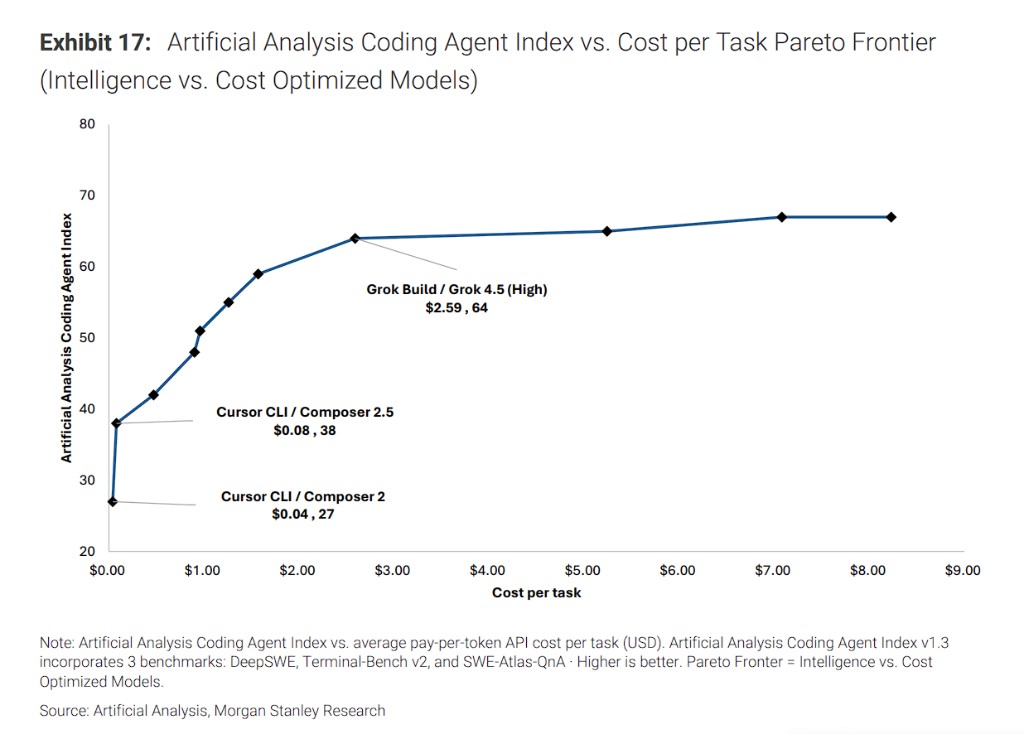
Morgan Stanley believes that the model strategies of Cursor and SpaceX AI clearly point towards the Pareto frontier of cost and efficiency, rather than pursuing the top of raw performance leaderboards.
From a product architecture perspective, Cursor is divided into two layers: a model-agnostic workflow interface layer (harness), and self-developed Fusion and Composer series models.
Grok 4.5 is the first model jointly trained by both parties, scoring 64 points (out of a maximum of approximately 67) in the Artificial Analysis Coding Agent Index, with a cost per task of about $2.59. In contrast, top-tier frontier models cost as much as $7 to $8 or more per task. Cursor's self-developed Composer 2 and Composer 2.5 cost only $0.04 to $0.08 per task, with token consumption approximately one-eighth that of the heaviest frontier models.
ARR and Gross Margin: From Deep Losses to the Low 60% Range
Morgan Stanley constructed a bottom-up revenue and gross margin model for Cursor, detailed quarterly through 2027 and annually extending to 2030.
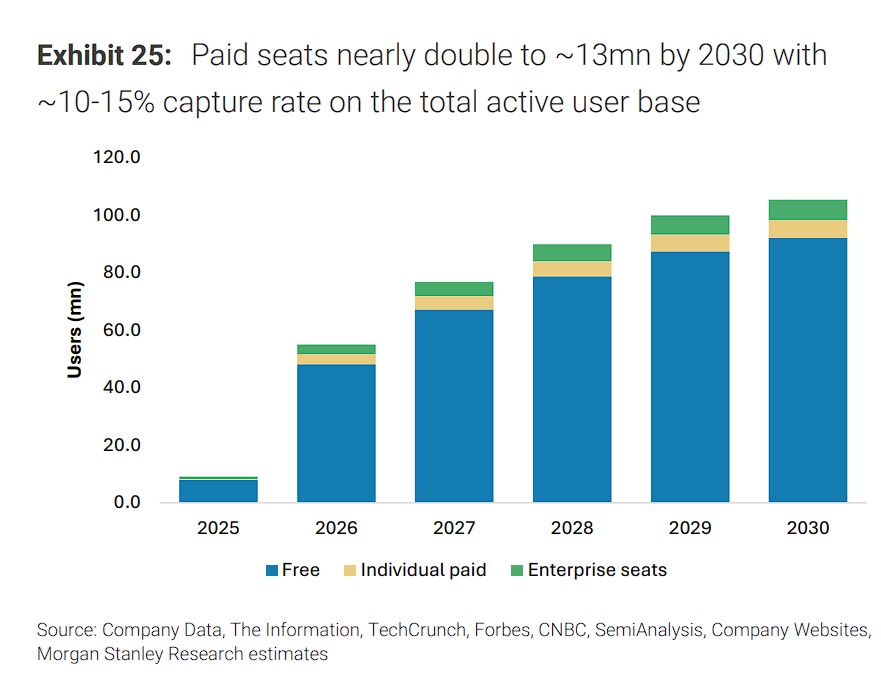
Regarding revenue drivers, the enterprise segment contributes about three-quarters to four-fifths of ARR. The number of enterprise customers is expected to grow from 50,000 in Q2 2026 to 138,000 by 2030, with paid seats increasing from 3.3 million at the end of 2026 to 7 million by 2030, corresponding to a penetration rate of approximately 15.8% among global professional developers. Individual paying users are expected to rise from about 3.6 million at the end of 2026 to approximately 6.2 million by 2030.
Regarding the gross margin trajectory, Cursor has historically maintained negative gross margins, primarily because subscription revenue includes usage fees paid to third-party AI labs for tokens, resulting in very thin spreads. Reportedly, the gross margin for the quarter ending January 2026 was approximately -23%.
As Composer and Grok take on more inference workloads (increasing from about 33% in 2026 to about 72% in 2030), and the proportion of cheaper third-party model usage rises, Morgan Stanley expects gross margins to turn positive in Q3 2026 and reach the low 60% range by 2030.
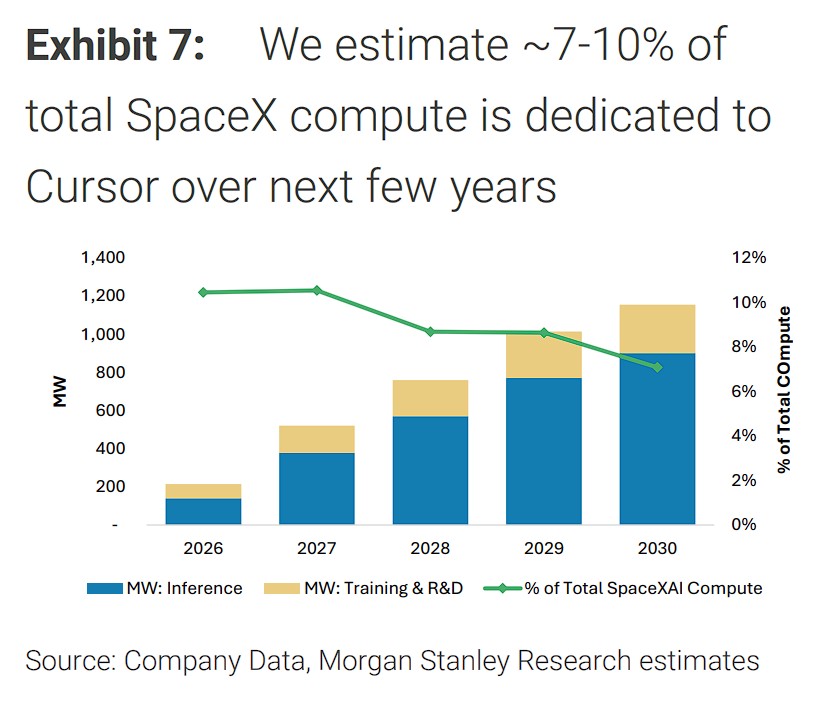
Regarding computing power utilization, Cursor is expected to occupy 7% to 10% of SpaceX AI's total computing power, but its revenue intensity per watt is approximately twice that of SpaceX AI's average workload. This reflects the advantage of the high-margin subscription structure compared to leased computing power and consumer Grok inference.
Enterprise AI Spending: Low Penetration, Huge Growth Potential
The acceleration of enterprise AI spending provides a broad market space for Cursor.
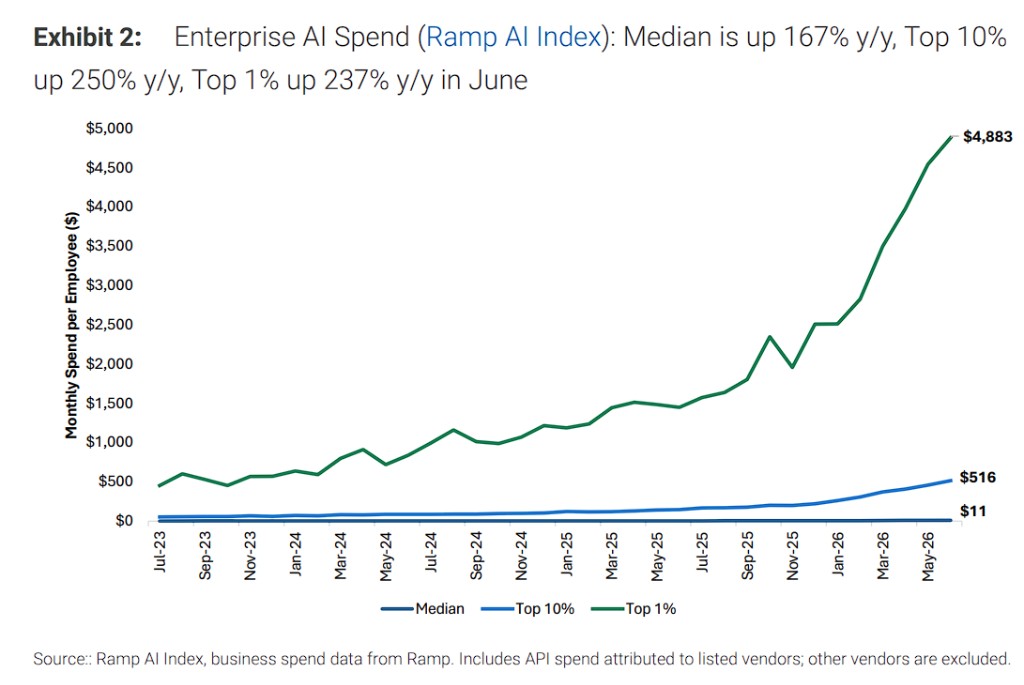
Citing data from the Ramp AI Index, Morgan Stanley pointed out that while enterprise AI spending is accelerating, overall penetration remains in the early stages. As of June 2026, the median monthly AI spending per employee in US enterprises was approximately $11, a year-over-year increase of 167%; for the top 10% of enterprises, it reached $516, and for the top 1%, it exceeded $4,880, representing year-over-year growth of approximately 240% to 250%.
However, nearly half of US enterprises still do not pay for any AI tools. The payment rate for large enterprises is about 65%, for medium-sized enterprises about 61%, and for small enterprises only about 49%.
The adoption of AI for programming shows similar characteristics. According to Jellyfish data, as of June 2026, the median engineer already held a license for AI programming tools, with license coverage approaching 90% in the top quartile of enterprises; however, only about 28% of delivered code in median enterprises was completed with the aid of AI, a ratio that was close to zero a year ago.
Morgan Stanley believes that the gap between tool adoption and actual production use is narrowing rapidly, and the spending curve for AI programming still has considerable upside potential.
