


Guotai Junan Securities: What are U.S. Treasuries pricing?
The research report from Guolian Minsheng Securities points out that the pricing framework of U.S. Treasuries is shifting from being dominated by a single policy interest rate to a multi-dimensional resonance of "fiscal risk premium + supply-demand mismatch + policy uncertainty." After July, due to weakening fundamentals and the Federal Reserve's hesitation to raise interest rates, short-term momentum has slowed, while the long end has accelerated upward driven by term premiums, steepening the curve. In the second half of the year, long-term interest rates are likely to be difficult to decrease, and attention should be paid to variables such as fundamentals, fiscal gaps, and foreign capital reduction
According to the Zhitong Finance APP, Guolian Minsheng Securities released a research report stating that since the beginning of this year, the accelerated rise in U.S. Treasury yields has become the focus of global asset pricing. The upward movement of the risk-free interest rate suppresses equity valuations and raises volatility. In the first half of the year, the market primarily priced in the monetary policy shift under economic recovery and energy shocks, with short-term rates rising rapidly alongside interest rate hike expectations, resulting in a "bear flattening" yield curve. However, after July, the weakening fundamentals and the Federal Reserve's hesitation to raise interest rates slowed short-term momentum, while long-term rates accelerated upward due to term premiums, continuing to steepen the curve. The bank believes that U.S. Treasury pricing is shifting from a single policy rate dominance to a multi-dimensional framework resonating with "fiscal risk premium + supply-demand mismatch + policy uncertainty and long-term inflation risk." In the second half of the year, long-term rates may find it easier to rise than to fall, and the steepening of the curve may become a core clue, requiring close tracking of fundamental data, fiscal gaps and tariff hedges, foreign capital reduction, the crowding-out effect of AI corporate bonds, and the progress of the Walsh reform.
The original text is as follows:
Since the beginning of this year, the accelerated rise in U.S. Treasury yields has once again become the focus of global asset pricing. Accompanied by the rapid rise in U.S. Treasury yields, the risk-free interest rate, which serves as the pricing anchor for global financial assets, has quickly moved upward, directly suppressing equity asset valuations and triggering profound adjustments in cross-asset allocation. In this process, the negative correlation between U.S. stocks and U.S. Treasuries has re-emerged after being temporarily broken, and the volatility of global financial markets has also been pushed to high levels.
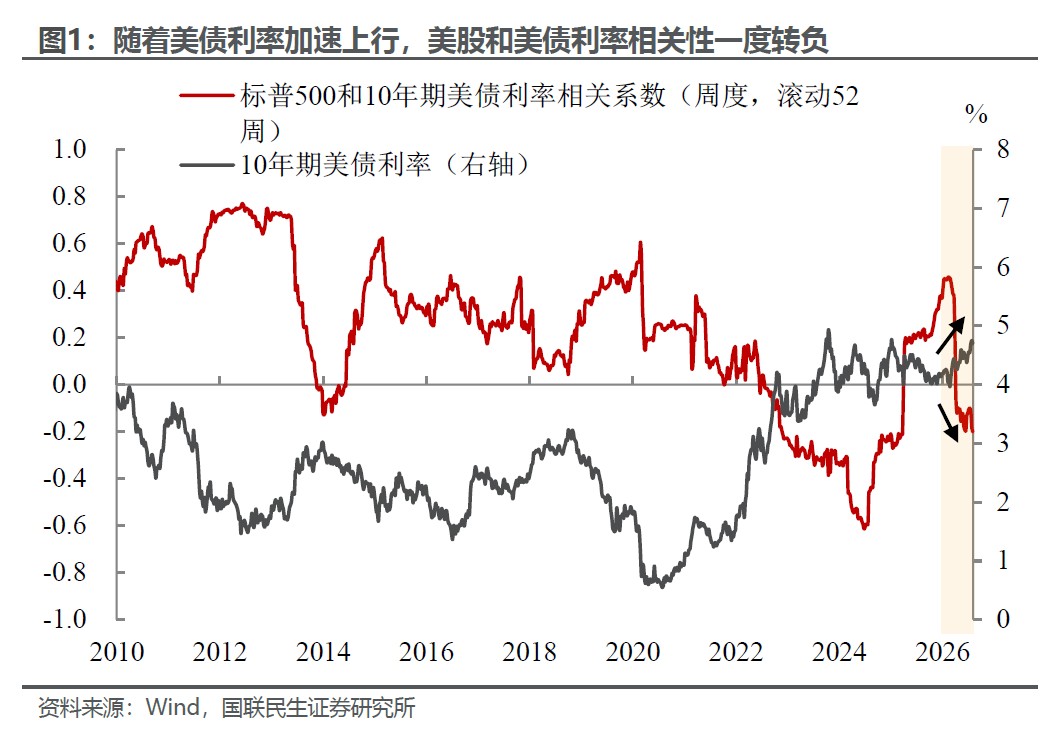
However, beneath the surface of the rapid rise in U.S. Treasury yields, the core factors driving this round of increases seem to be changing. In the first half of the year (up to the end of June), the market primarily priced in the monetary policy shift under economic recovery and energy shocks: the Federal Reserve's policy expectations quickly reversed from pricing in 1-2 rate cuts for the entire year at the beginning of the year to expectations of rate hikes, leading to a rapid rise in short-term rates and convergence towards long-term rates, resulting in a typical "bear flattening" yield curve.
However, entering July, under the weakening fundamentals and the Federal Reserve's hesitation to raise interest rates, the upward momentum of short-term rates gradually slowed, while long-term rates accelerated upward. The trend of steepening the yield curve continued to strengthen, with term premiums becoming the core driver of the rise in long-term rates.
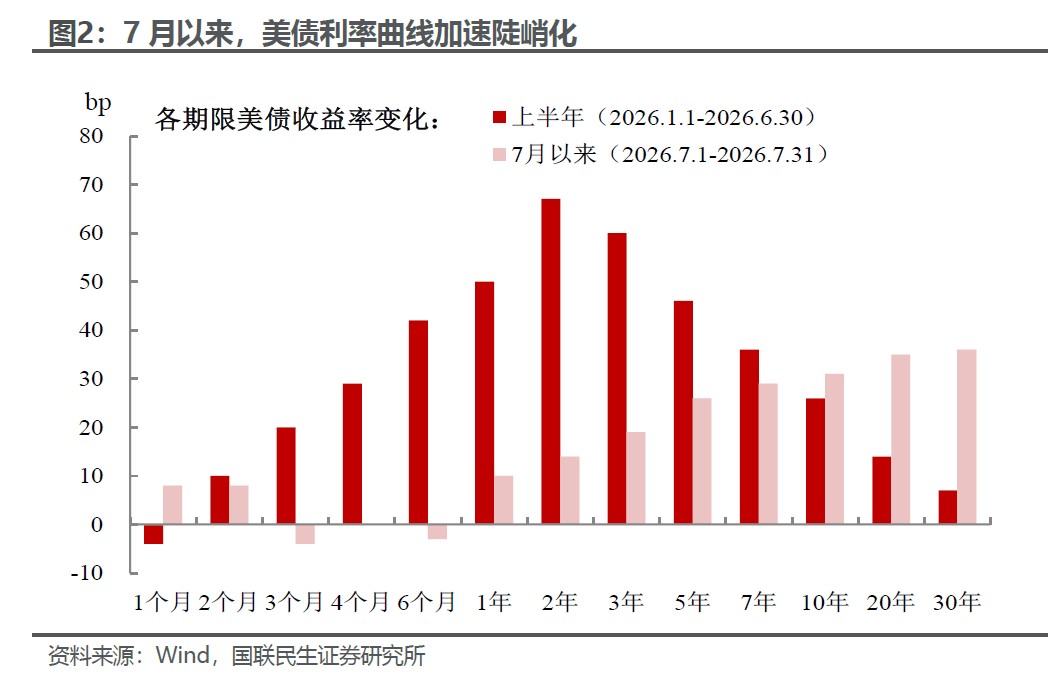
We believe that this shift may indicate that the pricing framework of the U.S. Treasury market is moving away from a dominant model based solely on policy rate expectations, towards a multi-dimensional pricing system driven by resonances such as "fiscal risk premium + concerns over supply-demand mismatch + policy uncertainty and long-term inflation risk." In this context, the ease of rising and difficulty of falling long-term rates in the second half of the year, as well as the steepening of the yield curve, may become the core clues running through the market 1. What is the U.S. Treasury market pricing in the first half of the year?
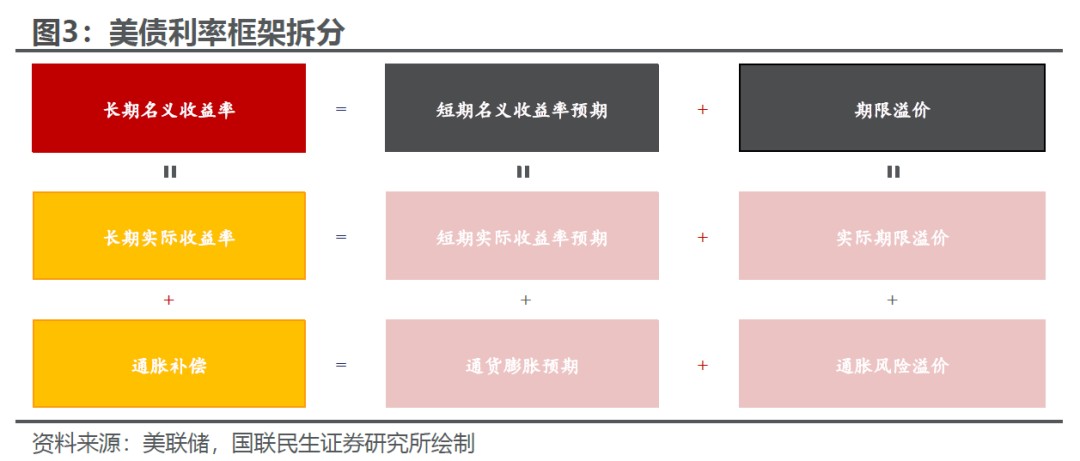
How should we understand the driving forces behind the rise in U.S. Treasury yields since the beginning of the year? Using a classic interest rate decomposition framework, nominal U.S. Treasury yields can be broken down into expected short-term real rates, long-term inflation expectations, and term premiums (real term premiums + inflation risk premiums). Among them,
-
Expected short-term real rates reflect the market's consensus forecast on the Federal Reserve's medium-term monetary policy path and long-term equilibrium real rates. This is directly linked to the potential growth momentum of economic fundamentals (such as labor productivity and capital returns) and the pace of policy shifts by the Federal Reserve;
-
Long-term inflation expectations represent the financial market's pricing of medium- to long-term price stability and the Federal Reserve's ability to anchor inflation;
-
Term premiums are the additional risk compensation demanded by investors for bearing the future uncertainty risks associated with holding long-term bonds (such as interest rate and inflation uncertainty risks, supply-demand imbalance risks, fiscal issuance pressures, etc.).
It is not difficult to see that the core source of the driving factors for U.S. Treasury yields in the first half of the year is the expected short-term real rates. According to the DKW model's decomposition of U.S. Treasury yields (different models may have slight variations in estimates, but the overall trend is similar, such as the commonly used ACM model), in the first half of the year (up to June), the 10-year U.S. Treasury yield rose by 23 basis points, with expected short-term real rates rising by about 15 basis points, contributing approximately 65% to the nominal yield increase; while long-term inflation expectations and term premiums only rose by about 4 basis points each, contributing a total of only 35%.
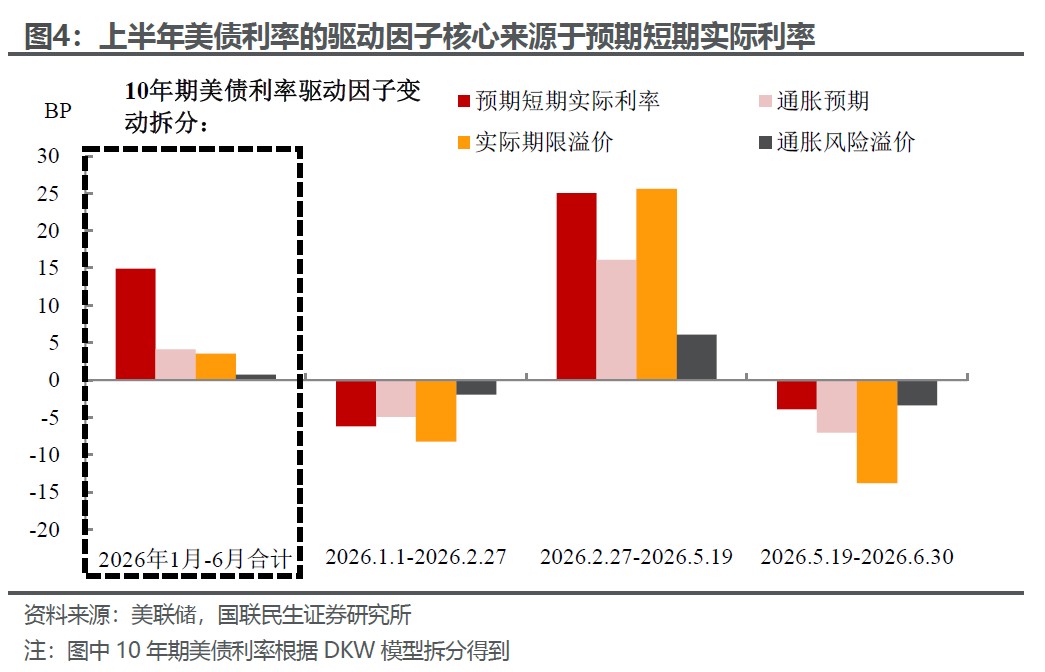
Specifically, after the Iran conflict, the driving factors for U.S. Treasuries showed a clear phase-switching characteristic:
Phase One (Geopolitical Conflict Escalation Period: From the outbreak of the Iran conflict to mid-May): The three factors resonate and rise. The sudden escalation of the Middle East situation drove up prices of crude oil and other commodities, intertwining geopolitical uncertainty with supply-side inflation risks, leading to a short-term impulse rise in inflation expectations and term premiums. At the same time, strong economic data from the U.S. further reduced market expectations for interest rate cuts, causing expected short-term real rates to rise in tandem, with all three factors driving the rapid increase in the 10-year U.S. Treasury yield.
Phase Two (Geopolitical Risk Easing Period: From mid-May to the end of June): Inflation and term premiums recede, with real rates holding high. As the situation in Iran marginally eased and crude oil prices significantly fell, the previously factored-in inflation expectations and term premiums were quickly erased, by the end of June, both had returned to levels prior to the outbreak of the conflict. However, supported by the Federal Reserve's "Higher for Longer" hawkish stance and expectations of no economic landing, expected short-term real rates remained high, becoming the core underpinning for the final elevation of U.S. Treasury yields in the first half of the year. **
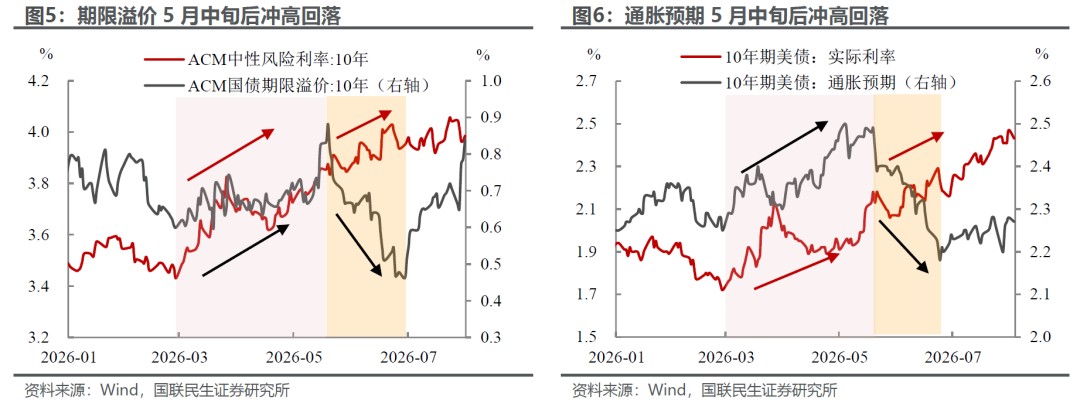
In summary, the U.S. Treasury market in the first half of the year was more of a "policy rate repricing" driven by fundamentals, where the market focused more on the "economic resilience — delayed rate cuts" policy rate repricing, which is a typical fundamental-driven logic. During this phase, although inflation expectations fluctuated due to geopolitical influences, the overall anchoring was good, and the supply-demand imbalance's pressure on term premiums had not yet become the market's dominant factor. The yield curve mainly exhibited a "bear steepening" pattern where short-term rates chased up long-term rates.
2. What is the core contradiction in the U.S. Treasury market in the second half of the year?
However, entering July, the logic of rising U.S. Treasury rates underwent a certain shift, concentrated in the bear steepening of the yield curve — term premiums took over from expected short-term real rates, becoming the core driving force behind the rise in long-term U.S. Treasury yields.
First, the slowdown in fundamentals and the Federal Reserve's hesitation in rate hikes have led to a weakening momentum in short-term real rate expectations. As macroeconomic indicators such as non-farm payrolls, inflation, and GDP show signs of marginal weakening, coupled with the Federal Reserve's caution and hesitation regarding the policy rate path, the momentum for further upward adjustments in the market's expectations for Federal Reserve rate hikes has weakened. Since July, the pull effect of expected short-term real rates on long-term yields has significantly decreased, and the overall upward momentum has slowed.
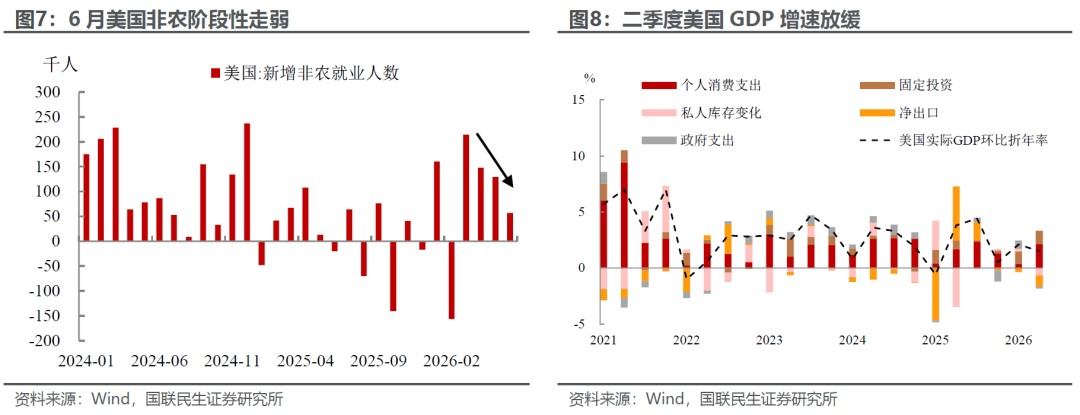
However, long-term nominal rates have surged unilaterally under the pull of term premiums, accelerating the bear steepening of the yield curve. It can be seen that since July, the 10-year U.S. Treasury yield has risen by about 30 basis points, almost entirely contributed by term premiums, while the risk-neutral rate has remained basically unchanged. Meanwhile, throughout July, although forward inflation expectations were generally at a low level, there were signs of a slow rise, especially after the FOMC meeting at the end of July, where the rise in inflation expectations and repricing seemed to accelerate.
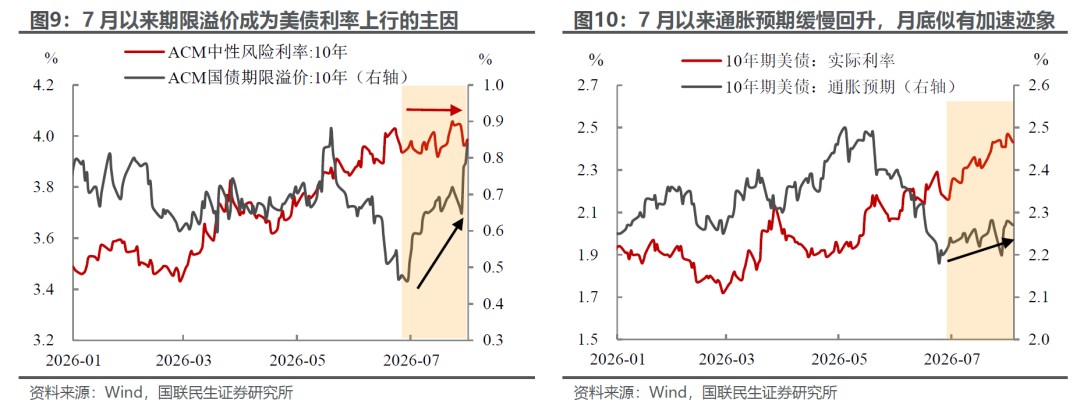
Specifically, we believe that the accelerated rise in term premiums and the signs of rising inflation expectations during this phase mainly stem from concentrated concerns about fiscal issues, supply-demand mismatch pressures, and policy uncertainties, while the market currently seems not to have fully priced these risks:
First, on the fiscal side, the pressure of deficits continues to expand, systematically raising the central tendency of duration supply in the medium to long term. In the first half of the year, discussions in the market regarding fiscal deficits and tariff policies were once overshadowed by geopolitical risks, but with the recent progress in tariff refunds and the approach of midterm elections, concerns about fiscal pressures have returned to the market's view In terms of revenue, the IEEPA tariff refunds are concentrated in payouts, creating direct financial pressure on the fiscal side. Due to the previous tariffs imposed under the International Emergency Economic Powers Act (IEEPA) being ruled illegal by the judiciary, the government needs to refund approximately $166 billion in tariffs. Since the start of the tax refund this fiscal year, the Treasury has completed $81 billion in refunds (mainly concentrated in May-June), with nearly half of the funds still pending payout. We estimate that the refunds are expected to raise the deficit rate by about 0.6 percentage points, significantly tightening the fiscal cash flow chain in the short term.
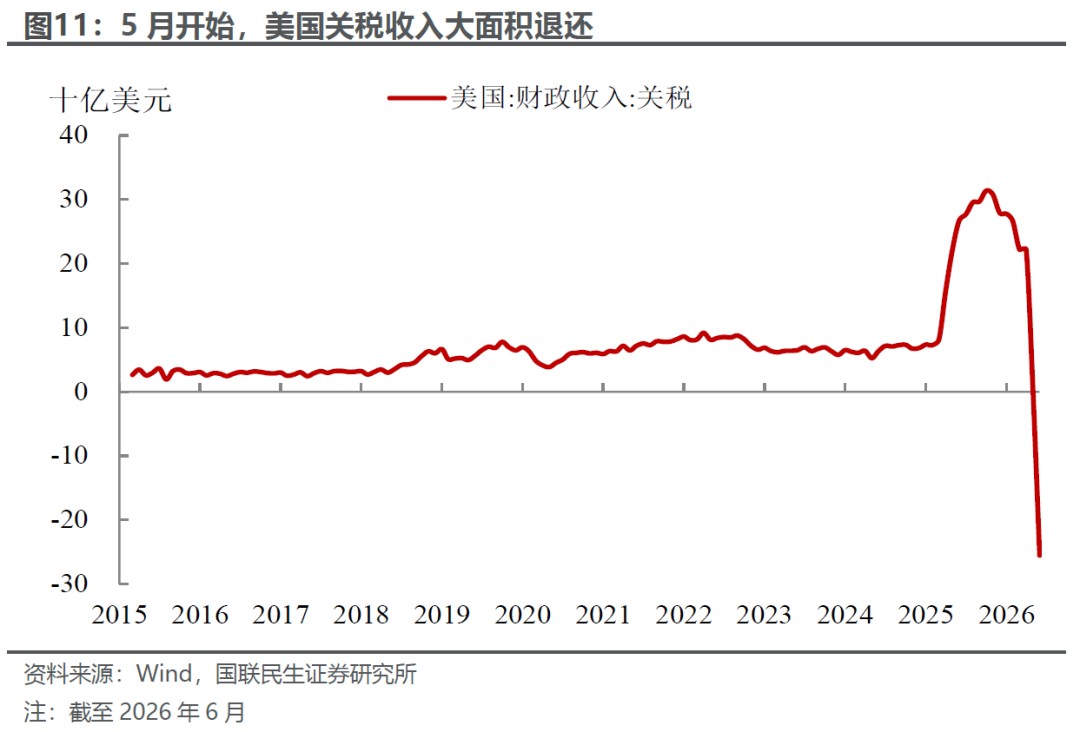
Alternative tariff provisions are unlikely to fully fill the tax revenue gap, making it difficult to alleviate the medium- and long-term pressure on fiscal debt issuance. Although the government attempts to use Section 301 of the Trade Act of 1974 to transition policies instead of Section 122, it still struggles to compensate for the significant tax losses caused by the refunds:
In the short term, the sharp decline in tariff revenue directly raises the deficit for the year. According to predictions from the Yale Budget Lab, the new tariff revenue for the fiscal year 2026 may drop to about $80 billion, less than half of the fiscal year 2025 level ($190 billion). Considering the impact of the refunds, this means that the decline in tariff revenue alone will push the deficit rate for fiscal year 2026 up by an additional 0.3-0.4 percentage points compared to fiscal year 2025 (5.8%).
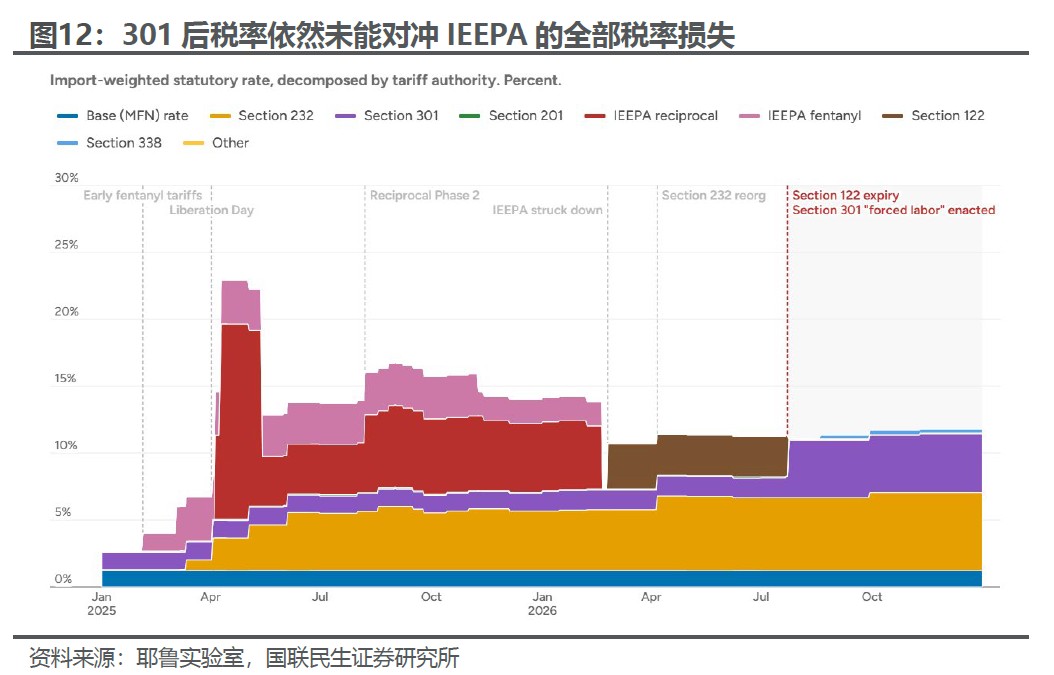
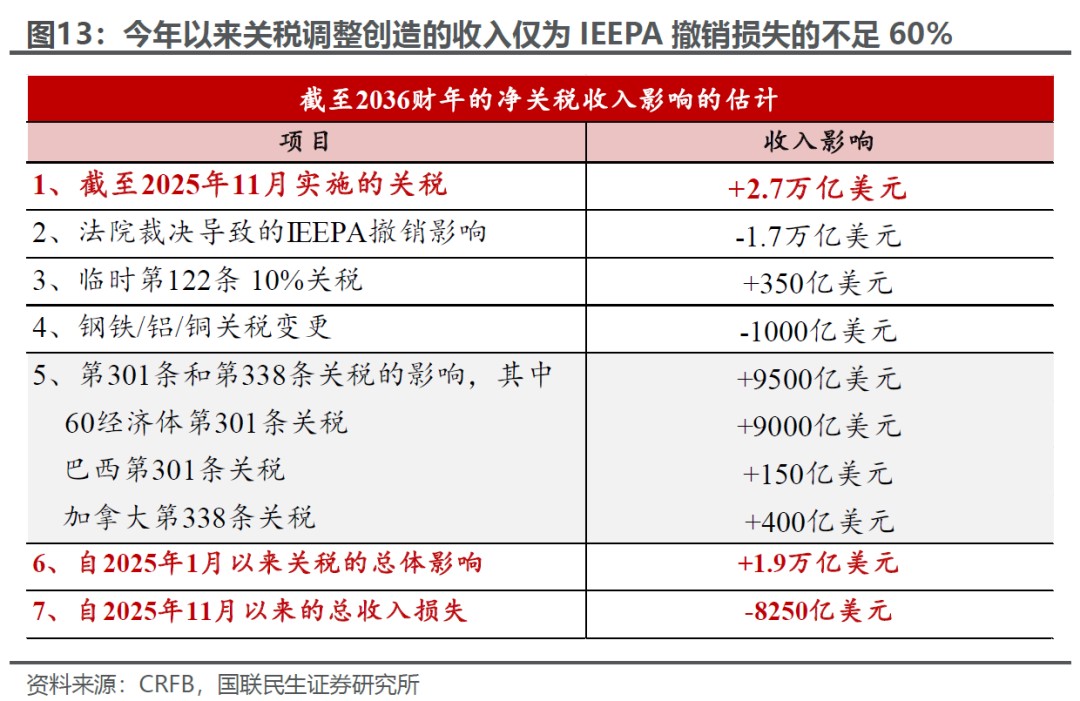
In the long term, the new tax regulations have limited coverage, and the structural gap will force the duration of supply to remain high. The tax revenue that can be generated by the current Sections 301 and 338 can only cover less than 60% of the revenue from the previous equivalent tariff phase. According to CRFB estimates, by fiscal year 2036, the IEEPA ruling will result in a cumulative loss of about $1.7 trillion in tax revenue, while the new regulations are expected to generate only $950 billion, filling less than 60% of the gap. This long-term structural gap will compel the Treasury to continuously expand the issuance of national debt, driving the long-end U.S. Treasury duration supply to remain high.
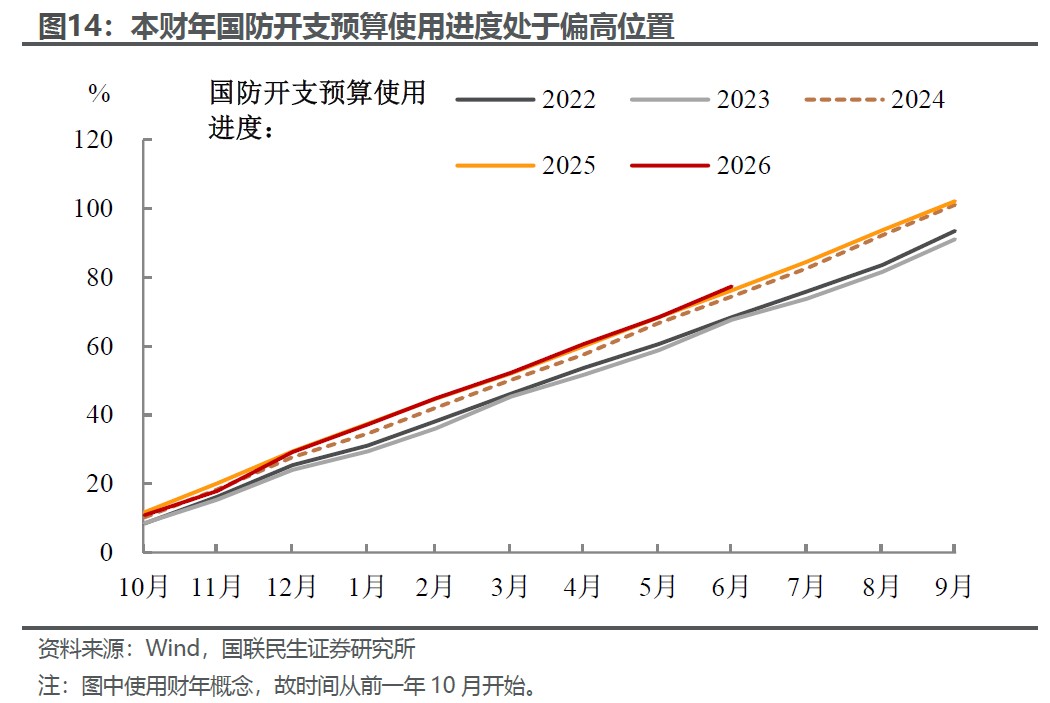
On the expenditure side, escalating geopolitical conflicts lead to passive expansion of military spending, constituting an additional rigid pressure on the fiscal deficit. This poses a severe test to the fiscal balance capability of the Trump administration. The U.S. defense budget for fiscal year 2026 is approximately $876.8 billion, and as of June, nearly $678.7 billion (almost 80%) has been used this fiscal year. If the U.S.-Iran conflict does not de-escalate in a timely manner, the long-term nature of geopolitical competition will force military spending and overseas aid budgets to expand rigidly, which not only weakens the subsequent fiscal stimulus maneuvering space but will also directly translate into additional increments in national debt issuance Intensifying the duration supply-demand imbalance of long-term government bonds.
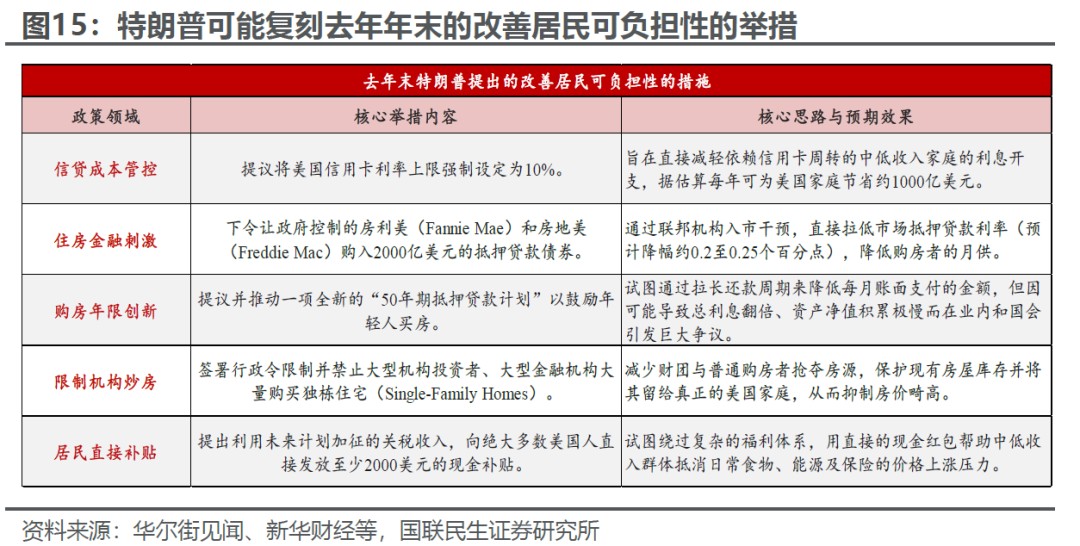
In addition, as the midterm elections approach, the Trump administration's political demand for easing residents' affordability is becoming increasingly urgent. To win over the basic support of low- and middle-income voters, referencing last year's policy ideas from the Trump administration, it may implement a combination of measures such as setting a cap on credit card interest rates (e.g., a proposal for a 10% cap), issuing targeted subsidies for livelihoods and consumption, and using administrative and quasi-fiscal means to guide a decline in mortgage rates, thereby directly alleviating the cost of living pressure on households.
Although there is still a time lag from policy framework planning to legal implementation, the probability of related measures being fully effective within the year is limited, but their marginal impact on the financial market may manifest early: The market's renewed expectations for secondary fiscal easing and deficit expansion may push up the supply premium of U.S. Treasuries and inflation expectations, thereby creating sustained upward pressure on long-term U.S. Treasury rates.
Secondly, the duration supply-demand pattern has deteriorated to some extent, which is forcing the term premium to rise. The total scale of U.S. government bonds has surpassed $39 trillion, with the proportion of government bonds to GDP maintaining a historical high of 120%. However, while the Treasury continues to release a "flood of supply" of U.S. Treasuries, the marginal demand side has shown a significant weakening.
Firstly, the policy orientation of tightening by Waller has strengthened expectations for medium- to long-term liquidity tightening. Waller's succession conveys a clear signal—the Federal Reserve will adhere to monetary policy discipline and balance sheet constraints, making it difficult to return to the previous extreme easing of "flooding the market," which means the central bank's role as a backstop for long-term U.S. Treasuries is gradually weakening.
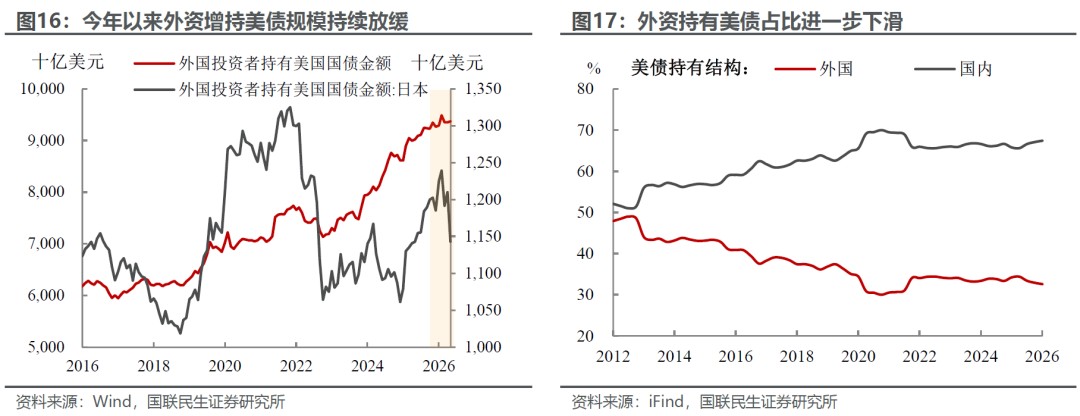
Secondly, the marginal exit of core buyers such as overseas official institutions has further exacerbated the duration mismatch pressure in the market. Since the beginning of this year, foreign investment in U.S. Treasuries has significantly slowed, with the Bank of Japan and domestic institutions, as the largest overseas holders of U.S. Treasuries, selling off particularly heavily—Japan alone net sold U.S. Treasuries worth up to $80 billion from January to May this year. The characteristics of supply-demand imbalance in the U.S. Treasury market are becoming increasingly prominent, forcing long-term U.S. Treasuries to raise the term premium to clear excess duration supply and attract marginal buyers from the private sector.
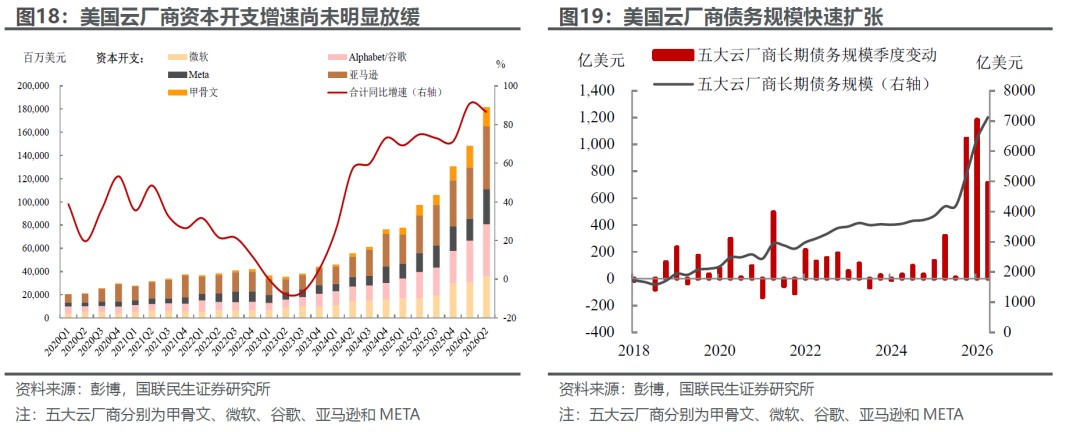
Thirdly, the surge in AI capital expenditures has increased the supply of investment-grade corporate bonds, creating a certain "crowding-out effect" on funds allocated to long-term U.S. Treasuries. This year, to raise the massive capital expenditures for AI computing infrastructure, major cloud providers have significantly increased the issuance scale of high-rated corporate bonds As of Q2 2026, the capital expenditure of the five major cloud providers (including Microsoft, Google, META, Amazon, and Oracle) reached $180 billion for the quarter (a year-on-year increase of about 90%), with long-term debt soaring to $700 billion (almost doubling compared to the beginning of 2025).
The "substitution effect" of high-rated corporate bonds is forcing U.S. Treasuries to raise term premiums to maintain attractiveness. This wave of high-quality, high-yield corporate bond supply has directly crowded out the institutional allocation funds that were originally settled in long-term government bonds (such as insurance, pensions, and asset management institutions). Against the backdrop of tightening balance sheet capacity for market makers and institutional investors, government bonds must offer higher yield compensation (i.e., higher term premiums) to clear in the competition for the "funding pool" with high-rated corporate bonds, which marginally exacerbates the upward tilt of long-term U.S. Treasury yields.
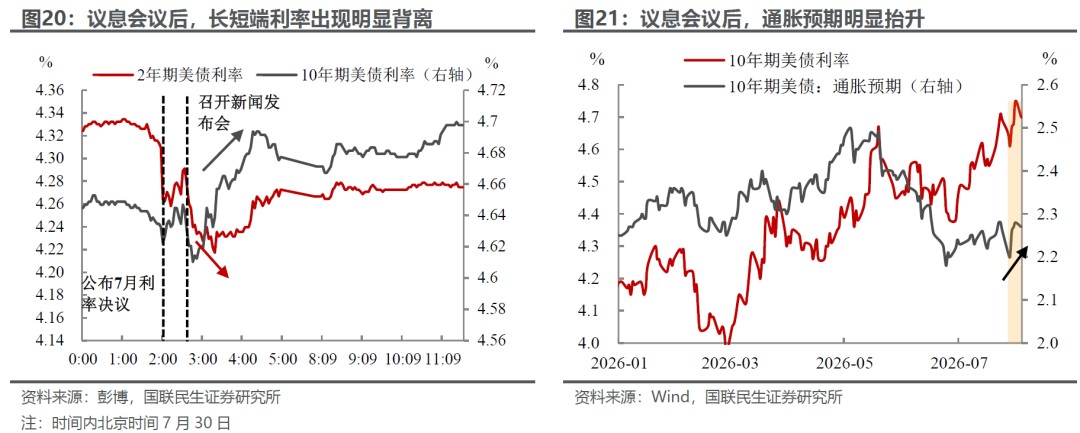
Finally, Waller's "ambiguous framework" and "talk without action" policy statements are systematically exacerbating the long-term inflation risk repricing in the market. Especially after the July FOMC meeting, although Waller emphasized his hawkish determination against inflation, this "strong rhetoric, delayed action" policy divergence has inversely intensified the policy trust deficit in financial markets.
The market is beginning to deeply worry about the Federal Reserve's "action lagging behind the curve" in responding to potential supply-side shocks and secondary inflation. The ambiguity of this policy path and the disconnect in execution have led to a loosening risk in medium- to long-term inflation anchoring, further pushing investors to demand higher inflation risk premiums. After the press conference following the July meeting, short-term rates fell significantly, but under the influence of inflation expectations, long-term rates further rose to 4.7%.
3. Key Dimensions to Closely Monitor for U.S. Treasury Breakthroughs
In summary, we believe that the steepening of the yield curve will constitute the core trading theme of the U.S. Treasury market in the second half of the year. Under multiple pressures such as the expansion of fiscal deficits forcing issuance pressure, overseas buyers marginally reducing duration, the financing wave of AI giants creating a "crowding out effect," and the long-term inflation center facing upward risks, the pricing framework of U.S. Treasuries is undergoing structural reconstruction. This also means that relying solely on easing expectations may not be able to unilaterally suppress high long-term rates; the dominance of long-term U.S. Treasuries is accelerating its shift towards term premiums and supply-demand fundamentals.
Looking ahead to the second half of the year, the breakthroughs and rebalancing of U.S. Treasury trends need to closely track the following core indicators:
1) Fundamentals and real interest rates (short-term anchor): If macroeconomic and inflation data can show a sustained slowing trend, it is expected to effectively lower short-term real interest rates and policy rate expectations; 2) Tariff Hedging and Fiscal Gap (Fiscal and Supply Side): On the revenue side, will the Trump administration introduce new tariff measures in the second half of the year (to supplement fiscal revenue gaps with tariff income), marginally alleviating the pressure of fiscal bond issuance caused by tax refunds? On the expenditure side, observe the rigid expansion of defense spending triggered by escalating geopolitical conflicts, as well as the secondary squeeze on fiscal spending from livelihood subsidies for middle and low-income voters (such as affordability measures). If rigid expenditure expansion occupies fiscal maneuvering space, it will directly force the peak of U.S. Treasury bond issuance to remain high, exacerbating the supply-demand imbalance in duration;
3) Progress of Foreign Capital Reduction and AI Crowding-Out Effect (Demand Side): Focus on tracking the marginal duration reduction trends of overseas official institutions represented by Japan. As the pressure of yen depreciation eases, observe whether the Bank of Japan gradually slows down its pace of U.S. Treasury bond reduction, alleviating the upward pressure on term premiums; at the same time, observe the "crowding-out effect" of long-duration, high-rated corporate bonds issued by tech giants (Hyperscalers) for AI computing infrastructure on the allocation of funds to U.S. Treasuries.
4) Progress of Walsh Reform Group (Policy Uncertainty Expectations): Can the reform working group established by the new Federal Reserve Chairman Walsh (involving communication mechanisms, balance sheet and inflation framework, etc.) quickly introduce a landing plan, thereby alleviating the deep dilemma faced by the Federal Reserve in balancing "balance sheet reduction discipline, liquidity management, and political independence" from an institutional level, and restoring market expectations for term premiums and inflation risks?
Risk Warning: AI demand significantly slows down; U.S. inflation proves stickier than expected; escalation of geopolitical conflicts and sharp rise in oil prices; U.S. fiscal policy exceeds expectations
