


CICC: The U.S. economy has not yet shown significant signs of slowing down, and controlling inflation remains the focus of the Federal Reserve's policy
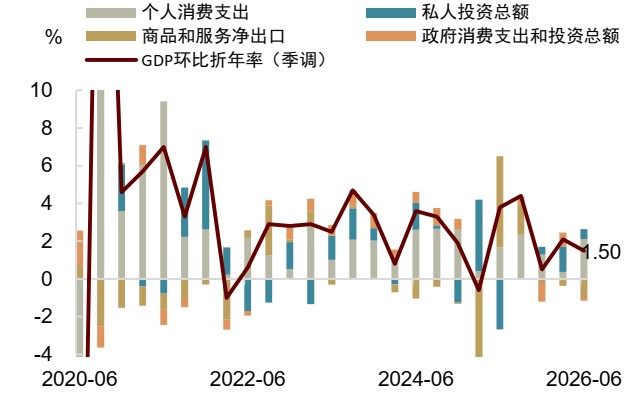
CICC's research report pointed out that the annualized quarter-on-quarter GDP growth in the U.S. for the second quarter was 1.5%, which, although lower than expected, showed strong domestic demand, with private domestic final sales growing at the fastest rate since 2023. The economy is resilient, with growth momentum shifting from fiscal to the private sector. Given the uncertainty surrounding inflation, the Federal Reserve's policy focus remains on controlling inflation, and adopting a "preemptive interest rate hike" is a reasonable option
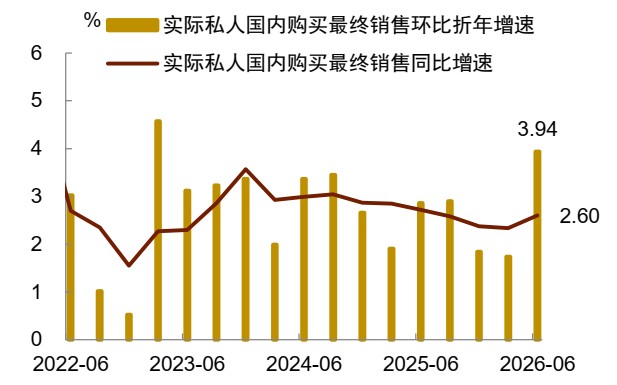
According to the Zhitong Finance APP, China International Capital Corporation (CICC) released a research report stating that the annualized quarter-on-quarter GDP growth in the United States for the second quarter was 1.5%. Although this is below market expectations, the data is not weak. Imports, inventory, and government spending dragged down GDP, while private domestic final sales, which reflect domestic demand, grew at an annualized quarter-on-quarter rate of 3.9%, the fastest since the beginning of 2023, indicating that economic resilience remains strong. Consumption has shown a significant rebound, corporate investment driven by AI continues to maintain high growth, and residential investment has also begun to improve. The momentum of economic growth is gradually shifting from fiscal stimulus to the private sector. In terms of inflation, core PCE has declined from the previous value, but the recent rise in oil prices indicates that future inflation still carries uncertainty. Overall, the U.S. economy has not shown significant signs of slowing down, demand remains robust, and the Federal Reserve's policy focus will still be on controlling inflation, making "preemptive interest rate hikes" a reasonable option. Furthermore, the growth in the second quarter has shown certain diffusion characteristics, which not only indicates a more stable foundation for this round of recovery but also aligns with the recent rotation of funds and market trends in the U.S.
CICC pointed out that although the GDP growth rate in the second quarter was below market expectations, this is not a weak data set. From a structural perspective, the drag on growth mainly comes from fluctuations in imports, inventory, and government spending, rather than a collapse in endogenous demand from the private sector. The private domestic final sales in the U.S. for the second quarter increased at an annualized quarter-on-quarter rate of 3.9%, significantly accelerating from 1.7% in the first quarter, and marking the fastest growth since the first quarter of 2023, highlighting the resilience of domestic demand.
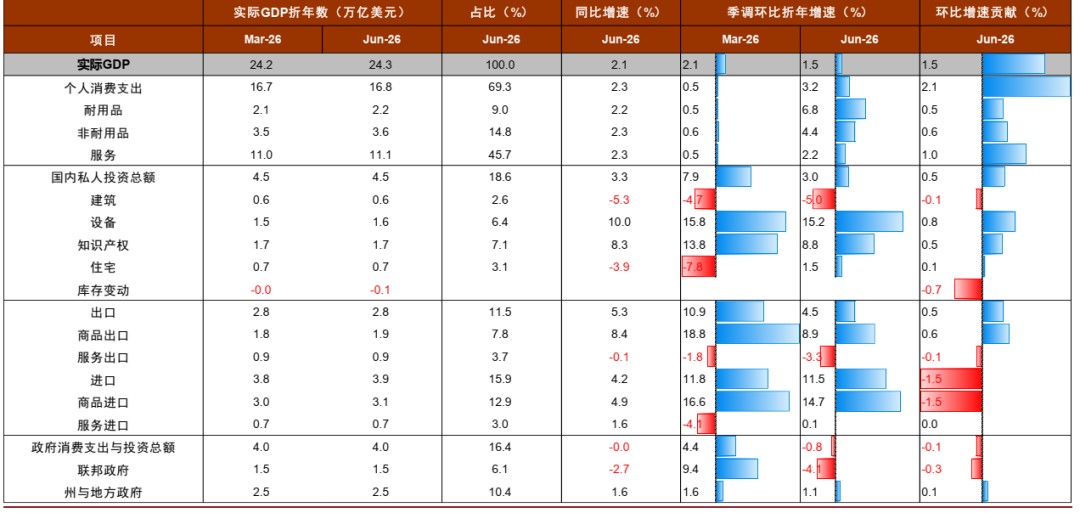
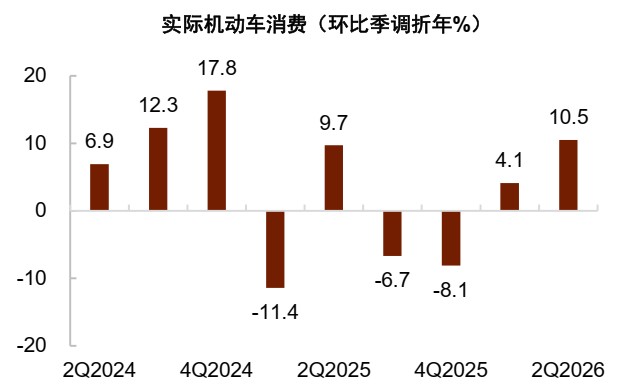
Further analysis shows that consumption improved significantly in the second quarter, with previously weak goods consumption accelerating this quarter, while service consumption remained resilient. Real personal consumption expenditures, seasonally adjusted, grew at an annualized quarter-on-quarter rate of 3.2%, a notable recovery from 0.5% in the first quarter, contributing 2.12 percentage points to GDP; among which, durable goods grew by 6.8%, with consumption growth in motor vehicles and parts, furniture, and durable household goods all strengthening compared to the first quarter. Non-durable goods grew by 4.4%, with significant contributions from other non-durable goods, except for gasoline and energy products, which were still affected by price shocks. Service consumption grew by 2.2%, with dining, accommodation, financial services, and leisure services remaining robust.
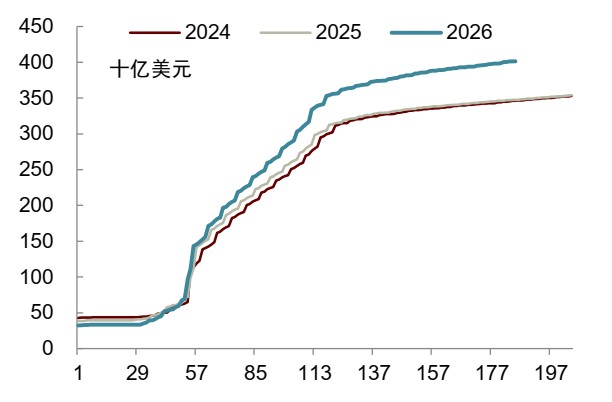
More importantly, this rebound occurred against a backdrop of high interest rates, high oil prices, and persistent inflationary pressures, indicating that the recovery in employment, stable income, and the fiscal rebate effects of the Inflation Reduction Act have provided strong support for household consumption. Looking ahead, the recent rise in oil prices and significant adjustments in the stock market, combined with the tapering of fiscal stimulus effects, may mean that consumption in the third quarter may not maintain the high growth rate seen in the second quarter. However, as long as employment and real income do not deteriorate significantly, it is more likely to manifest as a marginal slowdown rather than a sudden drop.
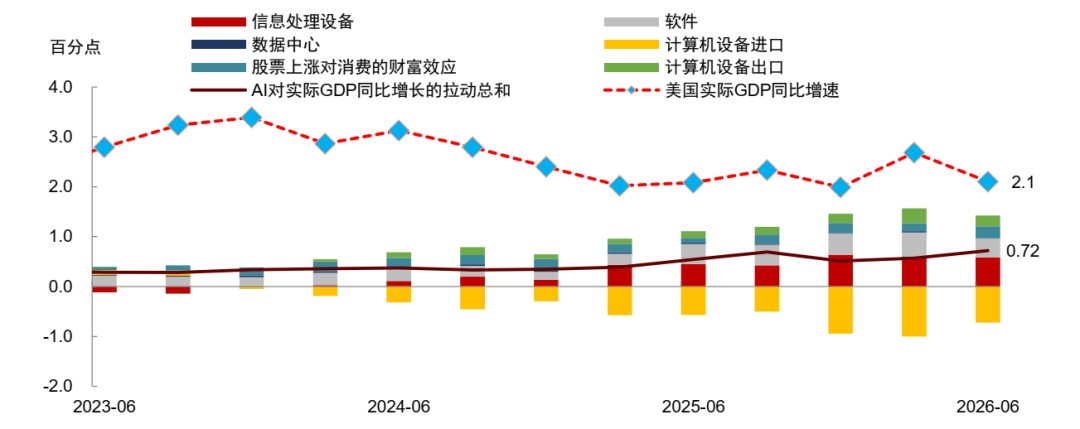
Investment signals are also positive, with AI-related investments continuing to expand and marginal improvements in residential investment. Private fixed investment grew at an annualized quarter-on-quarter rate of 3% in the second quarter, primarily driven by AI-related investments. Equipment investment grew at an annualized quarter-on-quarter rate of 15.2%, continuing the high growth rate of 15.8% in the first quarter, with information processing equipment investment growing at an annualized quarter-on-quarter rate of 8.3%, a slight decline from the first quarter. Intellectual property investment grew by 8.8%, with software investment increasing by 11.4%. Our calculations show that AI-related projects contributed approximately 0.72 percentage points to the year-on-year growth of real GDP in the second quarter, with information processing equipment and software contributing 0.58 and 0.38 percentage points, respectively Residential investment increased by 1.5% month-on-month, marking the first positive growth since the first quarter of 2025, reflecting that the driving force behind private investment is spreading from AI to broader areas.
Imports and inventory are dragging down GDP. In the second quarter, imports grew at an annualized month-on-month rate of 11.5%, contributing a 1.51 percentage point drag on GDP, with goods imports being the main source of the drag. Although high import growth may reduce current GDP, it essentially reflects the expansion of domestic corporate capital expenditure, inventory stocking in the upstream and downstream of the AI industry chain, and a rebound in end-consumer demand, indicating that domestic demand is not weak. Regarding inventory, changes in inventory in the second quarter dragged GDP growth down by 0.67 percentage points, reflecting that companies consumed inventory during the period of geopolitical conflict.
Government spending has shifted from growth to decline, indicating a marginal retreat of fiscal stimulus. In the second quarter, government consumption expenditure and total investment decreased by an annualized month-on-month rate of 0.8%, with the federal government reducing by 4.1%, reflecting that the macroeconomic stimulus driven by government transfer payments and high fiscal deficits since Trump took office is marginally weakening, and the engine of economic growth is returning to the private sector.
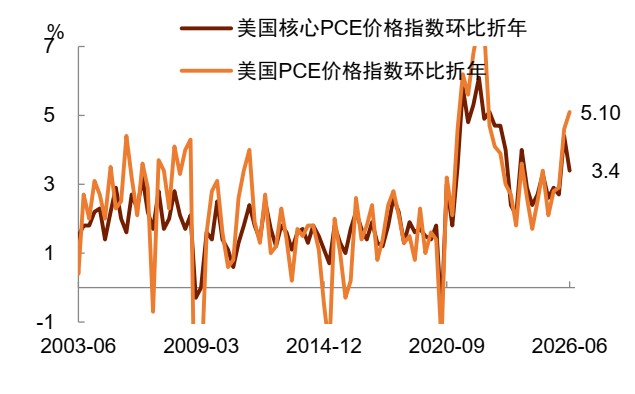
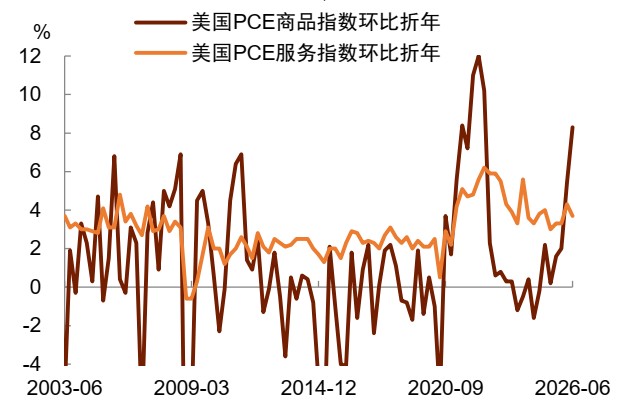
In terms of inflation, the PCE price index rose by 5.1% month-on-month in the second quarter, mainly due to rising oil prices. The core PCE price index, excluding food and energy, rose by 3.4% month-on-month, significantly down from the previous value of 4.4%, in line with market expectations. Notably, the PCE price index fell by 0.1% month-on-month in June, marking the first monthly decline since the pandemic began in 2020, mainly due to the easing of the situation in the Strait of Hormuz in June. However, since July, oil prices have risen again, indicating that future inflation trends still carry significant uncertainty.
Overall, this GDP data once again indicates that the U.S. economy continues to maintain strong resilience, with no obvious signs of slowdown in the short term, and monetary policy should still focus on inflation risks. Although the Federal Reserve decided to keep interest rates unchanged at the July meeting, the market has not fully accepted this decision, with investors concerned that the Fed may repeat the mistake of acting "too late," leading to a significant rise in long-term U.S. Treasury yields. Although this GDP report itself does not directly reflect a resurgence of inflation, the strong growth in private domestic final demand indicates that the endogenous momentum of the economy remains sufficient, also increasing the risk of inflation pressures rising again in the future. In this context, the Fed's subsequent policy focus will still revolve around inflation, and adopting "preventive rate hikes" should be a reasonable option. (For details, please refer to "The Fed's Inaction Increases Market Risks").
In addition, the growth in the second quarter has shown certain diffusion characteristics, with the momentum of economic growth gradually spreading from AI capital expenditure to industrial equipment, transportation equipment, software, R&D, and further transmitting to consumer goods and residential investment. This indicates that the U.S. economy has not entered a "single sector-driven stall" phase, but is showing a broader and more resilient recovery pattern. Looking ahead, fluctuating oil prices, marginal weakening of fiscal stimulus, and tariff policy disruptions remain uncertain factors worth noting, but the growth diffusion signals released by the second quarter GDP also provide new clues for judging the performance of assets in the next phase. Recently, the U.S. stock market has shown significant capital rotation characteristics, with market performance spreading from a few AI leaders to more industries and sectors, and this GDP data aligns with this change, possibly indicating that the rotation pattern will continue Chart 1: The annualized quarter-on-quarter growth rate of the US GDP in the second quarter has declined
Source: Haver, China International Capital Corporation Research Department
Chart 2: However, private sector domestic demand has rebounded strongly
Source: Haver, China International Capital Corporation Research Department
Chart 3: Overview of US GDP components
Source: Haver, China International Capital Corporation Research Department
Chart 4: AI-related imports have dragged down; its investment, net imports, and wealth effect remain important drivers of US GDP growth
Source: Haver, China International Capital Corporation Research Department
Chart 5: Motor vehicle consumption has rebounded significantly
Source: Haver, China International Capital Corporation Research Department
Chart 6: Due to the influence of the "Great Beauty Act," this year's tax refund amount is higher
Source: Haver, China International Capital Corporation Research Department
Chart 7: Core PCE is stabilizing, while overall PCE is pushed up by oil prices
Source: Haver, China International Capital Corporation Research Department Chart 8: Service inflation remains moderate, PCE rebound mainly driven by goods
Source: Haver, China International Capital Corporation Research Department
