


Hold Steady! Bank of England Keeps Rates at 3.75% as Expected, but Warns of Persistent Inflation Risks
The Bank of England kept its benchmark interest rate unchanged at 3.75%, but internal voting revealed a 6:3 split, with three members advocating for a rate hike. Influenced by energy price volatility stemming from US-Iran tensions and the situation in the Strait of Hormuz, the central bank explicitly issued hawkish signals, warning that it is ready at any time to restart tightening policy if high oil prices trigger secondary inflationary effects
The Bank of England kept its benchmark interest rate unchanged on Thursday, but sent a clear signal: it is ready at any time to tighten monetary policy if elevated energy prices trigger widespread and persistent inflationary pressures. This stance aligns with the direction of the Federal Reserve's decision on the same day.
The Bank of England's Monetary Policy Committee (MPC) decided to keep the benchmark interest rate at 3.75%, a level that has remained unchanged since last December. Bank of England Governor Andrew Bailey stated:
"Our duty is to ensure that any rise in inflation is temporary."
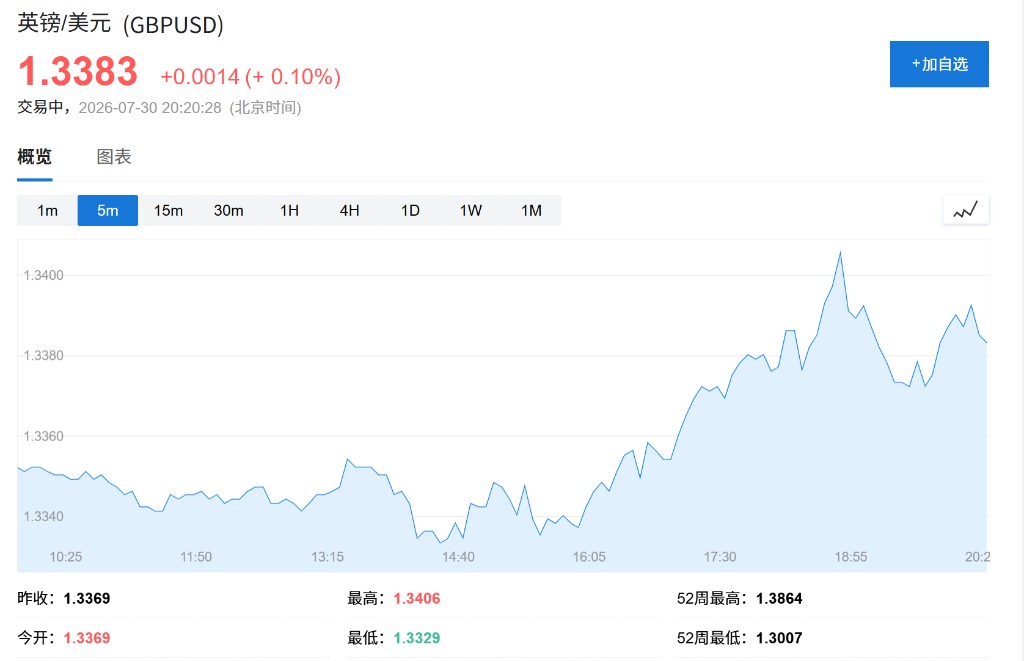
Three of the nine MPC members voted to raise the benchmark rate to 4%, reflecting heightened caution among some officials regarding the risk of secondary inflation transmission. The pound sterling rose slightly by 0.08% after the announcement, trading at $1.3376 against the US dollar. Felix Feather, an economist at Aberdeen, commented, "This was a slightly more hawkish pause by the Bank of England than expected."
Widening Divide: Three Members Advocate for Rate Hike to 4%
Among the nine MPC members, Megan Greene, Huw Pill, and Catherine Mann voted to raise the benchmark interest rate by 25 basis points to 4%, while the other six voted to keep it unchanged.
Greene pointed out that UK inflation has remained above target for approximately five years. She noted that signs of a second energy chokepoint being blocked in the Red Sea, combined with constraints on the AI hardware supply chain, are bringing additional supply-side pressures to the market. She stated, "Preemptive rate hikes could reduce the probability of secondary inflationary effects taking root."
Pill emphasized the "profound uncertainty" surrounding the outlook for energy prices, arguing that this uncertainty "could persist for a long time with an unknown duration," making fine-tuning monetary policy dangerous. He explicitly stated that raising rates now would "send a clear and unequivocal signal to the market that we have the willingness and ability to address upside inflation risks stemming from the situation in the Gulf."
Energy Price Volatility Makes Policy Path Difficult to Anchor
The backdrop to this decision is complex. Since the outbreak of US-Iran tensions in late February, oil and gas prices have experienced severe volatility, with fluctuating expectations of a blockade in the Strait of Hormuz making it difficult for the market to price in risks. Central bankers globally are generally concerned that if energy prices remain high for an extended period, companies' motive to protect profits will drive price increases, while workers will tend to demand wage hikes to maintain purchasing power, thereby triggering the "secondary effect" of inflation.
The UK's overall inflation rate in June had already fallen to 2.6%, a near 15-month low, providing support for the central bank's pause on rate hikes. Simon Dangoor, Deputy Chief Investment Officer of Fixed Income at Goldman Sachs Asset Management, stated that the currently encouraging inflation data reduces the need for immediate action, and the central bank is content to remain on the sidelines "for now."
However, all MPC members agreed that the risks to the energy price trajectory remain skewed to the upside, which is one of the most noteworthy policy signals in this statement.
Breakdown of US-Iran Memorandum of Understanding Becomes Key Policy Variable
Among the three members holding a hawkish stance, Mann's attitude is particularly noteworthy. She joined the minority faction advocating for a rate hike in the June meeting and maintained this position again, explicitly identifying the core factor that changed her judgment.
"The key to changing my judgment was the breakdown of the US-Iran Memorandum of Understanding," Mann said. "This conflict continuing intermittently seems to have become the new normal."
This statement implies that the evolution of the geopolitical situation in the Strait of Hormuz will directly influence the pace of the Bank of England's subsequent actions. If pressure on energy prices persists and inflation data fails to decline further, the pro-hike faction within the MPC may continue to gather strength, potentially tilting the policy balance gradually toward tightening.
