


NVIDIA will invest $1 billion in Naver and expand its cooperation agreement with SK Group
NVIDIA announced an investment of $1 billion in South Korea's Naver for the construction of AI data centers and to expand cooperation with SK Group, planning to build a computing power cluster of over 2 gigawatts in Korea. This move aims to deepen the global AI layout, ensure the supply of storage chips, and accelerate the implementation of AI infrastructure
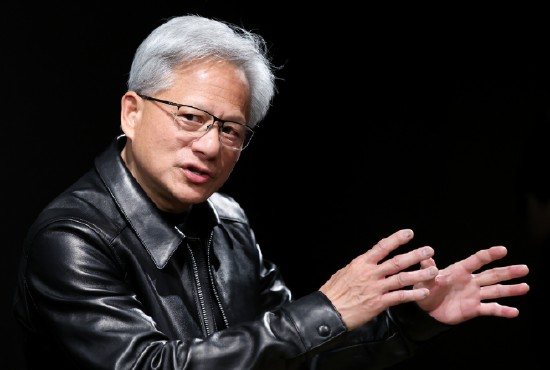
NVIDIA announced that it will invest $1 billion in South Korean internet and cloud service provider Naver for its AI data center project under construction in South Korea. NVIDIA has recently completed multiple large transactions, and this is another significant collaboration.
NVIDIA stated last Friday evening that this funding will allow Naver's data center to expand more than twice its current size. The project is jointly developed by Naver and the American private equity firm Brookfield Asset Management, and will be fully equipped with NVIDIA AI computing hardware.
In addition, NVIDIA has reached a cooperation agreement with SK Group to build an AI data center cluster in South Korea with a total computing power scale exceeding 2 gigawatts, which can roughly meet the electricity needs of 1.5 million households. NVIDIA revealed that the first AI computing factory, constructed by SK Telecom, will be put into operation next year.
NVIDIA CEO Jensen Huang stated in an interview, "Korea is entering a golden development period. The country's semiconductor industry and industrial sector are thriving, with the complete capability to build AI infrastructure for the world."
Jensen Huang continues to lay out the global AI industry through significant investments and large cooperation agreements.
He has invested billions of dollars in upstream and downstream companies across the entire AI industry chain, with the core goal of accelerating global customer adoption of NVIDIA products and clearing various bottlenecks in the AI industry's implementation.
This official announcement further deepens NVIDIA's cooperation with two leading South Korean companies based on existing collaborations; the news comes during South Korean President Lee Jae-myung's visit to the United States. President Lee is attending a series of industrial events in Silicon Valley and will subsequently finalize more technology cooperation agreements.
For NVIDIA, deepening cooperation with SK Group can ensure a stable supply of memory chips. SK Group's SK Hynix and Samsung Electronics are the two major high-end memory chip suppliers globally; currently, there is a persistent shortage of high-bandwidth memory chips due to large-scale new AI data centers being built worldwide.
NVIDIA stated that the company will assist SK Hynix in developing the next generation of high-bandwidth memory (HBM) chips to secure stable supply channels. Jensen Huang revealed in the interview that the total transaction amount of the overall AI cooperation project between NVIDIA and SK Group will exceed $50 billion, covering two major areas: NVIDIA's procurement of memory chips and SK Group's procurement of NVIDIA supercomputing equipment. "The total scale of cooperation between the two parties will reach $50 billion."
Regarding Naver's data center project, Brookfield has signed a non-binding framework agreement to provide up to $9 billion in financing.
Jensen Huang believes that investments in AI companies like Anthropic and OpenAI can drive growth in NVIDIA's main business and create investment returns. However, market critics point out that such investments create artificial demand and circular trading Earlier this week, NVIDIA signed a $1.5 billion agreement with Amkor Technology to help the latter expand its chip packaging factory. Previously, Jensen Huang had just returned from a trip to Japan, during which he reached cooperation agreements with several robotics companies and Toyota.
Currently, Jensen Huang is promoting NVIDIA to expand its customer base beyond large cloud providers (hyperscale computing service providers) and increase investments in AI hardware for other enterprises. He suggested that countries should build a self-controlled domestic AI computing system to maintain data sovereignty; at the same time, ensure that small and medium-sized enterprises and various institutions can easily access AI computing resources
