


Gold Correction Not Yet Over: Could $3,500 Become Key Support?
Bank of America's technical analysis indicates that a "Death Cross" has formed for gold, creating short-term pressure. With the pullback lasting only 24 weeks—far shorter than the previous 121-week uptrend—the correction may not be over, with $3,500 identified as a key support level. Goldman Sachs argues that robust central bank gold purchases will provide a floor for prices, hedging against hawkish Federal Reserve pressure. BNP Paribas notes growing caution in the options market, with funds buying put options to hedge downside risk, but emphasizes that concerns over U.S. debt reinforce gold's long-term allocation value
The tug-of-war between bulls and bears in the gold market has entered a critical phase. Technical indicators show persistent downward pressure, yet strong demand from central bank purchases continues. Institutional views on gold's medium-term trajectory are significantly diverging.
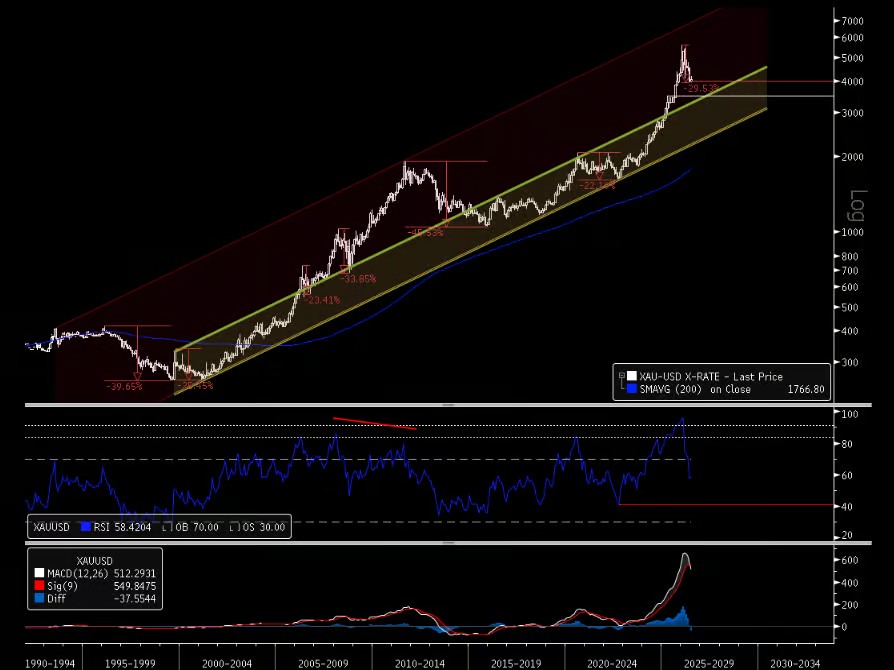
Bank of America (BofA) latest analysis points out that gold is currently in a downward channel, with the "Death Cross" signal suggesting further room for decline, although TD Sequential indicators hint at a potential trend reversal. The bank believes that this correction has lasted only 24 weeks; compared to the previous 121-week uptrend, the consolidation cycle may not yet be complete, identifying the $3,500 range as a key support level.
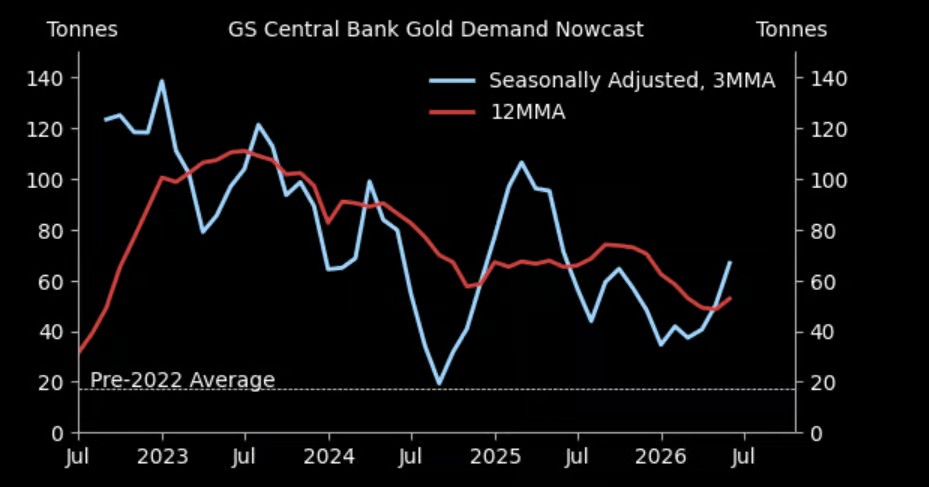
Meanwhile, Goldman Sachs expects central banks to purchase 81 tons of gold in May, arguing that such buying will provide a price floor for gold, offsetting short-term downward pressure from hawkish Federal Reserve expectations.
Weak Technical Signals: $3,500 May Become Key Defense Line
BofA's latest technical analysis shows that gold remains in a downward channel, with a "Death Cross" pattern already formed, indicating continued short-term technical pressure. However, the bank also notes that TD Sequential indicators have released potential reversal signals, meaning gold prices may be approaching a window for phased adjustment, and bearish forces do not completely dominate.
BofA stated that since 2000, channel lines in gold's long-term movement have served as important technical hubs. Currently, the support zone is gradually shifting toward the $3,500 vicinity. The bank believes the current correction cycle may not yet be over. Compared to the previous uptrend that lasted about 121 weeks, the current pullback has lasted only about 24 weeks, suggesting there may still be room for the consolidation period to extend. Gold prices may continue to fluctuate before confirming a medium-term bottom.
Source: Bank of America
Central Bank Gold Purchases Become Important Support
Despite weak technicals, continuous central bank gold buying is becoming an important supporting force in the gold market. Goldman Sachs' latest model shows that global central bank gold purchases in May are expected to reach 81 tons. Calculated on a three-month seasonally adjusted monthly average basis, this is approximately 67 tons, significantly higher than the historical average of about 17 tons prior to 2022.
Goldman Sachs pointed out that recent forecasts for central bank gold purchases have strengthened again. The bank believes that against the backdrop of short-term pressure on gold prices from hawkish Federal Reserve expectations, central bank demand will provide important price floor support for gold.
BNP Paribas noted that official sector gold holdings saw their first net sale in 14 months this March. However, the bank believes this change is more likely a short-term anomaly rather than a reversal of the central bank gold buying trend.
Source: GIR
Diverging Fund Sentiment: Bullish Futures, Options Market Seeks Protection
Capital flow data shows divergence emerging within the gold market.
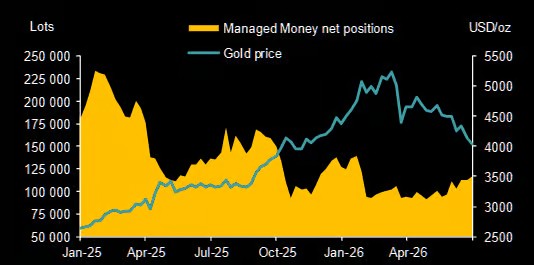
BofA data shows that although gold prices have retreated from their early 2026 highs, the proportion of net long positions in the futures market relative to open interest remains at a relatively high level. BNP Paribas stated that during the June correction in gold, fund investors began buying on dips, and net speculative long positions subsequently rebounded, indicating that some capital is still betting on gold's medium-to-long-term upward trend.
However, the options market is sending more cautious signals. The bank pointed out that since March, funds have generally tended to buy gold put options, indicating that investors are using options strategies to hedge downside risk, and at least in the short term, the market is not fully optimistic about further upside.
Source: BNP Paribas
Inflation Logic Fades, Debt Pressure Reinforces Gold's Long-Term Allocation Value
From a macroeconomic perspective, BNP Paribas believes that the traditional "inflation hedge" logic for gold is changing.
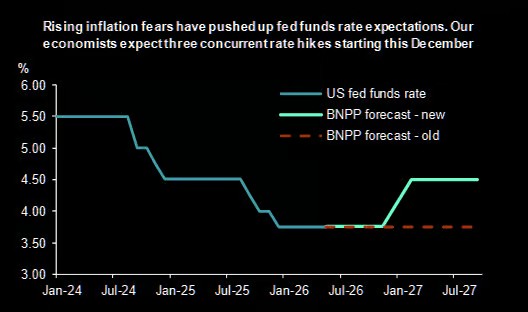
The current market is more concerned that high inflation expectations may keep interest rates elevated, rather than viewing inflation itself as a sole reason to buy gold. This also explains why gold faced pressure while rising energy prices boosted inflation expectations and the market repriced the Federal Reserve's policy path.
However, the bank believes that U.S. fiscal conditions are becoming a long-term support factor for gold. Since July 2025, the scale of U.S. public debt has increased by approximately $3 trillion. Concerns about the sustainability of U.S. debt may continue to drive investors to allocate to gold.
In addition, the correlation between gold and U.S. equity assets has changed. For most of 2024 to 2025, gold and U.S. stocks once showed a positive correlation, but after entering 2026, the correlation turned negative again, with gold's safe-haven attribute re-emerging in asset allocation.
Source: BNP Paribas
