


Easing Tensions in the Middle East and Chip Rally Push Asia-Pacific Indices to ATH; Korea Composite Index Surpasses 7,000 Points as Samsung Market Cap Exceeds $1 Trillion
纳指大涨 2%,半导体 ETF 涨约 5.2%,能源业 ETF 跌超 4.1%。中概股普遍上涨,纳斯达克中国金龙指数涨 3.45%。美元指数下跌 0.5% 至战前水平;日元大涨 1%,欧元与英镑跟涨。现货黄金大涨 3% 至 4694 美元附近。WTI 原油跌近 7% 至约 95 美元,布伦特跌至近一个月低点。
美伊和谈预期升温,据报将达成一份原则性协议备忘录,原油应声大跌,通胀担忧进一步缓解,推动欧美债市走强。
此外,ADP 就业超预期和 AI 芯片等科技巨头强劲财报的共振下,欧美股市大涨,标普与纳指再创新高。
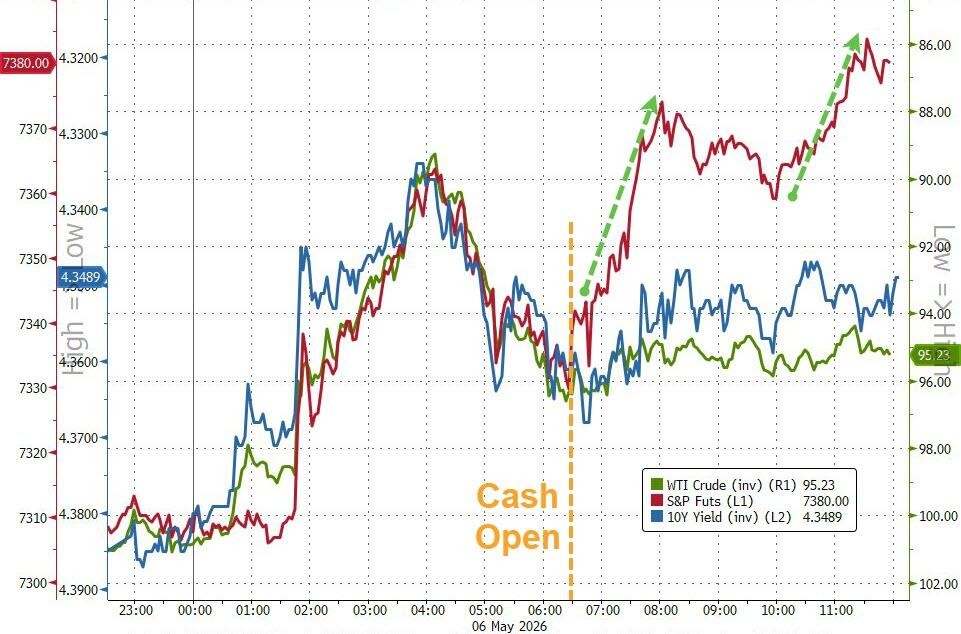 (美股债油日内走势)
华尔街见闻提及,新华社援引美国媒体 6 日报道称,两名美国官员及另外两名知情人士透露,白宫认为,与伊朗接近达成一份一页的谅解备忘录。该备忘录旨在结束战争,并为更详细的核问题谈判设定框架。
报道称,美方预计将在未来 48 小时内收到伊朗对多项关键条款的回应。特朗普周三表示:
我们进行了非常良好的会谈,极有可能达成协议。
然而,伊朗数名官员随后公开表示,美方提案"不切实际",特朗普也警告称若协议未达成将实施更多轰炸。
特朗普表示与伊朗达成协议指日可待后,日内 WTI 原油一度暴跌超 13%,美股盘前特朗普的警告让原油快速反弹,较日低涨 10%。
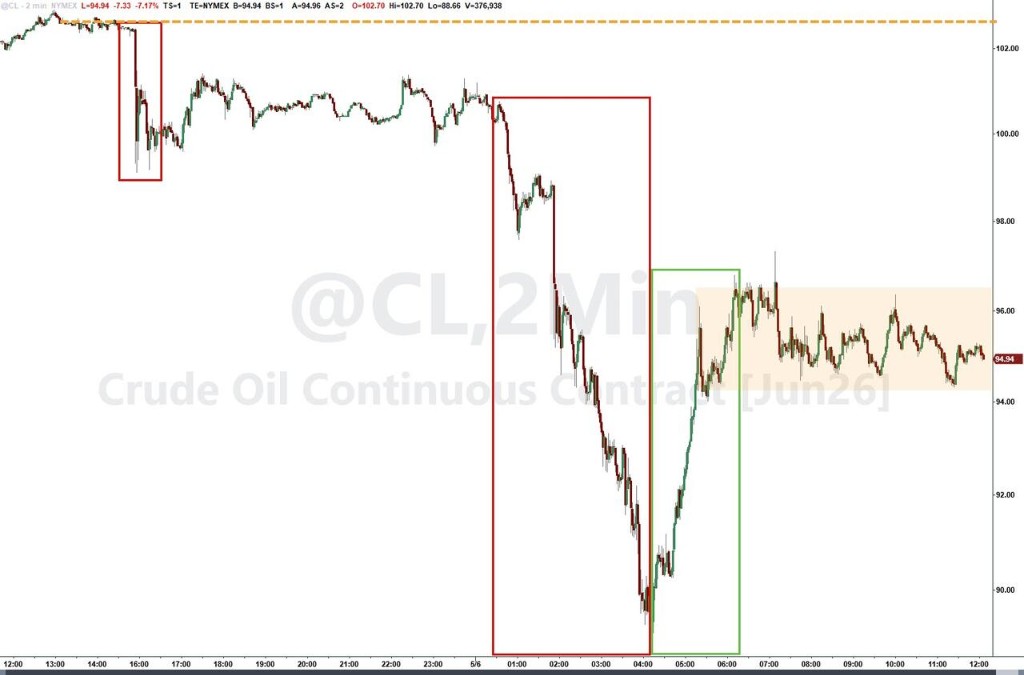 (WTI 原油期货价格日内走势)
过去几周,由于停火、封锁等一系列仓促措施,原油价格一直维持在一些关键水平。
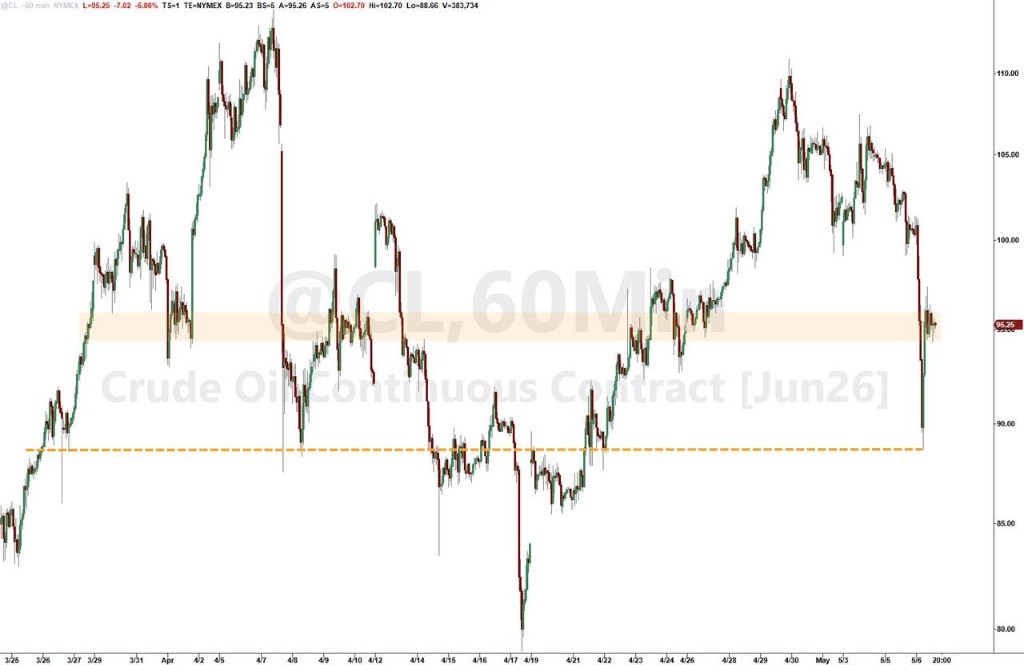 (原油期货价格围绕 95 美元中枢价格宽幅震荡)
周三标普指数和纳指再度创下历史新高,而道指盘中一度重回 50000 点上方。
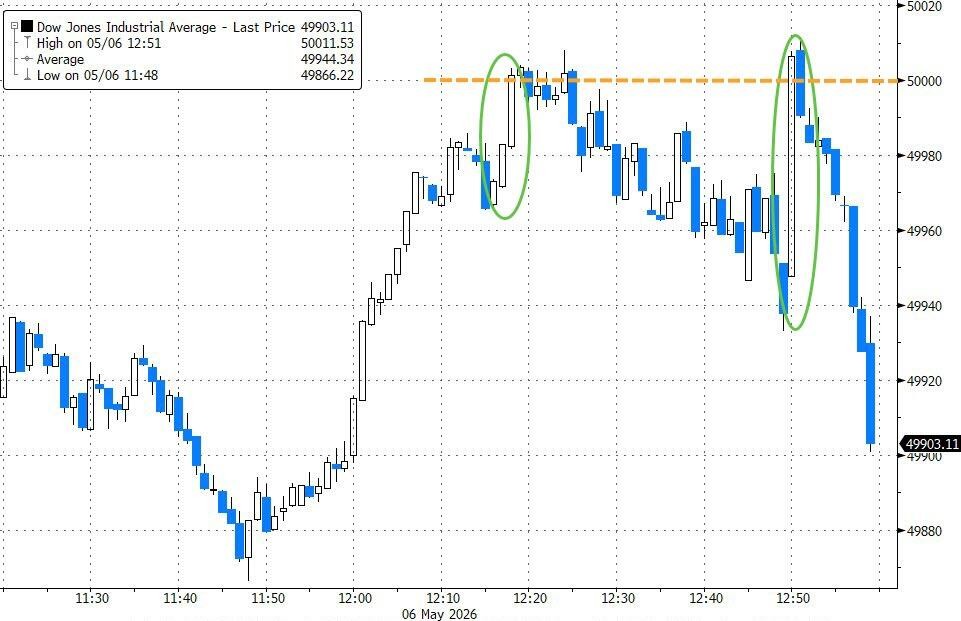 (道指日内一度重回 5 万点)
AMD 前一日盘后公布超预期的营收指引,股价单日飙涨近 19%,提振科技板块整体走强。值得注意的是,AMD 股票严重超买,其 RSI 指标已连续 19 天高于 80。
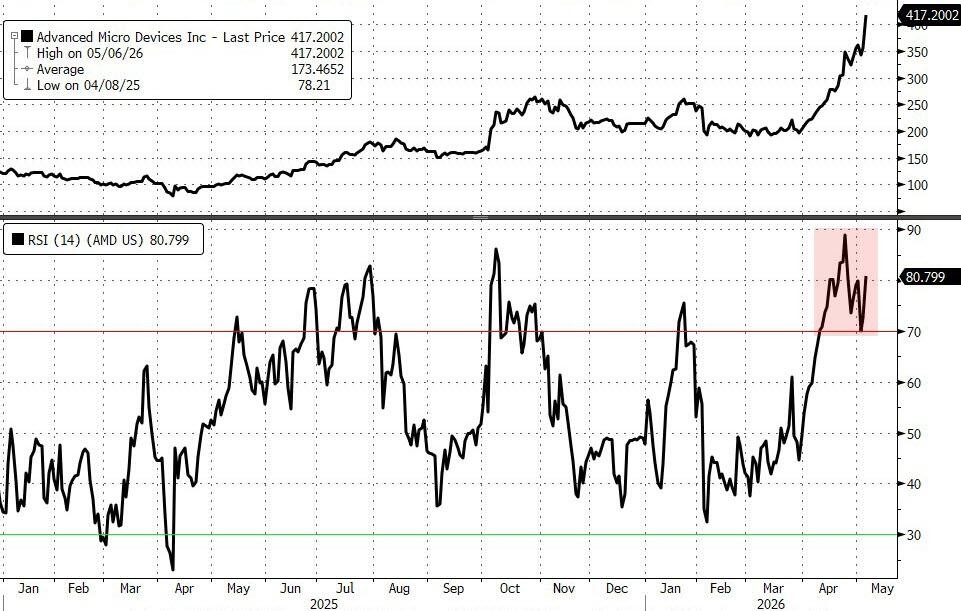 (AMD 飙涨 19%,同时下方 RSI 指标显示超买)
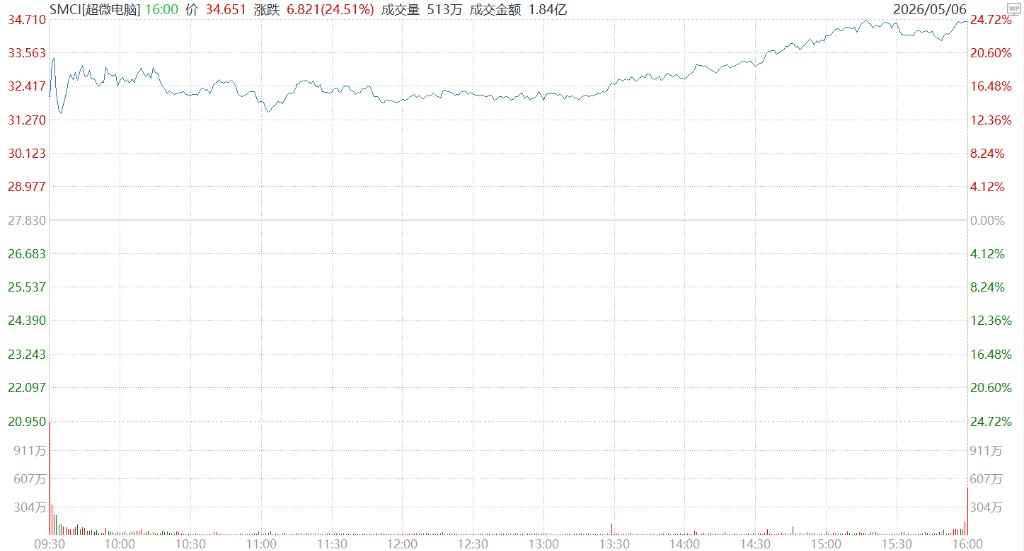
服务器厂商超微电脑同日公布强于预期的第四财季营收及利润指引,周三股价大涨 24.5%。
英伟达则受益于其与康宁公司的战略合作。华尔街见闻提及,英伟达康宁签长期协议,康宁光学连接产能将提升 10 倍,英伟达获至多 1800 万股认购权。英伟达股价上涨 5.7%,市值重回 5 万亿美元上方。
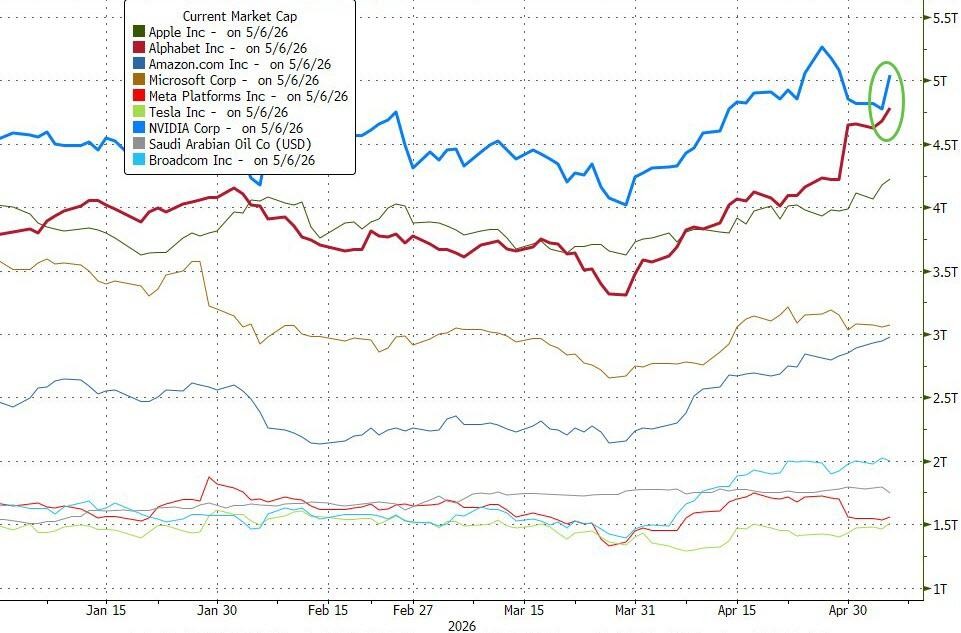 (全球市值前九大上市公司)
科技七巨头全线走强,整体表现优于标普剩余 493 成分股指数。
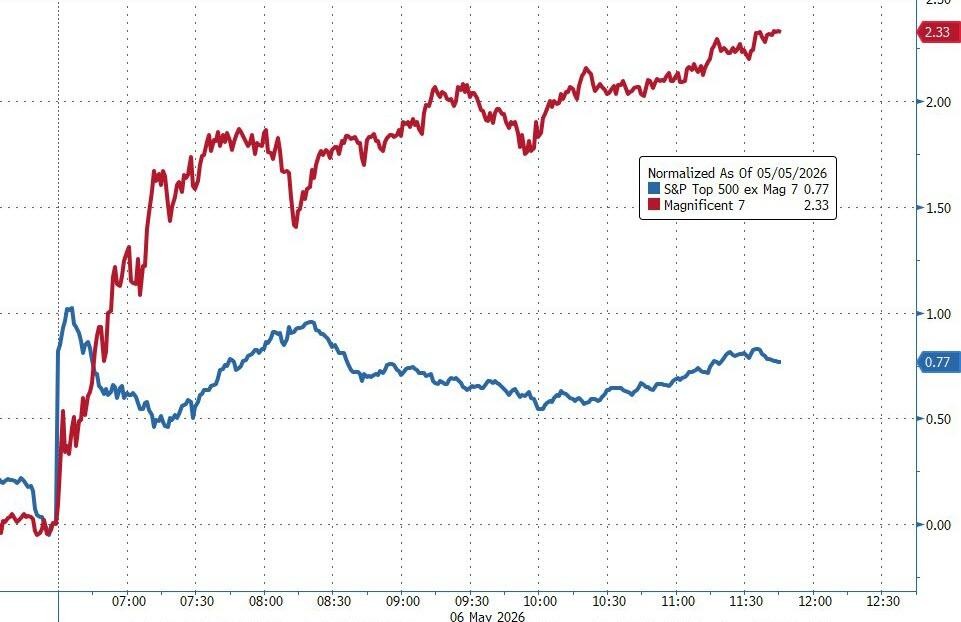 (科技七巨头跑赢标普 493 股指)
高盛科技板块专家 Pete Callahan 在客户报告中指出,纳斯达克 100 指数创下年内第 20 次单日涨幅超 1% 的记录,主要由半导体板块驱动。半导体板块的强势表现推动半导体/软件板块今日跌至周期新低。
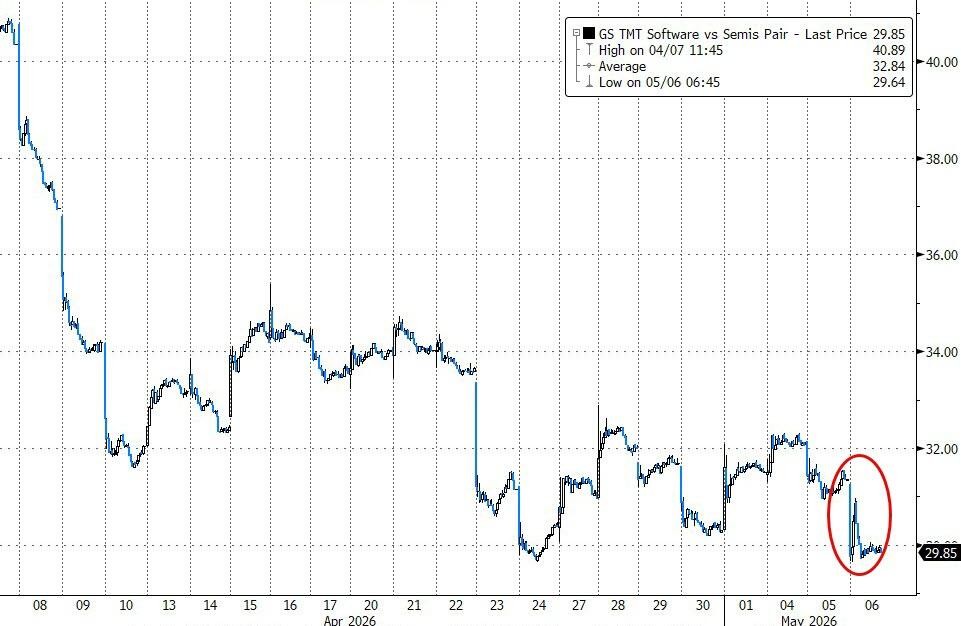 (半导体/软件板块跌至周期新低)
彭博策略师 Michael Ball 表示:
由 AI 盈利乐观情绪和波动率下降构成的正向反馈循环,将强化资金流入,支撑标普 500 继续上涨。若地缘政治担忧进一步消退,支撑力量可能从个股加速转向波动率压缩。
VIX 指数 4 月以来大幅回落,远低于战前水平,但石油 ETF 波动率仍然明显偏高。
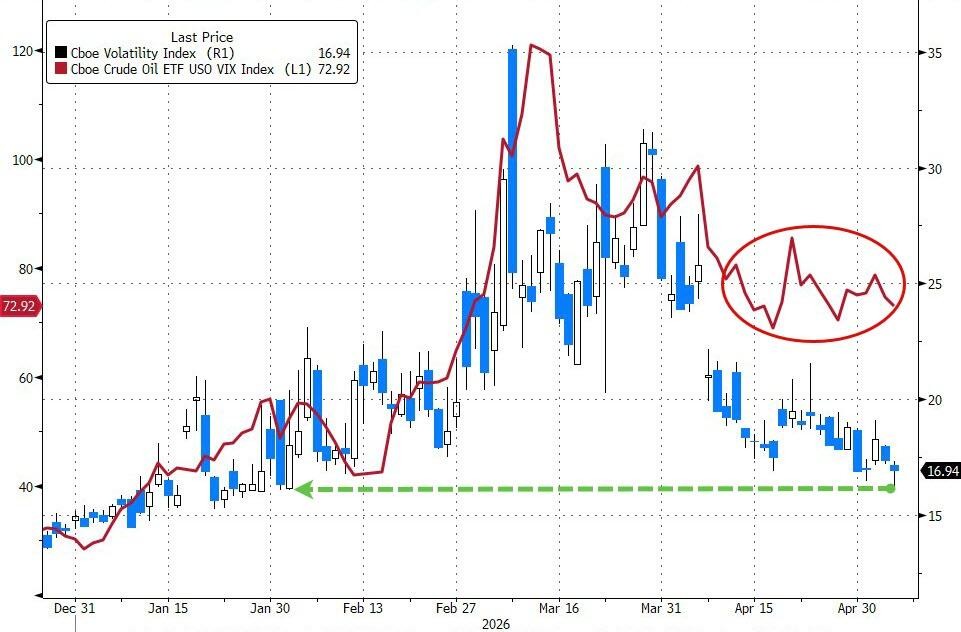 (“恐慌指数” VIX 远低于战前水平)
霍尔木兹海峡潜在重开的供应链改善预期,令工业和原材料板块成为标普 500 中表现最佳的方向之一,工业板块当日上涨 2.6%,信息技术板块上涨 2.56%。
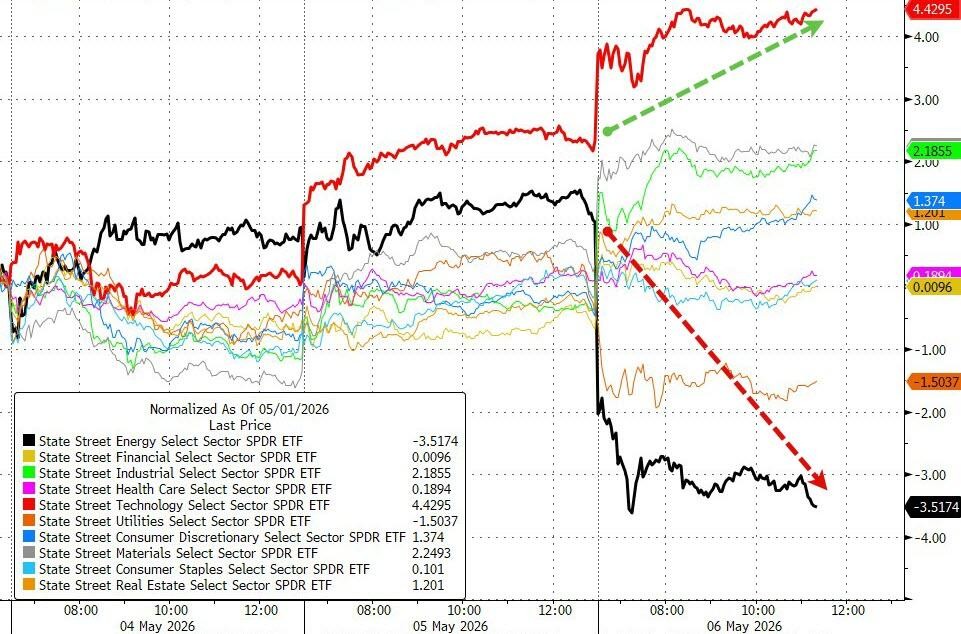 (美股本周板块走势)
企业盈利同样释放出积极信号。迪士尼公布第二财季业绩超出华尔街预期,流媒体业务盈利改善、主题公园及邮轮消费强劲,股价上涨 7.5%;Uber 预测第二季度预订量强劲,股价上涨 8.4%。
AMD 和 SMCI 的财报印证了 AI 芯片和数据中心需求依然强劲;迪士尼、Uber 等财报显示美国消费者在体验经济上的支出依然旺盛。Globalt Investments 高级组合经理 Thomas Martin 表示:
经济运转良好,没有任何迫近衰退的危险信号,在这一背景下,你必须持有股票。
根据 LSEG 数据,截至 5 月 1 日,超过 80% 已公布业绩的标普 500 成分股盈利超出分析师预期,标普 500 整体利润增速有望创四年多来最强。
据华尔街见闻,美国 4 月 ADP 就业人数增长 10.9 万人,创 15 个月以来新高,为市场提供了额外的经济韧性支撑。投资者正等待周五公布的非农就业数据,路透社对经济学家的调查显示,4 月新增就业岗位预期为 6.2 万个。
不过,联储官员的表态令市场对降息的期待趋于谨慎。圣路易斯联储行长 Alberto Musalem 表示,货币政策面临的风险已向通胀上行方向倾斜,利率可能需要在高位维持更长时间。
芝加哥联储行长 Austan Goolsbee 则警告,不应机械地因生产率加速而降息,因为这一现象有时会推高物价。利率互换市场的定价显示,年内联储加息或降息的概率大致相当。
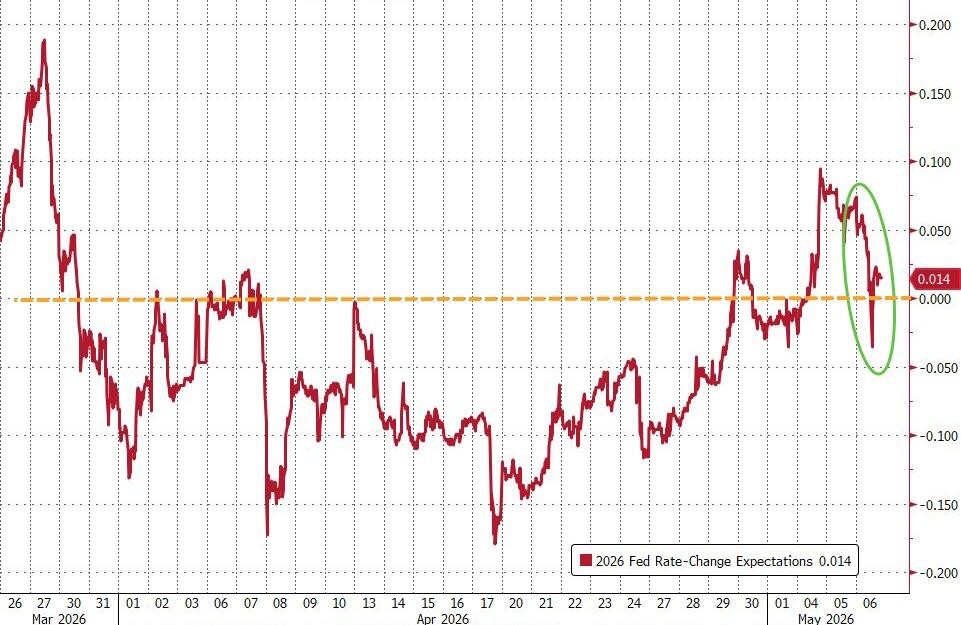 (市场预期美联储货币政策立场保持中性)
30 年期美债收益率今日继续下滑至一周低点,5.00% 的收益率再次刺激买家回归。
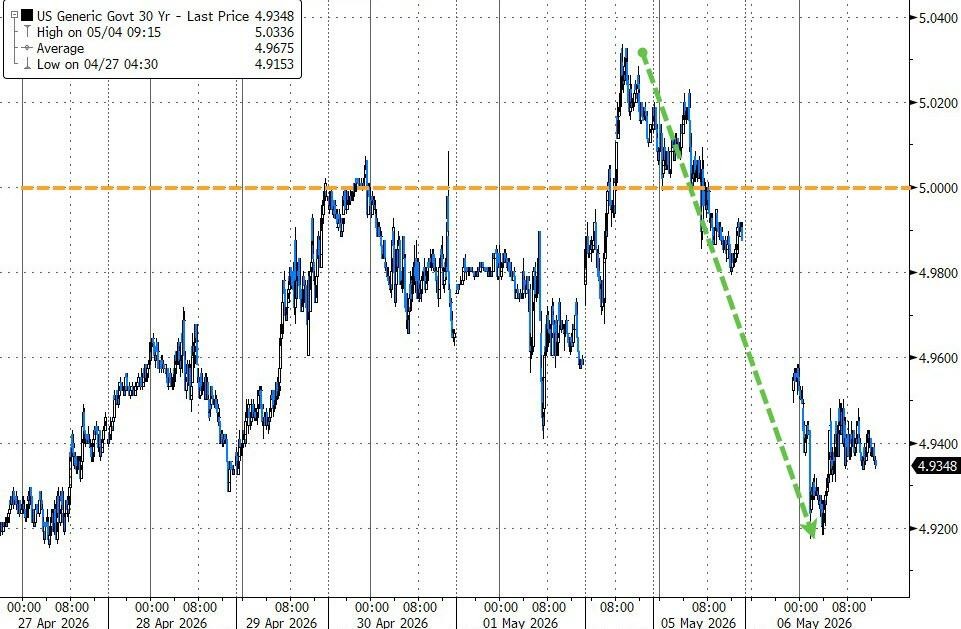 (30 年期美债收益率今日加速跌离 5% 关口)
日元周三大幅升值,美元兑日元升至 156.38,据报日本央行再度实施汇市干预,进一步压低美元。美元现货指数当日下跌 0.5%,回落至战前水平。
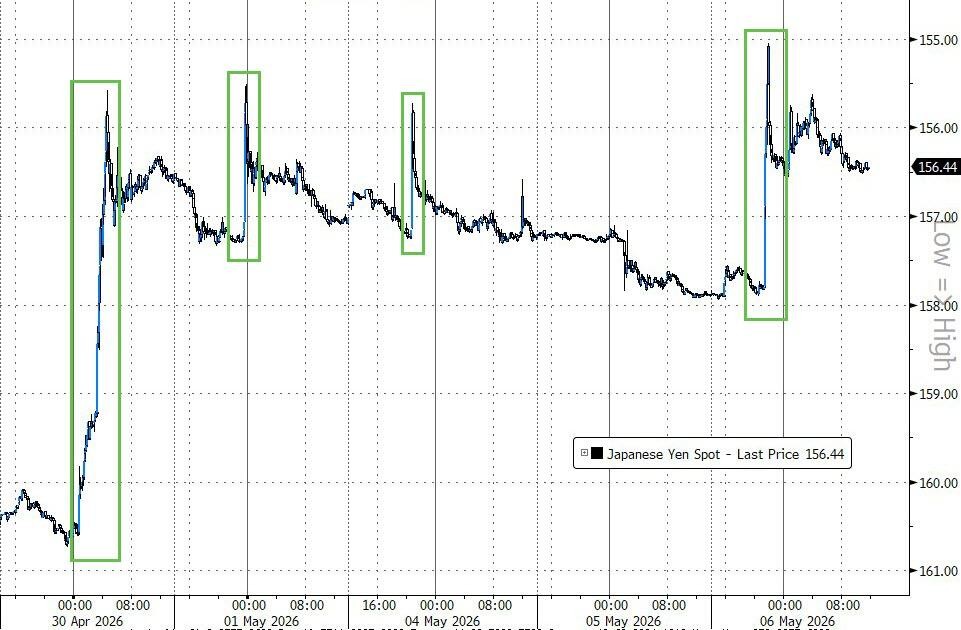 (据报日本央行干预后,日元今日大幅升值)
黄金则受益于美元走弱及地缘政治避险情绪的切换,现货金价大涨 3% 至每盎司 4694.57 美元,逼近关键技术阻力位。
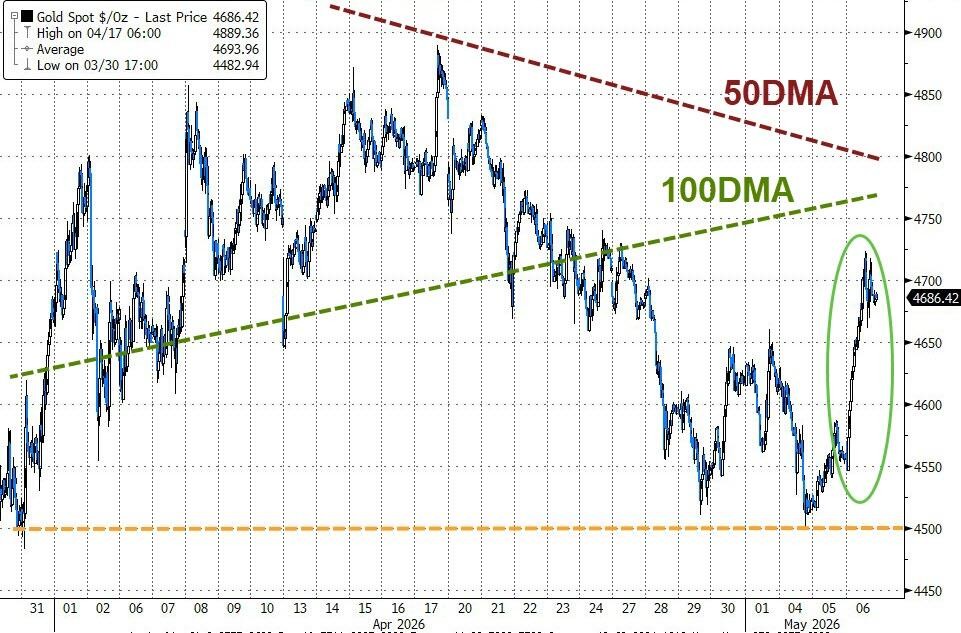 (现货黄金一个月走势)
分析人士指出,若美伊协议临近,此前用于支撑新兴市场主权储备的"存钱罐"效应或将再度关闭,为金价提供额外上行动力。
比特币隔夜一度攀升至约 8.3 万美元,创 1 月底以来新高,并接近 200 日均线后受阻回落,最终小幅收跌 0.1% 至 81539 美元。
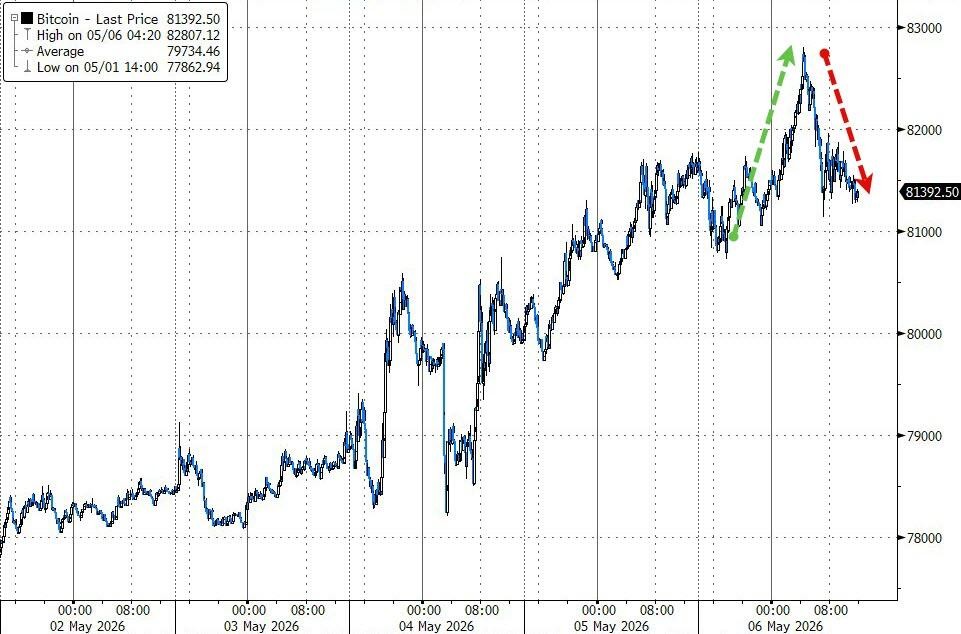 (比特币价格冲高回落)
数据显示,比特币近期的走强得到逾 16 亿美元比特币 ETF 资金净流入的支撑。
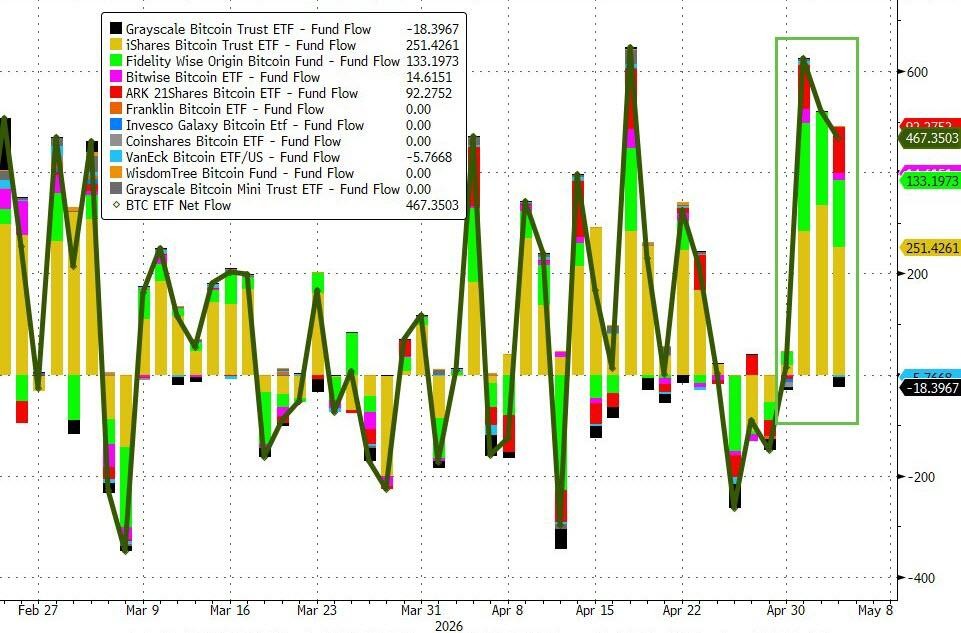 (比特币 ETF 连续四日净流入资金)
周三,美股行业 ETF 多数收涨,半导体 ETF 涨约 5.2%,能源业 ETF 跌超 4.1%。中概股普遍上涨,纳斯达克中国金龙指数涨 3.45%。盘后业绩后,Arm 先涨后跌、跌超 7%。
美股基准股指:
标普 500 指数收涨 105.90 点,涨幅 1.46%,报 7365.12 点。
道琼斯工业平均指数收涨 612.34 点,涨幅 1.24%,报 49910.59 点。
纳指收涨 512.817 点,涨幅 2.03%,报 25838.943 点。纳斯达克 100 指数收涨 584.111 点,涨幅 2.09%,报 28599.172 点。
罗素 2000 指数收涨 1.47%,报 2886.77 点。
恐慌指数 VIX 收涨 0.35%,报 17.44。
美股行业 ETF:
半导体 ETF 收涨 5.18%,全球航空业 ETF 涨 4.53%,全球科技股指数 ETF、科技行业 ETF、生物科技指数 ETF 至多涨 3.15%,银行业 ETF 涨 1%。
(5 月 6 日 美股各行业板块 ETF)
科技七巨头:
万得美国科技股七巨头(Magnificent 7)指数涨 2.39%。
英伟达涨 5.68%,谷歌 A 涨 2.42%,特斯拉涨 2.35%,Meta 涨 1.31%,苹果涨 1.16%,微软涨 0.60%,亚马逊涨 0.51%。
芯片股:
费城半导体指数收 4.48%,报 11472.75 点。
台积电 ADR 涨 6.36%,AMD 暴涨 18.64%。
- 超微电脑绩后,股价大涨 24.5%。
- 盘后业绩后,Arm 先涨后跌,跌超 7%。
中概股:
纳斯达克中国金龙指数涨 3.45%。
- 热门中概股方面,百度集团涨超 11%,金山云涨逾 8%,阿里巴巴涨近 7%,世纪互联涨超 6%,汽车之家涨近 6%,腾讯音乐涨超 5%,禾赛科技涨近 5%。
其他个股:
Circle 涨 6.66%。
- 迪士尼公布第二财季业绩超出华尔街预期,股价上涨 7.5%。Uber 预测第二季度预订量强劲,股价上涨 8.4%。
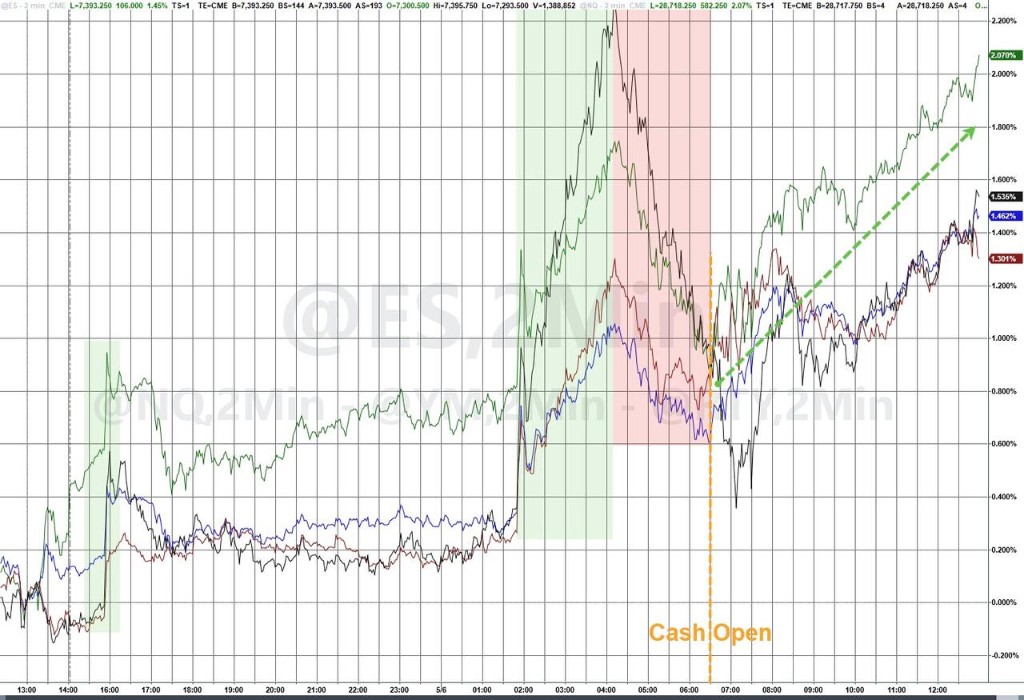
欧洲股市收涨超 2.2%,法国股指涨超 2.9%。
泛欧股指和板块:
欧洲 STOXX 600 指数收涨 2.22%,报 623.25 点,创 4 月 17 日以来收盘新高。
- 主要板块中,银行股、工业股分别上涨 3.8% 和 3.2%,成为欧洲指标指数的最大推动力,国防类股上涨 4.7%;能源是唯一下跌的板块,跌幅为 2.5%,因油价下跌近 7%。
各国股指:
德国 DAX 30 指数收涨 2.12%,报 24918.69 点。
法国 CAC 40 指数收涨 2.94%,报 8299.42 点。
英国富时 100 指数收涨 2.15%,报 10438.66 点。
(5 月 6 日 欧美主要股指表现)
2/10 年期美债收益率跌超 7 个基点,追随国际油价下跌的表现。欧洲债市大幅走强。
美债:
纽约尾盘,美国 10 年期国债收益率跌 7.1 个基点,报 4.349%。
两年期美债收益率跌 7.4 个基点,报 3.866%;30 年期美债收益率跌 4.9 个基点,报 4.938%。
(美国主要期限国债收益率)
欧债:
欧市尾盘,德国 10 年期国债收益率跌 6.0 个基点。两年期德债收益率跌 10 个基点,报 2.580%。
法国 10 年期国债收益率跌 9.2 个基点。
日元再次涨向 155。比特币冲高回落,一度涨超 1.4%,触及 200 日均线后回落、价格持平于昨日尾盘。
美元:
纽约尾盘,ICE 美元指数跌 0.52%,报 97.980 点,日内交投区间为 98.50-97.62 点。
(彭博美元指数)
非美货币:
纽约尾盘,欧元兑美元涨 0.51%,报 1.1752,英镑兑美元涨 0.41%,报 1.3594,美元兑瑞郎跌 0.57%,报 0.7784。
商品货币对中,澳元兑美元涨 0.78%,纽元兑美元涨 1.21%,美元兑加元涨 0.10%。
日元:
纽约尾盘,美元兑日元跌 0.96%,报 156.36 日元,日内交投区间为 157.93-155.02 日元。
离岸人民币:
纽约尾盘,美元兑离岸人民币报 6.8132 元,较周二纽约尾盘跌 138 点,日内整体交投于 6.8283-6.8049 元区间。
加密货币:
纽约尾盘,比特币冲高回落,一度涨超 1.4%,触及 200 日均线后回落、价格持平于昨日尾盘。以太坊则倒 V 反转,日内走低逾 1%。
(比特币价格)
美国原油期货收跌 7%,布油跌超 7.8%。
原油:
WTI 6 月原油期货收跌 7.19 美元,跌幅 7.03%,报 95.08 美元/桶。
(WTI 原油期货)
布伦特 7 月原油期货收跌 8.60 美元,跌幅 7.83%,报 101.27 美元/桶。
天然气:
NYMEX 6 月天然气期货收跌 2.1%,报 2.73 美元/百万英热单位,创 4 月 29 日以来收盘新低。
金价涨 2.8%,逼近 4700 美元。LME 期镍跌 2.1%,报 19235 美元/吨,一度涨至 20000 美元、创 2024 年 5 月份以来最高位。
黄金:
纽约尾盘,现货黄金涨 2.84%,报 4686.74 美元/盎司。
(现货黄金价格)
COMEX 黄金期货涨 2.81%,报 4696.80 美元/盎司。
白银:
纽约尾盘,现货白银涨 6.22%,报 77.31 美元/盎司。
COMEX 白银期货涨 5.77%,报 78.83 美元/盎司。
其他金属:
纽约尾盘,COMEX 铜期货涨 3.05%,报 6.176 美元/磅。
LME 期铜涨 2%,连续第三个交易日走高,报 13390.50 美元/吨,一度刷新 4 月 23 日以来高位至 13462 美元。
- LME 期铝跌 1.8%,报 3524.50 美元/吨。LME 期镍跌 2.1%,报 19235 美元/吨,一度涨至 20000 美元、创 2024 年 5 月份以来最高位。
