"Rising Oil Prices" Warning, But Why Are U.S. Stocks Unmoved?

Wallstreetcn
2026.04.23 06:05

Oil prices have swung wildly due to tensions in Iran, yet U.S. stocks have defied the trend to hit new all-time highs. Behind this rare "decoupling" lies a "paper boom" sustained by a strong earnings season and specific options market structures. However, market breadth has narrowed to its tightest level since the Dotcom Bubble, VIX has reclaimed levels above 20, and the entire rally rests on a single assumption: that the conflict will eventually be resolved. Should the ceasefire break down, this sandcastle will collapse

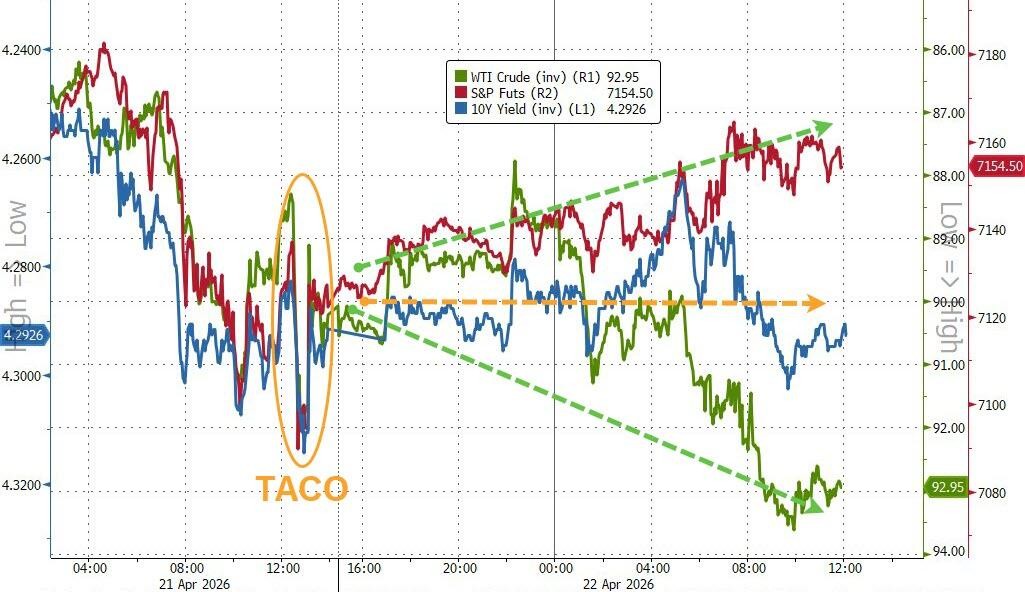
Oil prices and U.S. stocks are experiencing a rare "dual-track market"—escalating tensions in Iran are driving crude sharply higher, while U.S. equities continue to forge ahead to new record highs.

Behind this decoupling lies optimism fueled by a robust earnings season, unique structural support from the options market, and a heavy market bet on the eventual resolution of the conflict. Yet analysts warn that current calm resembles a "sandcastle"—seemingly solid until it suddenly isn't.

Oil Prices Swing Violently as Geopolitical Stakes Rise

Over the past 24 hours, the crude oil market has undergone a roller-coaster ride, with multiple news flows alternately impacting prices.

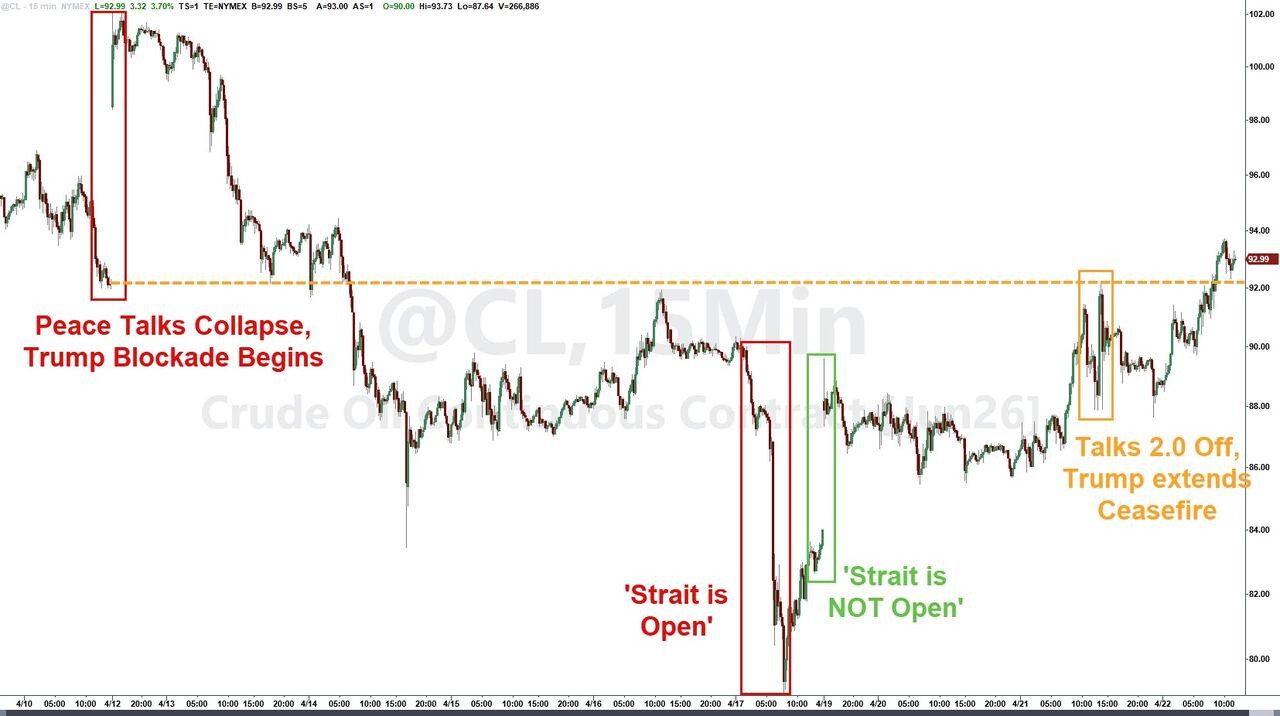
After Iran detained two vessels in the Strait of Hormuz, oil prices surged first. Following an attack on a third vessel, prices pushed further to previous daily highs. Subsequently, Trump stated that a new round of talks between the U.S. and Iran would begin "as early as Friday," causing oil prices to briefly retreat; the White House then announced a ceasefire extension of three to five days, sending prices soaring again. In the afternoon, the Iranian president expressed welcome for dialogue and agreements while accusing Trump of "contradictory words and actions," leading to a slight softening in oil prices. The White House press secretary emphasized that "the blockade remains ongoing and Kish Island is completely full," further dampening bullish sentiment.

The final result was that WTI front-month futures recovered all losses triggered by the ceasefire news, returning to levels above those seen before the breakdown of talks.

Despite oil price volatility, FX volatility has retreated to near recent lows, with Deutsche Bank's FX Volatility Index hovering at low levels not seen since the end of 2025. Analysts note that this calm "resembles complacency more than conviction"—ceasefire agreements could be terminated at any moment due to attacks within the strait, and Iranian media have already indicated no intention to negotiate with the U.S. within this week.

Why U.S. Stocks Remain "Deaf"

Amid heightened geopolitical risks, U.S. stocks have chosen to ignore macro factors and focus instead on micro fundamentals—supported by what has been an unexpectedly strong earnings season.

According to Bloomberg, S&P 500 constituents have demonstrated improving ability to convert revenue into profits, with consensus estimates for quarterly earnings per share rising even amid recent market turbulence. This quarter's earnings reports are trending toward "significantly beating expectations." As Sebastian Boyd of Bloomberg noted, the resilience shown by U.S. stocks in the face of negative developments from the Middle East war stems fundamentally from the sheer abundance of corporate profits, making it difficult for the market to sustain a bearish view.

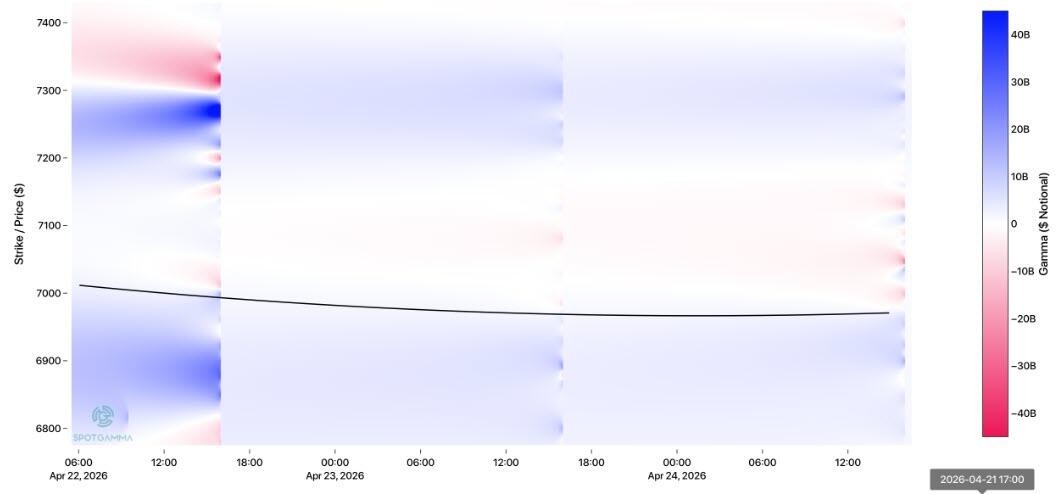
Options market structure is also contributing to this calm. The S&P 500 is currently in the positive Gamma zone, with low front-end implied volatility and concentrated call option buying, effectively anchoring the index near the 7100 point. 0DTE (zero days to expiration) traders aggressively sold put options during the late session, further suppressing realized volatility and accelerating the Nasdaq's surge before the close.

Hidden Risks Within Market Structure

Despite repeated record highs, the foundation supporting this rally is not secure.

S&P 500 market breadth has fallen to one of its narrowest levels since the Dotcom Bubble, with this rally heavily concentrated in a handful of large-cap tech stocks. The short squeeze on the "most shorted" stocks has stalled for four consecutive days, and ammunition for further squeezes appears to be dwindling. Small-cap stocks significantly underperformed today, with initial gains driven by short covering quickly evaporating after the open.

Goldman Sachs warns that following the April options expiration, the positive Gamma hedging buffer will thin out. If the S&P 500 breaks below 7050, the options structure could accelerate downward, with major support at 7000 and resistance between 7125 and 7150.

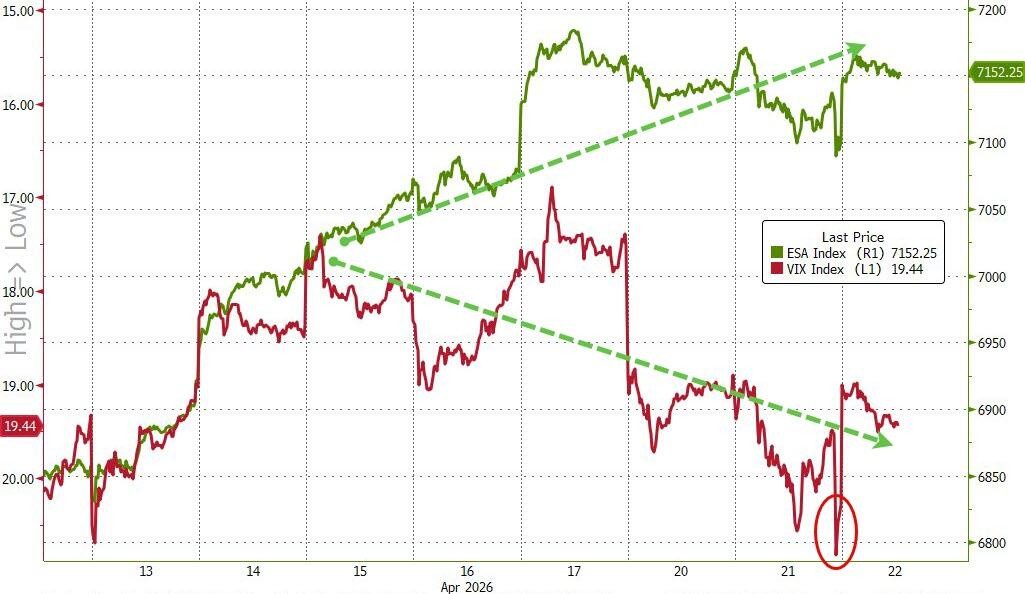
Tuesday's move of VIX back above 20 is also worth watching, suggesting that traders' willingness to hedge against downside scenarios is rising rapidly. The head of Goldman Sachs' Hedge Fund business explicitly stated that while the primary bull trend remains intact, the risk-reward ratio in the short term is not ideal, advising traders to maintain a "long Delta, long Vol" portfolio and increase hedges when necessary.

How Long Can the Decoupling Last?

The current disconnect between stocks and oil reflects a market operating on the core premise that "conflict will eventually be resolved."

As Goldman Sachs points out, as long as the market maintains belief that a solution will be reached within the coming months, even temporary economic damage will struggle to inflict significant harm on long-duration assets like equities. However, this also means the entire market has become deeply dependent on this assumption—if the assumption wavers, the potential for severe damage will multiply.

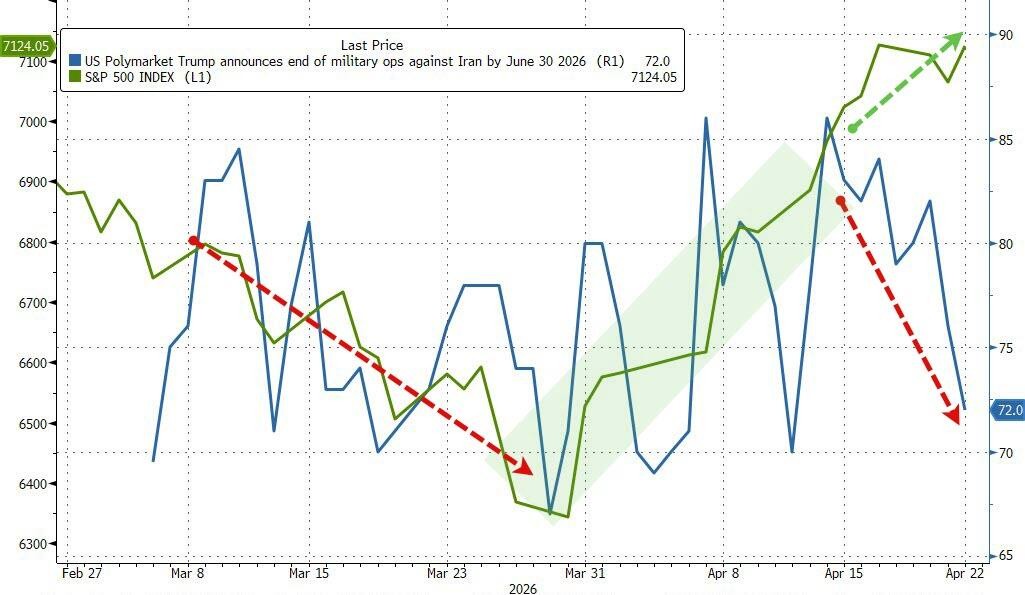
According to Bloomberg, the probability on political prediction platform Polymarket regarding "military action ending before June 30" has dropped noticeably in recent days, while the S&P 500 simultaneously hit new all-time highs, widening the gap between the two.

With market breadth extremely compressed and macro hedges significantly reduced, should the ceasefire break down again or attacks reignite within the strait, the stock market faces adjustment risks far more severe than current pricing suggests.