


BofA's Hartnett: Commodity Bull Market to Last Years, 'Whoever Controls Resources Wins the AI Race'!
Bank of America Chief Strategist Hartnett points out that commodities will replace stocks as the biggest winner for the rest of this decade. 'Whoever controls chips, rare earths, minerals, and oil will win the AI race' -- geopolitical games, fiscal expansion, and a weakening dollar are driving a commodity super bull market
Michael Hartnett, Chief Investment Strategist at Bank of America Securities, believes that against the backdrop of geopolitical turmoil and an AI arms race, commodities will replace stocks to become the biggest winner of the "buy everything except bonds" trade for the remainder of this decade, with the bull market potentially lasting for several years.
Hartnett suggests that investors should heavily allocate to commodities in the coming years to hedge against risks, inflation, and a weakening dollar. He also warns that excessive fiscal expansion implies that government bonds are more likely to experience bear market rallies rather than sustained bull market conditions.
The underlying reason is that the core of geopolitical games has evolved into a monopolistic demand for commodities, stating, "Whoever controls chips, rare earths, minerals, and oil will win the AI race."
This assessment has been validated by the market. The Bloomberg Commodity Index has risen by 35% since the beginning of 2025, more than double the gain of the S&P 500 Index during the same period. Conflicts in the Middle East and the AI arms race are reshaping global supply chains, driving up prices for energy, metals, and other critical resources.
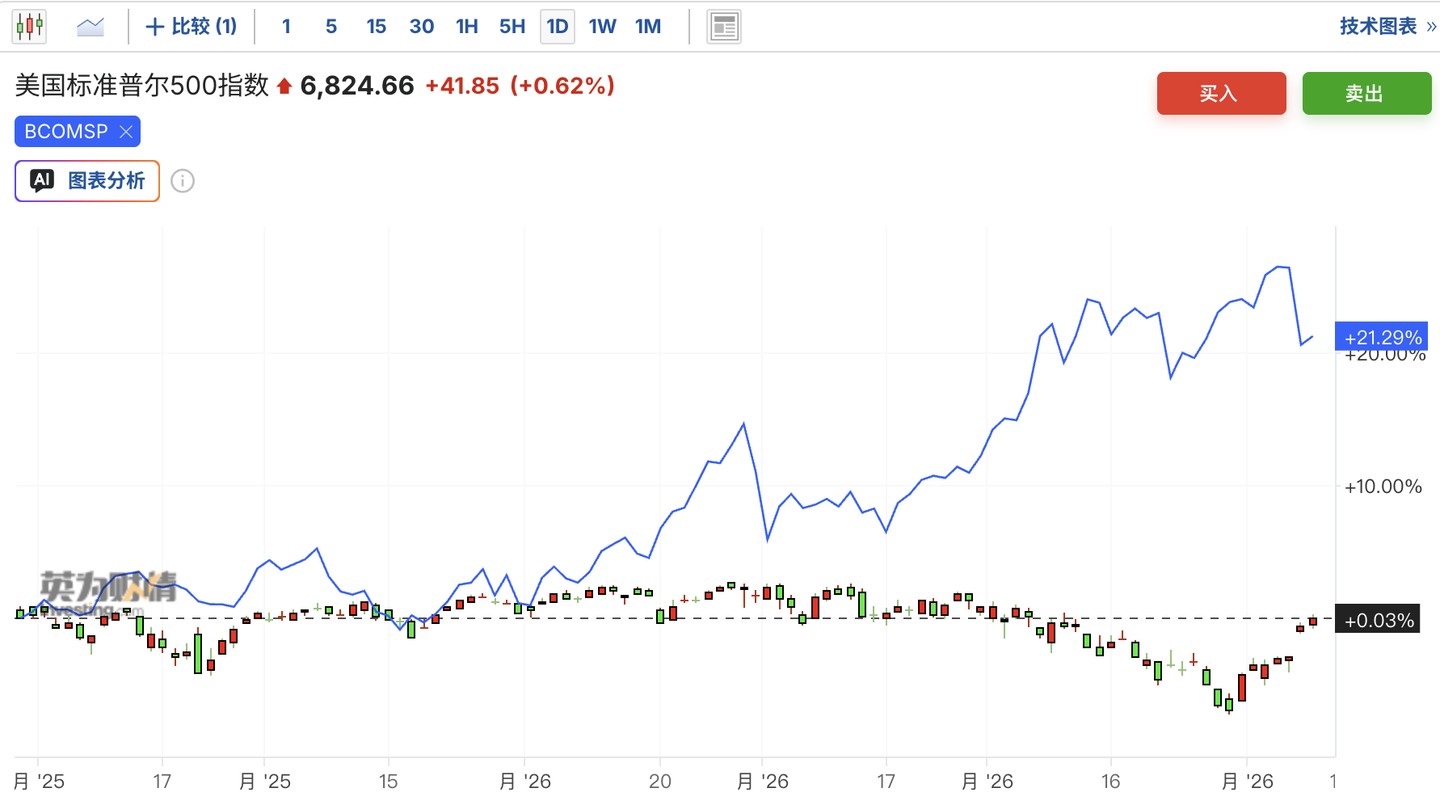
AI Race and Geopolitical Conflicts Fueling Commodities
Hartnett attributes the current structural rise in commodities to a fundamental shift in the global geopolitical landscape. He points out that the core of geopolitical games has evolved into a "monopolistic demand for commodities," succinctly summarizing this logic:
"Whoever controls chips, rare earths, minerals, and oil will win the AI race."
The spread of conflicts in the Middle East has directly impacted the global energy supply landscape. Iran's blockade of the Strait of Hormuz after the outbreak of war has disrupted passage for numerous vessels, leading to a significant surge in crude oil prices year-to-date.
Concurrently, metals such as gold, silver, and copper have already benefited from sustained central bank purchases and demand support driven by the AI infrastructure construction boom. The confluence of these positive factors has propelled the commodity market to broad strength.
Governments worldwide, aiming to protect their domestic industries and consumers from the impact of soaring energy and natural resource prices, are accelerating their efforts to secure supply chains and are competing for critical mineral resources essential for manufacturing and technology industries, such as rare earths. This trend further enhances the long-term allocation value of commodities.
Commodity Leads Asset Rankings in the Latter Half of the Decade
Looking ahead to the latter half of this decade, Hartnett anticipates a profound shift in asset performance rankings. In his core assessment, commodities will outperform the US dollar, and international stocks and small-cap stocks will outperform US stocks and large-cap stocks, becoming structural winners.
The long-term inflationary pressure driven by fiscal expansion is a key support for this view. Hartnett explicitly states that government bonds are more likely to experience technical rallies within a bear market in the coming years, rather than genuine bull market conditions. This will prompt funds seeking real returns to continue migrating towards inflation-hedging assets like commodities.
In terms of short-term strategy, the Bank of America team currently favors a steepening yield curve trade, betting that expectations of central bank rate hikes will be gradually digested. They also favor US consumer stocks and chip stocks, corresponding to the policy focus on cost of living issues and the sustained investment by hyperscale cloud providers in the AI arms race.
Stocks Still Favored, But Their Dominance is Diluting
Despite the brighter outlook for commodities, Hartnett is not bearish on stocks. He notes that the stock market is on track to set a record for net inflows this year, with $275 billion in net inflows recorded year-to-date, a trend expected to continue.
Stocks are considered a "too big to fail" asset because, since the global financial crisis, policymakers' continuous interventions have repeatedly thwarted "Wall Street's bearish sentiment and market pullbacks."
Hartnett states that unless there are major policy missteps (such as a collapse in the dollar or bond markets, or a large-scale credit event), the trend of continuous inflows into the stock market is unlikely to reverse easily.
However, within his asset allocation framework, stocks have moved from being the "optimal choice" to second place, yielding to commodities. This assessment is based on a systemic prediction of rising inflation levels, a long-term weakening dollar, and intensifying global resource competition over the next several years.
