


Commodities, Chinese Assets, Consumption Recovery... BofA: '4C' Trade Could Be the Hottest Trend in H2!
Amidst geopolitical and trade policy impacts, Bank of America Securities points to the '4C' trading strategy, centered on commodities, Chinese assets, US consumer stocks, and yield curve steepening, as potentially becoming the most explosive investment trend in the second half of the year. The BofA Bull & Bear Indicator dropped to 6.3, a nearly ten-month low, indicating a shift towards market caution. Year-to-date, crude oil has surged 74.4% and commodities are up 45.6%. The current mainstream market trading consensus is to 'short on rallies'
Against the backdrop of a reshaped geopolitical landscape, persistent trade policy disruptions, and a shift in the US political cycle, the '4C' trading combination centered on commodities, Chinese assets, US consumer stocks, and yield curve steepening is poised to become the most explosive investment trend in the second half of the year.
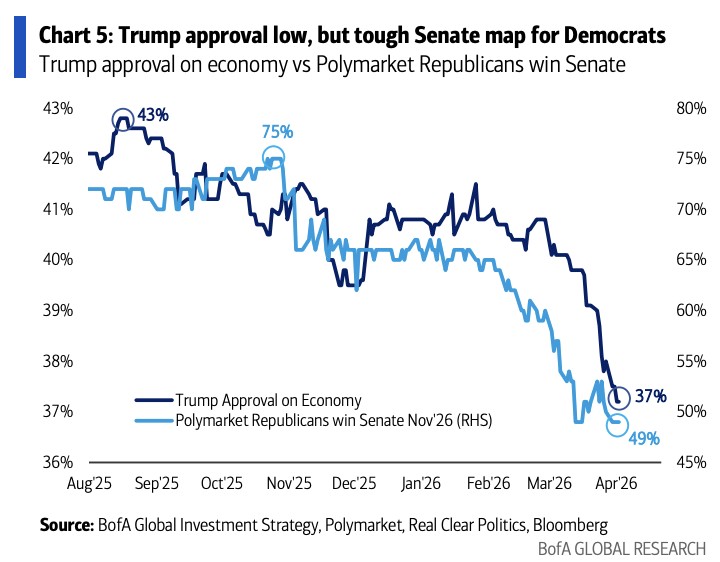
According to the "Chase the Wind" trading desk, a recent report by Bank of America Securities' The Flow Show indicates that the continuous decline in Trump's approval ratings (with support for his economic policies at only 37% and for his inflation policies even lower at 33%) suggests that political logic is pointing towards a 'short war' rather than a 'long war' scenario, from which these four trading themes are derived.
Concurrently, the BofA Bull & Bear Indicator plummeted from 7.4 to 6.3, hitting a new low since June 2025, with a weekly decline also being the largest since April 2025. The 'sell signal' has been lifted. Significant net outflows from high-yield bonds and deteriorating breadth in global stock indices were the main drags.
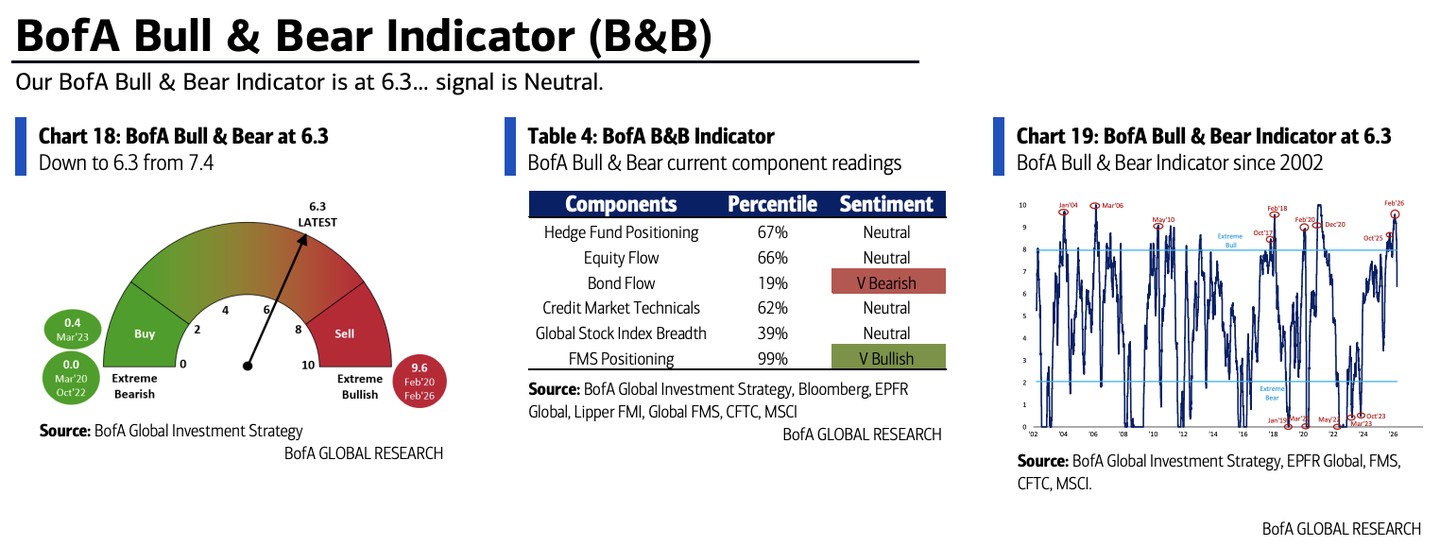
In terms of year-to-date asset performance, crude oil led the pack with a 74.4% surge, commodities as a whole rose 45.6%, and gold gained 10.2%; in contrast, US stocks fell 3.8% and Bitcoin plunged 22.2%, indicating a clear shift in market style.
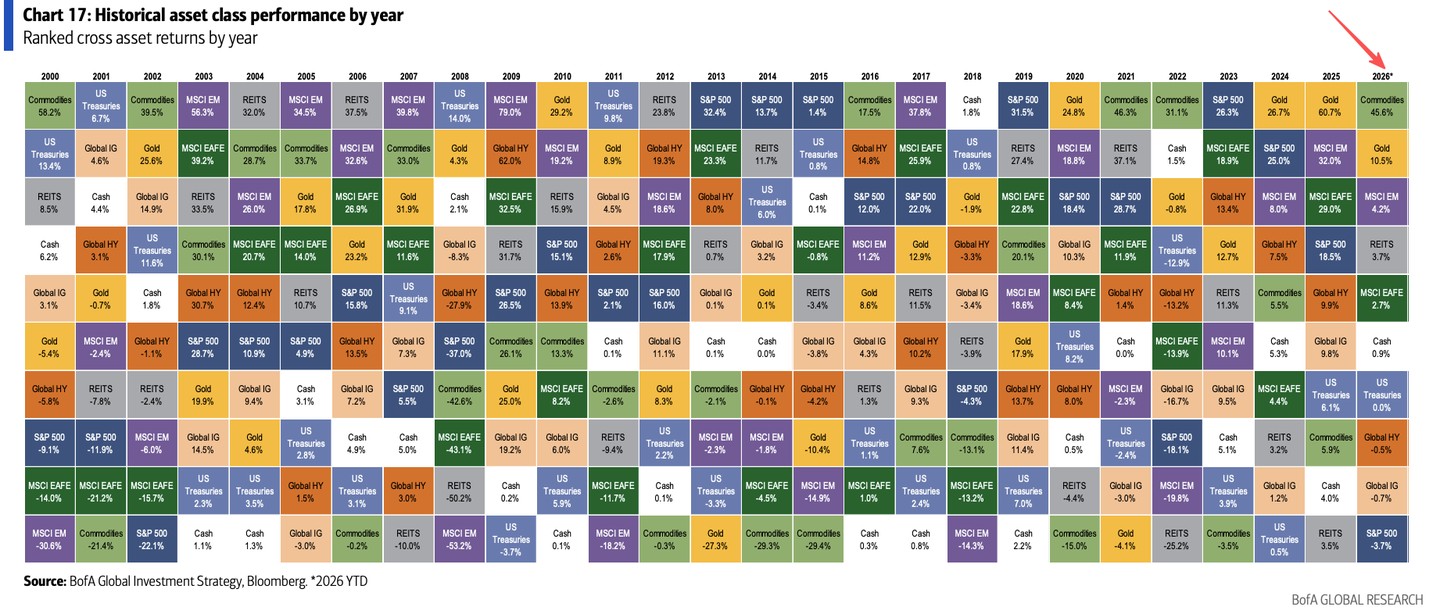
Bull & Bear Indicator Drops Sharply, Market Sentiment Turns Cautious
The BofA Bull & Bear Indicator fell to 6.3 this week, a ten-month low, primarily dragged down by triple pressures: deteriorating global stock index breadth, outflows from high-yield bond funds, and a widening spread between high-yield and subprime bank debt.
The inverse 'sell signal,' originally triggered on December 17, 2025, was officially removed on March 25, and the signal has now turned neutral.
BofA's global breadth rules indicate that currently, 16% of MSCI global index constituents are trading below both their 50-day and 200-day moving averages, still a long way from the -88% threshold required to trigger a buy signal.
Current positioning data does not show a complete liquidation by bulls, but any rally attempting to break through 6800 points (resistance from 50-day and 100-day moving averages) faces significant pressure. 'Shorting on rallies' has now become the mainstream market trading consensus.
'4C' Framework: Four Main Themes to Capture Second-Half Opportunities
BofA's '4C' investment framework encompasses four interconnected trading directions.
Yield Curve Steepening: The failure of the 2-year US Treasury yield to effectively break above 4% last week marks the end of the curve flattening rally triggered by Q1 valuation risks. Signs of a 'ceiling' for the 2-year yield, coupled with a weakening US labor market, both support going long on longer-duration bonds and betting on curve steepening.
Commodities: The logic of geopolitical competition for resources provides strong support for commodities. This week, Trump's announcement of increased tariffs on pharmaceuticals and expanded tariffs on steel and aluminum further reinforced market pricing for resource scarcity.
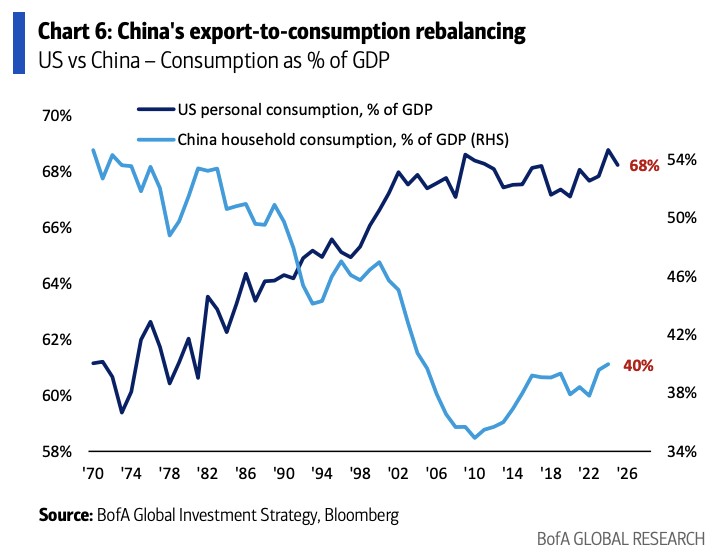
Chinese Assets: The "US-China May Summit" and the reshaping of China's consumption structure are key catalysts. Data shows that China's household consumption as a percentage of GDP remains significantly lower than in the US, indicating substantial room for rebalancing and considerable valuation repair elasticity for Chinese assets.
US Consumer Stocks: Following the end of the war, a significant policy shift is expected to address the cost of living. However, short-term fund flows show divergence: consumer sector outflows totaled $1.1 billion this week, the largest single-week outflow since December 2025, suggesting the allocation window for consumer stocks may not have opened yet.
Soft Landing or Hard Landing? Liquidity-Sensitive Assets are Key Indicators
The core conflict in the current market centers on the interaction between employment and corporate earnings.
Non-farm payroll data has a positive correlation with the 12-month forward earnings per share of the S&P 500 index. With the 2026 EPS estimate for the S&P 500 already revised up from $310 billion at the beginning of the year to $323 billion, continued strong employment data in the coming months could prevent earnings expectations from being revised downwards in line with stock prices.
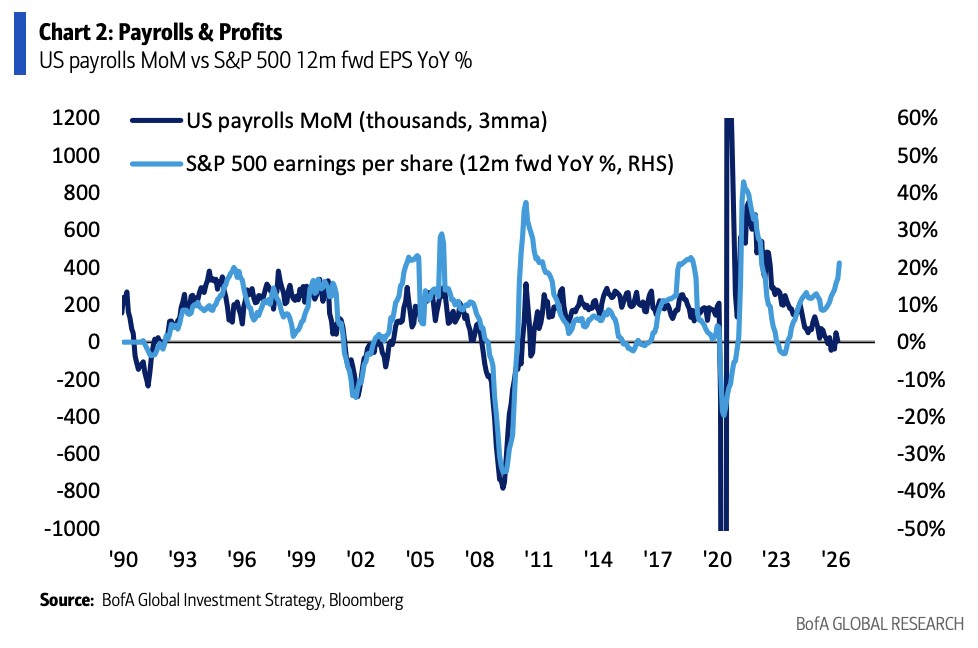
The judgment point for a soft or hard landing is also clear: if "peak liquidity-impaired assets" such as Bitcoin, private credit, software ETFs, and bank stocks stabilize and rebound amidst peaking yields and a steepening curve, the probability of a soft landing is higher; if these assets continue to struggle to find bottom support, the risk of a hard landing will rise significantly.
From a political perspective, the continued decline in Trump's approval ratings is repricing the midterm election landscape – the probability of Republicans retaining the House has dropped to 15%, and the probability of retaining the Senate has fallen back to 49%. The core policy risk in Q2 lies in trade policy once again becoming a tool for US pressure to achieve geopolitical goals.
BofA Maintains Short Stance on AI Data Center Bonds; Private Client Equity Exposure Drops to Near One-Year Low
Data from Bank of America Global Wealth and Investment Management (GWIM) shows that private clients manage $4.1 trillion in assets, with equity allocation dropping to 63%, the lowest since May 2025; bond and cash allocations have risen to 18.6% and 11.0% respectively, both recording net inflows this week.
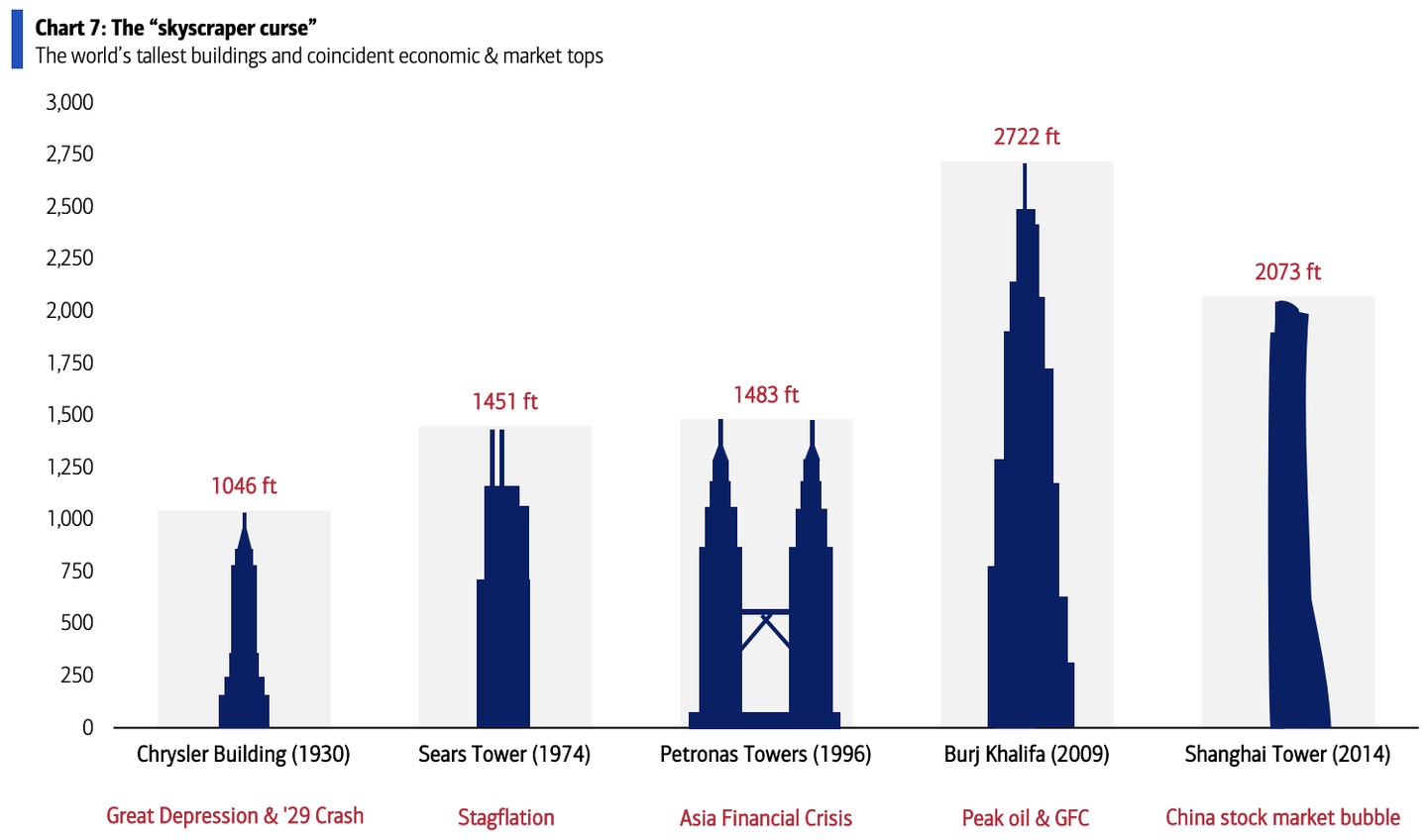
The "Skyscraper Curse" – the historical phenomenon where the completion of the world's tallest buildings often coincides with the peak of economic bubbles – is viewed by BofA. They believe the hallmark of this cycle will not be the tallest building, but the largest AI data center: the Utah Delta Gigasite project plans to provide over 10 gigawatts of computing power, with construction starting at the end of 2025 and initial power supply expected in 2027.
Based on this judgment, the stance of shorting corporate debt of AI hyperscale data center operators is maintained, and it is noted that Microsoft, Meta, and Oracle have all been heavily cutting jobs recently to fund data center capital expenditures, which is seen as a signal of increasing capital misallocation.
All the above exciting content is from the "Chase the Wind" trading desk.
For more detailed interpretations, including real-time analysis, frontline research, and more, please join **"Chase the Wind Trading Desk▪ Annual Membership"**

Risk Disclosure and Disclaimer
Markets involve risks; investment requires caution. This article does not constitute personal investment advice, nor does it consider the specific investment objectives, financial situation, or needs of individual users. Users should evaluate whether any opinion, view, or conclusion in this article is suitable for their particular circumstances. Investment based on this is at your own risk.