


Dialogue with Tao Hailong: SAIC Volkswagen Enters the "Comfort Zone" of New Forces
Back at the table
Author | Chai Xuchen
Editor | Zhou Zhiyu
In the battle for large SUVs, Volkswagen arrived a bit late, but this time, it has been re-educated by the Chinese market, lowered its stance, and returned to the table.
Recently, the ID.ERA9X began pre-sale. This is an extended-range SUV exceeding 5.2 meters in length with a wheelbase over 3 meters. It not only features chassis tuning by the German team and the first R7 world model developed in collaboration with Momenta, but it will also be exported globally from China, ushering in the 2.0 era of joint ventures and beginning to export Chinese technology worldwide.
This marks the first time a joint venture automaker has entered the competition for flagship 9-series SUVs. However, this is also a "late" Volkswagen.
Over the past decade, China's new energy SUV market has evolved from a blank slate to a red ocean, while Volkswagen, which once dominated the fuel era, missed its window. It wasn't a lack of foresight, but rather strategic indecision, CARIAD delaying intelligent architecture, and a lengthy global decision-making chain. By the time Volkswagen finally resolved its internal issues, China's new energy sector had already established its own rhythm.
But being late does not mean giving up. Tao Hailong, General Manager of SAIC Volkswagen, frankly told Wallstreet News, "We know where the pain points are, and we know time is running out, so we must lead with a flagship." Deputy General Manager Fu Qiang admitted, "In the past few years, joint venture brands failed to seize the fastest-growing period for the new energy market because the definition rights were not in China."
This time, Volkswagen has finally conceded, allowing China to take the lead and products to originate from China again. Internally, there is a bold ambition: the ID.ERA9X aims to secure a top 3 position in the 9-series extended-range segment.
The breakout battle for this joint venture giant has now begun. In 2026, SAIC Volkswagen will continue to focus on new energy transformation, launching 7 new energy vehicles into the market. Fu Qiang declared, "The basic goal for developing any product is to enter the top three in its respective market segment."
Perhaps this year, the momentum of joint venture brands will see a significant turnaround.
The Great Migration in the Era of Large Cars
Looking back from an industry cycle perspective, the timing of SAIC Volkswagen's launch of the 9X coincides with the period after the major shake-up in China's automotive market.
Over the past three years, not only cars but also consumer expectations, usage habits, tolerance for intelligence, and brand loyalty have been redefined.
In the fuel era, Volkswagen's advantages could be summarized in one sentence: stable, durable, and unbreakable. Its reputation was built on mechanical stability and engineering prowess, allowing its brand share to remain within a stable range despite minor fluctuations.
But the rhythm of the new energy era is entirely different.
From Li Auto's L9 pushing the concept of a "dad car" to the family's decision-making center, to AITO's M9 raising the ceiling of the entire track with its intelligent experience, and then to NIO's product comeback with its battery-swapping system and ES8, "large cars" have become the preferred choice for Chinese families when replacing vehicles.
In 2025, sales of mid-to-large-sized new energy SUVs surpassed 630,000 units, a year-on-year surge of 87.8%—this is the fastest-growing curve among all new energy market segments. Volkswagen, however, has fallen behind on this curve.
Fu Qiang explained to Wallstreet News: "It's not that we didn't see the trend, but we weren't fast enough to translate our judgment into products. Slow software implementation, long decision cycles, coupled with the 1.0 joint venture model, prevented us from iterating at China's speed."
This is a true portrayal of Volkswagen's situation in recent years.
The integration of CARIAD led to delays in software architecture. Although the ID. series has the highest sales among joint venture pure electric brands, there has always been a gap in intelligent experience and perception by Chinese users. More critically, at a time when consumer logic was changing, Volkswagen failed to give users a reason to wait any longer.
Concurrently, the tolerance of the Chinese market for joint venture brands has rapidly diminished.
In the past, people were willing to wait a year or two for Volkswagen because everyone was slow; now, new players iterate every six months, Huawei has raised the bar for intelligence, and domestic systems like Geely and BYD have pushed R&D efficiency to its limits with their scale advantage—another step slower for joint venture brands means falling behind by an entire length.
Tao Hailong put it bluntly: "German technology alone is no longer enough; we must integrate China's advanced capabilities, otherwise, we won't be chosen by users again."
The 9X was born under this pressure of "change is inevitable," and it is Volkswagen's first step in turning the page.
Systemic Counterattack Takes Shape
The truly differentiating factor of the 9X lies in its development path—defined by China + German chassis + Chinese supply chain + bidirectional global export. This has never happened in Volkswagen's history.
Tao Hailong told Wallstreet News, "The ID.ERA9X is Volkswagen's flagship model in the new energy era following the Phaeton and Touareg, and its product definition was entirely completed in China."
This statement implies that for Volkswagen to win back consumers in the Chinese market, its flagships must once again originate from China.
In terms of technology, the strengths of Germany and China have been integrated into a single vehicle for the first time. Volkswagen's traditional chassis tuning, human-machine engineering layout, and integrated vehicle delivery capabilities, combined with the maturity of domestic supply chains in intelligent cockpits, intelligent driving, and domain control architectures, collectively determine the upper limit of the 9X.
This vehicle features the R7 world model, debuting in collaboration with Momenta, marking Volkswagen's first time closing its gap in the field of intelligent driving. For its extended-range system, Volkswagen has chosen the EA211 as the range extender; the chassis remains Volkswagen's most familiar ace. Tao Hailong said: "Although this car is over 5.2 meters long, its handling is like that of a small car; this is our strong suit."
Another crucial mission for the 9X is to break geographical boundaries.
From the project's inception, right-hand drive models, overseas adaptation, and export routes were planned simultaneously. Fu Qiang even told Wallstreet News, "This car will eventually be driven back to the German headquarters so that all R&D, technical, and product managers can see what a flagship made by the Chinese team looks like."
If the 9X redefines the joint venture 2.0 in terms of product, the other half of rebuilding combat effectiveness falls on the system. A luxury car alone is not enough; if the entire chain behind it doesn't keep up, it still won't sell.
SAIC Volkswagen has clearly recognized this. Tao Hailong admitted: "Having good products is not enough; if the system doesn't change, user perception won't change." To address this, SAIC Volkswagen has begun a complete overhaul of its full-lifecycle processes.
The sales side is changing its authorization model. They are shifting from a chain where "the car is given to the dealer, and the dealer faces the customer" to "customers communicate directly with the brand, and dealers provide services on behalf of the brand." Fu Qiang revealed to Wallstreet News: "In the past, issues had to go from the customer to the 4S store, then to after-sales, and then to the manufacturer; now, we have achieved complete direct communication."
The channel side is also moving away from the sole reliance on the 4S store model. Instead, they are establishing satellite stores, ID. Stores, and pop-up stores, even exploring penetration into third-, fourth-, and fifth-tier cities to rebuild the brand image through touchpoints closer to the user.
With the system reforms in place, SAIC Volkswagen is ready to launch its breakout battle.
In 2026, SAIC Volkswagen will continue its focus on new energy transformation, with 7 new energy vehicles hitting the market, covering technologies like extended-range, plug-in hybrid, and pure electric. SAIC Volkswagen's goal is to increase the proportion of new energy sales to over 20%.
The extended-range segment will be led by the ID.ERA9X, with another 5-seater model expected in the second half of the year.
There will be 2 pure electric models. Following the AUDI E5 Sportback, SAIC Audi will launch the high-end pure electric mid-to-large SUV, the Audi E7X, and another pure electric model based on the CMP platform, a brand-new SUV developed by Volkswagen in collaboration with Xpeng.
Additionally, there will be 3 plug-in hybrid models. The Passat Pro and Tiguan L Pro will gain "e" prefix plug-in hybrid versions, and a brand-new compact plug-in hybrid sedan will be launched in the second half of the year.
To achieve its electrification transformation, SAIC Volkswagen has made drastic adjustments to its product line. The company's first large luxury business MPV, the Viloran, has ceased further R&D, and the ID.3, ID.4X, and ID.6X have been discontinued to free up production capacity for the pure electric model based on the CMP platform this year.
In terms of pace, Volkswagen has completely abandoned its previous slow iteration model.
In today's competitive landscape, no brand has the luxury of room for error. Especially for joint venture brands, every step slower comes at the cost of being abandoned by consumers.
SAIC Volkswagen is back at the table, and this time, it must win.
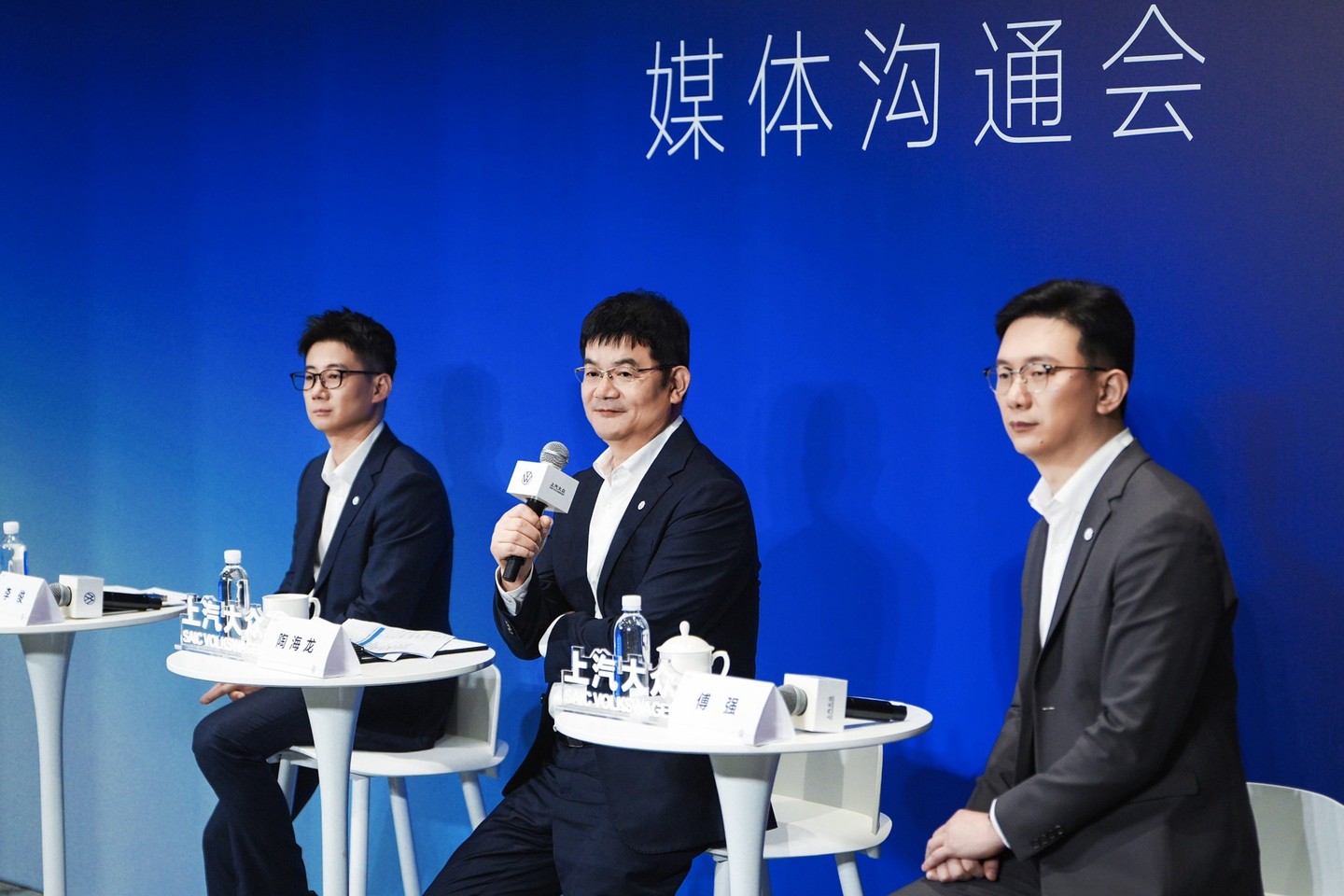
Below is the transcript of the dialogue with Tao Hailong, General Manager of SAIC Volkswagen, Fu Qiang, Deputy General Manager, and Li Jun, Executive Director:
Q: The ID.ERA9X is a representative work of the Joint Venture 2.0 landing. What specific aspects does it embody?
Tao Hailong: In terms of product definition for Joint Venture 2.0, the ID.ERA9X is the flagship model in Volkswagen's new energy era following the Phaeton and Touareg, reaching a corresponding height in technical level and product positioning. The definition of this product was entirely completed in China. Since the Phaeton and Touareg, Volkswagen has not developed such a high-end model in Europe.
The reason for launching it first is based on product strategy and strategic thinking, which is to lead with a flagship product.
How do we define such a product? On one hand, we fully leverage Volkswagen's traditional technical strengths, such as in the engine and chassis domains, as well as integrated vehicle capabilities, including layout capabilities based on human-machine ergonomics.
On the other hand, we integrate China's advanced technological strength, especially in the intelligent cockpit and intelligent driving domains. SAIC Volkswagen possesses strong supply chain integration capabilities and fully utilizes the advantages of China's automotive industry chain resources.
As for how rapid iteration is achieved, time is the best proof. This car will be officially delivered on April 25th.
In terms of rapid iteration, we will break the traditional iteration model and pace of Volkswagen's fuel vehicles. This product has been iteratively developed during its development process, and the product we are launching now has been thoroughly reviewed internally and is being introduced to the market in its optimal state.
Q: How is the ID.ERA9X locally upgraded, and to what extent can it achieve the vision of exporting technology from China to the world?
Fu Qiang: The Chinese market is the largest, most competitive, and fastest-adopting market for new technologies globally. The German side has fully recognized this trend. We adopt the Joint Venture 2.0 model to define vehicles locally in China, but this car is not developed solely for the Chinese market. From the beginning of development, we planned its global path.
Currently, right-hand drive models for markets like Southeast Asia and Australia are also in intensive adjustment and development phases. This car, as a flagship luxury product of Volkswagen AG, will eventually be driven back to the German headquarters.
Furthermore, Volkswagen AG has three major R&D centers globally, with China being its largest overseas R&D center. The Chinese team is undertaking more cutting-edge exploration in high technology, especially in the field of intelligence. All R&D achievements will ultimately benefit Volkswagen users worldwide.
Q: What are Volkswagen's considerations for entering the extended-range market?
Fu Qiang: Thanks to our competitors, consumers have largely accepted the concept of extended-range, but the technology still has significant room for improvement and is far from reaching its maturity ceiling. Therefore, although Volkswagen is entering the extended-range track later than its competitors, we will fully leverage our late-mover advantage to launch a more competitive product.
Tao Hailong: Because we saw an opportunity, we entered this track. SAIC Volkswagen's 9X has solved all the pain points of the 9-series extended-range large SUVs in the domestic market.
When continuously climbing uphill, can the power be maintained at low battery levels? How does the powertrain perform? The feedback I received is that the power is excellent. Under conditions of full load with 6 people, at an altitude of 5,000 meters, and with the battery as low as 10%, the EA211 golden range extender ensures no issues with climbing power. The power during deep acceleration is comparable to a 2.0T engine on plains; acceleration is not an issue even under the condition of full load, 5,000-meter altitude, and low battery.
Secondly, the vibration and noise of the Volkswagen EA211 engine used as a range extender—especially the noise—are very low even under high working conditions. During the 5,000-meter climb, the noise is minimal, demonstrating excellent sound performance, which is the source of our confidence in using it as a range extender.
We also have strong capabilities in chassis tuning. Although the 9X exceeds 5.2 meters in length, its handling is like that of a small car. Handling, reliability, and stability are all strong points of SAIC Volkswagen products.
Fu Qiang: Previously, Volkswagen and joint venture companies saw many users move toward new forces because, during that period, joint venture companies did not offer products that could meet the needs of these users. But today, such products have arrived, so we not only aim to attract loyal fans of joint venture brands but also to attract users from new forces back to us.
In terms of sales, we hope this car can rank among the top three in the 9-series extended-range segment after launch. For SAIC Volkswagen, the basic goal for developing any product is to enter the top three in its respective market segment.
Furthermore, as a flagship product, it carries the responsibility of a flagship, so we hope it can drive the entire Volkswagen brand and play an upwardly pulling role in the renewal of the Volkswagen brand in the new energy market.
Q: Given the current market challenges, how can SAIC Volkswagen mobilize the collective strength of its over a thousand dealer channels?
Tao Hailong: While developing the ID.ERA series products, we also pondered a question: Are good products alone enough? The answer is clearly no. The core issue is how the brand builds perception in the minds of users and establishes SAIC Volkswagen's new energy brand image. At the beginning of last year, I visited 4S stores.
I also urged the sales team to dare to promote "systemic change." I know that systemic change is very challenging, but in the new energy era, we have not done enough. The times are changing, and if we continue to use traditional thinking and habits, we may not be able to meet the expectations of users for SAIC Volkswagen in the new energy era, so we must change.
Our teams are working diligently and conducting reforms in various fields almost every day. From last year to the present, we have held about four or five large dealer-wide meetings, dedicating full days to interpreting numerous professional topics. What people call the system is essentially the guidance of values. Whatever values we hold, we should support them with a corresponding system.
Fu Qiang: The preparation for the entire systemic transformation is not something that can be completed in two or three days. More than a year ago, we clearly defined the direction and requirements for systemic transformation, which primarily includes three levels:
First, regarding channels. Previously, customers had to go to 4S stores for sales and after-sales service; now, we have expanded to satellite stores, ID. Stores, and approximately 160 pop-up stores, aiming for channel diversification. This year, we are also exploring further penetration into third-, fourth-, and fifth-tier cities, exploring cooperation models for lower-tier markets, and leveraging group advantages to expand more channels, providing consumers with more touchpoints to easily access us.
Second, dealer philosophy, which is the transformation of the authorization model. In the past, we handed over the cars to dealers, who sold them to customers. When customers had issues, they communicated with the dealers, and if the dealers couldn't resolve them, they would report back to us. Now, the thinking has completely changed: customers can communicate directly with us, and all rights and benefits announced today are directly offered to consumers. We have also transformed our dealer authorization model: dealers provide services to customers on our behalf. Customers are both the dealer's customers and our brand's customers.
This has subtly altered our relationship with dealers. In the past, we might have focused solely on making good cars and selling a certain volume to determine our relationship with dealers; now, we are responsible for creating excellent products, and dealers are responsible for providing high-quality service experiences. If dealers provide excellent 360-degree service experiences and customers are satisfied, we will provide the necessary support to the dealers.
If dealers provide good service but sales are still not ideal, we will look for reasons within ourselves—whether it's inadequate promotion or issues with product design. A year ago, we proposed not to overstock inventory, and dealer inventory coefficients quickly returned to a normal level of around 1.5, with some dealers even below 1.5.
Overall, our philosophy has changed, our authorization model has changed, and our assessment focus for dealers has also changed, guiding dealers to pay more attention to consumer satisfaction and return to the essence of service.
Third, strengthening the entire process. This year, we dispatched over 200 supervisors to 4S stores to clarify all touchpoints that interact with customers and to clearly understand dealer performance in each link. Starting from product introduction, how to establish contact with customers immediately, explain the product thoroughly, provide a good test drive service experience, and ensure the delivery process has a sense of ceremony—all full-lifecycle processes involving customer touchpoints must be standardized and regulated to enhance consumer satisfaction.
In the past, information was lost in transmission from the manufacturer to the dealer and then to the consumer. For example, if a consumer's car had a problem, it might first go to the 4S store, then to after-sales, and if the workshop couldn't resolve it, it would be reported back to us; now, it's completely different, with information flowing directly.
I believe that the entire shift in thinking, driven by these three dimensions, has propelled our systemic transformation. The biggest driving factor is truly shifting our focus to be consumer-centric.
Q: In this year of significant product launches, what other methods is SAIC Volkswagen preparing to counter the market's intense competition?
Fu Qiang: To fight the battle in the flagship market for the ID.ERA9X, we have introduced management mechanisms like IPMS and adopted multi-wave, multi-dimensional, and multi-frequency communication methods, which are unprecedented in the history of SAIC Volkswagen's new product launches.
To achieve the goal of immediate order generation and delivery upon launch, we have made extensive preparations. This cannot be accomplished by the marketing department alone; it requires strong support from the General Manager and other departments. To initiate pre-sales, all vehicles must be transported to dealer stores. Tomorrow, immediately after today's pre-sale conference, test drives can commence.
Our original plan was to launch in June, but we have now advanced the official delivery date to April 25th. In fact, by the end of March, all vehicles had reached full quality readiness and were delivered to dealers, awaiting customers.
Q: The ID.ERA9X is defined by China according to German standards. How did Volkswagen headquarters evaluate this car?
Fu Qiang: I can proudly say that overseas dealers and colleagues from Volkswagen China who have seen it expressed astonishment. No one expected that the experience on this car could be so good. This product should be able to meet the needs of a significant portion of the high-end family market globally.
This time, SAIC Volkswagen is driving the car from Shenzhen all the way to Germany because not all German executives have the opportunity to fly to China and Shanghai to see it. Therefore, we are providing this opportunity to drive the car to Germany so that people from various departments in Germany, including R&D, technology, sales, and product managers, can see our product.
Q: What are the prospects for this car in overseas markets?
Tao Hailong: Volkswagen China and the Wolfsburg headquarters in Germany have reached a consensus on China's export strategy and are actively holding related seminars to explore how to open up export channels from China. The first step is to "go out" and pave the way.
SAIC Volkswagen has also established a dedicated "Export Management Committee" internally to create a corresponding promotion mechanism. Volkswagen China is also researching standards for different countries and will begin deploying them sequentially within this year.
Regarding sales volume after export to Germany and whether Germany can accept it, I cannot provide a definitive answer at this moment.
Q: What is the overall atmosphere in the joint venture market?
Fu Qiang: In the past few years, the market share of joint venture brands in the fuel vehicle market has been increasing, but their share in the overall market has been declining. The fundamental reason is that the market share of fuel vehicles has dropped from 90%, 80%, 70%, 60% to about 50% last year. During these years, joint venture brands did not seize the opportunity of the rapid growth of the new energy market. One important reason is that most joint ventures were under the "1.0 Joint Venture" model and did not bring product definition rights to China.
Now, we can see that mainstream joint venture companies are basically adopting the same approach: bringing definition rights back to China, leveraging the capabilities of both shareholders, and developing better products for the Chinese consumer market. Currently, several major joint venture companies are launching a large number of new energy products this year. Under the "2.0 Joint Venture" model, these bulk products are about to hit the market, and they are all very good and competitively priced. For example, yesterday's Bozi 7 and today's ID.ERA9X are very competitive products.
I believe this year should be a year of gradual recovery for joint venture companies. As joint venture companies gradually establish their own territories and market positioning in the new energy market, combined with their still solid market share in the fuel vehicle market, the prospects are quite optimistic. The final outcome still needs to be verified by the market.
Tao Hailong: This year, the Volkswagen brand will launch 6 new energy products, with the ID.ERA9X being the first. Subsequently, various models will be launched, including pure electric, plug-in hybrid, and extended-range, as well as SUVs and sedans. Each will be very attractive and competitive.
Q: With the advent of 896-line lidar, it has become a threshold standard for high-end intelligent assisted driving vehicles above 300,000 yuan. The 9X will inevitably face this issue after its launch. How will you address it?
Fu Qiang: I believe sales consultants on the front lines will definitely encounter this. In fact, the opening remarks today already contain a hint of the answer: "Human-centric technology." How do you measure intelligent assisted driving experience? Experience is king. Globally, the undeniably top-tier Tesla FSD does not have lidar. Can you say Tesla's intelligent assisted driving is poor?
We have full confidence that if people test and compare, they will see whose intelligent assisted driving experience is better. We refuse to be bound by parameter stacking; the most comfortable state achieved through the coordination of software and hardware is the best intelligent assisted driving.
Tao Hailong: Don't think that parameter enthusiasts are very powerful. Hundred-kilometer acceleration, thermal efficiency, computing power—parameters are indeed important, but for the entire vehicle, integrated craftsmanship and comprehensive performance are more crucial. If you have hundred-kilometer acceleration but cannot brake, acceleration but lost handling stability, fuel consumption but poor NVH, single-point fuel consumption but no comprehensive fuel consumption, computing power but poor response—these are all useless, including 896-line lidar. Ultimately, it should be reflected in comprehensive performance, not single-point parameters. I admit that 896-line lidar is a good thing, but it also has its applicable scope. Has anyone deeply analyzed the 896-line technology? How are its 896 lines composed? What role do they play? Tesla doesn't even have lidar. Therefore, we must look at comprehensive performance.
Q: Recently, major car companies have launched new models, and SAIC Volkswagen has also chosen to launch its flagship SUV today. May I ask why you chose to launch the new model at this time?
Tao Hailong: Launching a new model at this time is actually a race against time. Therefore, SAIC Volkswagen is launching new products with the fastest speed. Additionally, this product has undergone two years of R&D and has reached a very high level of maturity, meeting SAIC Volkswagen's new product launch quality standards. The reasons are primarily based on market demand and the company's development needs.
The market is still relatively cold, and there are no clear signs of a market recovery so far. Usually, March shows some signs of recovery, but the trend will not change. I believe the trend will continue from last year, with new energy and intelligence continuing their upward development.
Q: Extended-range and large three-row layouts are already relatively mature in the industry, but brands like Li Auto and Huawei have shifted to underlying technology tracks such as fully active suspension and electronically controlled chassis. While catching up to the existing market, how do you prevent the technological gap with other car companies from widening further?
Fu Qiang: Ultimately, new forces and traditional forces will experience a process of "mutual embrace." For us, we had significant shortcomings in intelligence in the past few years, and the most urgent task is to catch up in this area. For new forces, they have shortcomings in traditional areas—especially chassis and power performance—and they will also try their best to address them.
Ultimately, it will be a competition of the company's ability to adapt to the market and react quickly. Regarding the future, we are exploring technologies and conducting relevant R&D in various aspects. Today is our first product, and there will be 6 more products to follow, with more products next year. As the group's boss puts it, "eating what's in the bowl, looking at what's in the pot, and also gazing at the field." Although the first generation of the ID.ERA9X has been launched, the products in the pot and in the field are continuously undergoing technical R&D and previews.
Tao Hailong: Technological trends must ultimately bring tangible benefits and experiential improvements to customers, while also being competitive. The directions you mentioned are all being covered by us, and some have already commenced corresponding development, including computing power, AI intelligence, and chassis technology, all of which are being laid out. The fundamental goal is to achieve a qualitative improvement in customer experience and a comprehensive enhancement of product performance.
Q: When defining the product, how did you consider the customer profile of the ID.ERA9X?
Fu Qiang: A portion consists of our existing user base. In this marketing campaign, we mobilized all dealers and tried to reach out to our 30 million existing customers, giving them earlier opportunities to experience the product and better benefits, so they have a chance to engage with and test our product.
On the other hand, we are also targeting new customers among the younger generation. So, while we treat our existing customers well, we also need to develop new customers; both markets must be considered. In terms of media communication resource allocation, we cover both user groups simultaneously.
Li Jun: Regarding user profiles, I've been in close contact with the regions and front-line dealers recently and have heard many real cases. A few days ago, there was a story from a 4S store: a car owner had been driving Volkswagens since graduating from university, having owned four generations. Because he liked intelligent assisted driving and intelligent cockpits, which were previously a blank spot for us, he switched to a new force brand. Less than a year later, upon hearing about our new car, he immediately came to the showroom to see it. After viewing it, he bought it and said, "You've finally started working on this; I'm back." He immediately returned to Volkswagen.
These are real stories from stores across the country. It tells us that Volkswagen's user profile, in addition to traditional users, also includes users from new forces. Since this is a 9-series product, and we are moving in this direction, we must target the same user groups. Previously, we hadn't kept up in terms of intelligence, causing our original fans to leave, but now that we're back, the users are also returning.
Q: Currently, fuel vehicles are still the profit base. With more new energy products coming, how will resources be balanced?
Tao Hailong: Fuel vehicles are a very important base for SAIC Volkswagen. When formulating our strategy, we also simultaneously consider the development trend of the fuel vehicle market. By 2027, we will transform our existing fuel vehicle system, and almost all models will be upgraded with the next-generation electronic and electrical architecture. The intelligence of fuel vehicles will be further enhanced, and the powertrain will also be upgraded accordingly. I believe product competitiveness ultimately depends on comprehensive strength.
