


Memory Prices Fall, Citi Significantly Lowers Micron's Price Target!
As Google's new TurboQuant technology impacts memory prices, the spot price of mainstream 16GB DDR5 memory has fallen by 6%. Consequently, Citi has significantly lowered its price target for Micron by 17%, from $510 to $425. It also noted that while the spot memory market is under pressure, the downside risk for contract prices is controllable; TurboQuant's cost reduction and efficiency improvement will further unlock applications, ultimately boosting overall computing power and total memory demand
Citigroup significantly lowered its price target for Micron Technology by 17% due to the recent weakening of DDR5 DRAM spot prices, but maintained its buy rating and all earnings forecasts, believing the long-term logic of AI-driven storage demand remains fundamentally unshaken.
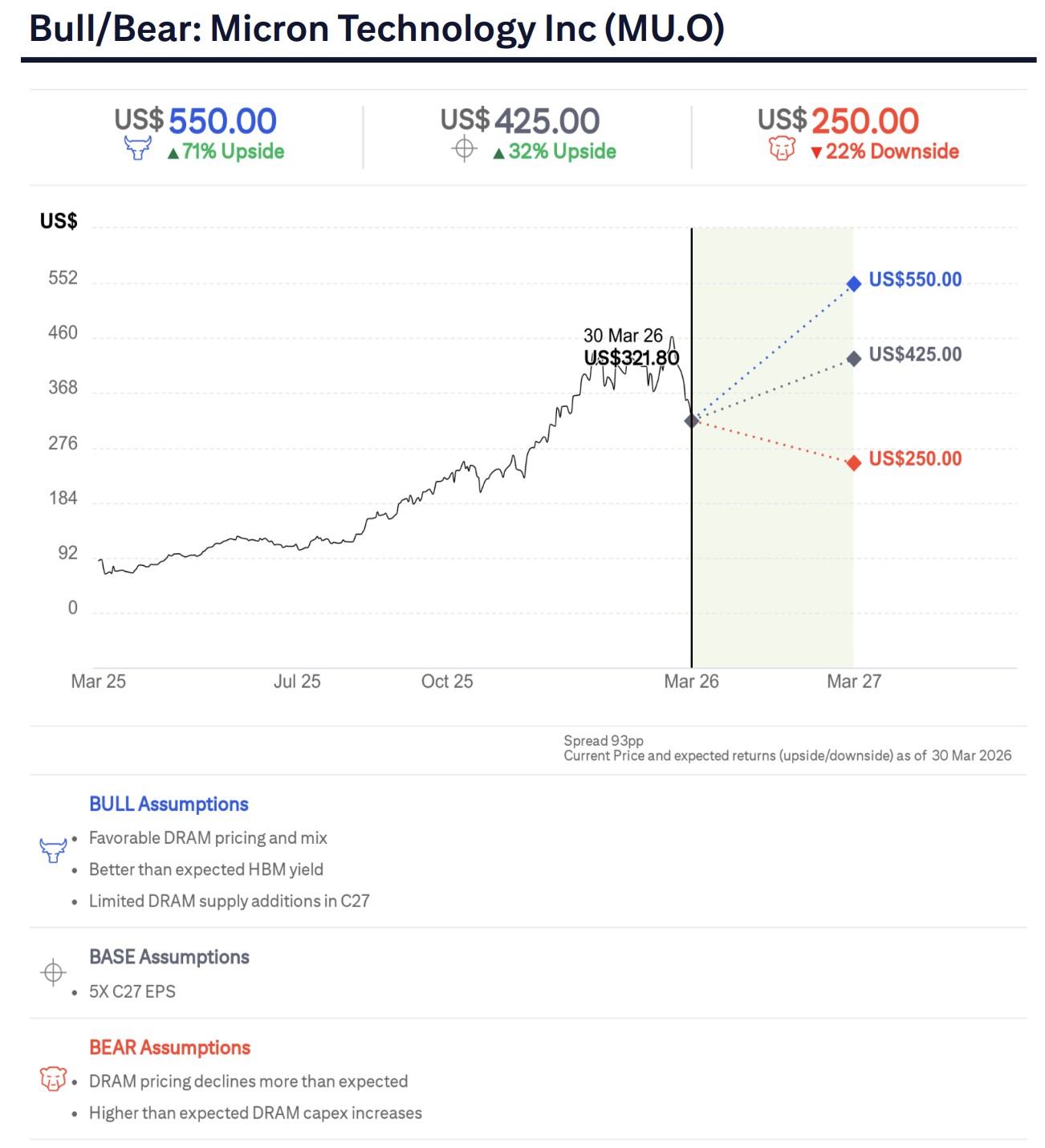
According to Wind Information's trading desk, Citi analyst Atif Malik, in a research report released on March 31, lowered Micron's price target from $510 to $425, a decrease of 17%. As of the close on March 30, Micron's stock price was $321.80, still presenting an upside potential of approximately 32% from the new target price.
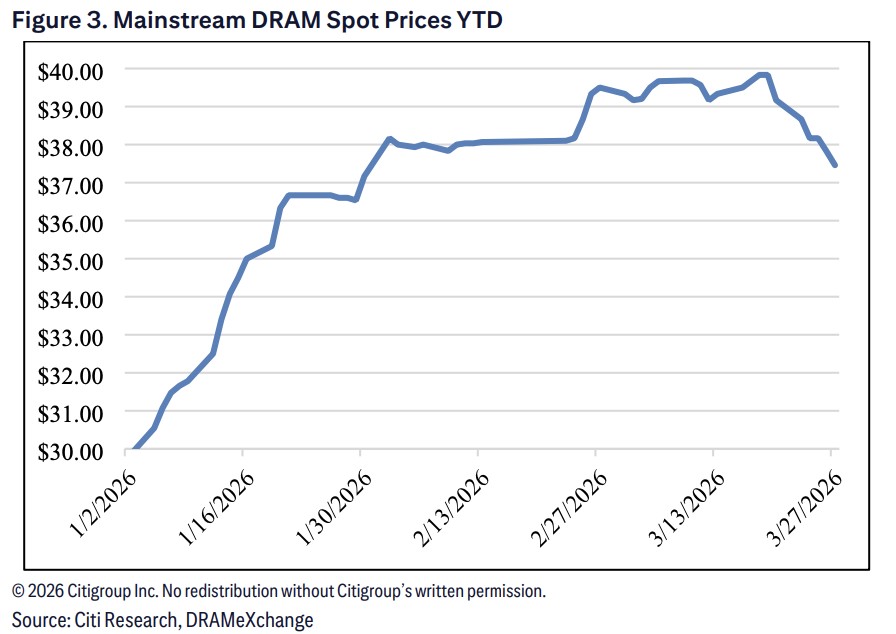
According to data in the report, the spot price of mainstream 16GB DDR5 DRAM has fallen by about 6% recently. This downturn is mainly attributed to market concerns about Google's TurboQuant technology. This technology is believed to potentially reduce memory consumption for AI inference, thus triggering market worries about the outlook for storage demand.
Micron and its peers have begun negotiations with hyperscale cloud vendors for strategic long-term agreements spanning 3 to 5 years. These agreements include frameworks for locking in base procurement volumes, advance payment arrangements, and quarterly price adjustments based on market conditions, which are expected to provide effective support for contract prices.
DRAM Spot Prices Under Pressure Directly Trigger Price Target Downgrade
The overall trend for mainstream DRAM spot prices has been downward since the beginning of the year, with the decline in DDR5 16GB products being particularly prominent, recently falling by about 6%.
Based on this, Citi analysts have revised their valuation benchmark for Micron from 6 times to 5 times earnings at the bottom of the cycle, and using the projected peak earnings per share for 2027, they derived a new target price of $425, which aligns with the historical valuation bottom range of 5 to 6 times during DRAM's previous upcycles.
It is worth noting that the firm has maintained all its financial forecasts for Micron: core earnings per share are projected at $58.46 for fiscal year 2026 and $94.55 for fiscal year 2027. The current stock price corresponds to a P/E ratio of approximately 5.5 times for 2026 and 3.4 times for 2027, which is relatively low historically.
Long-Term Agreements Provide Structural Support for Contract Prices
Despite pressure in the spot market, the downside risk for contract prices is relatively controllable.
The report points out that Micron and its storage peers are negotiating 3- to 5-year strategic long-term agreements with hyperscale cloud vendors. The terms include locking in base procurement volumes, setting up advance payment mechanisms, and dynamically adjusting quarterly prices based on market conditions.
This framework for long-term agreements is expected to build structural support for contract prices. Micron's revenue comes from its DRAM business, which accounts for about 79% of its total revenue, making contract price trends crucial for its earnings visibility.
TurboQuant Impact Believed Similar to DeepSeek, Potentially Driving Demand in the Long Run
Regarding the main cause of the recent spot price decline, the report conducted a special assessment of TurboQuant technology.
TurboQuant is a model compression technology developed by Google's research team. It optimizes Key-Value Cache (KV Cache) computation through novel quantization methods (including PolarQuant technology and QJL algorithms), thereby reducing memory usage during AI inference.
The report suggests that TurboQuant's impact on storage demand is similar to the previous DeepSeek incident: on the surface, efficiency-enhancing technologies reduce the computing power and memory costs per AI inference. However, lower usage costs will further unlock application volumes, ultimately boosting overall computing power and total memory demand.
Based on historical patterns, cheaper technologies often drive demand for more technology, and the AI field is no exception. The firm therefore concludes that the recent pullback in spot prices reflects more of a short-term market sentiment disturbance rather than a trend reversal in AI storage demand.
