


Fear Index Off the Charts, Hedge Funds Selling Off! Goldman Sachs Trading Desk Warns: "Outlook for US Stocks Not Optimistic"
Goldman Sachs traders have warned that the outlook for US stocks is not optimistic, as the S&P 500 has fallen for five consecutive weeks, setting a rare historical record. The fear index reached 9.2, remaining in the "fear zone" for 17 consecutive trading days. Although systemic selling pressure is nearing exhaustion and pension fund buying is emerging, market fear remains high. Hedge funds have been net sellers of US stocks for six consecutive weeks, and net leverage has seen its largest decline in nearly a year
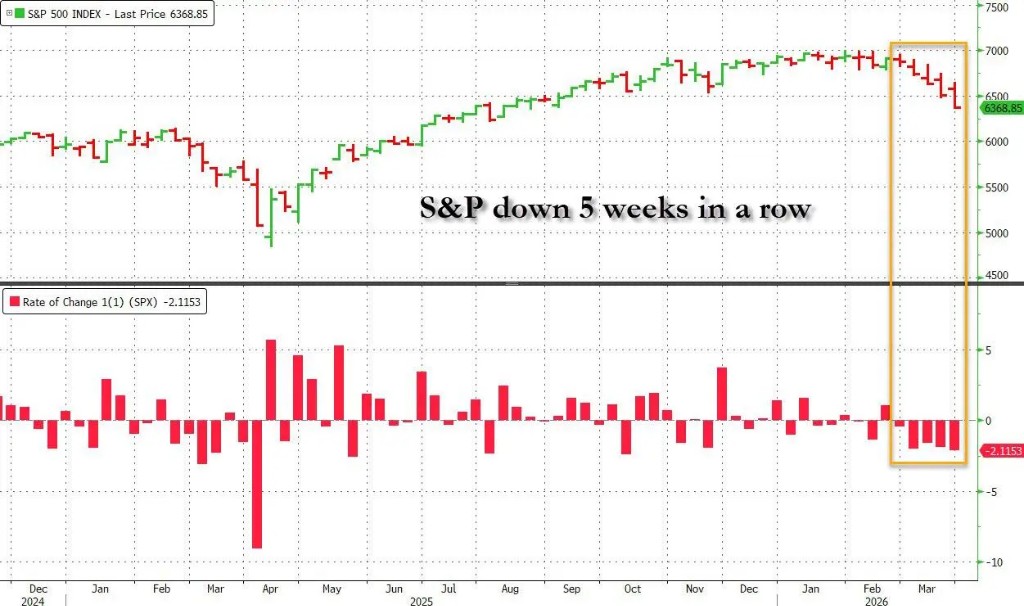
The S&P 500 has fallen for five consecutive weeks, with technical indicators breaking down across the board. Goldman Sachs traders stated bluntly that "the data is not optimistic," though signals such as the near exhaustion of systemic selling, the emergence of month-end pension fund buying, and record CTA net short positions are building momentum for a potential rebound.
Senior Goldman Sachs trader Cullen Morgan wrote in a weekend report that "Friday was one of the most uncomfortable trading days in recent memory." The S&P 500 recorded its fifth consecutive weekly decline, a rare occurrence since 1970. The persistence of this decline has even surpassed the impact of the 2020 COVID-19 shock and the 2025 "Liberation Day" sell-off.
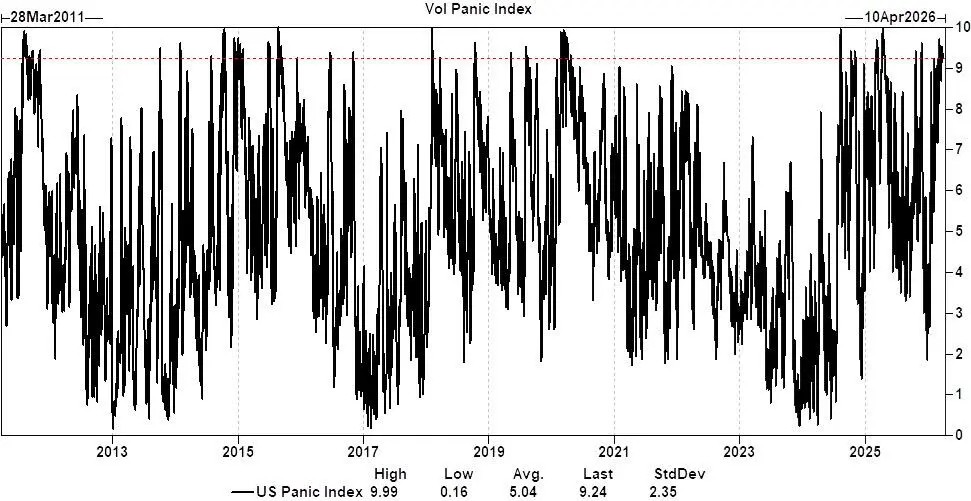
The latest reading of Goldman Sachs' US equity volatility fear index reached 9.2 (out of 10) and has remained in the "fear zone" (above 8.5) for 17 consecutive trading days, marking one of the longest continuous fear streaks in the past 15 years.
Meanwhile, the index has broken below all key moving averages and technical support levels, including CTA strategy sell thresholds; the Nasdaq has pulled back over 11% from its historical high, officially confirming its entry into correction territory.
A Rare Five-Week Decline
Cullen Morgan pointed out that the S&P 500's five consecutive weekly declines have been "rare" since 1970, with the most recent instance occurring during the recession scare in 2022. Notably, neither the COVID-19 crash in 2020 nor the recent "Liberation Day" sell-off extended into a fifth week—this current downturn has entered a historically rare range in terms of duration.
Goldman Sachs conducted forward-looking yield projections for these historical cases, and the conclusion was "not encouraging." Morgan admitted that most charts tracked by Goldman Sachs have yet to signal clear oversold conditions, but some indicators have begun to show signs of capitulation.
Elevated Fear Sentiment
Multiple internal Goldman Sachs indicators show that market fear has reached historical extremes:
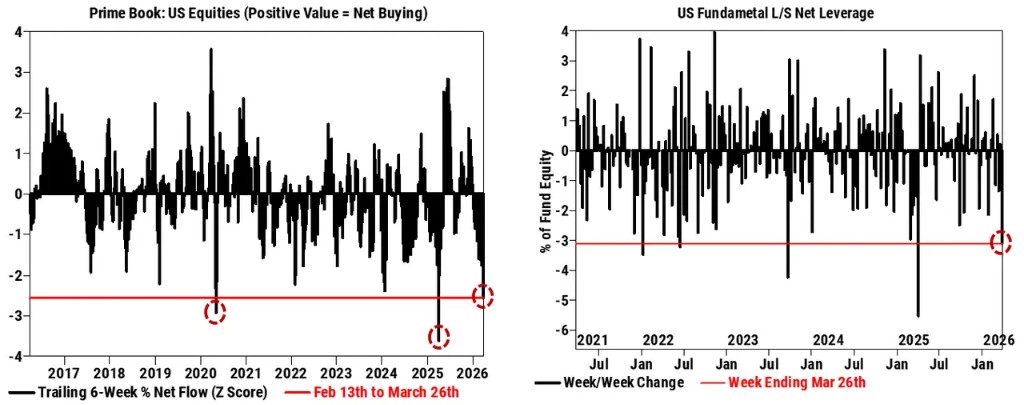
Hedge Funds Continue Net Selling: Goldman Sachs' prime brokerage weekly report shows that hedge funds have been net sellers of US stocks for six consecutive weeks. The scale of recent net selling ranks as the third largest in the past decade, primarily driven by reductions in both long and short positions in individual stocks, with contributions from short positions in macro products.
Net Leverage Records Largest Drop in Nearly a Year: US fundamental long/short net leverage fell by 3.1 percentage points this week, marking the largest single-week drop since the week of "Liberation Day" in early April 2025.
Fear Index Sets 15-Year Record: Goldman Sachs' US equity volatility fear index reached 9.2 (out of 10) and has been in the fear zone for 17 consecutive trading days, making it one of the longest continuous fear records in nearly 15 years.
Sentiment Indicator Approaches Historical Buy Point: Goldman Sachs' US equity composite sentiment indicator fell to -0.9 this week, reflecting a significant reduction in overall equity exposure. Historical data shows that when the sentiment indicator is below -1, subsequent equity returns tend to be higher than average, and the signal is more reliable when the indicator falls further below -1.5.
Short Pressure Near Extremes
From a technical perspective, current shorting pressure is nearing historical extremes.
Short Gamma Reaches Peak: Following last week's record expiration of over $5 trillion in "triple witching" options, market maker Gamma positions plummeted. As of Friday's close, market maker net short Gamma exceeded $7 billion, the second-lowest value in history, meaning the market could see accelerated movements in both directions.
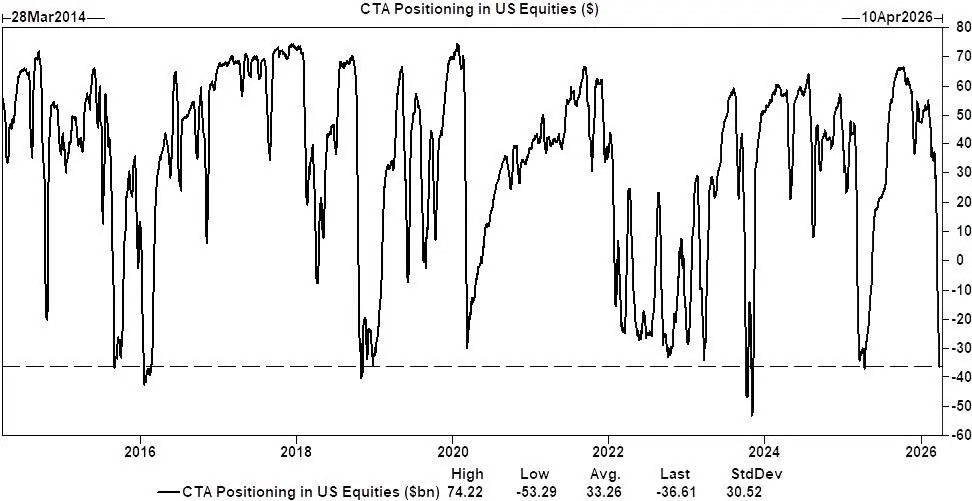
CTA Nearing Bullish Reversal Threshold: Goldman Sachs estimates that systematic strategy investors have sold a cumulative total of approximately $85 billion in US stocks over the past 30 trading days, nearing historical records. Currently, CTA net short positions stand at approximately $37 billion. Morgan's report stated, "There is an asymmetry to the upside—over the next month, we expect CTAs to be buyers under any scenario," implying that any positive news could trigger a wave of short covering.
Nasdaq Signal: Within the Nasdaq 100, currently fewer than 15% of constituents are above their 50-day moving average. Historically, this proportion has often preceded the emergence of short-term rebounds.
A noteworthy structural feature is that despite the extreme market sentiment, realized volatility between closing prices remains below 15. However, S&P 500 one-month implied volatility has jumped to 26, and the spread between the two is "one of the widest we have ever seen"—this divergence indicates that demand for options protection far exceeds what is suggested by actual price volatility.
Against the backdrop of the continued decline, the report identifies several structural catalysts that could change the market's direction:
Month-End Pension Rebalancing: Goldman Sachs' model predicts that US pension funds will buy approximately $19 billion in US stocks at month-end, ranking in the 89th percentile historically.
Seasonality: Since 1950, the average S&P 500 gain in April has been 1.35%, which historically makes it a seasonally strong month.
Options Market Pricing: Although this week was shortened due to the Easter holiday, the options market's implied single-week volatility for the S&P 500 still exceeded 3.4%, one of the largest single-week implied volatilities in the past five years.
Overall, rebound momentum is building as short pressure nears extremes, but a rebound is predicated on a relaxation of tensions in the Middle East. For now, the overall outlook for US stocks remains unclear.
Risk Warning and Disclaimer
Market risks exist; investment requires caution. This article does not constitute personal investment advice and does not take into account the specific investment objectives, financial situation, or needs of individual users. Users should consider whether any opinions, views, or conclusions in this article are appropriate for their specific circumstances. Investing based on this is at the user's own risk.
