


NASDAQ-100 Officially Enters Correction Territory, Tech Giants Drag Index Down Over 11% From Peak
The Nasdaq 100 Index has fallen more than 11% from its peak, officially entering technical correction territory for the first time since the Trump tariff shock. The Iran war is weighing on risk appetite, compounded by market skepticism over the returns on massive AI investments, which has led to Microsoft plunging 34%, Meta Platforms dropping 29%, and NVIDIA pulling back 18%. Analysts believe that as valuations return to rationality, a new window for positioning may be opening
The Nasdaq 100 Index officially entered technical correction territory on Friday, with the continued decline in tech giants' share prices pushing the index's drop from its peak to over 11%, marking an unprecedented stress test for the core drivers of the past three years' bull market.
As of press time, the NASDAQ-100 was down 1.22%. This marks the first time the NASDAQ-100 has triggered a technical correction—typically defined as a bear market drop of at least 10% but less than 20% from a recent high—since the market turmoil caused by the Trump tariff shock in April 2025.
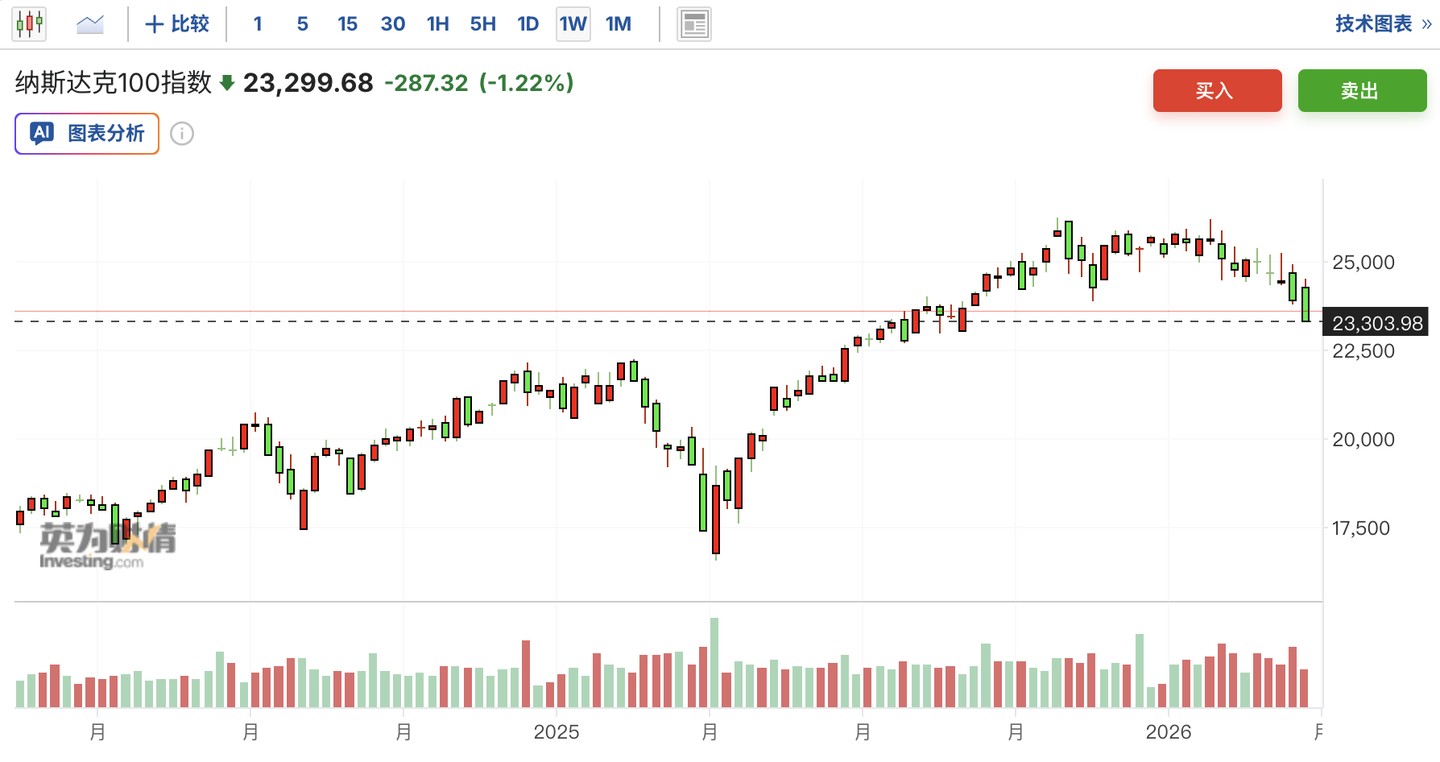
The ongoing Iran war continues to shake investor confidence, while market doubts regarding the returns on tech giants' massive AI infrastructure spending are deepening. These two pressures combined have accelerated the current sell-off.
Despite this, Wall Street as a whole remains optimistic about the tech sector's fundamentals. Analysts expect the "Magnificent Seven" to achieve 19% earnings growth in 2026, outstripping the 16% projected for the rest of the S&P 500 components. Furthermore, following this significant pullback, the NASDAQ-100's valuation has become notably more reasonable compared to a few months ago.
Multiple Pressures Combine to Trigger New Technical Correction
The current NASDAQ-100 correction is not the result of a single factor.
According to Bloomberg, on the geopolitical front, the Iran war continues to suppress market risk appetite; on the fundamental front, investors are becoming increasingly cautious about the massive capital expenditures tech giants are making in AI computing power, with growing questions about when these investments will translate into more significant financial returns.
Since the index peaked, Microsoft's stock price has plummeted by a cumulative 34%, facing its worst quarterly performance since 2008. Meta Platforms, in addition to AI spending pressures, has also been hit by legal challenges, with a 29% decline during this period.
Both companies are among the highest-weighted constituents in the NASDAQ-100, and their performance significantly impacts the overall index.
NVIDIA and Software Stocks Slump Simultaneously, Broadening the Impact
The heavy hit is not confined to the "buyers" of AI. NVIDIA, the primary beneficiary of the AI investment craze, has retraced 18% since its October peak. Markets worry that as expectations for AI computing demand growth cool, the company's rapid sales growth may be difficult to sustain.
Expectations of AI-driven industry disruption are also weighing on the software sector, and the impact has spread to more sub-segments.
HR software provider Workday and Atlassian, which owns the Trello product, have both seen their shares drop more than 40% since October 29, significantly underperforming the overall index. This reflects widespread market anxiety over the expectation that AI will reshape the enterprise software landscape.
Valuations Return to Rationality, Wall Street Maintains Long-Term Optimistic Outlook
Despite the intensity of the current decline, the long-term investment logic for the tech sector remains unshaken on Wall Street.
According to data from Bloomberg Intelligence, the "Magnificent Seven" are expected to achieve 19% earnings growth in 2026; in contrast, the earnings growth forecast for the other 493 components of the S&P 500 is only 16%, indicating that the tech giants' earnings growth advantage remains substantial.
In terms of valuation, the NASDAQ-100's current price-to-earnings (P/E) ratio (based on forward earnings) has compressed from 28x at its October peak to 21x, trading at a slight discount to its historical 10-year average, which has increased its attractiveness for some long-term investors.
While multiple negative factors have been considerably priced in, stabilization will still depend on when AI investment returns can manifest as tangible earnings improvements.
