


After two consecutive days of sharp declines, the memory sector begins to "diverge": Samsung and SK Hynix stabilize, "flash memory" continues to fall
Following Google's TurboQuant algorithm breakthrough, the memory chip industry is experiencing a divergence: flash memory companies' stock prices are under continuous pressure, with Kioxia and others significantly retracing previous gains; HBM suppliers Samsung and SK Hynix have quickly stabilized. Morgan Stanley noted that this technology primarily optimizes memory efficiency in the inference stage, with limited impact on core HBM demand, while posing a greater threat to NAND flash memory. Bloomberg Intelligence believes that memory optimization in the inference stage has a greater impact on NAND flash memory, while the core memory required by GPUs (HBM/DRAM) is largely unaffected
A breakthrough algorithm by Google aimed at improving AI inference efficiency is causing structural divergence within the memory chip industry: stock prices of flash memory companies remain under pressure, while related stocks in High Bandwidth Memory (HBM) have stabilized relatively.
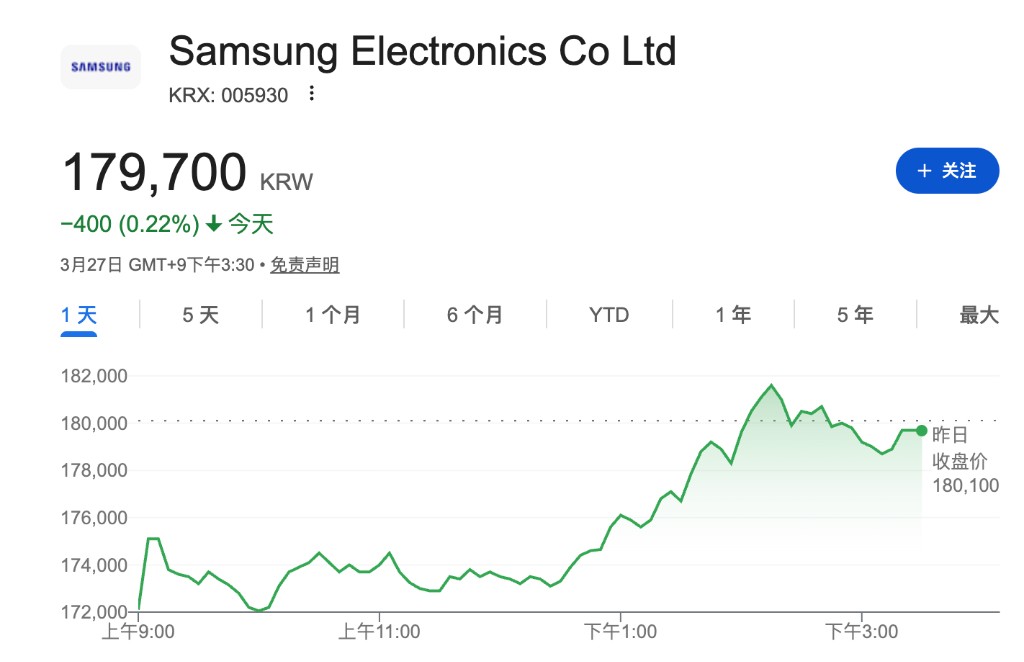
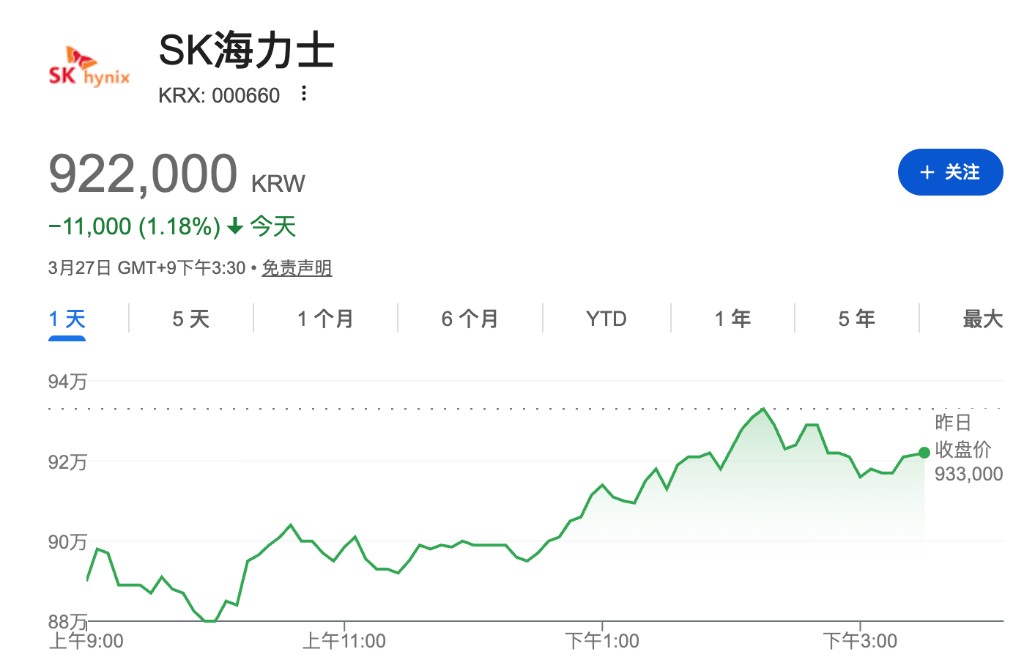
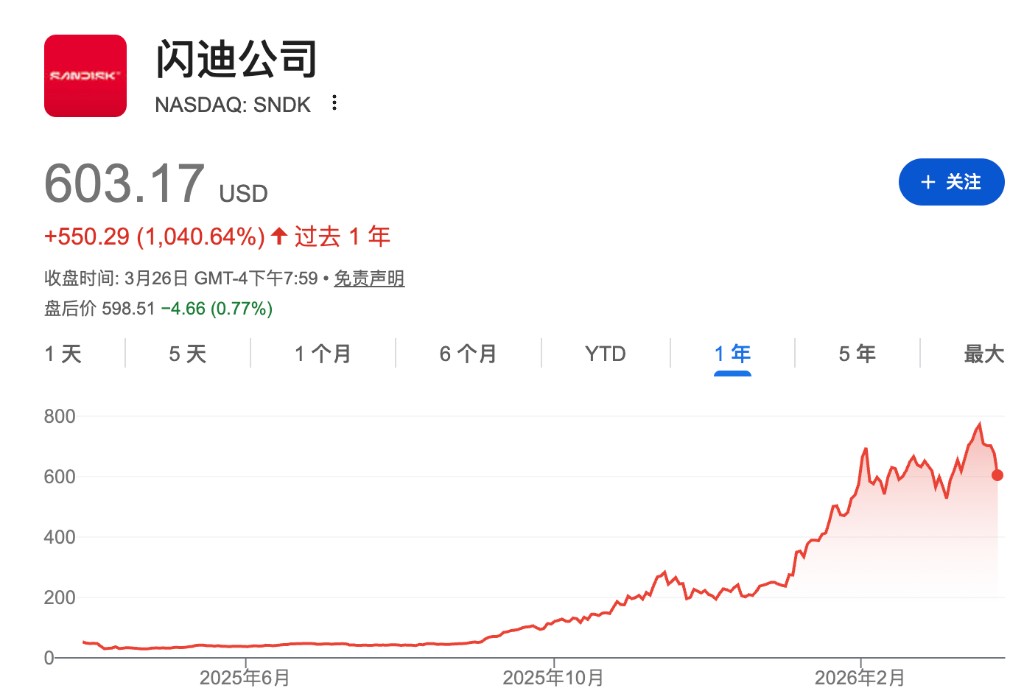
The memory chip sector in the US stock market faced pressure for two consecutive trading days, with Sandisk closing down 11% on Thursday. On Friday, selling sentiment briefly spread to the Asia-Pacific market, with Korean memory stocks continuing to decline, SK Hynix falling more than 5% intraday, and Samsung Electronics dropping over 4%.
However, thanks to the core position of HBM business in AI training, Samsung Electronics and SK Hynix, which supply High Bandwidth Memory to Nvidia's AI accelerators, quickly stabilized. Samsung has essentially recovered all its losses, and SK Hynix's decline narrowed to 1%, demonstrating greater resilience than flash memory manufacturers. In contrast, stocks like Kioxia, which had accumulated gains of over 600% in the preceding months, continued to decline.
Morgan Stanley analyst Tiffany Yeh pointed out in a research report that Google's "TurboQuant" technology significantly enhances AI inference efficiency by compressing memory usage and data movement, but "it will not weaken the demand for core memory chips such as HBM". The market is gradually realizing that the threat this technology poses to flash memory companies is far greater than in the HBM field.
Flash Memory Sector Takes the Brunt, Previous Gains Largely Retraced
Driven by the expectation of AI popularization, flash memory and storage product manufacturers have attracted a large influx of investors in recent months. Since late August, Sandisk's stock price had risen by more than 1000% at one point, and Kioxia also increased by over 600%, significantly outperforming traditional memory giants like Samsung Electronics, SK Hynix, and Micron Technology.
However, market sentiment reversed this week. Investors, realizing the far-reaching implications of Google's technological breakthrough, were the first to sell off shares of these companies. Google announced that its TurboQuant algorithm can compress the memory required for specific stages in running large language models by at least one-sixth, thereby significantly reducing overall AI operational costs. Market concerns suggest this move will weaken the procurement demand for memory from hyperscale data center operators like Meta, thus dragging down memory chip prices in the smartphone and consumer electronics sectors.
Bloomberg Intelligence analyst Jake Silverman stated in a research report: "As model weights need to be stored in GPU memory, HBM demand and DRAM produced by Micron are likely unaffected; in contrast, NAND flash memory demand will face a more profound long-term impact."
HBM Demand Logic Unshaken, Samsung and SK Hynix Stabilize
In contrast to the continuous decline in the flash memory sector, High Bandwidth Memory (HBM) related stocks have shown strong resilience during this sell-off. Samsung Electronics had recovered all its losses by Friday, and SK Hynix's stock price had largely returned to pre-sell-off levels.
Analysts believe there is clear logical support behind this divergence. During the training phase of large AI language models, GPU demand for HBM is highly concentrated, while TurboQuant optimizes memory efficiency in the inference stage, not touching the core demand for HBM on the training side. Samsung and SK Hynix had previously become market darlings during the initial AI investment boom precisely because of their HBM products, and this advantageous position has not been shaken by this algorithmic breakthrough.
Analysts: Short-term Market Volatility Does Not Obscure the Long-term Industry Narrative
It is worth noting that this round of memory chip selling occurred against the macroeconomic backdrop of scrutiny over overall tech stock valuations. Inflation concerns triggered by the Middle East situation have made the market more cautious about high-valuation stocks, and investors are highly sensitive to news, with profit-taking behavior potentially occurring at any time.
Ed Gomes, Chief Investment Officer at SGMC Capital, stated that the hardware demand driving the implementation and application of AI technology is a long-term structural issue that "will continue to evolve over years, even decades, not days or weeks." He believes the sell-off related to TurboQuant is "short-term noise and provides a good buying opportunity for quality stocks."
However, analysts also pointed out that with the continuous iteration of AI efficiency algorithms, the divergence within the memory chip industry may further intensify. Whether flash memory companies can replicate their previous high growth expectations remains to be seen.
