


A 2022 Deja Vu! Iran Conflict Triggers "Triple Kill" in Wall Street Stocks, Bonds, and Gold; Cash Holdings Surge to 4.3%
A Bank of America survey shows that fund managers' cash holdings increased to 4.3% from 3.4% in February, the largest monthly jump in six years. Soaring oil prices are pushing up inflation expectations, and traders who had bet on interest rate cuts are now pricing in a Fed hike before October. The current market reaction is eerily similar to the early stages of the Russia-Ukraine conflict in 2022. JPMorgan notes that current cash allocations are still below the 5.9% seen then, and if uncertainty persists, market adjustments may not be over
Global investors are responding to the current geopolitical situation in the same way they did during the outbreak of the Russia-Ukraine conflict in 2022—massively reducing holdings in stocks, bonds, and gold, and shifting funds to cash. The energy price shock is driving up inflation expectations, causing multiple asset classes to come under pressure simultaneously, leading to a rare triple sell-off in stocks, bonds, and gold.
On March 26, according to Bloomberg, the latest investor survey by Bank of America this month shows that the cash held by fund managers has increased at the fastest pace in six years, with cash holdings jumping from 3.4% in February to 4.3%. JPMorgan strategists noted on the same day that the portfolio adjustments investors are making in response to the conflict may still have considerable room to go.
JPMorgan's strategy team, led by Nikolaos Panigirtzoglou, wrote in their latest research report: "From a historical perspective, cash allocations remain at low levels, which is a headwind for stocks and bonds, and this situation will continue as long as geopolitical and macroeconomic uncertainties remain high."
Energy Price Hikes Boost Inflation Expectations, Interest Rate Cut Bets Give Way to Rate Hike Pricing
The most critical concern for investors currently is that the energy price shock caused by the war will push up inflation, forcing central banks to tighten monetary policy. Brent crude oil prices are on track for their largest monthly gain since 1990, with quotes well above $100 per barrel. Affected by this, global stock markets fell 5% in March, and falling bond prices pushed US Treasury yields to multi-month highs.
Market expectations for the interest rate path have shifted significantly. Traders who had previously bet on the Federal Reserve cutting interest rates in 2026 are now pricing in a 50% probability of a Fed rate hike before October. In Europe, rate cut expectations have been replaced by bets on three 25-basis-point rate hikes.
Stocks, Bonds, and Gold Fall Simultaneously, Cash Becomes the Only Safe Haven
This round of adjustments is characterized by a rare synchronized sell-off across multiple asset classes. JPMorgan strategists noted, "Investors are abandoning stocks, bonds, and gold at the same time, shifting to higher cash allocations."
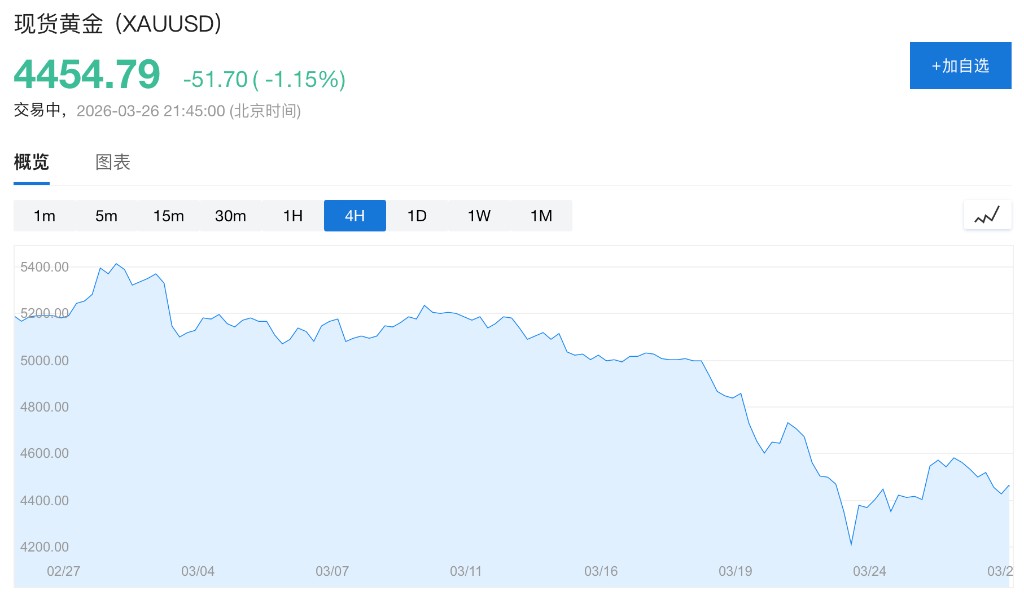
Gold has fallen by more than 15% since the conflict broke out. The prospect of central banks maintaining interest rates or even raising them has diminished the attractiveness of non-yielding precious metals, and the traditional safe-haven logic has failed in this rotation.
Cash Allocations Still Below Historical Extremes, Market Adjustments May Not Be Over
Despite the clear trend of funds flowing into cash, the current level remains moderate compared to historical extremes. Bank of America's survey shows that cash holdings have risen to 4.3% this time, while during the early stages of the Russia-Ukraine conflict and the COVID-19 pandemic, this proportion reached as high as 5.9%.
JPMorgan strategists also emphasized that, compared to the outbreak of the Russia-Ukraine conflict, the current level of cash in portfolios is still modest. This means that if geopolitical and macroeconomic uncertainties continue to escalate, there is still room for further accumulation of defensive positions, and market adjustments may not have ended.
