Stagflation Alert Sounded! Eurozone March Composite PMI Drops to 10-Month Low, France's PMI Falls for Third Consecutive Month into Contraction

Wallstreetcn
2026.03.24 11:28

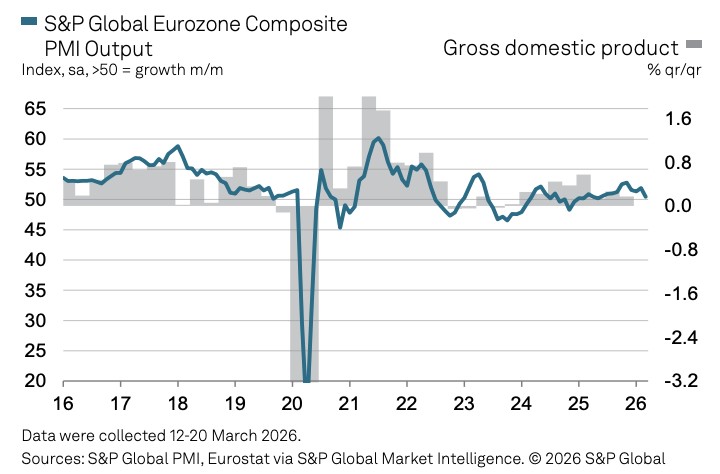
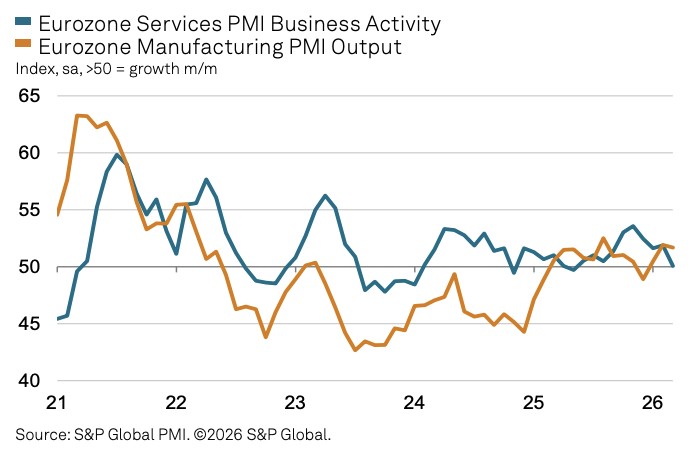
Impacted by rising energy prices and supply chain disruptions, the Eurozone's March PMI plummeted more than expected to 50.5, a 10-month low. The services PMI fell to 50.1, while the manufacturing PMI rose to 51.4. The unexpected rebound in manufacturing failed to offset the overall weakness in services. Germany and France also saw their PMIs decline more than expected. The European Central Bank is caught between controlling inflation and safeguarding growth, with significantly narrowed policy options

Middle East conflict is pushing up energy costs and suppressing the service sector, leaving the European Central Bank grappling with a dilemma between growth and inflation.

Private sector activity in the Eurozone hit the brakes hard in March, with the composite PMI falling to a 10-month low, raising stagflation risk alarms. An unexpected rebound in manufacturing failed to offset broad weakness in services, while soaring energy prices and supply chain pressures triggered by the Middle East conflict are fundamentally reshaping Europe's economic outlook.

According to preliminary data released by S&P Global on Tuesday, the Eurozone's composite PMI fell to 50.5 in March from 51.9 in February, below analysts' expectations of 51, marking the lowest level since May last year, but still holding just above the 50-point threshold that separates expansion from contraction. The preliminary services PMI dropped to 50.1, well below the expected 51.1; however, the preliminary manufacturing PMI rose against the trend to 51.4, a 45-month high, outperforming the expected 49.6.

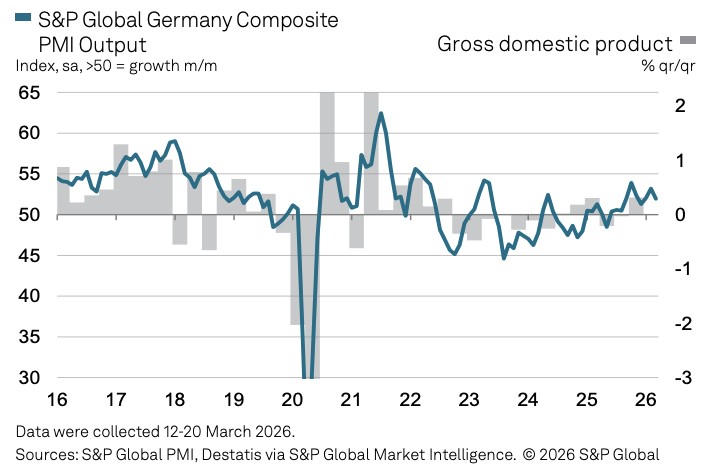
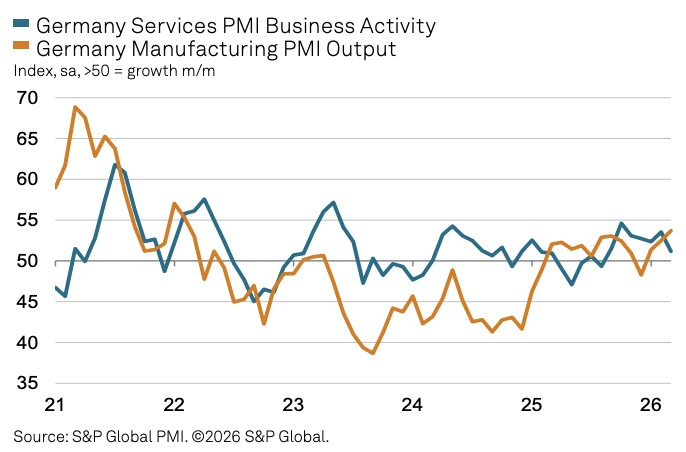
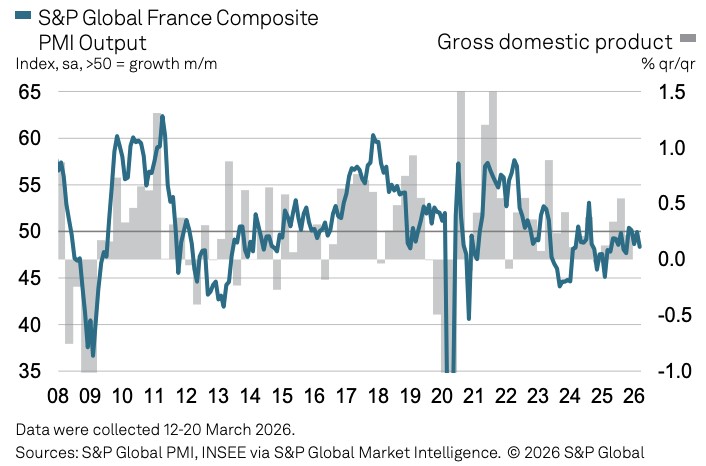
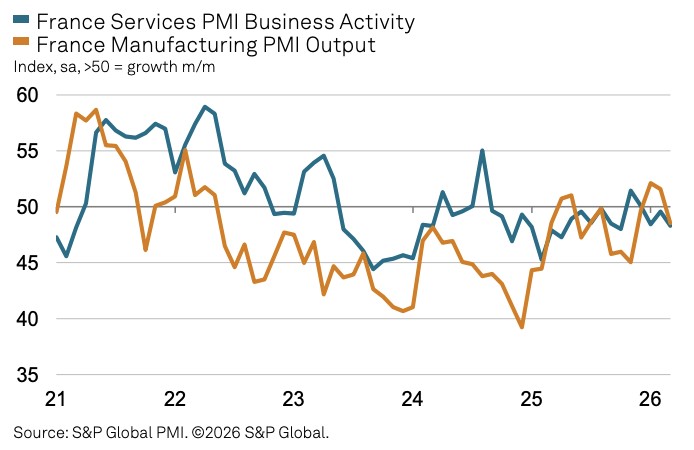
Germany and France saw synchronized cooling. Germany's composite PMI fell more than expected to 51.9. Its manufacturing sector unexpectedly strengthened, partly due to clients stocking up in advance to hedge against war-related supply chain risks. France's composite PMI unexpectedly slipped to 48.3, a five-month low, marking its third consecutive month below the expansion-contraction threshold.

Financial markets reacted relatively calmly after the data release. The German 10-year government bond yield remained largely flat, hovering around 3%; the euro depreciated slightly by 0.2% to $1.1593. Money markets continued to price in more aggressive tightening bets, with approximately 70 basis points of rate hikes priced in by year-end.

Stagflation Alert: Soaring Costs Parallel Slowing Growth

Chris Williamson, Chief Business Economist at S&P Global, stated directly in a release, "The flash Eurozone PMI in March is sounding stagflation alarms – the Middle East conflict is significantly pushing up prices while simultaneously stifling growth." He pointed out that as energy prices surge and the conflict disrupts supply chains, business costs are rising at the fastest pace in over three years.

According to S&P Global, the pace of input price increase in March was the fastest since February 2023, with surveyed companies citing broad increases in energy, fuel, transport, wages, and various raw material costs; supply chain pressures are also beginning to build, with disruptions to sea freight and delivery delays for goods from Asia becoming apparent.

Future output expectations saw the largest decline since the outbreak of the Russia-Ukraine conflict, reflecting deep market pessimism about the outlook.

Williamson commented that the current situation "will force the European Central Bank to tread a cautious path at the policy level when facing the increasingly clear and rising stagflation risks in the coming months."

Germany and France Show Synchronized Slowdown, Services Sector the Main Drag

The breakdown of data from the two largest Eurozone economies further reveals internal divergence.

Germany's composite PMI fell to 51.9 from 53.2, a larger drop than expected (expected 52.2), but still remaining in expansion territory. Its manufacturing sector unexpectedly strengthened, partly due to clients stocking up in advance to hedge against war-related supply chain risks; however, the services PMI recorded only 51.2, significantly below market expectations.

Phil Smith, Economist at S&P Global, warned, "Forward-looking output expectations for manufacturing have been revised downwards, suggesting that the surge in factory activity may be short-lived." Germany, which was on the cusp of an economic turning point driven by fiscal spending, now faces a renewed setback in its recovery momentum due to this external shock.

France's situation is more severe. The composite PMI slipped further to 48.3 in March from 49.3, a five-month low and the third consecutive month below the expansion-contraction threshold, also worse than Bloomberg's survey expectation of 49.3. The services PMI fell to 48.3, and although the manufacturing sector remained in expansion territory, its support for the overall situation was limited.

Joe Hayes, Chief Economist at S&P Global, commented, "For now, France's nascent recovery appears to have been put on pause." He indicated that inflation threats, persistent supply-side disruptions, and heightened recent uncertainties are prompting companies to reassess their outlooks, leading to a significant drop in business confidence.

ECB Caught in a Dilemma, Policy Space Considerably Narrowed

The European Central Bank is currently in a wait-and-see mode, needing to address the inflationary pressures stemming from the Middle East situation while also weighing the uncertainties brought by potential policy shifts from politicians. According to Bloomberg, citing sources familiar with the matter, officials are not ruling out a rate hike at the April policy meeting.

Chris Williamson believes that in the face of "clear and rising stagflation risks in the coming months," the ECB "will have to tread a cautious path at the policy level."

He pointed out that the PMI data suggests "the ECB is no longer in a "sweet spot" regarding growth and inflation" – with slowing growth and accelerating cost increases occurring simultaneously, significantly narrowing the room for monetary policy maneuver. The duration of the Middle East conflict and its potential long-term impact on energy and supply chains will be key variables determining the Eurozone's economic outlook.