


The Middle East energy conflict cools down, oil prices retreat, U.S. stock futures are weak, and gold stabilizes at $4,660 after a sharp drop
Expectations of easing tensions in the Middle East have led international oil prices to retreat from nearly four-year highs, stabilizing emerging market assets. However, inflation concerns triggered by energy shocks have completely reshaped global interest rate expectations, with the market no longer betting on a rate cut by the Federal Reserve this year. Institutions even anticipate that the European Central Bank may raise rates as early as April. The sharp contraction in rate cut expectations, combined with liquidity demands, has resulted in a fierce sell-off of precious metals such as gold, which is currently experiencing a slight increase and stabilization in price
The situation of energy mutual attacks in the Middle East has shown signs of easing, with international oil prices retreating from nearly four-year highs, temporarily alleviating market inflation concerns. However, the global central banks' shift towards hawkish policies is triggering severe adjustments in the precious metals market.
Overnight statements from the United States and Israel have eased market worries about further escalation of the Middle East conflict. According to Xinhua News Agency, Israeli Prime Minister Benjamin Netanyahu promised to stop attacking Iranian energy facilities, stating, "I believe this war will end much sooner than people think." Trump also indicated that he would not deploy ground troops. As a result, Brent crude oil prices fell back to around $107 per barrel from their highest closing price since July 2022.
The decline in oil prices has provided some support for emerging market assets. The MSCI Emerging Markets Index showed signs of stabilization on Friday after a 2.7% drop due to soaring oil prices on Thursday, with the developing country currency index slightly rising by 0.2%, both expected to achieve weekly gains. However, inflation concerns triggered by high energy prices have profoundly altered global monetary policy expectations, with the bond market no longer betting on the Federal Reserve lowering interest rates this year, and the European Central Bank even facing pressure to raise rates.
Yesterday, under the dual pressure of failed hopes for interest rate cuts and liquidity shocks, precious metals such as gold faced heavy selling. Currently, gold prices have slightly risen and stabilized.
The performance of major assets is as follows:
Stock Market:
- The MSCI Asia-Pacific Index fell slightly by 0.2% on Friday. Japanese stocks are closed today.
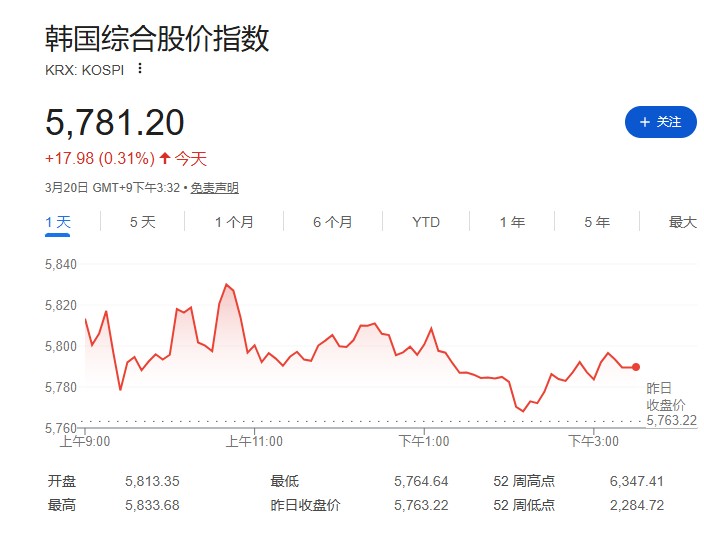
- The South Korean Kospi Index rose over 1% at one point on Friday, then the gains retreated to 0.3%. Samsung Electronics led the gains.
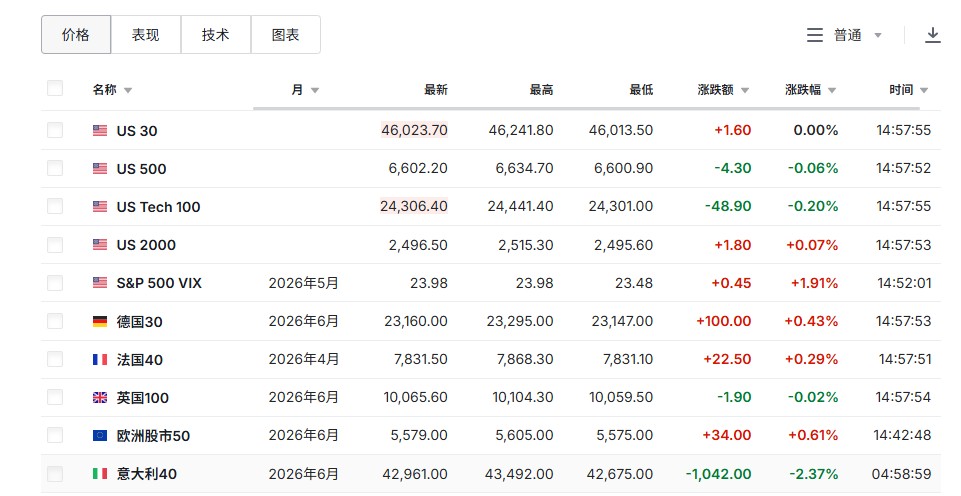
- U.S. stock index futures are nearly flat. Most European stock index futures rose slightly, with the Euro Stoxx 50 index futures up 0.6%.
Commodity Market:
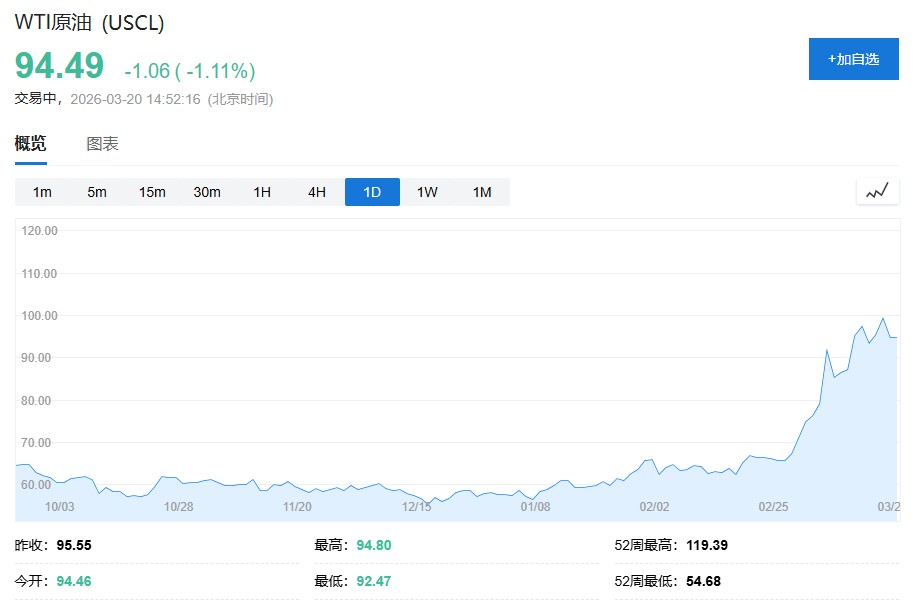
- WTI crude oil is currently down over 1%, trading at $94.49 per barrel, and Brent crude oil also fell slightly.
- Spot gold, after a sharp decline, is maintaining around $4,660. Silver once dropped nearly 2%.
Foreign Exchange:
- The Thai Baht is leading among currencies, while the offshore Chinese Yuan is relatively weak.
Emerging Market Assets Stabilize
With the decline in oil prices, emerging market assets have shown resilience ahead of the weekend. Mitul Kotecha, head of Asian foreign exchange and emerging markets macro strategy at Barclays Bank, stated, "Comments from Israeli and U.S. officials help inject a bit of calm into today's market, aiding the recovery of emerging market assets."
WTI crude oil is currently down over 1%, trading at $94.49 per barrel, and Brent crude oil also fell slightly.

Despite the increased uncertainty from geopolitical conflicts, investor sentiment towards emerging markets remains positive overall. A survey by HSBC shows that the proportion of investors optimistic about emerging market assets has risen to the highest level since January 2021Vincent Mortier, Chief Investment Officer of Amundi Group, pointed out that factors such as government fiscal improvement and resilient growth expectations are supporting emerging market economies. Currently, emerging market stocks account for only about 5% of global asset management, below the long-term average of 7% to 8%, and are expected to gradually increase in the future.
In the Asia-Pacific market, South Korea's Kospi index rose more than 1% on Friday, but later the gains retreated to 0.3%, led by Samsung Electronics and Samsung C&T. The Thai baht led among currencies, while the offshore yuan performed relatively weakly. However, dragged down by heavyweight stocks like Alibaba, the MSCI Asia-Pacific index fell slightly by 0.2% on Friday.
U.S. stock index futures were nearly flat. European stock index futures mostly rose slightly, with the Euro Stoxx 50 index futures up 0.6%.
Inflation Concerns Reshape Rate Expectations
Despite a short-term drop in oil prices, the impact on the energy supply chain remains profound, with global inflation risks sharply rising, forcing central banks around the world to reassess their monetary policy paths.
According to Reuters, institutions such as JP Morgan, Morgan Stanley, and Barclays have significantly adjusted their interest rate forecasts for the European Central Bank. Barclays and JP Morgan expect the European Central Bank to raise rates at the policy meeting in April, followed by further hikes in June and July; Morgan Stanley anticipates rate hikes of 25 basis points in June and September. This shift is driven by the inflationary risks stemming from the Middle East conflict.
Not only the European Central Bank, but major central banks globally have also released hawkish signals this week. The Federal Reserve maintained interest rates unchanged with a hawkish tone; the Bank of England clearly stated it is ready to "take action" to address inflation; and Australia's benchmark bond yields have climbed to their highest level in nearly 15 years. Garfield Reynolds, head of Bloomberg MLIV Asia team, noted: "The signals from the bond market indicate that any drop in oil prices may be temporary, and the supply shocks in oil and gas will continue to exacerbate inflationary pressures."
Rate Cut Unlikelihood Triggers Precious Metal Sell-off
The reversal of rate expectations has become the core driving force behind the sharp decline in the precious metals market. As gold does not generate interest income, the contraction of rate cut expectations directly undermines its relative attractiveness.
Aakash Doshi, global head of gold and metals strategy at State Street Global Advisors, stated: "Before the outbreak of war, the money market expected the Federal Reserve to cut rates twice this year, while the current market pricing reflects that there will be no easing this year."
Spot gold plummeted 3.5% on Thursday, briefly falling to the $4,500 mark, hitting a six-week low. On Friday, gold prices remained at relatively low levels. Silver fell nearly 2%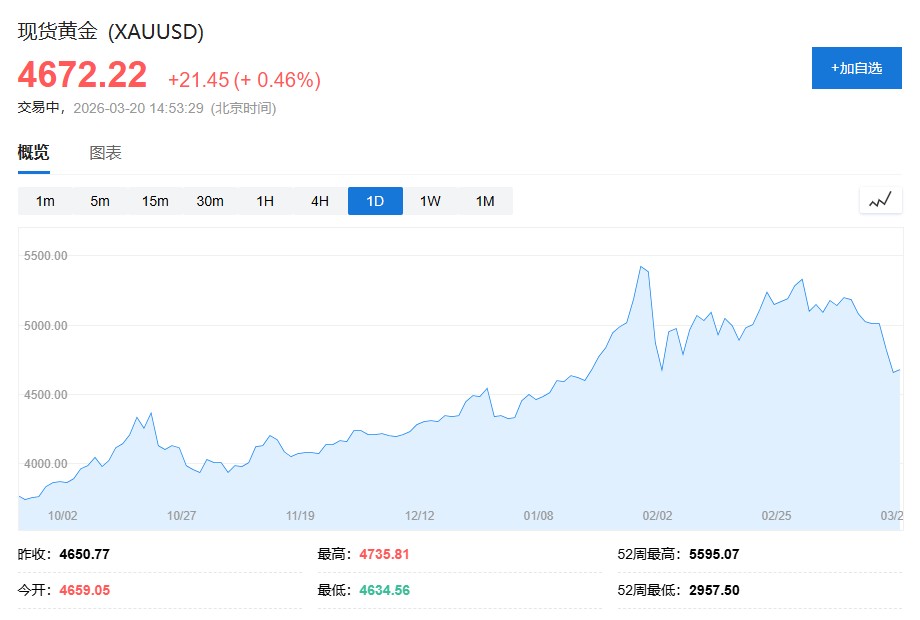
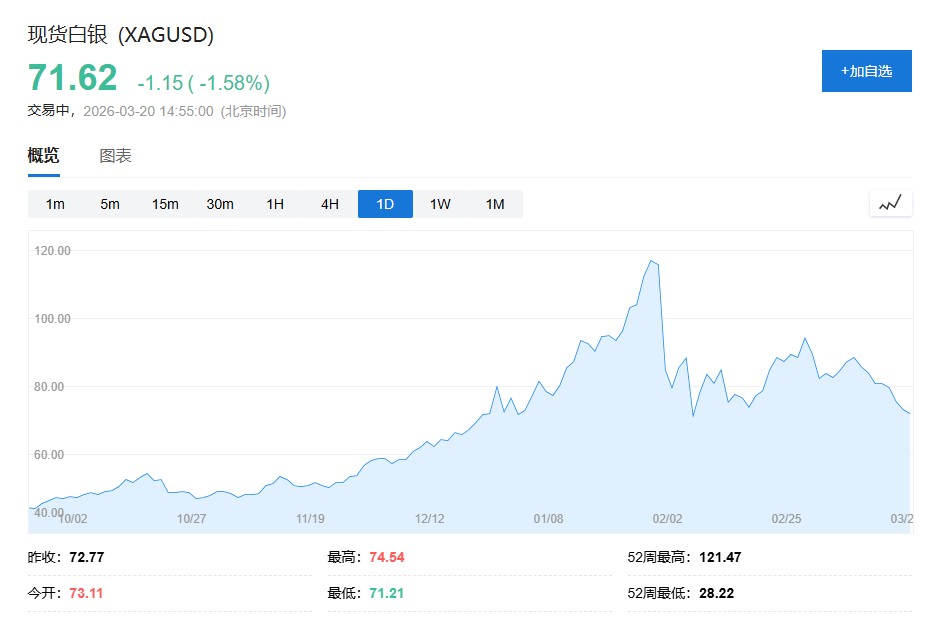
At the same time, retail and professional investors are simultaneously reducing their exposure to precious metals. According to VandaTrack data, the world's largest gold ETF, SPDR Gold Shares, has seen net selling by retail investors for six consecutive trading days. Tom Wrobel, Capital Consulting Director at Société Générale's Commodity Brokerage Division, pointed out that trend-following hedge funds (CTAs) are actively reducing their gold positions in the current volatile market.
Suki Cooper, Global Head of Commodity Research at Standard Chartered Bank, added that given the significant rise in gold and silver prices over the past two years, some investors are choosing to take profits to offset losses in other assets. Additionally, the strengthening dollar has diverted some funds. This round of selling is not limited to gold and silver; platinum, palladium, as well as industrial metals like copper and aluminum have also declined, reflecting a systematic downgrade in market expectations for global economic growth
