


Wall Street's "soul-searching question": How high can oil prices really go?
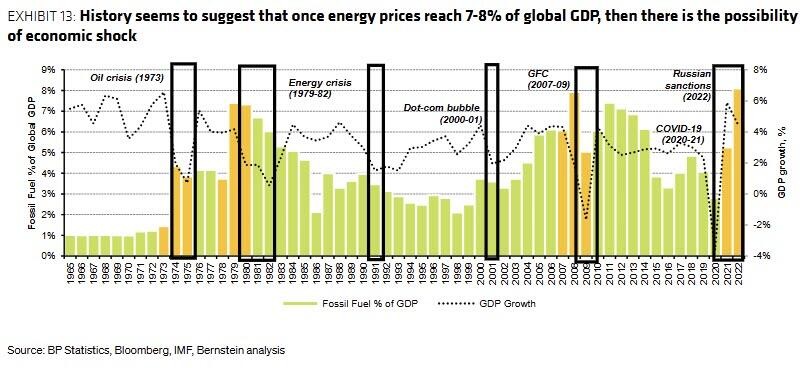
Bernstein warns that the duration of the blockade of the Strait of Hormuz is a core variable. If the blockade lasts for six months, the daily supply gap could reach 15.3 million barrels, and peak oil prices may hit $170, triggering demand destruction equivalent to the 2008 financial crisis. Although existing strategic reserves can provide a buffer of 550 million barrels, it is insufficient to withstand a long-term supply interruption. The market remains optimistic about a resumption of production within a month and has not fully priced in the potential global economic recession
Since the outbreak of the Iran war, international oil prices have surged from $60 per barrel at the beginning of 2026 to above $100, but Wall Street institutions warn that this may be far from the end. The ultimate direction of oil prices depends on one key variable: how long the blockade of the Strait of Hormuz can last.
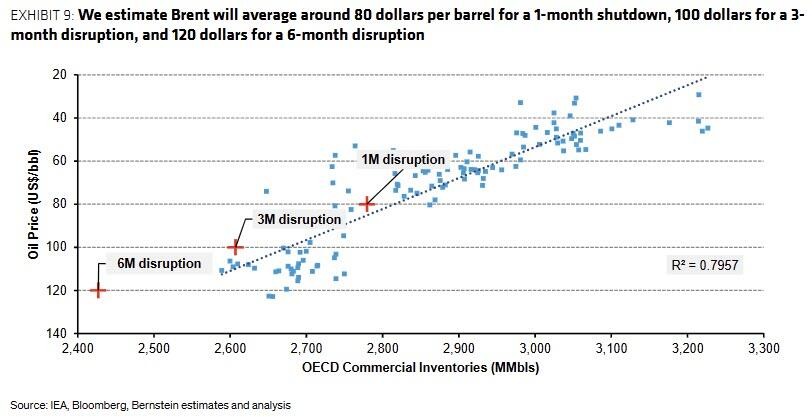
The Bernstein energy team has constructed three scenario models around the duration of the blockade: If the blockade lasts for one month, Brent's peak will be around $100 per barrel; if it extends to three months, the peak will rise to $140; if it lasts for six months, the peak could reach $170 per barrel. Bernstein views a one-month blockade as the baseline scenario but also clearly states that under the three to six-month blockade scenarios, a global economic recession will be "inevitable."
Meanwhile, JP Morgan has issued warnings from another perspective. According to a previous article from Wall Street Insight, the commodity team led by Natasha Kaneva at JP Morgan noted in a research report on March 17 that the stability of Brent and WTI around $100 is an "illusion"—the spot prices of crude oil in Dubai and Oman have soared to $155 per barrel, creating a price difference of over $55 with Brent. The regional inventory buffer, deviations in benchmark pricing structure, and policy interventions that support Brent's relative stability are essentially short-term factors; once the Atlantic basin inventory is exhausted, Brent will be forced to rise.
The current market overall still leans towards a "temporary conflict" scenario. Bernstein points out that oil stocks are priced to imply oil prices of about $80 to $100 in 2026, with a long-term price of about $70, and the market has not yet incorporated recession risks into pricing. "Time will tell us if this is correct," Bernstein wrote.
Complete Blockade of Hormuz: Daily Supply Gap Up to 15.3 Million Barrels
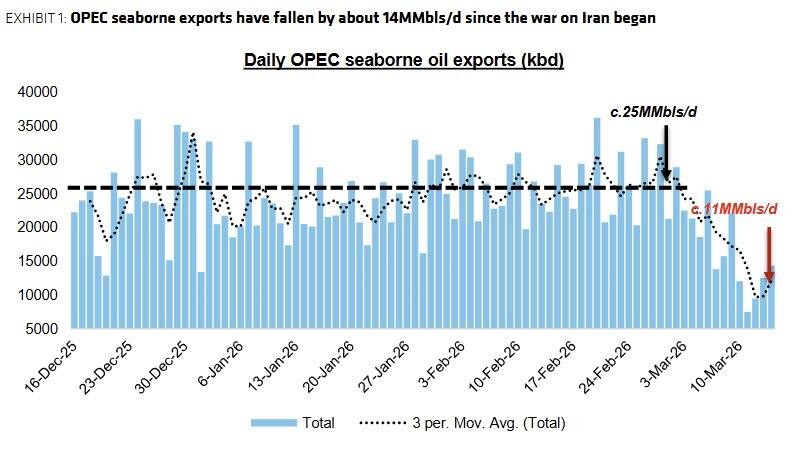
A complete closure of the Strait of Hormuz would have a massive potential impact on global supply. According to tanker tracking data, OPEC's crude oil and condensate loading has decreased by 13.8 million barrels per day, combined with a disruption of about 1.5 million barrels per day in liquefied petroleum gas from the Middle East, resulting in an average daily supply gap of up to 15.3 million barrels under a complete blockade scenario. In March, due to only partial loading disruptions, the actual impact was about 10 million barrels per day.
Faced with such a scale of supply disruption, existing buffer mechanisms are insufficient to fully compensate. Bernstein estimates that of the approximately 250 million barrels of floating reserves outside the Persian Gulf, about 150 million barrels can be quickly mobilized; the Strategic Petroleum Reserve (SPR) can release about 400 million barrels within 180 days, totaling a buffer of about 550 million barrels. However, the institution judges that this scale is still insufficient to make up for the cumulative supply gap caused by a long-term blockade.
Additionally, while expanding oil transport capacity through the UAE's east-west pipeline or diverting through the Port of Fujairah has some feasibility, Bernstein also points out that these alternative routes face risks of being attacked by Iran, and the effectiveness of alleviation remains highly uncertain.
Three Scenarios: Peak Oil Prices Reach a Maximum of $170
Bernstein has established three scenarios with significantly different price paths based on the duration of the lockdown.
- Baseline Scenario (One Month Lockdown): If the Strait resumes navigation by the end of March, the monthly peak for Brent is about $100/barrel, with an average price of about $80/barrel in 2026, and an average demand decline of about 300,000 barrels/day.
- Moderate Scenario (Three Months Lockdown): The monthly peak for Brent rises to $140/barrel, with an average price of about $100/barrel, and a demand decline of about 1 million barrels/day in 2026. Bernstein clearly states that a global economic recession is "inevitable" in this scenario.
- Extreme Scenario (Six Months Lockdown): The monthly peak for Brent reaches $170/barrel, with an average price of about $120/barrel, and a demand decline of about 2.3 million barrels/day in 2026—close to the 2.4 million barrels/day demand destruction during the 2008 global financial crisis.
Nevertheless, Bernstein believes that given the severe consequences of a prolonged lockdown on the global economy, "rationality will prevail, and solutions are expected to emerge in the coming days to weeks." However, the institution admits that current market pricing has not fully incorporated the tail risks of a three to six-month lockdown and recession.
Buffers Will Eventually Run Out, Market Has Not Priced in Recession
J.P. Morgan's Natasha Kaneva team warns that the three main factors supporting the current stability of Brent—regional inventory surplus, deviations in benchmark pricing structure, and policy interventions—are essentially short-term buffers that cannot sustainably mask the true tightness of global supply. Once commercial inventories in the Atlantic basin accelerate their depletion, the global market will be forced to clear under tighter supply conditions, at which point Brent will be compelled to reprice upwards, aligning closer to Middle Eastern spot prices. The current spread of over $55 between Brent and Dubai will become the largest upside risk premium hanging over global oil prices.
Bernstein also points out that the implied oil price range in the current pricing of oil stocks is about $80 to $100, with a long-term price of about $70, consistent with the one to three-month lockdown scenarios, and does not account for long-term risk premiums. "The market has also not priced in a recession," Bernstein wrote.
For market participants, there is only one core variable: when will the Strait of Hormuz reopen? This answer will ultimately determine the direction and ceiling of global oil prices in 2026
