


Qatar LNG shutdown, Iranian gas field bombed, European natural gas prices soar by 35%
Iran severely damages Qatar's LNG export facilities, which account for 1/5 of global supply; recovery may take years, and European gas prices soar 35% during trading! Trump warns that if Qatar's LNG facilities are attacked again, the U.S. will retaliate. Global supply tightens, coupled with European winter consumption depleting inventories, making it difficult for upward pressure on gas prices to ease
Iran's ongoing strikes on Qatar's energy infrastructure are pushing the global natural gas market into a state of heightened tension.
On Thursday, European natural gas benchmark futures surged by as much as 35% during trading. Qatar's National Energy Company confirmed that its liquefied natural gas export facility in Ras Laffan suffered "massive damage," leading to a large-scale fire. Trump immediately posted on social media warning that if Qatar's LNG facilities were attacked again, the United States would retaliate.
Ras Laffan typically accounts for about one-fifth of global LNG supply. It is still unclear how long the damage will last and what the timeline for repairs will be. However, the market has reacted swiftly—Dutch near-month futures, which represent the European natural gas benchmark price, were reported at €71.47 per megawatt-hour as of 8:02 AM local time, an increase of 30.76%.
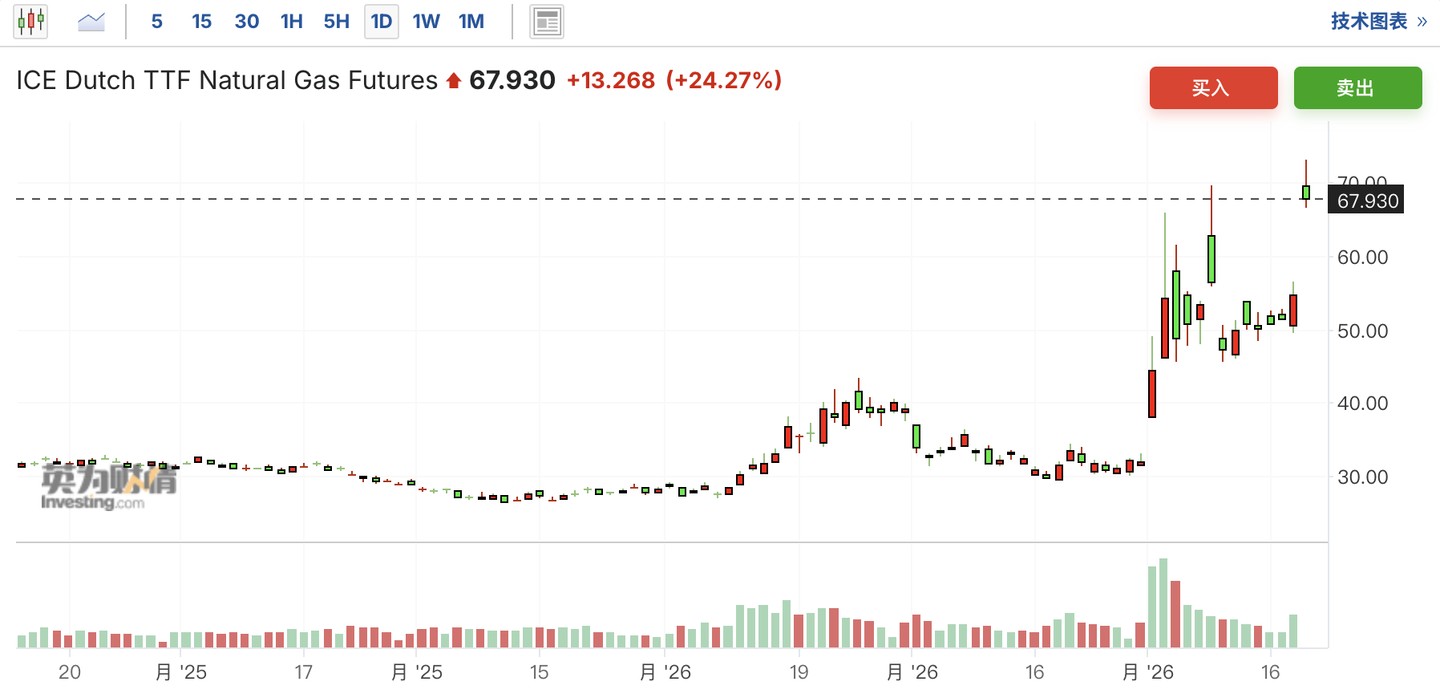
Major LNG Plant Damaged, Supply Disruption Worsens
Earlier this month, the Ras Laffan plant was shut down following an Iranian drone attack, marking the first interruption in its thirty-year operational history.
On Wednesday, Israel launched strikes on Iran's South Pars gas field, prompting Iran to retaliate with attacks on Ras Laffan, further expanding the damage to the facility. Abu Dhabi's Habshan gas facility was also forced to shut down due to debris from the intercepted attack.
The full extent of the damage and the timeline for repairs remain unclear. Qatar's National Energy Company has characterized it as "massive damage," indicating that the prospects for returning to normal operations have been significantly delayed.
Arne Lohmann Rasmussen, Chief Analyst at Global Risk Management, stated:
"Qatar's LNG could theoretically be offline for months, and in the worst-case scenario, even years. This crisis in the natural gas market will not automatically disappear with the end of the war or the reopening of the Strait of Hormuz."
Asian Buyers Dominate, but Global Supply Tightening Affects Europe
LNG buyers in the Middle East are primarily concentrated in Asia, but the impact of this supply disruption has spread globally. If the interruption at Ras Laffan becomes prolonged, the global LNG supply balance will narrow significantly, driving prices higher across the board.
For Europe, the timing of this escalation is particularly unfavorable. Europe has just emerged from winter, and its gas storage inventories have been significantly depleted.
This means Europe will need to procure a large amount of LNG this summer to replenish its stocks, inevitably competing with Asian buyers for the already reduced global supply. Under the pressure of supply and demand on both ends, the upward pressure on European gas prices is unlikely to dissipate in the short term.
Trump Issues Warning, Geopolitical Risks Continue to Dominate the Market
According to Xinhua News Agency, Trump threatened that if Qatar's liquefied natural gas facilities are attacked by Iran again, the United States "will completely destroy the entire South Pars gas field with unprecedented power against Iran."
This statement has heightened market concerns about further escalation of the situation. Currently, a cycle of mutual strikes has formed between Iran and Israel: Israel attacks Iran's South Pars gas field, and Iran retaliates against Qatar's energy facilities.
If this pattern continues, it will pose an ongoing threat to global LNG supply and make it difficult for the market to form a clear expectation of when the crisis will end
