


The market recognizes the Federal Reserve's "new chairman": oil
Renowned investor Boockvar issued a warning: the surge in oil prices is taking over the reins of monetary policy, and the expectation of interest rate cuts is dead. The S&P 500 price-to-earnings ratio has reached 21 times, and U.S. stocks have no margin of safety. The world is sliding into the abyss of stagflation, and the super bull market in commodities has just begun
As market sentiment turned negative during Wednesday afternoon trading in the U.S. stock market, investors are being forced to reassess a harsh reality: the expectations for interest rate cuts are evaporating, and the "new chairman" determining the market direction has changed.
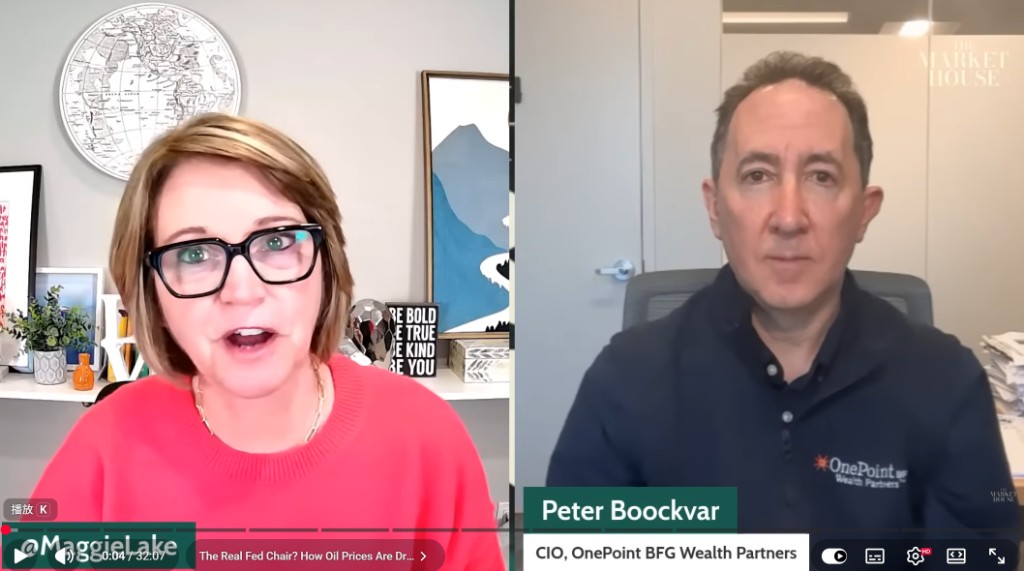
Recently, Peter Boockvar, Chief Investment Officer of Bleakley Financial Group, pointed out in a conversation with Maggie Lake that even without the Middle East conflict, the vulnerabilities of the U.S. stock market have long been evident.
Boockvar warned that the trading strategies related to generative AI are losing their edge, and the surge in oil prices is taking over the reins of monetary policy. When nearly half of the S&P 500 constituents are no longer participating in the rally, and geopolitical conflicts trigger a commodities bull market, the market is facing serious stagflation risks.
The "Last Bastion" of AI Trading is Eroding
Boockvar believes that the generative AI (GenAI) trading that supported the market in the first two months of this year has begun to weaken.
“Look at those massive cloud computing giants, even NVIDIA; these stocks can no longer escape the downturn.” He emphasized that investors are starting to scrutinize the valuation multiples of these companies. Due to massive capital expenditures, the free cash flow of companies like Oracle and Amazon is deteriorating.
“When nearly half of the constituents in the S&P 500 are no longer participating in the rally, the market increases its sense of fragility. The previous rally relied entirely on rotation trades into other sectors.”
Oil Takes Over the Federal Reserve, Expectations for Rate Cuts are Dead
Boockvar made a striking point: the Federal Reserve has a "new chairman," and it is oil.
As geopolitical conflicts lead to a sharp rise in crude oil and natural gas prices, the Federal Reserve's policy space is severely constrained.
-
Inflation pressures transmitted from the wholesale side: The latest PPI data shows that even before accounting for the recent rebound in oil prices, price pressures were already very bad. Boockvar criticized some Federal Reserve members for only looking at CPI, stating, “If there is significant pressure on the wholesale side and companies cannot pass it on, inflation has not disappeared; it is just stuck in the supply chain.”
-
The yield curve is out of control: The market's expectations for four rate cuts are unrealistic. Even if rates are cut, due to high oil prices, long-term rates (10-year yields) are unlikely to fall, which will continue to impact the real estate and credit markets.
“If oil prices stand at $100, I don't see how the Federal Reserve chairman would dare to cut rates.”
Commodities Bull Market: We Are Returning to the "Hoarding Era"
Even if the conflict ends tomorrow, Boockvar does not believe oil prices will return to $65. He pointed out that the pandemic and global trade frictions have taught the world a lesson: do not short critical commodities
-
Global Large-Scale Stockpiling: Following a significant decline in the U.S. Strategic Petroleum Reserve (SPR), every country will begin stockpiling oil, natural gas, fertilizers (nitrogen, phosphorus, potassium), and industrial metals (copper, nickel, silver, etc.).
-
Agricultural Inflation Relay: With fertilizer raw materials (ammonia, sulfur) hindered by the situation in the Middle East, an agricultural bull market has begun. Although there is a lag, when grain prices rise during the autumn harvest season combined with high oil prices, the world will face a serious cost crisis.
Private Credit: The Hidden "Skeleton"
In addition to geopolitical issues, Boockvar is deeply concerned about the $2 trillion private credit market.
He pointed out that the average credit rating of private credit is only single B or even CCC, and a large amount of funds have flowed into highly leveraged private equity acquisition projects. As capital costs rise and redemption pressures increase on the retail side, this opaque field may trigger a chain reaction. “Too much money chasing too few quality loans; once the economy slows down, the testing will begin.”
"No Way Out" Under a 21x P/E Ratio for the S&P 500
Currently, the price-to-earnings (P/E) ratio of the S&P 500 index is as high as 21 times, and Boockvar believes this offers no margin of safety.
“If it were 15 times, we could absorb the shock. But at 21 times, with AI trading slowing down and high-income spending being constrained, the economy is sliding into a stagflation environment.”
He advises investors to focus on defensive stocks that are less affected by the economic cycle (such as Nestlé, Universal Music) and currencies and resource markets that benefit from resource attributes (such as Brazil, Canadian dollar, Australian dollar), rather than blindly chasing already perfectly priced tech giants.
The following is the full conversation, translated by AI:
Maggie: Now is the time to reduce risk exposure. Hello everyone, I’m Maggie Lake. Today I will discuss the market with Peter Boockvar, Chief Investment Officer of One Point BFG Wealth Partners. Hi, Peter.
Peter: Hi, Maggie, great to see you again.
Maggie: Good to see you. For those watching the live stream on Substack and YouTube, if you haven't subscribed yet, please click that button; we really appreciate your support. Peter, I feel like we are racing toward the finish line today because the market has clearly turned negative in the afternoon session. What’s your feeling? What are investors reacting to?
Peter: On Monday morning, the title of my notes was “Is it Friday yet?”
Maggie: Exactly, it made me laugh because I feel the same way.
Peter: I feel like I need it (Friday). Before the war started, I thought it increased the current market's vulnerability.
The most significant thing in the first two months of this year is that the trading of generative AI technology has begun to weaken. The last bastion is the storage and memory sectors, but look at those hyperscale cloud computing giants, even NVIDIA; these stocks cannot shake off the downturn
I believe that, at least for cloud computing giants, investors are starting to truly scrutinize and reassess the valuation multiples of these companies, as their free cash flow is deteriorating.
This year, Oracle will experience negative free cash flow, and Amazon will also have negative free cash flow. Meta and Google will still have positive cash flow, but it's just a fraction compared to before these expenditures. I think this is where investors are focusing now. Looking at NVIDIA, their last quarter's financial report was outstanding, as was the previous one, and there are many good product news, but the stock also failed to rise.
For me, when nearly half of the constituents in the S&P 500 index are no longer participating in the rise, it adds a sense of fragility to the market. What supports the market is the rotation into other sectors.
Of course, the war has broken out, commodity prices have surged, especially oil and gas, which has thrown a bucket of cold water on the situation.
Now, I believe the Federal Reserve will not cut interest rates in the short term. Global long-term interest rates are on the rise again. And the pricing of the market does not take these "heavy blows" into account. I don't want to say that it has hit the "face"; it has only hit the "chin" for now.
But the longer the war lasts—though I don't necessarily think it will last that long—it has already caused enough pain. Investors need to understand that before the war began, the loss of generative AI trading had already made the market fragile.
Maggie: I think that's a very important point.
Peter: And one last thing, sorry to interrupt. Private credit has also increased the fragility of the market, and concerns there are spreading. This is a big deal for the capital costs of many companies.
It's also a big deal for insurance companies that have poured a lot into private credit. This is a huge field. While some say a $2 trillion asset class is no big deal, I believe the potential for a chain reaction is enormous. This is another thing we need to worry about.
Maggie: I want to circle back to thoughts on this later. Regarding the war, you mentioned it was just a hit to the "chin."
Many commentators say that considering what has happened, the market seems quite resilient, as they have anticipated it in the short term. We just saw a lot of headlines come through, coinciding with the Federal Reserve meeting, so there was a period of uncertainty.
Now it seems there is a new situation—though we don't have too many details, and much of the news comes from X and various sources, so we need to be cautious—Israel may have struck Iranian infrastructure, and Iran is now saying it will "take off the gloves," and any target can be attacked. Qatar's liquefied natural gas (LNG) center may be hit, and Saudi Aramco's refinery in Riyadh may also be targeted. Is the market too optimistic about this? Are they setting the probability of a "quick end" too high? Why do you think it will end quickly rather than drag on?
Peter: Regarding the market's reaction, there are a few points: we believe this will end, don't sell yet.
Then you will encounter situations like today, especially the Qatar Ras Laffan facility you mentioned, which is responsible for a large amount of LNG globally. I think 20% of the world's LNG comes from that region and facility.
Then you will reach a point: "Wow, it's not going to end soon." Even if it ends quickly, we are damaging a lot of infrastructure, which will extend the duration of high prices. But even if it ends tomorrow, I don't think oil prices will quickly return to $65. I think the same goes for other commodities. The world should be reminded after the pandemic that you don't want to short a lot of critical materials.
So when all this settles down, you will see a massive stockpiling of all commodities by humanity.
Look at the United States, under Biden's leadership, we have consumed half of the 700 million barrels of strategic oil reserves, down to 420 million barrels, and now we are going to release another 177 million barrels. Every country will stockpile oil, natural gas, nitrogen, phosphorus, potassium fertilizers, copper, nickel, lead, silver, and so on afterward. So prices will not return to previous levels. No one knows when it will end.
I think the process will be prolonged because there isn't even anyone within the Iranian regime to negotiate with; without negotiations, it cannot end. It takes two to tango, and it takes both sides to solve problems. We can't just say, "Okay, we have damaged them, and we are leaving."
Because the regime is still there. We must start thinking about what will happen after it ends, as the strait will always reopen.
But my point is, we can't go back. I believe the hallmark of 2025 will be a bull market in precious metals and industrial metals, which has now expanded into the energy sector. I was already optimistic about oil without knowing there would be a war, and now we have a comprehensive bull market in commodities, and there is still a long way to go.
Maggie: Do you think this has already been reflected in the current market prices? Has the stock market reflected it?
Peter: The stock market's price-to-earnings ratio is at 21 times, which definitely hasn't reflected it. The 10-year yield is only 4.25%, which also hasn't reflected it. Although we see inflation expectations rising, the 2-year and 5-year breakeven inflation rates have returned to the levels of last April when everyone was worried about tariffs. So we are starting to reflect it, but I don't think the market has priced in the persistence of high prices and inflation.
Look at today's PPI (Producer Price Index), which is very bad, and that is data from February, not yet affected by the current situation.
I see Federal Reserve members talking about inflation, and they think the only measure is CPI. But if there is huge price pressure on the wholesale side, and companies cannot pass it on, the CPI may grow less, but that doesn't mean inflation has disappeared; it is just blocked elsewhere in the supply chain. There is still significant price pressure
We still have people like Steven Myron who want to cut interest rates four times this year. What is he looking at? I understand you want to follow the president's orders, but don't you care about your reputation? I understand the concerns about the labor market, but if inflation is rising and cost pressures are increasing, you can't promote hiring by cutting interest rates. High cost pressures will reduce hiring motivation because companies need to maintain profit margins. So "ignoring inflation to cut rates to help the labor market" is a flawed assumption. We need to control inflation first.
Maggie: But raising interest rates hasn't helped, has it?
Peter: No, I mean the prudent approach now is to wait and see. Steven Myron thinks today is the day to cut rates by 25 basis points; I don't know what world he lives in, apart from academia. He has removed two rate cuts from his forecasts, which is a concession to reality. If what you say is true—companies will be reluctant to hire in the face of cost pressures—and we are in an era where AI might allow them to avoid hiring, that seems structural rather than temporary.
Peter: I've seen many amazing performances from AI, and I know it will disrupt certain people, but it's still too early to define and quantify its impact on employment.
Many small and medium-sized enterprises will not hire when hit by tariffs and insurance and energy cost shocks. But I'm not pessimistic about AI; in the long run, it will improve efficiency and productivity, leading to more economic activities that create jobs. Looking back over thousands of years of history, technological progress has always been like this. Some jobs will disappear, but new ones will emerge. It's just too early to quantify now.
Maggie: That's a good reminder because we are currently engulfed in fear. Do you think we are facing the risk of stagflation?
Peter: Without a doubt. Before entering this situation, the economy was already very complex. High-income spending and data center construction have contributed significantly, along with nearly $2 trillion in budget deficits. But other areas of the economy are basically in recession: real estate, manufacturing, and non-data center capital expenditures are basically stagnant.
If we now add higher inflation rates, middle- and low-income consumers are already under significant pressure due to gasoline prices rising nearly a dollar in just a few weeks. So the economy was already fragile, and this adds to it. Yes, this is a form of stagflation. What does this mean for investors? I don't know, but I believe valuation multiples will be lower than before the war.
Maggie: You have a famous quote in today's notes: "With a new chairman, the Federal Reserve is oil." Will this create a huge conflict with the White House? Especially since it's still uncertain whether Warsh will be nominated, but even if Walsh comes in, will the tension between the Federal Reserve and the White House escalate in the context of commodities?
Peter: Yes. The White House has two options: either push for aggressive rate cuts, leading to higher long-term rates; or maintain rates, keeping the 10-year yield below 4.5%.
You cannot do as you please on the yield curve. It's a trade-off: are you helping those with floating-rate loans, or are you helping those buying houses, cars, using credit cards, or investing in real estate? Lowering interest rates does not mean that all rates along the curve will decrease. We saw that after a 175 basis point cut, the 10-year yield was not lower than before. The European Central Bank cut rates by 200 basis points, yet long-term rates remain high. So this is very complex for the new chairman. Oil prices will determine the direction of long-term rates and dominate monetary policy. If oil prices are at $100, I don't see how the Federal Reserve chairman would dare to cut rates.
Maggie: Is the likelihood of the U.S. implementing an export ban increasing?
Peter: No, I don't think so. There are enough people in the White House who understand that it would cause significant harm. That's not the path you want to take.
Maggie: How do you consider opportunities and risks in your portfolio? Gold and silver are falling, which confuses those who expect them to be safe havens. What do you think?
Peter: Oil and agriculture are safe-haven assets. I said when oil was at $60 that it was one of the cheapest assets globally. The issue with gold and silver is that they surged too much at the end of December and early January and need a few months to digest. Coupled with the strengthening of the dollar and the fading expectations of rate cuts after the war began, these are all negative factors.
At some point, the market will pay attention to gold again, and it will resume its upward trend, but for now, it is in a consolidation phase.
Maggie: Agriculture is interesting because many people haven't been exposed to it. Is the fertilizer sector just starting to take off?
Peter: I think it will lag behind oil and gas. Nitrogen fertilizer prices have already started to soar because that region produces sulfur, urea, and ammonia. The agricultural bull market has begun, but since we are just entering the planting season, the impact on corn, soybeans, and wheat will only be known at harvest time in October and November. So there will be a lag. If you see food prices rising alongside oil prices, that will be a serious inflation issue.
Maggie: An audience member asks, "If the war drags on for six months, what should I buy?"
Peter: If it really lasts until April or even longer, there will definitely be a global economic recession. At that time, you would want to own agriculture and energy. Although a recession would reduce demand for industrial metals, causing them to lag, you still want hard assets. If the war continues, a global recession is almost certain.
Maggie: What about private credit? It was under pressure during the good times, will there be a major clearing now?
Peter: The average credit rating of private credit is at most single B, with many CCCs. If the economy declines, there will indeed be problems. Moreover, private credit and equity entering the retail market is a mistake because of the mismatch in terms. This will raise the capital costs for small and medium-sized enterprises. Especially in the absence of transparency, no one knows where the "skeletons" are hidden
Peter: Apollo accused the software industry of having a lot of bad debts a few days ago, but I think they are a bit arrogant.
A few weeks ago, Fitch's data showed that the default rate rose to 5.8%, with healthcare providers and consumer goods companies having the highest default rates, while software actually ranks third. If you lend money to economically sensitive companies, you have to accept the test now. Of course, there are good lenders and bad ones; too much money has chased too few quality loans in the past.
Maggie: What about the international markets? You've always liked Asia, but most of them are energy importers. Would you reconsider?
Peter: Europe is the same; they are heavily exposed. The international markets performed well in the first two months, but now they have become turbulent. I try to focus on companies that are less sensitive to the economy, such as Nestlé, Veolia, or Universal Music, as they are more resilient. But I still have a long-term positive outlook on international markets and emerging markets, like Brazil, which will benefit from high prices. The performance of commodity currencies like the Canadian dollar and Australian dollar is also better than that of the euro and yen.
Maggie: Finally, what is the biggest risk?
Peter: If AI trading continues to slow down, because it has dominated the S&P 500. If the stock market falls, the spending of high-income earners (a key economic support) will be problematic. In the past few years, I have talked to economists; they only provide GDP forecasts, not stock market forecasts, but the two are intertwined. If the stock market falls, you won't get 2.5% GDP growth. Moreover, the current market's price-to-earnings ratio of 21 times does not provide any margin of safety. If it were 15 times, we could absorb the shock, but 21 times is not feasible.
Maggie: Micron just released its earnings report, with revenue nearly tripling and exceeding expectations. But it fell 2% in after-hours trading. It seems that all the good news has been exhausted?
Peter: Storage and memory are the last links in AI trading, but you can't find a more cyclical industry than storage.
Maggie: The risks are significant. Peter, it was great to talk with you.
Peter: Thank you, Maggie.
Maggie: Thank you, everyone. See you on Friday, and good luck to all
