


Tencent conference call: Pony Ma discusses the concept of "shrimp farming" for the first time, this year's AI investment will at least double, and intelligent agents will foster a new decentralized ecosystem
Tencent clearly identifies AI as a core strategy in its 2025 financial report, planning to at least double investments in mixed yuan and new AI products by 2026. In the short term, revenue growth may outpace profit. The company emphasizes that its core businesses (gaming, social, advertising) are highly resilient in the AI era and draws on its cloud business experience, viewing AI investment returns with a long-term perspective. At the same time, Tencent is optimistic about the decentralized opportunities brought by intelligent agents and plans to deeply integrate mixed yuan into ecosystems like WeChat, rather than engaging in monopolistic competition at the foundational model level
Tencent clarifies strategic focus, continuously increasing investment in AI, with plans to at least double investment in the Hunyuan large model and new AI products by 2026.
On March 18, Tencent delivered a solid performance report. Total revenue in the fourth quarter of 2025 grew by 13% year-on-year, with significant growth in gaming and marketing services surpassing the industry average, providing ample financial buffer for strategic transformation. In response to market concerns about the return cycle on AI investments, management clearly stated that they would draw on Tencent Cloud's experience of moving from losses to profitability, viewing the time lag between investment and output with a long-term perspective.
During the earnings call held that evening, Tencent elaborated on the latest developments in its AI strategy. The company disclosed that the investment in the "Yuanbao" AI application and Hunyuan large model reached 1.6 billion RMB in the fourth quarter of 2025, totaling 1.8 billion RMB for the year. This figure does not include AI investments supporting existing businesses or the costs of providing GPU services to external clients through Tencent Cloud. Management emphasized that this portion of strategic investment would be reported separately, akin to the incubation of new business lines or capital expenditures, representing necessary upfront investments for building future infrastructure.
In terms of market impact, Tencent clearly signaled that there may be a divergence between revenue growth and profit growth in the short term. However, the company also emphasized that excluding investments in new AI products, the existing business continues to demonstrate strong operational leverage. 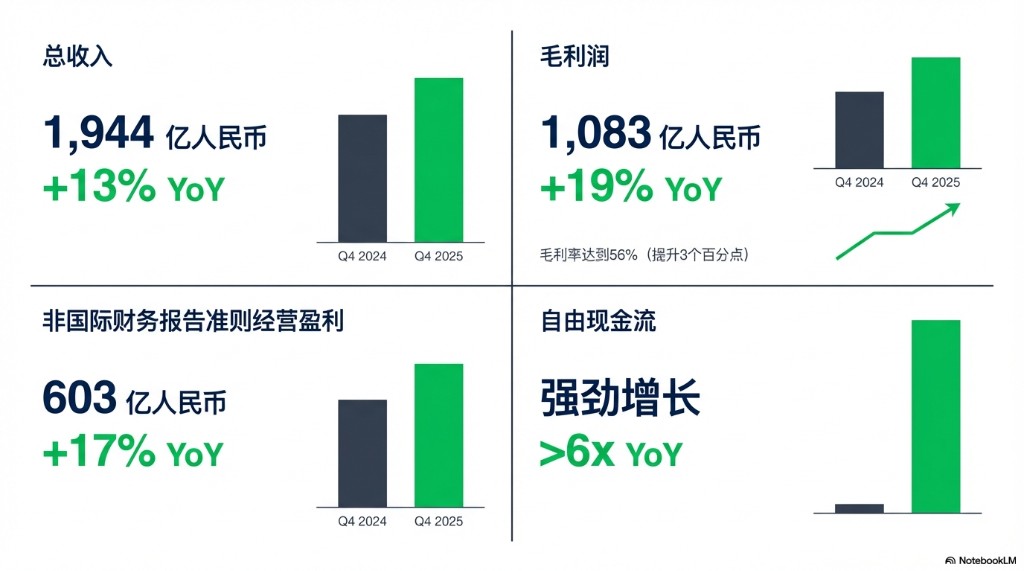
Pony Ma publicly discusses "shrimp farming" for the first time: can be combined with WeChat's decentralized concept
Notably, before the earnings call, Pony Ma publicly shared his thoughts on "shrimp farming" for the first time during the performance communication session. He believes that "lobster" applications can bring AI into various rich scenarios, rather than being entirely concentrated in ChatBot as in the past. This can better leverage Tencent's resources, allowing various fronts to work together, and also provides inspiration for the WeChat agent currently under development.
Pony Ma mentioned that mini-programs within the WeChat ecosystem have always been decentralized, and similar concepts can be integrated into future "lobster" applications. Service providers are particularly afraid of being short-circuited or channeled, so Tencent must consider this demand when designing its ecosystem. He stated that in the future, Tencent's "shrimp farming" will need to combine centralization and decentralization. Agent partners hope to have traffic and entry points but do not want to be merely called upon. "This is a longer-term consideration, and everyone may need to be a bit patient; this cannot be rushed out."
Core business demonstrates strong resilience in the AI era
Tencent President Liu Chiping pointed out during the earnings call that the company's core business exhibits strong resilience in the face of AI transformation.
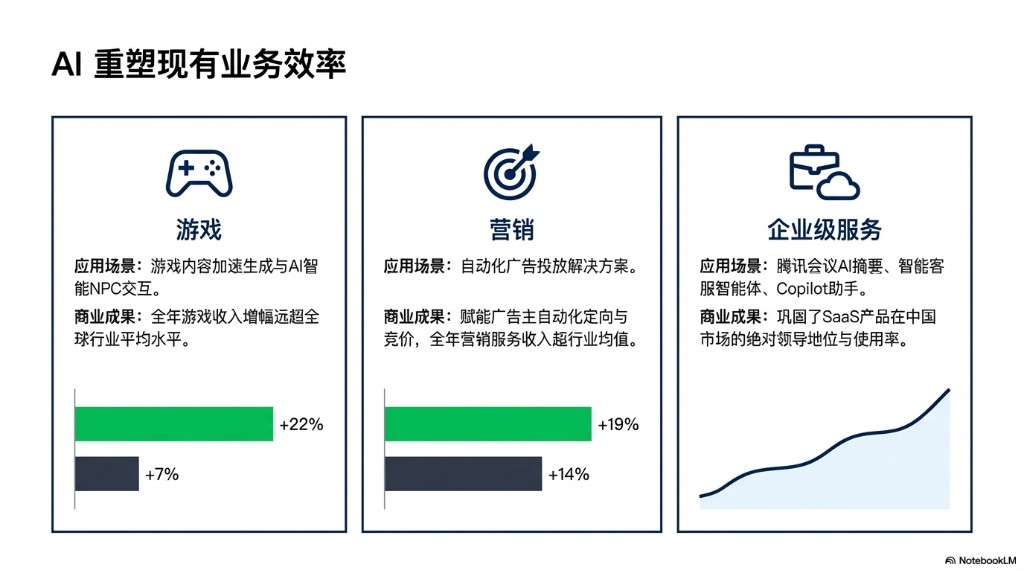
Firstly, communication and social businesses like WeChat and QQ are fundamentally about connecting people. This deep network effect and the private nature of user data create natural barriers that are difficult for AI to easily disrupt At the same time, the gaming business is also solidly rooted, especially in multiplayer online competitive games, whose vitality is deeply embedded in real-time interactions among players and emotional investments in strong IPs. AI technology has not weakened this aspect; instead, it has become a tool to help create more high-quality and innovative content, which has driven Tencent Games to achieve a 22% year-on-year revenue growth in 2025, significantly surpassing the global gaming industry's growth rate of 7%.
In addition, in the marketing services sector, Tencent has greatly enhanced the precision of ad placements and creative efficiency by deploying long-sequence AI models and generative AI tools. The "AI Advertising Solution" it launched helps advertisers achieve automated bidding and placements, thereby improving return on investment and attracting more budget allocation, ultimately driving a 19% year-on-year growth in marketing services revenue in 2025, far exceeding the average growth rate of 14% in the Chinese industry.
Deepening AI Strategy: From Empowerment to Native, Focusing on "Yuanbao" and Intelligent Agents
During the conference call, the company's Chief Strategy Officer elaborated on Tencent's AI evolution path. He stated that after completing the iterative optimization of foundational models (such as the Hunyuan large model), Tencent's AI strategy is transitioning from "empowering existing businesses" to a critical stage of "creating entirely new applications."
First, at the foundational model level, the internally tested "Hunyuan 3.0" model has made significant leaps in capability compared to its predecessors, providing stronger intelligent support for upper-level applications. At the application level, the Chief Strategy Officer specifically discussed the positioning and progress of the AI chat application "Yuanbao." He emphasized that the AI chat application is not meant to compete with all applications; its core benchmark is actually search engines.
Currently, "Yuanbao" has 18 million daily active users, and Tencent is rapidly iterating the product to enhance user experience and stickiness through various means, including integrating search functions, optimizing voice interaction experiences, supporting multi-model calls, and exploring group chat scenarios. He expects that with the deep integration of the "Hunyuan" model capabilities, the usage and user engagement of "Yuanbao" will further increase in the coming months.
Meanwhile, Tencent views AI intelligent agents as the next major opportunity, as these agents can autonomously execute complex tasks, thereby effectively enhancing productivity for individuals and enterprises. Currently, Tencent has launched a series of AI tools, including Word Research, QQ Collaboration, and Tencent Cloud Lighthouse, and plans to enable users to conveniently use them through a skills store. Looking ahead, the Hunyuan model team and application team will collaborate more closely to provide users with unique and powerful intelligent agent capabilities.
Tencent Cloud: Strategic Transformation Yielding Results, Capital Investment Intensified
Tencent Cloud has become the focal case of this communication meeting. Company executives pointed out that after prioritizing revenue growth and benchmarking industry participants in previous years, Tencent proactively made structural adjustments to its cloud business around 2022, shifting its focus to high-quality services rather than chasing high revenue and customized projects. After several quarters of effort, this transformation has begun to show results Currently, benefiting from the demand for GPU computing power, incremental opportunities brought by AI, and the expansion of overseas markets, Tencent Cloud is entering an accelerated growth trajectory. The company stated that it has ordered a significantly increased GPU capacity, laying a solid foundation to meet future demand. Tencent views its cloud business as another typical "Tencent-style investment case."
Responding to AI Investment Returns: Learning from Cloud Business Experience and Accepting Time Lag
In response to analysts' questions about the return on AI investments and profit margins in 2026, the management provided an honest and cautious reply. Chief Financial Officer Luo Shuo Han stated that it is possible for revenue growth to outpace profit growth, but the company is satisfied with this outcome as it indicates the expansion of new products and positioning in the face of significant opportunities.
Chief Strategy Officer James Mitchell further elaborated on the investment logic: applying AI in existing businesses has already yielded good returns, and even after excluding investments in new AI products, the operational leverage of existing businesses remains significant. Regarding investments in new products, he pointed out that the current consumer subscription and enterprise payment models for coding agents are still immature, thus requiring upfront investment. However, he believes that over time, these new products will generate revenue and bring substantial returns, with Tencent Cloud's case serving as proof—transitioning from initial losses to eventual profitability, there is a time lag between investment and return.
In terms of computing resource allocation, Tencent has actively secured more computing power and will meet demand through various means such as leasing, purchasing high-end GPUs, and domestic chips. Computing power will prioritize the training and inference of the Hunyuan model and new products. In terms of talent, the company attracts top AI talent through compensation incentives and team culture, and retains them by leveraging Tencent's unique use case scenarios.
Hunyuan Strategic Positioning: Winning through Scenarios and Ecosystems in a Multi-Model Ecosystem
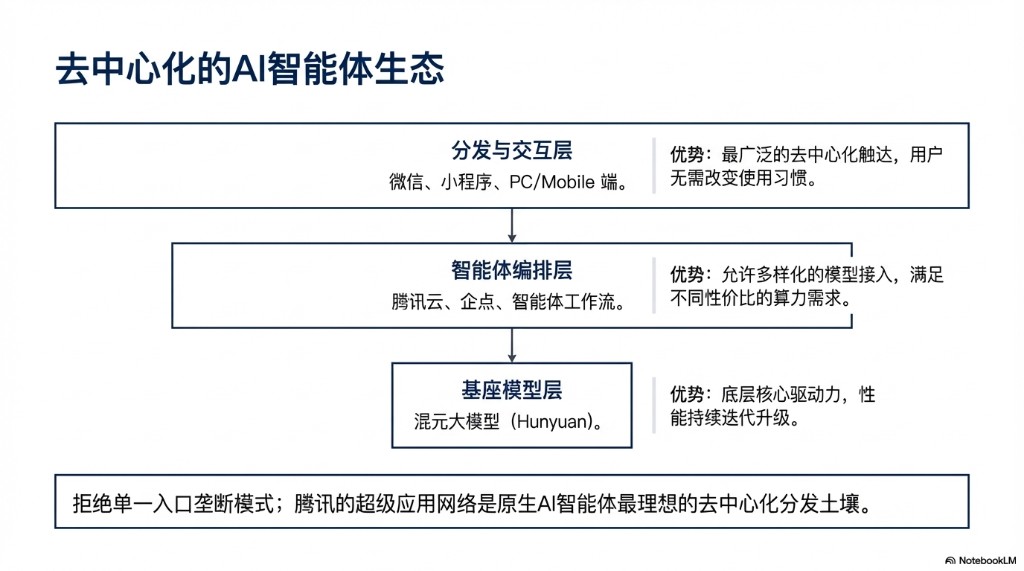
In response to the sharp question of "how to avoid diluting the value of its foundational model by launching Hunyuan alongside other large models," Tencent's management provided profound insights into the AI ecosystem. They believe that the future AI world will not be a monopolistic landscape dominated by one player, but rather a diversified world with multiple models coexisting and specialized divisions of labor. Just as the evolution from PC internet to mobile internet has spawned countless applications, the AI era will also move towards distribution and decentralization. Different models will excel in various fields such as code, long text, and multimodal applications.
In this landscape, Tencent's core advantage lies not in monopolizing the model layer but in its ability to reach users across PC, mobile, and cloud platforms, as well as its deep coverage in diverse scenarios such as social, gaming, and content. The Hunyuan model will closely integrate with decentralized ecosystems like mini-programs, enabling agents to autonomously execute complex tasks, thereby providing unique value to users. Tencent believes that with its strong ecosystem and application scenarios, Hunyuan can become one of the excellent models for users and enterprises to choose based on cost-effectiveness and performance needs.
Opportunities at the AI Application Layer: Agents Will Foster a New Decentralized Ecosystem
When discussing the most competitive segments of the AI value chain, management expressed strong optimism about the application layer, particularly regarding agents. They believe that while competition among large models (AGI) is fierce currently, future opportunities will be more evident at the application level The emergence of intelligent agent capabilities will give rise to a decentralized new ecosystem. In this ecosystem, every mini-program and every application can gain the ability for self-evolution through intelligent agents.
Tencent believes it has a natural advantage in this field: it has centralized super apps like WeChat as traffic entry points and operates China's most active decentralized ecosystem—the mini-program platform. With the injection of intelligent agent capabilities, mini-program developers will be able to provide users with smarter and more proactive services, which will be one of Tencent's most important value positions in future AI competition.
On AI Chip Strategy: Focus on Model Training Rather Than Self-Developed Chips
In response to the question of whether self-developed chips will be prioritized, Tencent clearly stated that this is not the most critical focus at the moment. The management differentiated the strategic significance of training chips versus inference chips: the design and manufacturing difficulty of training chips is extremely high, and the company needs to acquire the most advanced training chips to train optimal models in the most flexible way. The launch of Hunyuan 3.0 is just the starting point, and future iterations of model training will be faster.
At the inference level, the main consideration is cost. Currently, the Chinese market has various supply options for inference chips, which is in stark contrast to the monopoly of only one or two suppliers in the training chip field. The inference chip market is highly competitive, and supplier profit margins are far lower than those of training chips. Tencent's current priority is to use the best chips to train models, unleash product development and connectivity capabilities, and design the most attractive products for users. Only after achieving these goals will it consider how to reduce inference costs.
Below is the full transcript of the conference call (translated with AI assistance):
Host:
Good evening, everyone. Welcome to Tencent's Q4 2025 earnings announcement webinar. I am Wendy Huang from the investor relations team. At this moment, all participants are in listen-only mode. After the management presentation, there will be a Q&A session. For participants joining by phone, if you have a question, please press 5 to raise your hand. If you are joining via Zoom Meeting or VooV Meeting, please click the raise hand button in the lower left corner. Please note that today's webinar is being recorded. Before we begin the presentation, we would like to remind you that this meeting contains forward-looking statements, which are subject to various risks and uncertainties and may not be realized in the future for various reasons. Information regarding general market conditions is sourced from various channels. This statement also contains some unaudited non-International Financial Reporting Standards financial metrics, which should be considered as a supplement to, and not a substitute for, financial performance metrics prepared in accordance with International Financial Reporting Standards. For a detailed discussion of risk factors and non-International Financial Reporting Standards metrics, please refer to our financial report.
Now, please allow me to introduce the management team attending tonight's webinar. Our Chairman and CEO, Mr. Ma Huateng, will first provide a brief overview. President Mr. Liu Chiping will conduct a strategic review, Chief Strategy Officer Mr. James Mitchell will provide a business review, and Chief Financial Officer Mr. Luo Shuhan will summarize the financial discussion Next, we will open the floor for questions. Now, let's welcome Mr. Ma Huateng.
Ma Huateng:
Thank you, Wendy. Good evening, everyone. Thank you all for joining us. In 2025, we achieved quality growth in our evergreen products and services. Thanks to the breakthrough success of "Delta Force," our gaming portfolio has been further strengthened, which also solidified our evergreen games. AI has provided meaningful gains in content development, user engagement, and marketing efficiency. Due to the upgrade of recommendation algorithms and the content ecosystem..., our advertising accounts have seen total transparency growth of over 20%. Our marketing services have rapidly grown in the industry, benefiting from our upgraded AI advertising model and the newly launched automated marketing solution "AI Marketing Express." The fintech business has achieved healthy revenue growth by deepening licensing cooperation with financial institutions and maintaining prudent risk management. In terms of cloud business, we achieved scalable profitability due to strong demand from enterprises for our industry-leading tax products, supply chain optimization, and international business. Our international gaming business has surpassed $10 billion in annual revenue for the first time, thanks to the continued growth of evergreen games and the rapid expansion of popular games. Our cloud business has seen revenue growth in the professional market as we expanded collaborations with key clients and promoted broader adoption of our flash products. The strong operational leverage and robust cash flow generated by our core business have enabled us to increase investments in AI throughout the year. We have upgraded our team, recruited top AI talent, and systematically built processes to enhance the intelligence of foundational models. We have begun exploring the capabilities of new AI services, including Yuanbao, WeChat, and core products.
Thank you. Next, I will hand it over to Martin to share more.
Liu Chiping:
Thank you, Pony. Good evening, everyone. Good morning. In the next segment, I will share how we view AI as a transformative force, starting with the resilience of our existing business in the AI era, followed by how we deploy AI within our existing business to strengthen them, and then discussing the new products and opportunities brought by AI, as well as how we invest to seize these opportunities.
First, I want to talk about the strong resilience of our core business in the AI era. It is well known that AI will impact every aspect of the technology industry, but we believe that certain products and services are inherently more resilient. The characteristics of this resilience include: strong network effects generated by interactions among consumers, between consumers and content creators, and between consumers and businesses (ranked by strength); deep supply chain innovations that connect the digital world with the physical world; strong regulatory and licensing requirements; economies of scale; relatively low rates compared to the value provided or switching costs; and... essentially... using these criteria to evaluate our main existing businesses, supported by user trends, the conclusion is that each of them possesses a high degree of inherent resilience.
In particular, our communication services, including WeChat. People use them to connect and interact with family, friends, colleagues, and business partners. We believe that this demand for human-machine interaction, along with the network effects and the closed nature of the data generated by these interactions, will give communication services strong stickiness in the face of competitive non-AI services, and that the future demand for AI-based services will also remain resilient
Secondly, our gaming business is also very resilient. Our multiplayer games, especially PVP games, enjoy network effects. Similar to sports, they are essentially team-based, where players play or compete against other players. Just as people prefer to participate in or watch their supported teams compete in sports rather than watching AI sports competitions, players still enjoy the interactive experience that our games provide with others. Our games have also cultivated strong IPs, which will allow more games to be produced more quickly. The gaming industry sees 200,000 new mobile games and 18,000 new games launched each year. The limiting factor is that new games need to be of high quality and more innovative than the best games. As natural beneficiaries of cutting-edge technology, the proliferation of AI will naturally benefit the gaming industry. Moreover, when people have more leisure time...
Our fintech services are also resilient because they rely on a limited number of hard-to-obtain and retain licenses, and have been built over decades of investment... connecting merchants with over 1 billion consumers, which in itself brings network effects. Our mobile payment rates are already among the lowest in the world, and we believe this makes it very uneconomical to compete with us on price.
Liu Chiping:
Now, I would like to demonstrate how we leverage AI to strengthen our core business and stay at the forefront of the industry. When generative AI first emerged, we prioritized using it to enhance our core business. If we can strengthen them, we will be in a better position to invest in new potential areas. We believe that in every core business area, we are now at the forefront of our respective industries in China, and even globally, leading in the utilization of AI, as evidenced by the preliminary positive results seen in user engagement and revenue trends in gaming. In the gaming sector, we are deploying generative AI to accelerate in-game content production, enabling us to produce more content in our large games. We are leveraging generative AI to facilitate new user acquisition and existing user retention through targeted advertising, generating daily highlights, and matching teammates in PVP games. You can use non-player characters in PVE games. These initiatives are one of the reasons why our evergreen games are becoming increasingly evergreen, and one of the reasons we expect a 22% growth in gaming revenue by 2025, outperforming the global gaming industry growth rate of 7%.
In marketing services, we have expanded our advertising foundational model to provide more relevant ads to more targeted users, while improving conversion rates for advertisers and providing a better user experience. At the same time, we offer generative AI-driven creative solutions that enable advertisers to create more ads that are more relevant and efficient for smaller user groups. We launched the automated marketing solution "A+", where advertisers can automate targeting, bidding, and placement, thereby improving their marketing ROI and increasing their budget allocation to us. These initiatives greatly contributed to Tencent's marketing services revenue growth of 19% by 2025, exceeding the overall growth of China's advertising market at 14%
For the video accounts, a long-sequence AI model has been deployed, which captures more user signals to enhance content recommendations, driving user growth, engagement, and content distribution. By 2025, the total user duration of video accounts has increased by over 20%, and in terms of daily active users, video accounts are now the second-largest short video service in China. For digital content, we utilize AI in content production to improve production efficiency and provide visually engaging special effects. AI also helps achieve smarter content regulation in content distribution, such as in news videos.
We are using AI in enterprise software to provide features such as AI assistants that can record and summarize ongoing meetings and generate intelligent replies based on customer service history. Our enterprise software products are recognized as market leaders in China in their respective categories, both in terms of usage and revenue. For fintech, we use lightweight AI models in credit underwriting and consulting, which helps us maintain a delinquency rate that is better than the industry average.
Now that our core business has benefited from the integration of AI both operationally and financially, we believe we are in a favorable position to accelerate the development of new AI products, with foundational models as one of our priorities. At the foundational model level, we see a tremendous opportunity to combine powerful models with core use cases such as chatbots, coding, multimodal, and agent applications. While we are not pioneers in large language models, we have reorganized our team, improved data quality, and rebuilt our AI infrastructure for pre-training and reinforcement learning, allowing us to iterate smarter models at a faster pace. Hongyuan 3.0 is currently undergoing internal testing and represents a capability leap compared to Hongyuan 2.5, just as 2.5 improved over 1.0. Multimodal capabilities are also easily accessible. Text and images are early leading categories and will increasingly benefit from leveraging our proprietary data and rich use cases.
Some observers in China focus solely on chatbots as the only means of engaging users, and we believe this idea is overly simplistic. AI can assist people in various ways, going beyond information provision and... We believe AI chat applications primarily compete with search applications rather than all other applications.
For our own AI chat application Yuanbao, we focus on finding product-market fit and use cases that can drive traffic. We are rapidly iterating Yuanbao by enhancing its user experience through better search integration, improved voice recognition, more accessible multimodal capabilities, and exploring group chats. We believe that as we deploy Hongyuan 3.0 to Yuanbao in the coming months, it will increase the app's usage and user retention. Once Hongyuan 3.0 is deployed, we believe the core user experience will be further enhanced.
We are building agents that can autonomously understand and act on behalf of users. The excitement surrounding... indicates that people recognize AI can unlock computing capabilities to improve their daily lives, but it also highlights the risks of unleashing unsupervised AI. We reward AI agents at Tencent... to provide AI productivity that benefits both the public and early adopters, which will promote ecosystem activities and naturally generate... Currently, the agents are driven by various foundational models, and we expect users at the application level to continue to have access to a range of models However, the performance, including Hunyuan, enables us to offer new, unique, and intelligent capabilities. In the future, the Hunyuan team and the ... team will work increasingly closely together.
Speaking of ..., we have launched a series of productivity-enhancing AI tools, including Work Treasure, QQ..., and Tencent Cloud Lighthouse, and will provide downloadable skills from our skills center for users to easily utilize these tools. The cloud ... is upgrading AI from thinking to action and continuous task execution. Users can control this new generation of ... command line interface through their existing communication applications. This is an effective way for users to interact with digital agents in a format and place they are already accustomed to, such as in China ... and QQ.
The products I described above require substantial and continuously increasing investment, and we believe these investments will yield significant returns. In the fourth quarter of 2025, our two largest new AI products (Hunyuan and Yuanbao) will have expenditures of approximately 1 billion RMB, totaling 18 billion RMB for the year. These figures are solely for Hunyuan and Yuanbao, excluding initiatives that support our existing products and services, as well as costs incurred from providing services to external customers through Tencent Cloud. We expect that by 2026, investments in Hunyuan, Yuanbao, and other new AI products will more than double, and we intend to fund these investments with the profits from core business growth.
In the spirit of this transformation, we are separately listing investments in new AI products, as we view these strategic investments conceptually similar to investments in joint ventures or capital expenditures. These are upfront investments necessary to build the foundation required to unlock new value, rather than ongoing operating expenses. Therefore, we believe the impact of these investments should be viewed separately from the profits generated by existing businesses. Over time, I am confident that the monetization of these new AI products will closely follow user adoption.
Finally, I would like to use Tencent Cloud as a case study to illustrate how we have developed our services into market leaders with economic returns over time. This will be similar to gaming, payments, and long videos. We expect our new AI products to follow suit. Tencent Cloud believed from the beginning that, as Tencent itself is the largest single end-user of a range of technological infrastructure in China, it had scale from the outset and could provide differentiated services derived from Tencent's unique insights, ecosystem, and capabilities. For example, we believe we are the first Chinese cloud service provider to fully recognize the capabilities of AMD's recent generations of CPUs, becoming its largest partner in China, and our cloud video streaming service is an industry leader in streaming quality.
For a period, Tencent Cloud was misled by other industry participants to prioritize revenue growth. In 2022, we undertook a major restructuring of Tencent Cloud, focusing on high-quality services rather than chasing high revenue but low-value activities, such as resale and customization projects. This shift came at the cost of revenue growth over several quarters, but it enabled Tencent Cloud to achieve operational profit breakeven in 2024, after facing significant losses in previous years. During 2025, despite facing revenue headwinds due to our prioritization of internal demand, which limited GPU availability for external customers, Tencent Cloud still achieved significant improvements in revenue growth and profitability, realizing an operating adjusted profit of 5 billion RMB
In recent months, we have seen a better pricing environment, especially for memory and CPUs, coupled with strong AI demand and overseas expansion, allowing Tencent Cloud to grow its revenue at a faster pace. As we enter this year, we have ordered a significantly higher number of computing resources, which should also promote revenue growth. Overall, we believe Tencent Cloud is becoming another example of how Tencent competes at its own pace and in its own way, and how our incubation investment cycle operates. We believe that the initial losses of Tencent Cloud are necessary fixed cash investments to incubate a successful new business, but will ultimately yield good economic returns. We think the initial investment approach for new AI products should be the same.
Now, let's hear from James.
James Mitchell:
Thank you, Martin.
In the fourth quarter of 2025, our total revenue grew by 13% year-on-year. The revenue breakdown by business segment is as follows: value-added services accounted for 47% (with social networks at 16%, domestic market games at 20%, and international market games at 11%), marketing services accounted for 21%, and fintech and enterprise services accounted for 31%. Our gross profit grew by 19% year-on-year, reaching RMB 108 billion. The year-on-year gross profit growth for each segment was: value-added services grew by 21%, marketing services grew by 22%, and fintech and enterprise services grew by 17%.
Back to the business segments:
Value-added services revenue was RMB 90 billion, a year-on-year increase of 14%. Among them, social network revenue grew by 3% year-on-year to RMB 31 billion, mainly driven by increased revenue from video account live streaming and music subscriptions. Music subscription revenue grew by 13% year-on-year, benefiting from an increase in paid users. Long video subscription revenue grew by 1% year-on-year, with a slight increase in video subscription users, benefiting from popular dramas, variety shows, and the animation "Full-Time Expert." In the fourth quarter, these works ranked first in their respective categories in video views across all video platforms in China.
Domestic market game revenue grew by 15% year-on-year. "Delta Force" continued to rank among the top three in the industry this quarter, and in February 2026, the game peaked at over 50 million daily active users, with total duration... reaching a new high. The "..." AI coding improved development efficiency and deployed AI-driven partners to enhance user experience, with PC revenue growing by over 30% year-on-year, setting a new average daily active user high this quarter, benefiting from... skins, limited-time events, and esports competitions. "Valorant Mobile" was the most successful new mobile game in the industry in 2025 based on total revenue, offering a high-quality shooting experience and a unique art style that attracts young players. The game reached a new high in total revenue in February as we launched... user statistics. The "..." launched in January, a multi-platform FPS game based on the Unreal Engine, has attracted millions of daily active users.
International market game revenue grew by 33% year-on-year, primarily driven by Supercell. "Brawl Stars" was the third largest mobile game in the industry by daily active users in the fourth quarter, with its average daily active users growing more than threefold year-on-year, reaching an all-time high. The game held a tenth-anniversary event in March "……" won the Player's Voice Award in 2025. In the fourth quarter, the game saw rapid year-on-year growth in total revenue and daily active users driven by the new storyline of …… . "Warframe" released a major update, adding new game modes and new Warframes, with its average daily active users and total revenue reaching an all-time high in December 2025.
Marketing services revenue grew by 17% year-on-year. Growth drivers included optimized advertising targeting and expanded …… marketing. As we entered 2026, we deepened our cooperation with e-commerce platforms to promote their merchants to advertise with us, and increased the inventory of incentivized video ads and video accounts, which helped achieve faster growth in marketing services revenue compared to the fourth quarter of last year.
- On the product side, the total user duration of video accounts grew through upgraded content recommendation algorithms, leading to faster growth in ad impressions, although our loading rate remains lower than peers. Higher conversion rates prompted many small store merchants to increase their marketing spending. Users are increasingly interacting with mini-programs, mini-games, and short dramas, attracting more marketing spending from mini-games and …… information streams. Enhanced search functionality drove an increase in commercial query volume, and search pricing also improved.
Revenue from fintech and enterprise services was RMB 61 billion, a year-on-year increase of 8%. Fintech service revenue achieved single-digit percentage growth, driven by wealth management and commercial payment services, with gross margins growing faster. The transaction volume of commercial payments maintained positive growth supported by an increase in transaction counts, with the decline in average transaction value narrowing. Wealth management was the second-largest contributor to fintech revenue, with average user assets …… . In the fourth quarter, cloud service revenue accelerated year-on-year growth, driven by increased enterprise demand and a better pricing environment, as well as tight supply of memory and CPUs. Revenue from cloud media services grew significantly, as short video platforms and video generation services increasingly used our media processing solutions for streaming video and audio processing, as well as playback to devices after cloud processing, reflecting our industry-leading streaming technology and competitive pricing.
Now, let's have John speak.
Luo Shuo Han:
Thank you, James. Hello everyone. In the fourth quarter of 2025, our total revenue was RMB 194.4 billion, a year-on-year increase of 13%. Gross profit was RMB 108.3 billion, a year-on-year increase of 19%. …… Operating profit for the fourth quarter was RMB 60.3 billion, a year-on-year increase of 17%. Interest income was RMB 4.8 billion, a year-on-year increase of 0.2%, driven by a growing cash reserve. Financial costs were RMB XXX billion, mainly due to …… exchange losses …… . Share of profits from associates and joint ventures was RMB XX billion, higher than RMB 7.7 billion in the same period last year, mainly due to improved performance of domestic associates driven by operational efficiency and revenue growth. Income tax expense increased by 7% year-on-year to RMB 12.5 billion. …… due to our reduction in stock buybacks.
The overall gross margin for the fourth quarter was 56%, an increase of 4 percentage points year-on-year, driven by strong growth in high-margin revenue sources (especially video accounts and advertising). The gross margin for marketing services was 60%, an increase of 2 percentage points year-on-year, driven by strong growth in high-margin revenue streams (especially video accounts and advertising) The gross margin for fintech and enterprise services is 51%, an increase of 4 percentage points year-on-year, benefiting from scale growth, improved revenue structure, operational leverage, and enhanced operational efficiency.
Total operating expenses increased by 0.6% year-on-year, as we strengthened marketing efforts to support new applications and games. General and administrative expenses rose by 20% year-on-year to RMB 23.8 billion, mainly due to increased employee costs (including higher depreciation related to AI investments) and increased depreciation expenses. Excluding stock-based compensation expenses in general and administrative expenses, it increased by 8% year-on-year to RMB 12.5 billion, primarily due to an increase in the number of employees. By the end of the year, we had approximately 116,000 employees, a year-on-year increase of 5% and a quarter-on-quarter increase of 1%, reflecting the increased staffing to strengthen AI and technology platforms.
In the full year of 2025, we repurchased 153 million shares at a total cost of HKD 80 billion, which reduced the weighted average number of shares used to calculate earnings per share for 2025 by 2%. In the future, if we see high-return opportunities, considering our certainty, we may lower the stock repurchase amount for 2026 compared to 2025 to fund AI investments while increasing dividends. Subject to shareholder approval at the upcoming annual general meeting, we propose to distribute an annual dividend of HKD 5.3 per share, an increase of 18% year-on-year. This dividend will be distributed on June 1, 2026. Thank you.
Host:
Thank you, John. We will now begin the Q&A session. Please adhere to the rule of one question per analyst at a time. If time permits, follow-up questions can be asked.
First question: Citigroup - Alicia Yap
Alicia Yap - Citigroup:
Good evening, management, thank you for taking my questions. My question is about investment versus profit. In your prepared remarks, you mentioned that the profit growth from existing businesses is sufficient to cover incremental AI investments, and we need to view these long-term investments separately. However, as AI investments continue to increase, how should we view the profit margins for 2026 or the gap between revenue and profit growth? My second question is also about AI. Given the ongoing constraints in AI computing power and talent, how do we strategically prioritize? As we have emphasized before, prioritizing internal AI deployment. However, in light of recent market developments, how does management view our resource allocation priorities? What key performance indicators are we monitoring? Is it the development of advanced large language models, user engagement, token growth, or enterprise solutions? Thank you.
James Mitchell:
…I will answer your first question, and Martin can add. Our opening remarks implied that it is possible for revenue growth to outpace profit growth due to the phased increase in new product investments. If this does happen, we would be very pleased with that outcome, as we can see that these new products represent an opportunity for us to expand operations in a huge market, and we can also see user … stickiness with these products. … This is a very good option
Regarding your second question about resource constraints. In terms of talent and GPUs, we have been very proactive in recruiting outstanding talent globally and in China to address the talent challenge. For the Hunyuan team, we will continue to strengthen it. We actually feel that we have built a strong AI talent team. We not only incentivize through compensation but also create the right culture for the team to thrive in their roles... and ensure good interaction with other departments at Tencent. Through the best team leaders and influence in China, the top talents have joined our team. We provide ample computing resources for the team and create use cases with Tencent's characteristics and uniqueness for the products they develop. So in terms of talent, I believe we are transitioning from a scarcity situation we faced in the past to a more satisfactory team configuration now, and of course, we will continue to recruit selectively.
In terms of computing power constraints, we have been very proactive in acquiring more computing power, which will gradually and accelerate to be in place this year, especially in the second half. This additional computing power comes from leasing capabilities, from our purchase of higher-end imported GPUs (which are now available again), and also from our purchase of a considerable number of domestically designed GPUs. In prioritizing the use of this computing power for different use cases, the current focus is on Hunyuan and broader new products. ... The nature of these products is essentially distributed; they can obtain computing power from local devices, multi-cloud, and Tencent Cloud, but this has some issues regarding the sources of computing power... So, we are concentrating computing resources on the core foundational model of Hunyuan and new AI products.
The host reminds each analyst to ask only one question.
Second question: Goldman Sachs - Robert Hall
Robert Hall - Goldman Sachs:
Thank you to the management for taking my question. I would like to ask about... the potential of the agent, and the recently launched global... and how to leverage this agent opportunity, and what plans there are for differentiation. Thank you.
Liu Chuangping:
I think Claw is a very exciting concept. It actually proposes a decentralized model or mechanism regarding how AI operates in the world. It's somewhat like the evolution of the internet. When the internet first started, there seemed to be an entry point (browser) and a distribution point (search engine). But over time, different services emerged. When the mobile internet came, a large number of applications suddenly emerged, including fully native, mobile-centric applications, as well as applications that migrated from the PC internet. We feel that the way Claw operates is similar. For a while, it seemed that everyone was vying to become the sole entry point and monopolist of AI agents. People said that if a general artificial intelligence model emerged, it would dominate everything. But that is not the case. Now there are multiple models that have become very powerful, each specializing in different areas: chat, coding, multimodal. There are also excellent open-source models, as well as many other models. Once upon a time, in the To C world, it seemed that traffic would concentrate on a single entry point. But now with Claw, we see a completely decentralized pattern opening up, where many companies can have their own Claw, which can utilize various different models and be supported by cloud infrastructure Each Claw must identify its unique value proposition to win over users. Claw not only leverages the cloud and unique models but also utilizes available tools and ecosystems on devices. This transforms into a more exciting and decentralized world. There are many opportunities for us to build products that meet people's needs. Thus, with Claw, there is also Work Treasure. In the future, I believe many existing applications will attempt to launch their own Claw and intelligent capabilities. More in-depth models will emerge to win the favor of these Claws. This has turned into a more exciting, decentralized world open for participation by everyone. As I mentioned, we just need to establish professional capabilities at the model layer, product layer, and infrastructure layer. Each layer needs to have its unique value proposition to win usage.
The third question: Unspecified Analyst
Unspecified Analyst:
...Regarding the era of intelligent agents. How does management assess Tencent's value proposition in this new era of intelligent agents? Since we are combining mixed elements with other consumer-facing products, how do we prevent other models from diluting the value of our own foundational model? Thank you.
James Mitchell:
I believe that regarding Tencent's value proposition, or what we can bring to users, we possess some inherent qualities that are very suitable for the deployment of intelligent agents and Claw, which Martin has also mentioned. One of these qualities is that we are a company with capabilities spanning PC, mobile, and cloud, with capabilities across applications and the World Wide Web. Just as intelligent agent Claw can traverse devices and domains. This is especially true for a company that operates some centralized applications while also hosting an extremely decentralized yet vibrant ecosystem (especially the mini-program ecosystem). You can think of it this way: In previous years, the arrival of the mobile internet greatly enhanced the application experience, but these were more centralized experiences; whereas the World Wide Web experience is more decentralized. Now, with these intelligent capabilities and Claw, decentralized experiences like mini-programs have the opportunity to be empowered, allowing them to develop strong capabilities that they did not possess before. Therefore, we believe there is an inherent natural fit between our capabilities and interests and the deployment of these intelligent agents or Claw. This is also one of the reasons we see consumers and industries enthusiastically adopting our own intelligent agents and core services.
Regarding the other part of your question, how to prevent other large language models from diluting the value of our model. I may not fully understand your premise, but I don't think this will happen. If you use these Claw and enter them, you will have choices. Do you want a high-performance, high-price/token model, or a medium-performance, very low-price/token model? Or a model somewhere in between? This is one of the charms of Claw. Mixed elements are one of the models available for choice. We believe that with the current mixed team in place, their pace will accelerate, and mixed elements will improve. Therefore, consumers will naturally increase their use of mixed elements. But I don't think a monopoly situation will form. Successful Claw will continue to allow consumers and industries to make choices based on their price/performance preferences Different models will be at different positions on the price/performance curve. We hope to be one of them, but we do not intend to be the only one.
Fourth question: Unnamed analyst
Unnamed analyst:
Considering the proliferation of productivity-oriented AI agents in various enterprises (especially traditional industries), do you think this will accelerate the demand for world models (like the 3D models we possess)? Additionally, what is the management's assessment of... capabilities and future competitive advantages in physical AI? Thank you.
James Mitchell:
I think your point makes a lot of sense. There are already computer-aided design capabilities, and people naturally expect AI to complement and ultimately greatly enhance these capabilities. This is very important in industrial design and architecture, and is becoming increasingly important in video production. We believe that due to our extensive and in-depth 3D graphic assets within our video games, we are in a uniquely advantageous position to provide data to train models and thus offer these 3D tools. However, ultimately, this may just be a fairly large niche market. We are well-positioned to address this market, but I wouldn't say it's our biggest opportunity ahead. There are many larger and more direct opportunities in front of us.
Fifth question: Unnamed analyst
Unnamed analyst:
Thank you for taking my question. I have a question about the disruption of games and AI. We have already seen AI starting to impact the number of employees and the cost of game development. How do you think AI will affect game quality? As we see an increase in the number of games, do you think Tencent's publishing and operations will become more important in the future? Additionally, if AI lowers the barriers to development, will we see a meaningful increase in the supply of games? How will the average quality of games be affected? Thank you.
James Mitchell:
Thank you for your question. I don't know if anyone attended last week's Game Developers Conference. This is the premier event held annually for game developers. As you might expect, there were many talks about using AI in game creation. I have a few broad observations: First, the vast majority of these talks focused on how to use AI to update content in existing games, accelerate content creation, and improve in-game..., but for various reasons, there is currently no capability to fully create games from scratch using AI. Second, many of the most attended talks came from our Tencent Interactive Entertainment colleagues, who discussed how to deploy AI in games for graphics, gameplay, user companionship, etc. We believe we are at the forefront of the industry in this regard. Many developers attending the Game Developers Conference echoed this feedback.
Regarding the latter part of your question, will this lead to an oversupply of new games, thereby increasing the importance of publishing and operations? The unfortunate reality of the gaming industry is that it is always in a state of oversupply. As Martin mentioned, there are 200,000 new mobile games and 18,000 new games released on Steam every year. So, whether that number increases from 200,000 to 2 million, 2 billion, or 2 trillion, the incremental impact is diminishing. The key is to create, operate, and keep the best games evergreen. To do this, you need the best talent, supported by the most advanced technology Therefore, we believe that... the success factors for Tencent's development will continue to benefit the best developers in the industry.
Liu Chiping:
Basically, you might imply that this is unfavorable for the gaming industry. But I believe that gaming is actually one of the industries that benefits from AI. As AI becomes more prevalent, people will have more leisure time, and the demand side will significantly increase. The gaming industry is one of the few industries that will definitely benefit during the AI adoption phase. The second point is that new developers can access excellent game development tools, but similarly, well-organized and highly talented teams can also access these tools. ... I believe that when a tool becomes available, those who actually have resources, already have platforms and users can better leverage these tools to increase output and improve games. I think this is an advantage for players who have evergreen games and embrace technology extremely quickly and agilely. Finally, when a lot of innovation occurs, we often see that an idea emerges, initially imperfect, and then is iterated and refined repeatedly. This process is actually accelerated by the large number of users who see these innovations, allowing them to iterate faster and integrate these new experiences into existing games, essentially turning games into platforms. I believe this is a unique opportunity we will see in the future.
Sixth question: Bank of America - Unspecified Analyst
Unspecified Analyst - Bank of America:
... Thank you to the management for the opportunity to ask a question. I would like to follow up on the AI cloud business question. On one hand, we see very strong demand for AI computing, but on the other hand, due to rising costs of DRAM and HBM, server prices are also increasing. Can you help us understand what Tencent's pricing power and value capture philosophy are in such a dynamic environment? In other words, do you intend to fully pass on cost inflation to customers, or subsidize cost inflation to gain more market share, or pass on costs to gain more profits?
James Mitchell:
Thank you for your question. First of all, I want to say that there is clearly demand for computing, but not just for AI computing. When people use the intelligent agent tools we discussed, they create software, and this software needs to be executed. When it is executed, most of it is not executed by GPUs, but on CPUs. As it executes, it generates memory demand. So, the demand is not only increasing for GPUs, DRAM, and HBM, but also for CPUs, memory, conventional DRAM, SSDs, etc.; the demand is comprehensive.
Regarding the industry and how we as part of the industry will respond to pricing: For many years, the profit margins of cloud service providers in China have been very low. One reason is that if new entrants appear, or customers want to directly procure infrastructure, they can contact suppliers directly to order the CPUs or DRAM they want. But that is no longer the case. Supply has been booked months, several quarters, and in some cases even years in advance. Suppliers prioritize the largest and most stable customers, which are large-scale enterprises like us. Therefore, smaller cloud providers can no longer procure supplies directly; they need to seek out large-scale enterprises. And large-scale enterprises operate at low profit margins in the long term So when demand rebounds, our industry has little choice but to pass on higher prices. You have already seen Chinese cloud service providers announce some price increases in the past 24 hours.
Regarding how we capture value in such a dynamic environment, a general principle is that we seek to create more value through "enrichment." "Enrichment" means that at the very least, if you have computing resources, you can directly lease them out for a certain low price and low profit. A better way is to segment and virtualize them into tokens, which can command higher prices and profit margins for computing units. Ideally, you bundle them into platform as a service or software as a service, which allows you to achieve the best pricing and profit margins. This is the journey we have been on, and it is part of how Tencent Cloud has transformed from significant losses four years ago to quite considerable profits last year. We will continue to advance along this journey from bare metal to tokens, and then to platformization and softwareization.
Seventh question: Morgan Stanley - Analyst not specified
Analyst not specified - Morgan Stanley:
Good evening, thank you for the opportunity to ask a question. I have a question about the management's repeated mention of "we are not the pioneers" or "we are even the latecomers." In the U.S. AI sector, we have also observed that some latecomers, even with abundant computing resources, talent, and data, find it very difficult to catch up. How is management confident that we will not repeat the same mistakes and fall behind in foundational models and applications?
Liu Chiping:
That's a very good question. If you are only playing one game, then catching up in a single game is indeed very difficult. But if you view AI as many different games, there are always new opportunities and new frontiers being opened up, right? This is happening now. At first, everyone thought AI was just chatbots, then coding emerged, and then multimodal appeared. Just when everyone thought that was about it, suddenly Claw emerged, further decentralizing the entire landscape. So in the future, we believe there will be many different presentations of AI, from models to products to agents, and existing services will also vary... on mobile, PC... So the entire development world is still in a very early stage. Therefore, in a very short time, you can already see a lot of diversification, and there will be even more in the future. This is why having some foundational capabilities is important, right? We do have many foundational capabilities. At the application level, we have... a social ecosystem, present on both PC and mobile, which is our advantage. Cloud, payments, and all these elements can be packaged together to become new AI products. So this is not a single race, but a world of many, many races, and this is becoming increasingly evident. Therefore, there will be many opportunities for different participants to emerge and innovate from behind. So I believe that as we mobilize all product teams to start innovating with products, this is happening for us in a very exciting way
The eighth question: Unspecified company - William Park
William Park - BMP:
…Management, thank you for taking the questions. First, recent reports indicate that… in China… Apple has reduced its absolute commission rate by 5%. Tencent is one of the major beneficiaries. To what extent should we expect this fee reduction to translate into Tencent's profits? Or will it be shared in some way?
James Mitchell:
I’m happy to answer that question. The news reports are based on the objective reality that Apple has indeed issued a formal announcement, so it’s not an imagined hypothesis, but actual developments that have taken effect over the past few days. Regarding the transmission issue, there should be a good transmission. When we have game development partners and we are the publishers of those games (which is currently quite rare), in the vast majority of cases, the revenue sharing is based on total revenue rather than revenue after deducting commissions. So this will translate to us. As for the taxes you mentioned, if we are referring to paying a corporate income tax of around ten percent on incremental profits, I think it depends on the extent to which we reinvest those incremental profits into new products.
I think you mentioned the quantitative part of the announcement, that the commission is reduced from 30% to 25% or from 15% to 12%. But in fact, for us, the more important forward-looking aspect of Apple's announcement is that Apple has stated it will effectively provide developers in China with rates equivalent to the lower rates paid by developers in other parts of the world to the Apple Store. Therefore, our view is that as industry trends evolve, it is only a matter of time before the rates charged by app stores normalize across different regions globally. Apple has stated that as rates decline in different regions globally, the rates in China will also decline in sync. So we see this as a very positive first step, but it is just the first step, a positive start.
The last question: Unspecified analyst
Unspecified analyst - Bank of America:
Thank you for taking the question. My question is about AI chips. Some peers are prioritizing the development of in-house chip design capabilities. I’m curious about the priority of internal chip development at Tencent.
Liu Chiping:
Thank you for your question. I think at this stage, this is not our core focus. There are training chips and inference chips. For training chips, design and manufacturing are very, very difficult. We want to access the most advanced training chips in the most flexible way to serve the best models for training. Then there are inference chips. Inference is mainly about cost. At this stage, there are actually many different inference chip suppliers in China, which is different from the training field where there are basically only one or two companies that can achieve very, very high profits. In the inference field, the profit margins are much lower, and there are many more solutions and options. So I think for us, the key at this stage is to utilize the best training chips to train our models. Focusing on this alone is very valuable. When it comes to inference for our user products, at this stage, we are very focused on using the best chips to train our models. Hunyuan 3.0 will be much better than Hunyuan 3.0, and this is just a starting point I believe that over time, we will be able to iterate model training more quickly. I am very confident that if we focus on this, we will reach a state-of-the-art level at some point. I think this is the most important thing for us. The second most important thing is to truly unleash the potential of our product development capabilities, integration, and connectivity to design the most exciting products for users. I believe that only after these are done correctly will we think about how to reduce inference costs.
Host:
Thank you, Martin. We are now concluding this webinar. Thank you all for participating in our earnings meeting today. If you would like to view our press release and other sections, please visit our company website
