


The IEA proposed the largest release of oil reserves in history, global stock markets rebounded, and the stock markets in Japan and South Korea closed higher, with oil prices stabilizing below $90

The International Energy Agency (IEA) proposed the release of the largest-ever strategic oil reserves to address the energy price shock caused by the Middle East conflict, driving a rebound in global stock markets. The MSCI Asia-Pacific Index rose by 1.2%, with technology stocks increasing by 3.2%. Although the market's upward momentum has narrowed, JP Morgan's write-downs on certain loans have raised concerns about credit quality. Investors are focused on the upcoming U.S. inflation data. The Nikkei 225 Index closed up 1.4%, and the Korea Composite Stock Price Index rose by 1.4%
The International Energy Agency (IEA) plans to initiate the largest-ever release of strategic oil reserves, injecting a dose of confidence into the recently volatile global financial markets.
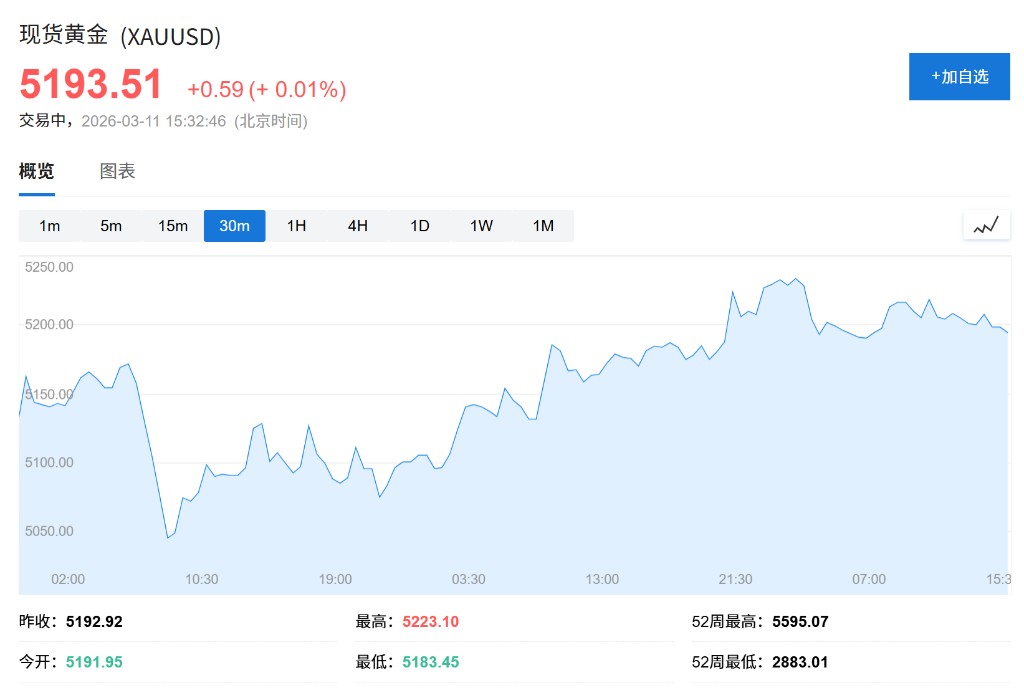
According to an article from Wall Street Watch, the IEA proposed the release of the largest-ever strategic oil reserves to address the energy price shocks triggered by conflicts in the Middle East. Boosted by this news, the MSCI Asia-Pacific Index rose 1.2%, with the technology sector gaining 3.2%, and Oracle's stock price surged 8% in after-hours trading. Meanwhile, the dollar fell for the fourth consecutive day, U.S. Treasury prices rose, and the 10-year yield slightly declined by one basis point to 4.14%, while gold continued its upward trend, trading around $5,200 per ounce.
However, the market's gains subsequently narrowed. According to the Financial Times, JP Morgan has informed private credit institutions that it has written down some loans and tightened lending, raising concerns about credit quality. European stock index futures dipped slightly, while U.S. stock index futures narrowed their gains to 0.2%.
Trump warned Iran against laying mines in the Strait of Hormuz, while U.S. Energy Secretary Chris Wright mistakenly issued and then deleted a message about the U.S. Navy escorting tankers through the strait, exacerbating market volatility. Investors are awaiting U.S. inflation data to be released later that evening for direction.
- S&P 500 futures rose 0.3%. Nasdaq 100 futures rose 0.2%.
- The Nikkei 225 index closed up 1.4%, at 55,025.37 points. The Tokyo Stock Exchange index closed up 0.9%, at 3,698.85 points. The Seoul Composite Index rose 1.4%, at 5,609.95 points.
- The yield on Japan's 10-year government bonds fell by 2.5 basis points to 2.155%.
- U.S. Treasury prices rose, with the 10-year yield slightly declining by one basis point to 4.14%.
- The U.S. dollar spot index fell by 0.2%.
- Gold traded around $5,200 per ounce.
- West Texas Intermediate crude rose 0.4% to $83.77 per barrel.
- Bitcoin fell 0.7% to $69,749.85.
Reserve Release News Boosts Market Sentiment
The news of the IEA's proposal to utilize strategic reserves has become the core driving force behind the market rebound. Khoon Goh, head of Asia research at ANZ Bank, stated, "The market remains vigilant regarding the situation in the Middle East, so any news about the release of strategic reserves—whether from the IEA, the U.S., or the G7—can provide some short-term relief for oil prices."
Brent crude oil further fell by 0.2% on Wednesday after recording its largest single-day drop in four years last Tuesday. Joshua Crabb, head of Asia-Pacific equities at Robeco Hong Kong, noted that the initial oil price shock seems to have been absorbed by the market, and the price benchmark scenario is trending lower, as there is "a significant political will to drive this situation."
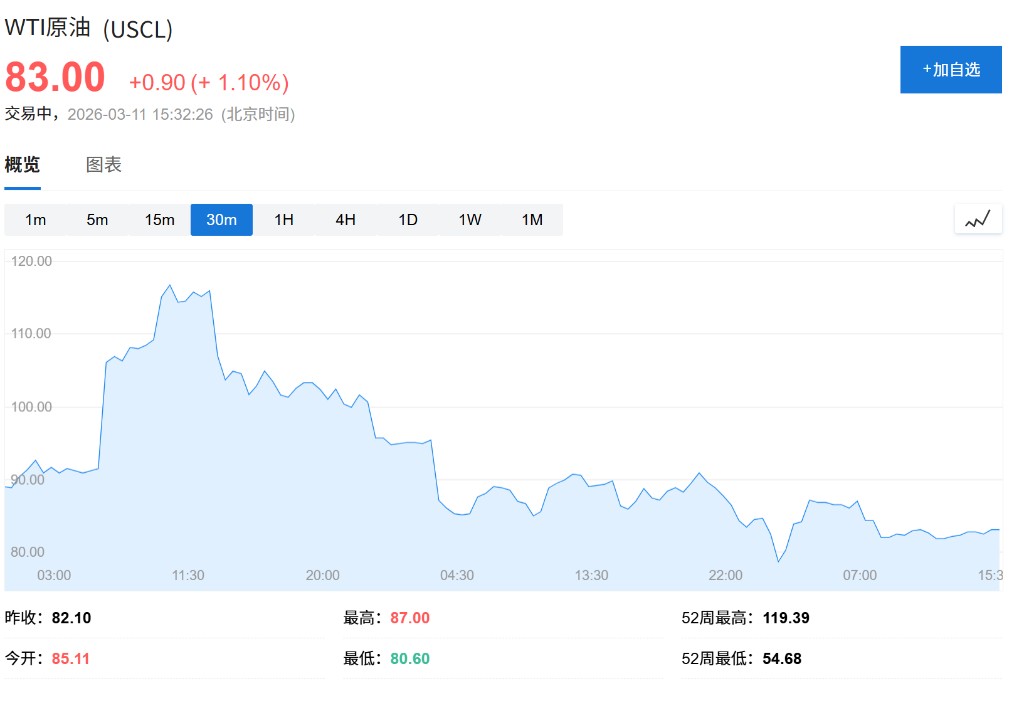 However, historical experience shows that the effects of reserve releases do not always meet expectations. The two reserve releases in 2022 initially pushed oil prices higher—markets interpreted them as a sign that the crisis was more severe than anticipated—before gradually exerting downward pressure on prices.
Geopolitical Risks Persist, Market Volatility Hard to Stabilize
The conflict in the Middle East has entered its second week, with no signs of easing. Trump warned Iran not to lay mines in the Strait of Hormuz, following media reports that Iran was preparing or had already begun this action. The Strait of Hormuz typically carries about one-fifth of the world's oil flow, and its actual blockade has continued to push up Brent crude oil prices since the beginning of the year, forcing oil-producing countries to cut production.
Last Tuesday's market turmoil was partly triggered by a false report: U.S. Energy Secretary Chris Wright mistakenly sent out a message about U.S. Navy escorting tankers through the Strait of Hormuz, which he later deleted, and the White House subsequently confirmed that no such action had taken place. This incident further pressured an already fragile market sentiment.
Bloomberg strategist and head of the MLIV team Garfield Reynolds pointed out, "Unless the cargo volume through the Strait of Hormuz quickly rebounds to pre-war levels, energy prices will remain high, as this war and the actual blockade of the strait are cutting off supplies and leading to expanded production cuts."
Fawad Razaqzada from Forex.com stated, "While traders may feel relieved by the sudden drop in oil prices, the geopolitical backdrop is far from stable, and the market remains susceptible to further volatility. Ultimately, the biggest determining factor is whether energy supplies in the region can return to normal."
U.S. Inflation Data Becomes Next Key Node
As the situation in the Middle East continues to disrupt the market, investors are turning their attention to the U.S. Consumer Price Index (CPI) data to be released later that evening. The latest employment report has already shaken the market's assessment of a stabilizing labor market.
The market expects the core CPI, excluding volatile food and energy prices, to rise by 0.2% month-on-month, indicating that price pressures have eased somewhat before the outbreak of the Iran war and the renewed uncertainty in the inflation outlook.
Sean Darby from Mizuho Securities stated that the market "may have been overly optimistic about the overall inflation situation," but due to the impact of the Middle East conflict, investors will "feel the inflation shock more quickly and intensely."
Jun Bei Liu, co-founder and chief portfolio manager of Sydney-based hedge fund Ten Cap Investment Management, stated that while the reserve release news provided temporary relief, maintaining hedging positions remains a prudent move. "Keeping hedging exposure is crucial, including allocations to certain energy stocks, as the outlook remains extremely uncertain."
Risk Warning and Disclaimer
The market carries risks, and investment requires caution. This article does not constitute personal investment advice and does not take into account the specific investment goals, financial situation, or needs of individual users. Users should consider whether any opinions, views, or conclusions in this article align with their specific circumstances Invest based on this, and you bear the responsibility
