


The United States is considering "globalizing" the approval system for AI chip exports

The United States is drafting new regulations for global approval of AI chip exports, proposing that companies like NVIDIA must obtain government approval before exporting chips to any location worldwide. At the same time, the new regulations will closely link computing power procurement with investments in the U.S. The regulations categorize approval into three levels based on computing power demand: simplified for small orders, pre-review and additional disclosure/check conditions may be required for large clusters; and ultra-large orders exceeding 200,000 units may require commitments from the buyer's country level and binding investments in the U.S. Following the news, NVIDIA and AMD saw declines during trading
The United States is evaluating upgrading AI chip export controls from "restricted to certain countries" to a "global licensing system."
According to recent reports from Bloomberg and other media, U.S. government officials are drafting an export control proposal that considers requiring companies like NVIDIA and AMD to obtain U.S. approval before exporting AI chips to "almost all destinations worldwide."
Insiders say the new regulations are not intended to effectively "ban" NVIDIA's exports but to position the U.S. government at the "gatekeeper" of the global AI supply chain—who can purchase sufficient computing power and under what conditions will more directly depend on the licensing issuance methods of the U.S. Department of Commerce.
The U.S. Department of Commerce has also proposed that if companies in relevant countries wish to purchase large quantities of NVIDIA and AMD chips for artificial intelligence data centers, they must commit to investing in the United States. The new regulations categorize approval into three levels based on computing power demand, simplifying small orders while large clusters may require pre-approval and additional disclosure/check conditions; orders exceeding 200,000 units may require commitments from the buyer's country and binding investments in the U.S.
The draft is currently in the inter-departmental consultation phase. Insiders have revealed to the media that the text may undergo significant revisions or may be temporarily shelved.
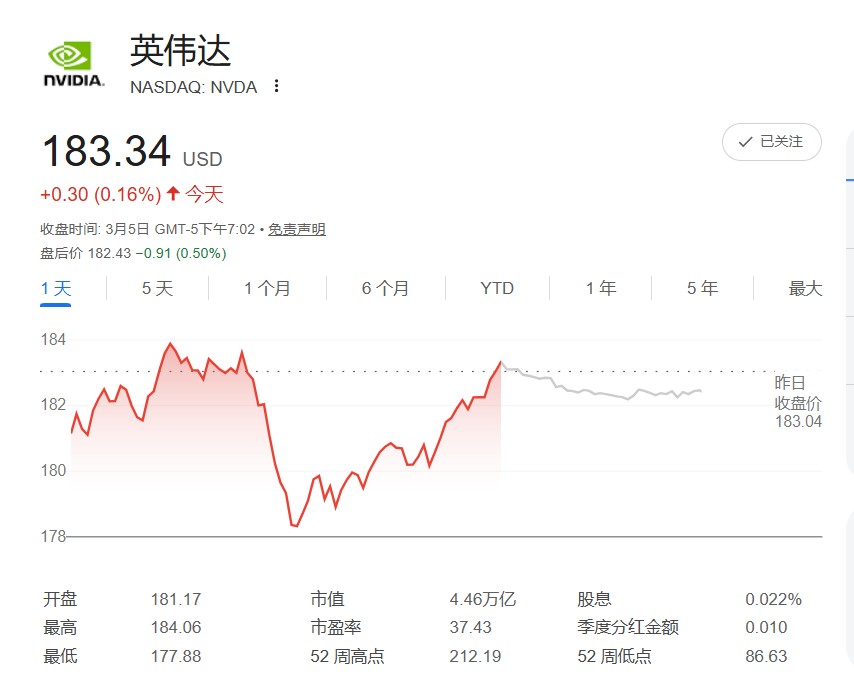
Following the news, NVIDIA and AMD's stock prices fell during Thursday's trading session.
From "40 Country Controls" to "Global Licensing"
Reports indicate that the draft will require companies to apply for licenses for the export of "almost all" NVIDIA and AMD AI accelerators, effectively expanding the current restrictions framework, which covers about 40 countries, to a global scale.
The U.S. Department of Commerce has also emphasized that this is not a return to the previous administration's "AI diffusion rules."
The U.S. Department of Commerce stated: "There are reports today suggesting we are returning to the 'AI diffusion rules.' We are not. They are burdensome, overly intrusive, and have catastrophic consequences."
"Investment for License": The Middle East Model May Be Institutionalized
The Financial Times reported that the highest level of the draft will require the buyer's country to commit to investing in U.S. domestic AI infrastructure as one of the conditions for obtaining large-scale advanced chips.
There is a precedent for linking export approvals with investment commitments. Last year, the U.S. reached a similar arrangement when approving chip exports to the UAE and Saudi Arabia: the UAE committed to investing $1 domestically for every $1 invested in the U.S.
In response, the U.S. Department of Commerce mentioned:
"We successfully advanced exports through historic agreements in the Middle East, and the government is currently discussing how to formalize this practice."
A U.S. official also clearly stated: "Any regulations issued by the government will aim to promote the U.S. technology stack."
Bloomberg also pointed out that the speed of approval and the strength of additional conditions will determine whether the impact is "increased procedures" or "substantive bottlenecks": If licenses are issued quickly with fewer conditions, the construction of global AI data centers may continue to advance, albeit with increased paperwork costs; if delays or prolonged negotiations occur, project planning and delivery schedules may be disrupted. After the U.S. announced a chip export arrangement with the UAE last year, license issuance did not begin until months later and included "reciprocal investment in the U.S." conditions
Tiered Approval: The Larger the Scale, the Stricter the Additional Conditions
The new regulations establish a tiered approval process based on the computing power scale required by enterprises:
The first tier is for small purchases of up to 1,000 NVIDIA GB300 GPUs. Such transactions will undergo relatively simple reviews and have specific exemption opportunities.
The second tier is for medium to large cluster deployments. Buyers must undergo a preliminary review before applying for an export license. Depending on the specific situation, buyers may need to accept additional conditions, such as full disclosure of their business model or allowing the U.S. government to conduct on-site inspections of their data centers.
The third tier is for ultra-large-scale deployments, referring to a single enterprise owning more than 200,000 GB300 chips in a single country. At this point, the government of the buyer's country must intervene. The U.S. will require the buyer's country to make strict security commitments and to make "matching" investments in U.S. AI infrastructure. As a scale reference, 200,000 GB300 chips are equivalent to the total scale of the AI infrastructure contract that NScale in the UK plans to provide to Microsoft.
Under the new export regulatory framework, chip companies must meet direct funding allocation conditions to obtain specific licenses. According to informed sources, in negotiations regarding export licenses for high-end H200 chips involving specific markets, NVIDIA CEO Jensen Huang has agreed to one condition: NVIDIA will remit 25% of the sales revenue from this portion of H200 sales to the U.S. government in exchange for export approval.
