


CITIC reviewed eight Middle Eastern conflicts since 1970 and identified four important patterns

CITIC reviewed eight Middle Eastern conflicts since 1970 and identified four important patterns. The military actions of Israel and the United States against Iran mark an escalation of conflict, necessitating attention to U.S. military movements, changes in Iranian politics, and spillover effects of the conflict. Safe-haven asset gold outperforms the U.S. dollar, oil prices are influenced by supply and demand, and U.S. stock performance is related to military intervention. It is expected that by 2026, the profits of leading tanker companies will reach new highs, the aluminum industry chain will be strong, the coal sector is expected to rise, and there will be increased attention in the military trade field
Abstract
On February 28 local time, Israel and the United States announced an attack on Iran, marking the situation in Iran as having finally entered the stage of military conflict. We believe the severity of the situation has exceeded that of the "Twelve-Day War" in June 2025, and subsequent developments should focus on three important signals: U.S. military movements, changes in Iranian politics, and the scope of conflict spillover.
To analyze the potential impact of the conflict, we reviewed eight major conflicts in the Middle East since 1970 and summarized the following patterns: Safe-haven asset gold is superior to the U.S. dollar, oil prices will still depend on supply and demand in the long term, the performance of U.S. stocks is directly related to the level of U.S. military intervention and the trajectory of the conflict, and there is no significant impact on Chinese assets.
At the industry level, the Iranian geopolitical conflict will strengthen the momentum of the oil transportation cycle, with profits for leading tanker companies expected to reach new highs in 2026. The rising demand for safe-haven assets, liquidity easing, and de-dollarization will continue to dominate the price increase logic of gold and other precious metals. Concerns over supply in the aluminum industry chain, combined with strong medium- to long-term supply and demand logic, continue to support the aluminum sector's price valuation rally. The geopolitical conflict in the Middle East, along with supply disruptions in Indonesia, is pushing up coal prices, and the coal sector is expected to rise further. Following the outbreak of military conflict between the U.S., Iran, and Israel, military actions are rapidly escalating, and attention to the military trade sector is expected to increase, while investment opportunities in the upstream military new materials field are also promising.
What potential changes should subsequent developments focus on?
On February 28 local time, Israel and the United States announced an attack on Iran, marking this event as the point at which the situation in Iran has finally entered the stage of military conflict.
As of 10:00 AM Beijing time on March 1, the situation in Iran is still rapidly changing. We believe the severity of the situation has exceeded that of the "Twelve-Day War" in June 2025. It may be difficult for the global market to speculate and interpret the final scenario all at once; it is more likely to continue fluctuating in response to important signals.
We believe it is necessary to pay attention to the potential changes in three important signals: U.S. military movements, changes in Iranian politics, and the scope of conflict spillover to see if they lead to more extreme scenarios. If there are no significant changes in these three signals, the market impact may be viewed as an amplified version of the "Twelve-Day War" in June 2025.
Figure 1: Three important signals to watch in the Iranian situation

Source: Xinhua News Agency, Center for Strategic and International Studies (CSIS), CITIC Securities Research Department
How will this affect the trends of major asset classes?
The situation in the Middle East may not cool down quickly, and in the short term, various assets may repeat their instinctive reactions to sudden events, with subsequent developments highly dependent on scenario assumptions.
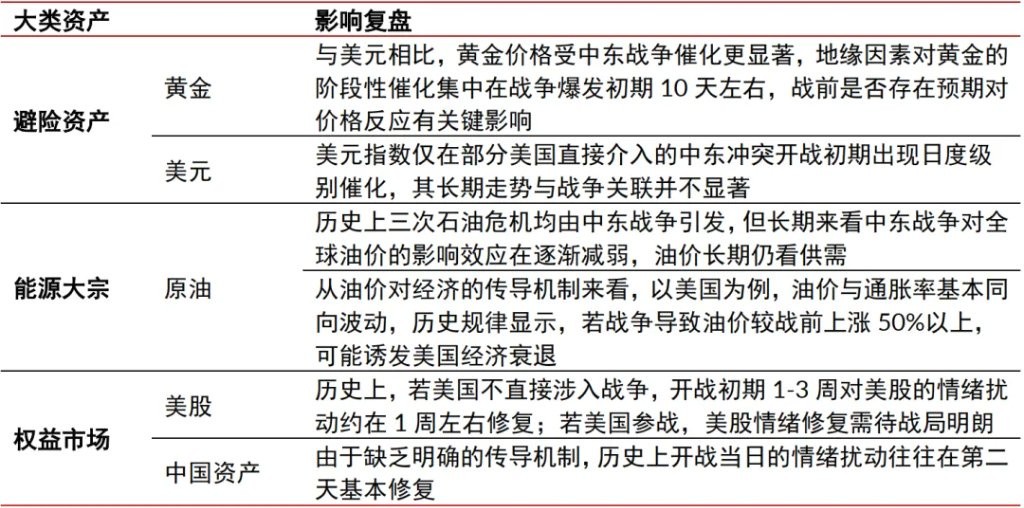
To provide a reference for analyzing the potential market impact, we reviewed the market impacts of eight major conflicts in the Middle East since 1970 and summarized the following patterns: Safe-haven asset gold is superior to the U.S. dollar, oil prices will still depend on supply and demand in the long term, the performance of U.S. stocks is directly related to the level of U.S. military intervention and the trajectory of the conflict, and there is no significant impact on Chinese assets. **
Table 1: Market Impact Review of Eight Major Conflicts in the Middle East Since 1970
Source: CITIC Securities Research Department
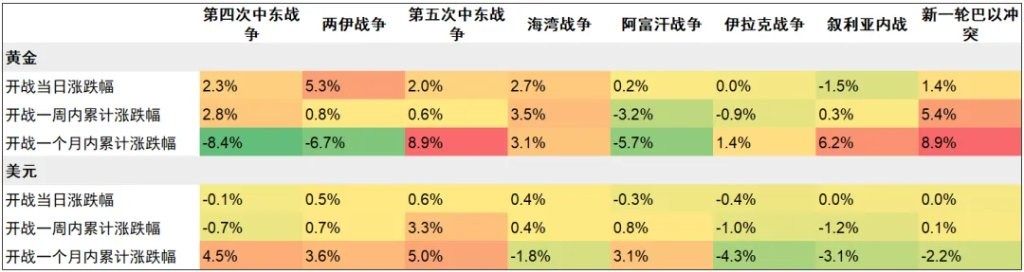
Figure 2: The Safe-Haven Property of Gold Generally Stronger than the US Dollar in Major Middle Eastern Conflicts Since 1970
Source: Wind, CITIC Securities Research Department
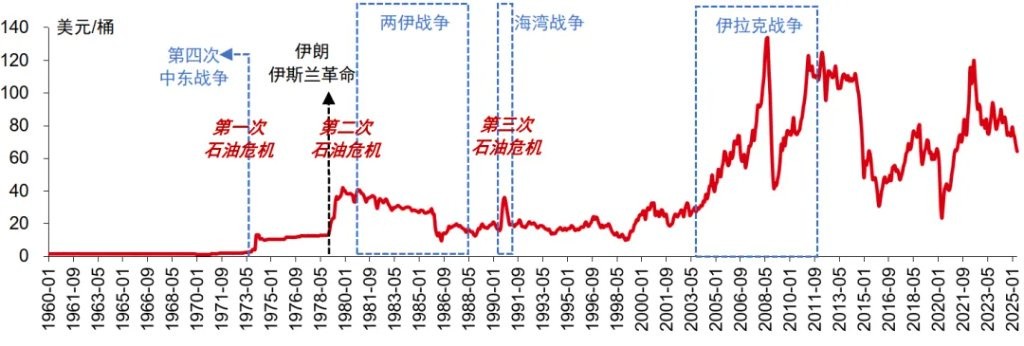
Figure 3: The Direct Impact of Middle Eastern Wars on Crude Oil Prices Often Occurs in the Early Stages of Conflict, and Over Time, the Impact Effect Gradually Weakens
Source: Wind, CITIC Securities Research Department
Figure 4: In Wars Directly Involving the United States, US Stocks Often Decline in the Early Stages Due to Safe-Haven Sentiment, Until the Situation Becomes Clear and Recovery Occurs
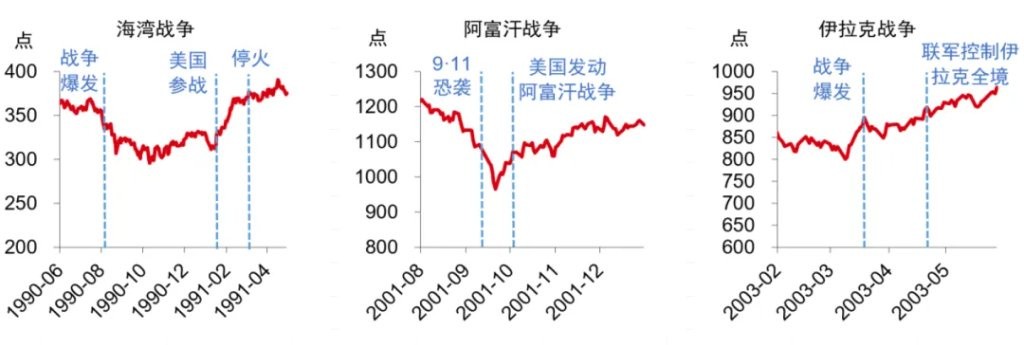
Source: Wind, CITIC Securities Research Department. Note: The vertical axis in the figure represents the S&P 500 index points.
In addition to war, asset allocation in March also faces the impact of important meetings, monetary policy, and the possibility of Trump visiting China. We expect the upward trend in the stock market to remain unchanged, but volatility may increase.
Impact on Industries and Investment Opportunities?
Oil Shipping: Geopolitical Conflicts Restructuring Supply Chains, VLCC Freight Rates Gaining New Momentum
Currently, tanker traffic through the Strait of Hormuz is almost at a standstill. Geopolitical influences have become the dominant factor in oil shipping cycle freight rates and valuations. The Strait of Hormuz accounts for about 30% of global crude oil and petrochemical transportation. Once fluctuations occur, it is likely to become a "bullish option" for the tanker cycle, with VLCCs leading in elasticity. Under the dominance of geopolitical factors, the Iranian geopolitical conflict will strengthen cyclical momentum, and profits for leading tanker companies are expected to reach new highs in 2026 .
Table 2: Review of the Impact of Geopolitical Conflicts on Oil Shipping
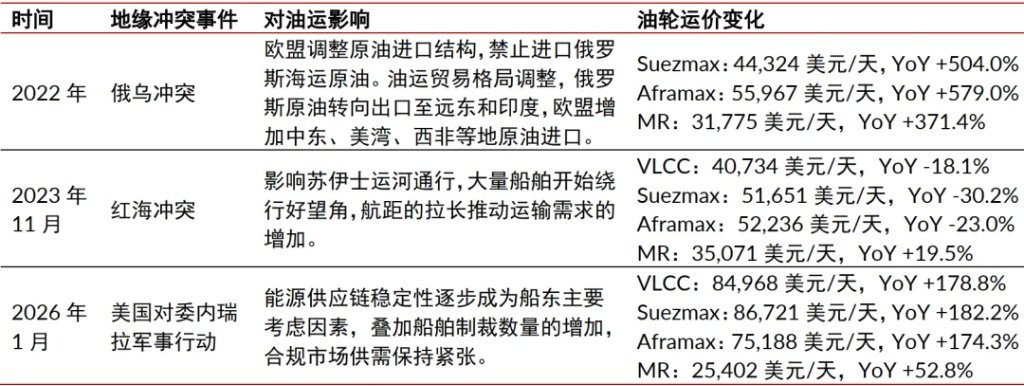
Source: Clarksons, CITIC Securities Research Department. Note: The Red Sea conflict corresponds to changes in freight rates for various ship types in the first half of 2024, and the US military actions against Venezuela correspond to changes in freight rates in January 2026 Figure 5: Distribution of Iran's Crude Oil Export Flows
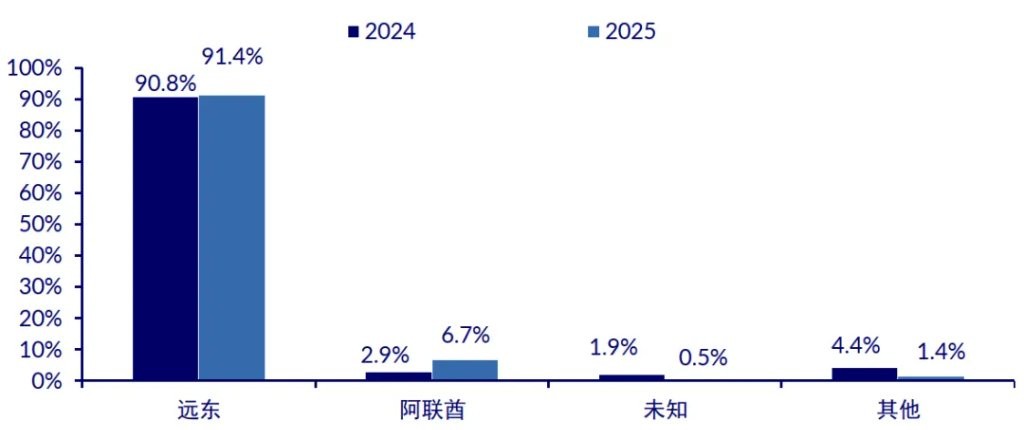
Source: UANI, CITIC Securities Research Department
Metals: Focus on Investment Opportunities in Gold and Aluminum Sectors
1) Gold: Recently, gold prices have experienced significant fluctuations. From a fundamental perspective, we believe this is due to changing market concerns regarding the independence of the Federal Reserve and the evolving situation in Iran, with speculative funds amplifying this trend.
Looking ahead, increased demand for safe-haven assets, loose liquidity, and de-dollarization will continue to dominate the logic for rising gold prices. Meanwhile, under a conservative gold price assumption of USD 5,000/ounce, domestic gold sector PE valuations remain at historical lows of 12-20X, suggesting continued attention to investment opportunities in the gold sector.
2) Aluminum: With the resurgence of conflict between Israel and Palestine, risks related to aluminum production capacity, shipping capabilities, and energy supply in the Middle East have significantly increased. Future disruptions in the aluminum supply chain in the Middle East and potential overseas secondary energy crises cannot be ignored. Reviewing the energy crisis of 2021-22, aluminum prices and sector gains reached 60%/100%.
Looking ahead, increased concerns over aluminum supply chain may lead to price increases beyond our previous expectations. Coupled with the strong long-term supply-demand logic in the aluminum industry, we remain optimistic about the simultaneous rise in aluminum sector price valuations.
Figure 6: Location of Aluminum Plants in the Middle East
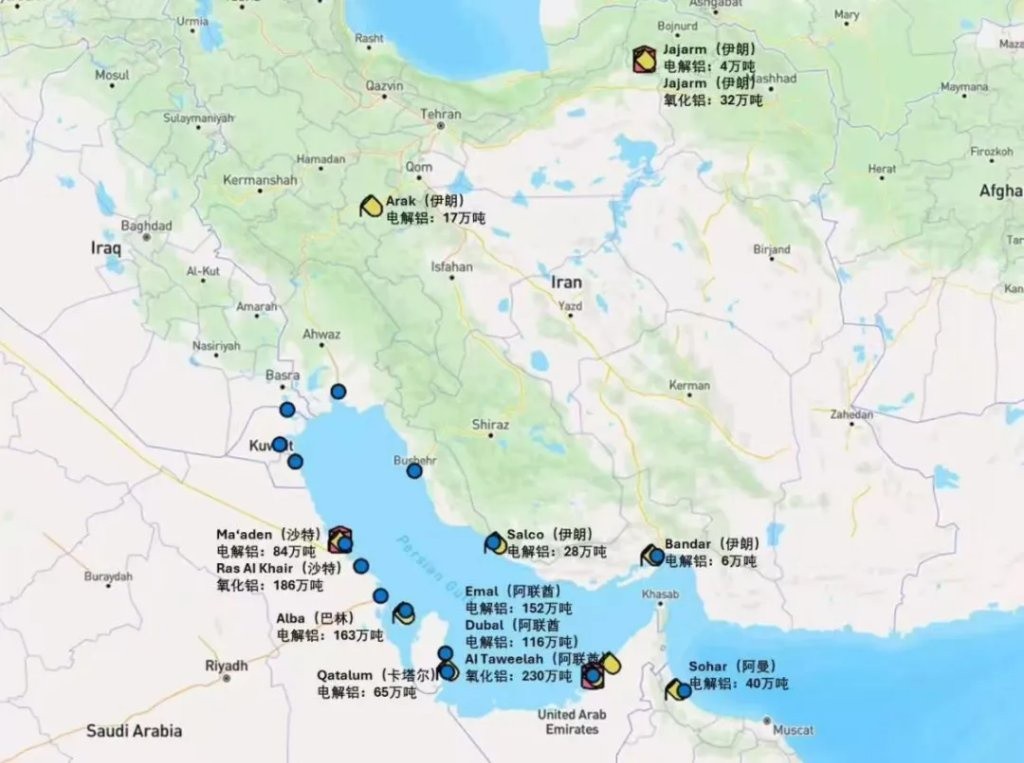
Source: CRU
Figure 7: Supply and Demand Balance and Forecast for China's Electrolytic Aluminum (Unit: 10,000 tons)
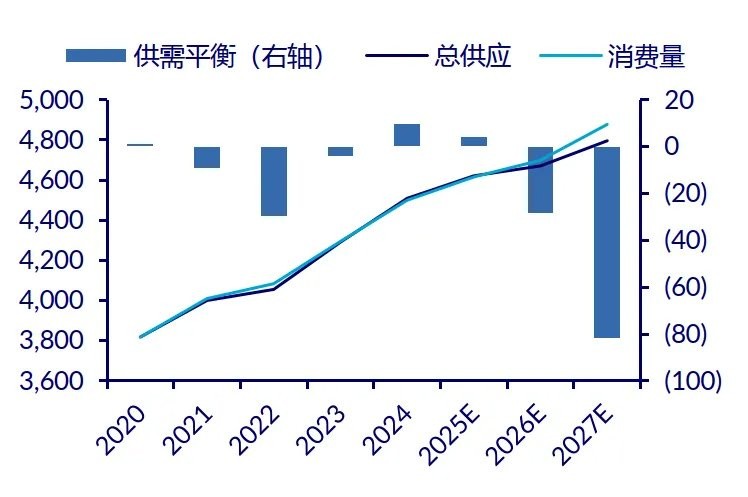
Source: SMM (demand data), ALD (supply data), CITIC Securities Research Department forecast Note: Potential increase in imports considered starting from 2027
Figure 8: Global Supply and Demand Balance and Forecast for Electrolytic Aluminum (Unit: 10,000 tons)
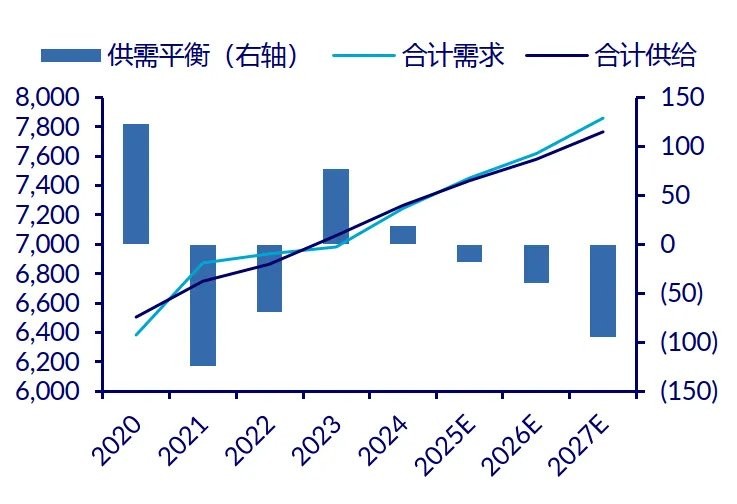
Source: SMM (demand data), ALD (supply data), CITIC Securities Research Department forecast
Coal: Escalation of Middle Eastern Conflicts May Boost Sector Valuations
The escalation of geopolitical conflicts in the Middle East may lead to sustained increases in crude oil prices, which could effectively drive up coal price expectations. Additionally, if the trade logistics of chemicals like methanol are affected, domestic coal consumption in coal chemical industries is also expected to increase, benefiting coal prices. Currently, combined with export disruptions caused by reduced coal production in Indonesia, domestic coal price expectations are likely to remain positive, and the sector is expected to continue its upward trend Recommend undervalued companies with coal chemical business, companies with a relatively high proportion of chemical coal sales or resource layout in Indonesia.
Figure 9: Crude Oil/Coal Price Ratio Since 2008 (USD - left axis, ratio corresponds to right axis)
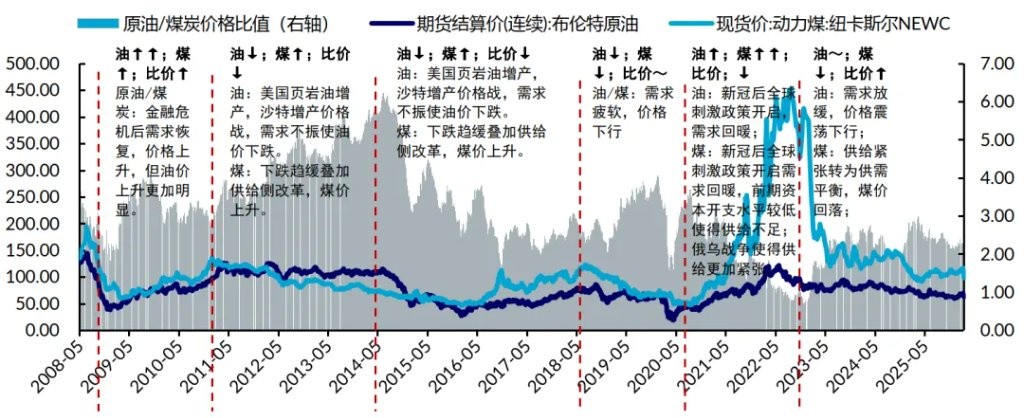
Source: ICE, Wind, CITIC Securities Research Department Note: Crude oil/coal price ratio = (Crude oil price per barrel * 7 (unit converted from barrels to tons) / 1.43 (crude oil standard coal conversion coefficient)) / (Coal price per ton * 7000 / 5500 (converted to standard coal); the horizontal lines in the figure from bottom to top represent the 10% / 25% / 50% / 75% / 90% percentiles.
Military Industry: Optimistic about China's Military Trade Development Space
With the outbreak of conflict between the U.S. and Iran, military actions have rapidly escalated, and attention to the military trade sector is expected to increase.
Global military spending is set to grow for the 10th consecutive year in 2024, with the highest increase since the Cold War, particularly rapid growth in Europe and the Middle East. According to SIPRI, nearly 80% of Pakistan's military trade in recent years has come from China, which has systematically equipped domestic equipment, highlighting Middle Eastern countries' recognition of Chinese equipment through defense agreements.
Military trade is an important tool for military powers to improve coordinated political relations, achieve high commercial profits, and strengthen military alliances, as well as a crucial way to maintain the defense industrial economy and support domestic military technology development. China's military trade is gradually transitioning from low-end, cheap exports to high-end weapon exports, especially against the backdrop of large-scale updates of domestic equipment in recent years, with some military product technologies already possessing strong competitiveness internationally.
In the future, as China's international political status gradually rises, domestic military trade products are expected to further increase their global market share.
Focus on: 1) Military aircraft; 2) Guided munitions and drones; 3) Radar and air defense systems; 4) Upstream supporting (communication data links, inertial navigation, energetic materials, composite materials, engines, and supporting) .
New Materials: Heat in Military Materials Expected to Rise
We believe that the current Middle East conflict sentiment is favorable for the military industry sector, especially in military trade. In the long term, traditional weapon-exporting countries like the U.S. and Russia may be preoccupied with their own issues, which could create opportunities for the export of China's advanced equipment in the context of tense international geopolitical situations.
We are optimistic about investment opportunities in the upstream military new materials sector and recommend focusing on: 1) Titanium materials; 2) High-temperature alloys; 3) Carbon fibers, etc.
Table 3: Investment Opportunity Overview
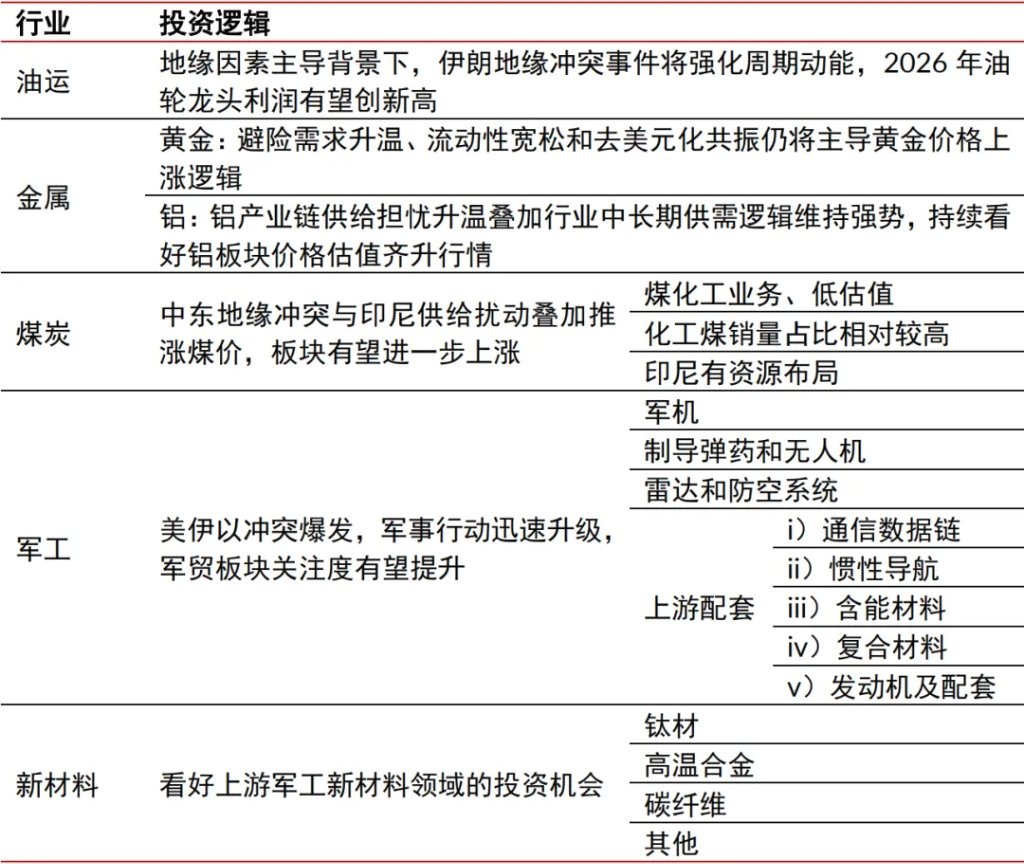 Source: CITIC Securities Research Department Forecast
In addition, despite the ongoing unrest in Iran, major powers in the Middle East, including Saudi Arabia and the UAE, generally choose to respond with a cautious and low-key attitude, without making clear official statements. This reflects their focus on economic development and promoting reconciliation within the Middle East, with no intention of getting involved in conflicts. Furthermore, as the United States continues to strategically withdraw from the Middle East, trust in the U.S. commitment to security has eroded, leading Middle Eastern countries to pursue strategic autonomy and emphasize diversification in foreign cooperation. This means that the U.S. strategy in the Middle East and the turmoil in Iran do not change the trend of deepening China-Middle East economic and trade cooperation.
From a sectoral perspective, in areas where U.S.-China competition is relatively weak and aligns with the long-term development needs of Middle Eastern countries, future cooperation prospects may be even broader, especially in fields such as oil and gas development and trade, photovoltaics, wind energy, and energy storage projects between China and countries like Saudi Arabia and the UAE, which are worth paying attention to .
Risk Warning and Disclaimer
The market has risks, and investment should be cautious. This article does not constitute personal investment advice and does not take into account the specific investment goals, financial conditions, or needs of individual users. Users should consider whether any opinions, views, or conclusions in this article align with their specific circumstances. Investment based on this is at their own risk
