


Oil prices have first shown a decline after the outbreak of the US-Iran war: Bessent promises to escort the Persian Gulf, suggesting that more measures are to come

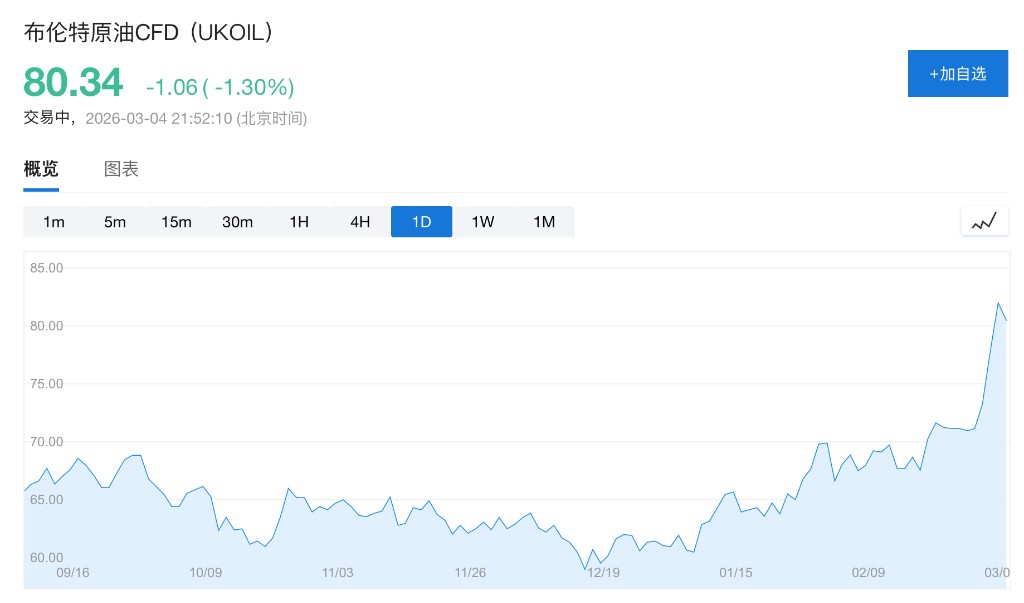
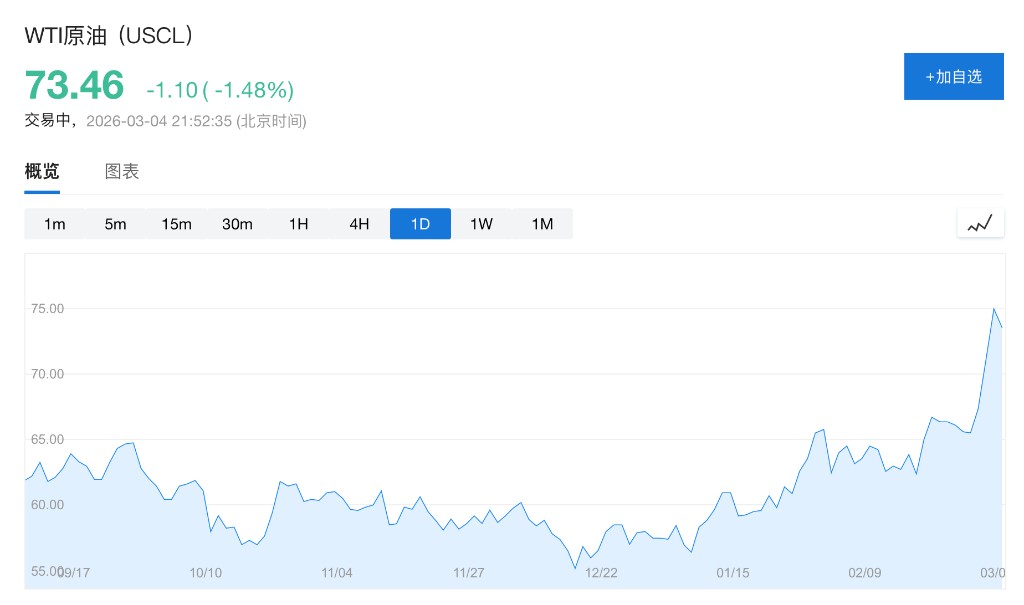
Since the outbreak of the US-Iran conflict, international oil prices fell for the first time on Wednesday, ending a two-day surge of over 11%. Treasury Secretary Besant stated that the White House will introduce a series of measures to ensure the safety of oil transportation in the Persian Gulf. Boosted by this, market concerns over supply disruptions eased. As of the time of writing, WTI crude oil fell 1.48% to $73.46, and Brent crude oil fell 1.3% to $80.34. Although traffic in the Strait of Hormuz remains stalled, policy signals have temporarily stabilized market sentiment
Since the conflict between the U.S. and Iran, international oil prices have fallen for the first time, after a consecutive two-day increase of over 11%.
According to CNBC, U.S. Treasury Secretary Janet Yellen stated on Wednesday local time that the White House will gradually introduce a series of measures to support oil tankers passing through the Persian Gulf. This news eased market concerns about supply disruptions, leading to a subsequent decline in oil prices. As of the time of publication, WTI crude oil fell by 1.48%, trading at $73.46 per barrel; Brent crude oil dropped by 1.3%, trading at $80.34 per barrel.
Previously, the U.S. and Israel launched a large-scale airstrike against Iran last weekend, to which Iran responded with missile and drone attacks on multiple targets in the Middle East, including energy infrastructure. As a result, WTI crude oil briefly approached $78 per barrel on Monday, surging 6% and 5% on Monday and Tuesday, respectively.
Yellen Promises a Series of Assurance Measures, Market Sentiment Stabilizes
The immediate trigger for the drop in oil prices was Treasury Secretary Yellen's clear statement on Wednesday during CNBC's "Squawk Box" program. She revealed that the White House would issue a series of announcements regarding the security of oil transportation in the Persian Gulf. She stated:
"We will issue a series of announcements; yesterday we announced that the U.S. International Development Finance Corporation (DFC) will provide insurance for oil tankers and cargo ships operating near the Persian Gulf last weekend."
This policy signal echoed President Trump's statement on Tuesday. Trump stated that the U.S. would provide insurance for oil tankers through the DFC and offer naval escorts for Persian Gulf oil transportation when necessary. These two statements collectively helped stabilize market sentiment, leading to a decline in oil prices.
Strait of Hormuz in Stalemate, Global Oil Market Faces Key Test
The core of this round of oil price volatility points directly to the safety of passage through the Strait of Hormuz. As the most important oil trade chokepoint in the world, this strait accounts for about 20% of global oil consumption exports. Due to shipowners' concerns about becoming targets of Iranian retaliation, tanker traffic through the strait has effectively come to a standstill. If the passage remains blocked for an extended period, the impact on global energy supply will be incalculable.
To restore market confidence and resume tanker passage, the U.S. government has implemented dual measures: providing insurance for tankers through the U.S. International Development Finance Corporation (DFC) and promising naval escorts when necessary.
However, Iran's retaliatory actions are still ongoing, and the geopolitical situation remains highly uncertain. Although short-term sentiment has been boosted by policy signals, the risk of volatility in the oil market has not yet dissipated
