The Asia-Pacific stock market remains in a downturn, with the South Korean Composite Index plummeting 6%, the Nikkei 225 Index falling over 2%, SK Hynix experiencing a V-shaped rebound, and Samsung Electronics narrowing its decline

The Nikkei 225 index opened down 1.4%, and then the decline expanded to 2.3%. The Seoul Composite Index in South Korea saw its decline widen to 5.2%, having cumulatively dropped over 10% from the high on February 26. The KOSPI 200 index futures in South Korea fell by 5%, and programmatic trading was paused for 5 minutes
Despite the overnight recovery of some losses in the U.S. stock market under Trump's reassurance, geopolitical panic and inflation concerns continued to fester in today's Asia-Pacific markets, leading to a significant decline in the Asia-Pacific stock markets for the third consecutive trading day.
On Wednesday, the MSCI Asia-Pacific Index fell by 1%. The Nikkei 225 Index opened down 1.4% and then expanded its losses to 2.3%. The Japanese bank stock index plummeted by 8%.
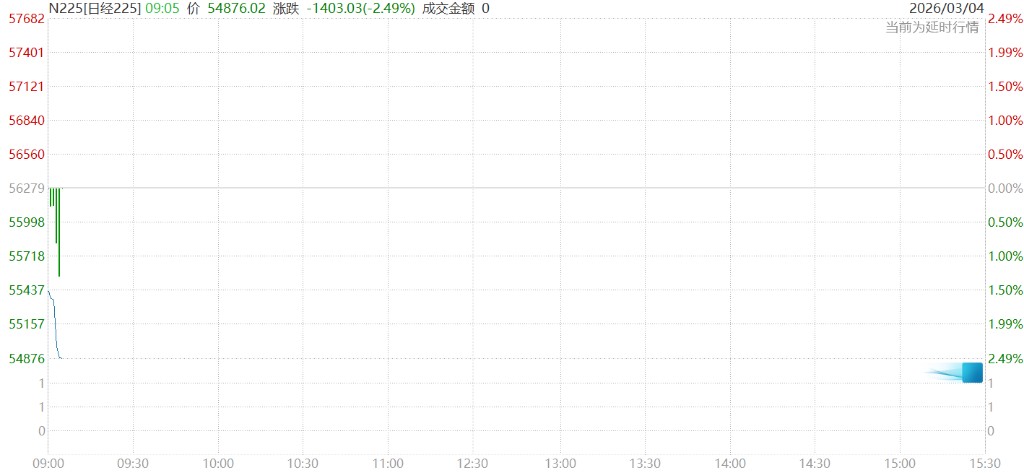
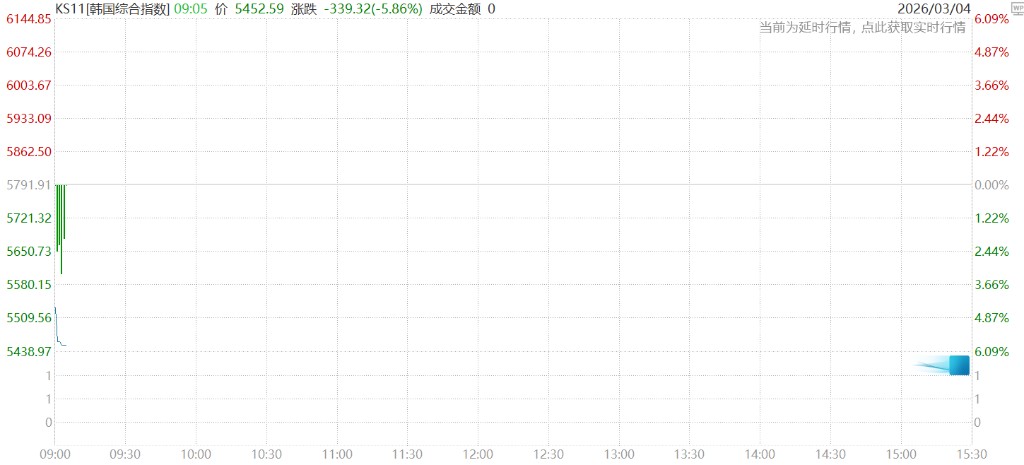
The South Korean Composite Index opened down 3.4% and then expanded its losses to 6%, accumulating a decline of over 10% from the high on February 26. The KOSPI 200 index futures fell by 5%, and program trading was paused for 5 minutes.
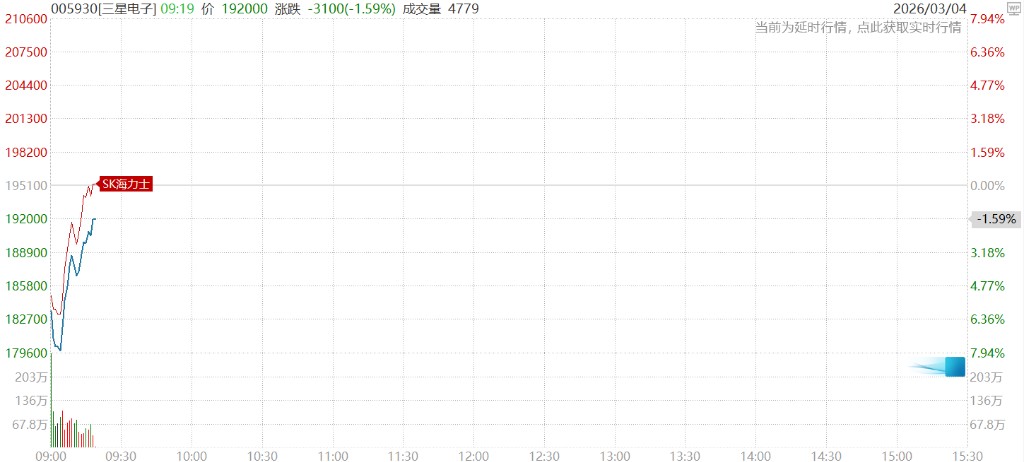
SK Hynix gapped down 5% at the open but later recovered to close flat. Samsung Electronics also saw its losses narrow to less than 2%.
The Bank of Korea stated that it will closely monitor excessive fluctuations in exchange rates and interest rates. Volatility in the foreign exchange, interest rate, and stock markets may continue.
The attacks by the U.S. and Israel on Iran have destabilized the Middle East and could bring a new round of inflationary shocks to the U.S. economy by pushing up oil prices. Furthermore, the timing and manner of how the attacks will end remain unclear, increasing the risk of prolonged conflict and unforeseen consequences that the White House cannot control.
Fawad Razaqzada from Forex.com stated:
Currently, market movements are influenced by news headlines. It largely depends on whether tensions can stabilize or if this will mark the beginning of a long-term disruption in global supply chains.
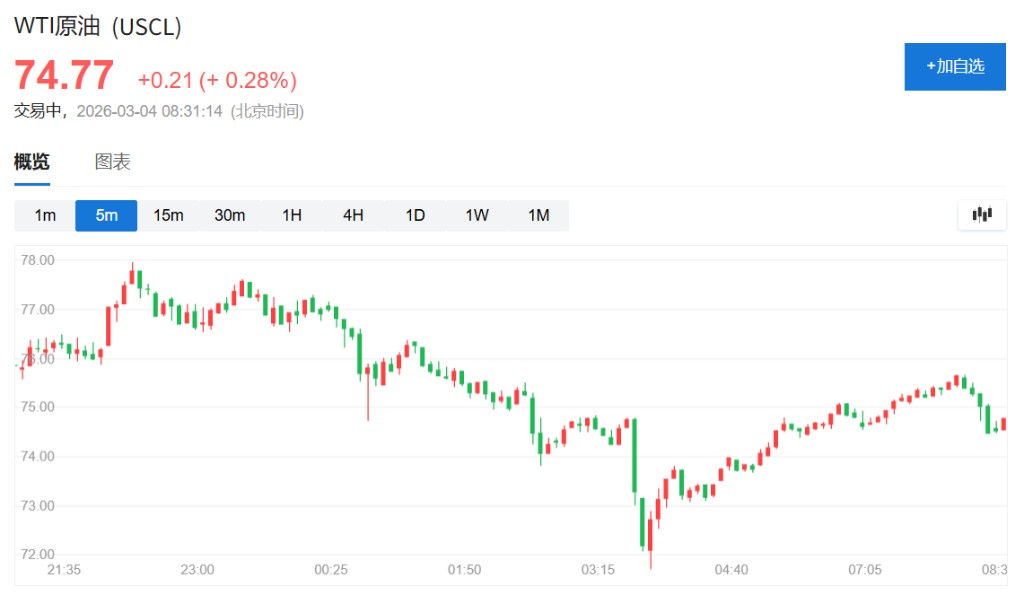
On Wednesday, WTI crude oil rose by 0.3%. Wall Street Journal mentioned that Trump announced the U.S. would escort and insure ships passing through the strait, aiming to curb the potential escalation of the crisis.
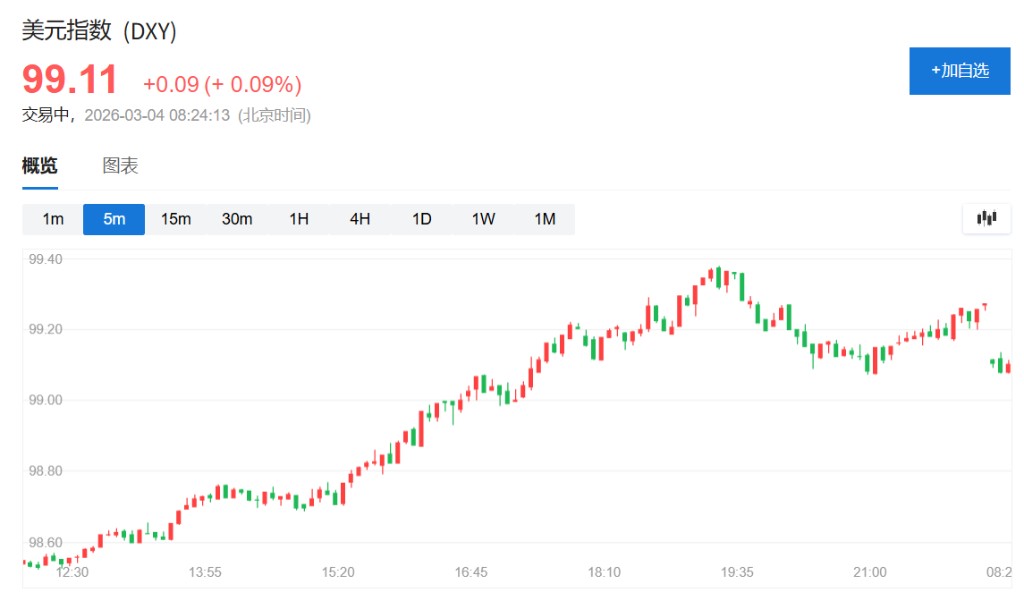
In the foreign exchange market, after two consecutive trading days of gains, the U.S. dollar index saw narrow consolidation in the morning, remaining basically flat. The Korean won rebounded by 0.7% after falling to its lowest level since 2009 in the previous trading day.
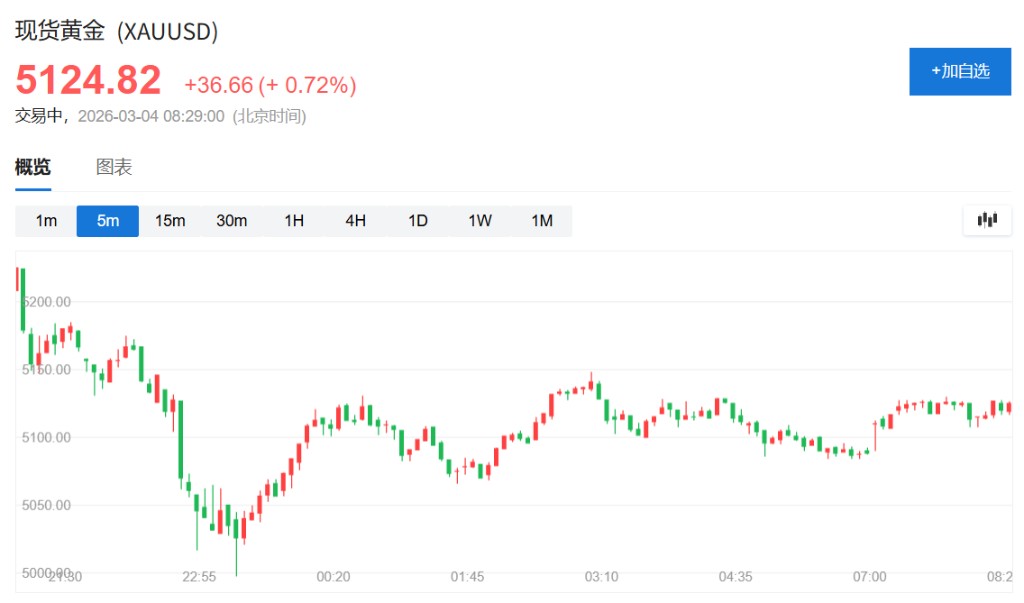
 On Wednesday, gold prices rose by 0.7%, approaching USD 5,125 per ounce, after previously dropping by 4.4% during the New York trading session due to the strong dollar.